Will Vaping Replace Traditional Tobacco in the Future?
Will vaping replace traditional tobacco in the future? Recently I’ve been paying attention to this niche sector. Vaping compared with combustible cigarettes is like electric cars compared with fuel vehicles, or perhaps the iPhone compared with Nokia. Ther
Will vaping replace traditional tobacco in the future? Recently, there has been a focus on the electronic cigarette segment, where electronic cigarettes are to combustion cigarettes what electric vehicles are to fuel vehicles, or what iPhones are to Nokias. There is a book called "The Tipping Point," which states that 20% is a tipping point. Once user penetration reaches 20%, doing anything becomes much easier. Therefore, when the user penetration of a new phenomenon reaches 10%, we can start to pay attention or invest. To determine whether the electronic cigarette sector has investment value, we need to assess whether it will become a trend, and to judge whether it will become a trend, we need to look at its current user penetration rate. If it exceeds 10%, we can pay attention; if it exceeds 15%, we can invest; because once it exceeds 20%, it will be unstoppable. So, what is the current user penetration rate of electronic cigarettes?
Since I am observing investment opportunities in the industry chain, my perspective is to look at the attitudes and sales proportions of tobacco giants towards electronic cigarettes. If a tobacco giant currently has a higher sales proportion of electronic cigarettes, it indicates that the giant places more importance on electronic cigarettes, and the business volume of its enterprises in the industry chain is larger, ensuring better growth potential in the future.
The five major tobacco companies in the world are: China National Tobacco, Philip Morris International, British American Tobacco, Japan Tobacco, and Imperial Brands. China National Tobacco is a closed system, so let's set that aside for now. Philip Morris International, British American Tobacco, Japan Tobacco, and Imperial Brands account for 25%, 19%, 14%, and 7% of the international market share, respectively.
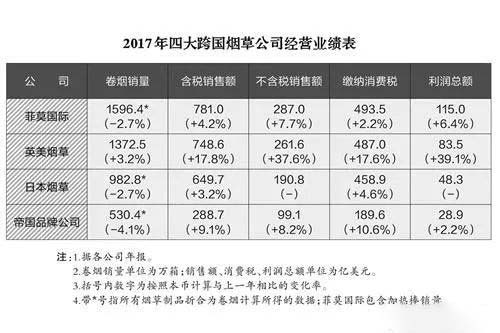 In 2017, Philip Morris International's electronic cigarette sales accounted for 12.7% of total sales. In 2017, Philip Morris International's cigarette sales were 15.239 million cases, a decrease of 6.3%, while heated tobacco stick sales surged from 148,000 cases to 725,000 cases, reducing the overall decline in tobacco product sales to 2.7%. Cigarette sales decreased by $850 million, a decline of 3.3%, while heated tobacco product sales jumped from $730 million to $3.64 billion, accounting for 12.7% of the company's total sales and driving a 7.7% increase in total sales, marking the largest sales increase for Philip Morris International since separating from Altria Group.
Net revenues include $2,970 million in 2018 and $1,997 million in 2017 related to the sale of RRPs (RRP refers to reduced-risk products, which is how tobacco companies refer to electronic cigarettes, also a way to guide public opinion). By Q3 2018, electronic cigarettes accounted for 13.4% of sales, up from 9.7% in the same period last year. This proportion is likely the largest among tobacco giants and is still increasing.
Japan Tobacco is working hard to catch up with Philip Morris International in the heated tobacco product sector, proposing to invest 100 billion yen (1 yen is approximately 0.059 yuan) over the next three years, aiming to achieve the number one market share in domestic heated tobacco products by 2020.
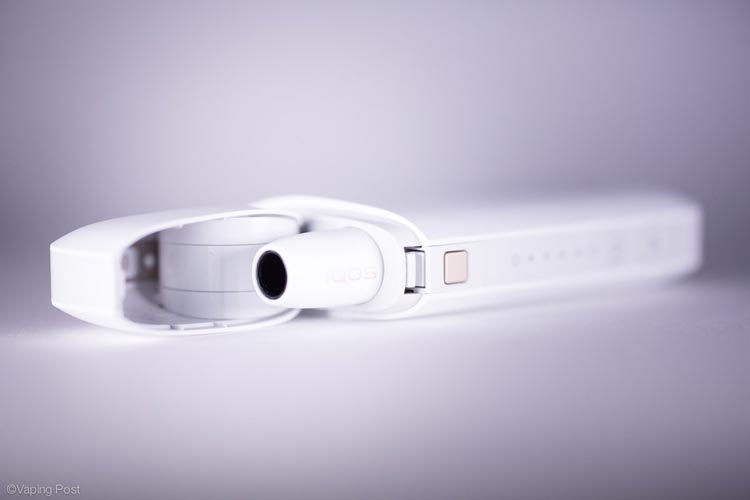 In Q3 2018, Japan Tobacco's RRP revenue was 25 billion yen (equivalent to 1.53 billion yuan), while the total revenue for Japan Tobacco in Q3 2018 was 167.58 billion yen, indicating that Japan Tobacco's electronic cigarette series accounted for 1.5% of total revenue. Japan Tobacco also stated, "We still expect the RRP category to reach 30% of total industry volume by the end of 2020," but is that expectation a bit too ambitious...?
British American Tobacco has a relatively balanced focus on both traditional cigarettes and new tobacco products. The company has proposed a slogan to transform into an innovative enterprise and has invested in the research and sales of new tobacco products since 2012. Since then, the company has invested a total of $2.5 billion, and its electronic cigarette brands are highly competitive in major markets such as Europe and the United States; its heated tobacco products have also been launched in Japan, following Philip Morris International and Japan Tobacco. However, overall, British American Tobacco does not believe that new tobacco products will ultimately replace traditional cigarettes, but rather treats them as a niche product with demand and potential, while traditional cigarettes remain the company's focus and foundation. The company's target for electronic cigarette revenue in 2018 was 100 million euros, while its sales in 2017 were 20.3 billion euros, which means it accounted for about 0.5%.
 Unlike the other three companies, Imperial Brands has not focused its main efforts on market expansion or new product expansion, but has implemented a brand concentration strategy since 2012, focusing on reducing the number of brands, nurturing strong brands, and lowering operating costs. I couldn't find the electronic cigarette sales proportion for Imperial Brands...
From the attitudes, strategic development directions, and electronic cigarette sales proportions of the four major tobacco companies, we can focus on the supply chain enterprises of Philip Morris International and Japan Tobacco. I understand that because traditional combustible tobacco is very profitable for tobacco giants, there is no highly consistent recognition and behavior regarding the transition to electronic cigarettes, but they are already deeply laying out their strategies, especially Philip Morris International and Japan Tobacco, which show the highest level of importance. In addition to the transition of traditional tobacco giants, the electronic cigarette industry is more led by emerging pure electronic cigarette gene companies that are innovating at the edges. Therefore, is electronic cigarette the trend of tobacco industry development? Overall, I believe it is, especially for some leading companies. If the FDA approves IQOS for sale in the United States, this trend will be even more certain.
Since I am observing investment opportunities in the industry chain, my perspective is to look at the attitudes and sales proportions of tobacco giants towards electronic cigarettes. If a tobacco giant currently has a higher sales proportion of electronic cigarettes, it indicates that the giant places more importance on electronic cigarettes, and the business volume of its enterprises in the industry chain is larger, ensuring better growth potential in the future.
The five major tobacco companies in the world are: China National Tobacco, Philip Morris International, British American Tobacco, Japan Tobacco, and Imperial Brands. China National Tobacco is a closed system, so let's set that aside for now. Philip Morris International, British American Tobacco, Japan Tobacco, and Imperial Brands account for 25%, 19%, 14%, and 7% of the international market share, respectively.
In 2017, Philip Morris International's electronic cigarette sales accounted for 12.7% of total sales. In 2017, Philip Morris International's cigarette sales were 15.239 million cases, a decrease of 6.3%, while heated tobacco stick sales surged from 148,000 cases to 725,000 cases, reducing the overall decline in tobacco product sales to 2.7%. Cigarette sales decreased by $850 million, a decline of 3.3%, while heated tobacco product sales jumped from $730 million to $3.64 billion, accounting for 12.7% of the company's total sales and driving a 7.7% increase in total sales, marking the largest sales increase for Philip Morris International since separating from Altria Group.Net revenues include $2,970 million in 2018 and $1,997 million in 2017 related to the sale of RRPs (RRP refers to reduced-risk products, which is how tobacco companies refer to electronic cigarettes, also a way to guide public opinion). By Q3 2018, electronic cigarettes accounted for 13.4% of sales, up from 9.7% in the same period last year. This proportion is likely the largest among tobacco giants and is still increasing.
Japan Tobacco is working hard to catch up with Philip Morris International in the heated tobacco product sector, proposing to invest 100 billion yen (1 yen is approximately 0.059 yuan) over the next three years, aiming to achieve the number one market share in domestic heated tobacco products by 2020.
In Q3 2018, Japan Tobacco's RRP revenue was 25 billion yen (equivalent to 1.53 billion yuan), while the total revenue for Japan Tobacco in Q3 2018 was 167.58 billion yen, indicating that Japan Tobacco's electronic cigarette series accounted for 1.5% of total revenue. Japan Tobacco also stated, "We still expect the RRP category to reach 30% of total industry volume by the end of 2020," but is that expectation a bit too ambitious...?British American Tobacco has a relatively balanced focus on both traditional cigarettes and new tobacco products. The company has proposed a slogan to transform into an innovative enterprise and has invested in the research and sales of new tobacco products since 2012. Since then, the company has invested a total of $2.5 billion, and its electronic cigarette brands are highly competitive in major markets such as Europe and the United States; its heated tobacco products have also been launched in Japan, following Philip Morris International and Japan Tobacco. However, overall, British American Tobacco does not believe that new tobacco products will ultimately replace traditional cigarettes, but rather treats them as a niche product with demand and potential, while traditional cigarettes remain the company's focus and foundation. The company's target for electronic cigarette revenue in 2018 was 100 million euros, while its sales in 2017 were 20.3 billion euros, which means it accounted for about 0.5%.
Unlike the other three companies, Imperial Brands has not focused its main efforts on market expansion or new product expansion, but has implemented a brand concentration strategy since 2012, focusing on reducing the number of brands, nurturing strong brands, and lowering operating costs. I couldn't find the electronic cigarette sales proportion for Imperial Brands...From the attitudes, strategic development directions, and electronic cigarette sales proportions of the four major tobacco companies, we can focus on the supply chain enterprises of Philip Morris International and Japan Tobacco. I understand that because traditional combustible tobacco is very profitable for tobacco giants, there is no highly consistent recognition and behavior regarding the transition to electronic cigarettes, but they are already deeply laying out their strategies, especially Philip Morris International and Japan Tobacco, which show the highest level of importance. In addition to the transition of traditional tobacco giants, the electronic cigarette industry is more led by emerging pure electronic cigarette gene companies that are innovating at the edges. Therefore, is electronic cigarette the trend of tobacco industry development? Overall, I believe it is, especially for some leading companies. If the FDA approves IQOS for sale in the United States, this trend will be even more certain.