
How Effective Are Vapes for Quitting Smoking?
How effective are vapes for quitting smoking? Some people say vaping can help smokers quit, while others argue it only serves as a cigarette substitute, and some even claim it is just hype with no real value. So what are the facts? Can vaping really help
How effective are vapes for quitting smoking? Some say e-cigarettes can help quit smoking, while others argue they merely replace cigarettes, and some even claim e-cigarettes are just a gimmick with no real significance. So, what is the actual situation? Can e-cigarettes truly help smokers quit? Medical analysis shows that smokers primarily depend on nicotine, but this dependence is not particularly strong; generally, it only takes about three weeks for the body to rid itself of nicotine dependence. So why do most people still struggle to quit? This is a matter of habit and mindset.
 When discussing quitting smoking, we first need to look at the various methods available:
1. Willpower quitting, which involves not using any tools. One simply decides to quit smoking today and stops. This method is the cheapest and simplest among all quitting methods, but it also has the lowest success rate, with a typical success chance of around 3% to 6%. Many smokers have likely tried this method, and the results are predictable: they quit and then smoke again, repeatedly going back and forth. Ultimately, this method can be quite discouraging, leading one to feel that their willpower is lacking. For this approach, I would say it’s not that your willpower is insufficient; rather, your subconscious is still quietly telling you: cigarettes can help relieve fatigue, help you concentrate, and have many benefits... The end result is that you return to square one.
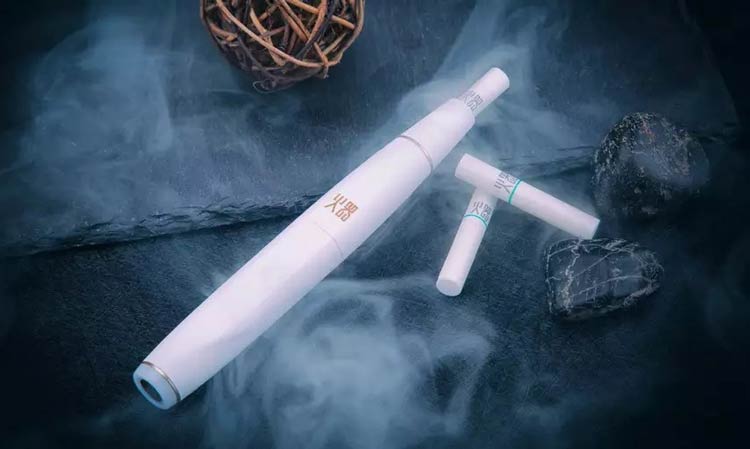 2. E-cigarette quitting: E-cigarette products have been on the market for over ten years. In recent years, thanks to technological improvements, e-cigarettes have been increasingly accepted by smokers, especially in Western countries, where e-cigarette usage has exploded. Let’s look at some data: Boston University conducted a survey in 2011, which found that within a six-month period, 31% of participants used e-cigarettes to quit smoking, with two-thirds reporting that vaping helped them reduce their cigarette consumption. 34% of participants quit smoking entirely, stopping nicotine intake, and also quit e-cigarettes. In the UK, in the first quarter of 2014, there were about 2.1 million e-cigarette users, of which 700,000 were former smokers who now only vape. From this data, we can conclude that the success rate of quitting smoking through e-cigarettes is around 33%. Among the remaining users, many smoke both e-cigarettes and traditional cigarettes, but the number of cigarettes smoked has significantly decreased.
From the above two sets of survey data, we can conclude that the success probability of quitting smoking through e-cigarettes is quite high, likely over 30%. E-cigarettes differ from other nicotine replacement therapies as they not only provide nicotine but also simulate the smoking experience, closely resembling the act of smoking, except that e-cigarettes produce vapor instead of smoke.
When discussing quitting smoking, we first need to look at the various methods available:1. Willpower quitting, which involves not using any tools. One simply decides to quit smoking today and stops. This method is the cheapest and simplest among all quitting methods, but it also has the lowest success rate, with a typical success chance of around 3% to 6%. Many smokers have likely tried this method, and the results are predictable: they quit and then smoke again, repeatedly going back and forth. Ultimately, this method can be quite discouraging, leading one to feel that their willpower is lacking. For this approach, I would say it’s not that your willpower is insufficient; rather, your subconscious is still quietly telling you: cigarettes can help relieve fatigue, help you concentrate, and have many benefits... The end result is that you return to square one.
2. E-cigarette quitting: E-cigarette products have been on the market for over ten years. In recent years, thanks to technological improvements, e-cigarettes have been increasingly accepted by smokers, especially in Western countries, where e-cigarette usage has exploded. Let’s look at some data: Boston University conducted a survey in 2011, which found that within a six-month period, 31% of participants used e-cigarettes to quit smoking, with two-thirds reporting that vaping helped them reduce their cigarette consumption. 34% of participants quit smoking entirely, stopping nicotine intake, and also quit e-cigarettes. In the UK, in the first quarter of 2014, there were about 2.1 million e-cigarette users, of which 700,000 were former smokers who now only vape. From this data, we can conclude that the success rate of quitting smoking through e-cigarettes is around 33%. Among the remaining users, many smoke both e-cigarettes and traditional cigarettes, but the number of cigarettes smoked has significantly decreased.From the above two sets of survey data, we can conclude that the success probability of quitting smoking through e-cigarettes is quite high, likely over 30%. E-cigarettes differ from other nicotine replacement therapies as they not only provide nicotine but also simulate the smoking experience, closely resembling the act of smoking, except that e-cigarettes produce vapor instead of smoke.
Related Articles

Vaping News
Ahead of a Nationwide Ban, Hundreds of Russian Retailers Voluntarily Stop Selling Vapes
2026-04-16

Vaping News
Illegal Vape Brands Try to Evade FDA Scrutiny by Posing as “Made in the USA”
2026-04-08

Vaping News
Jordan’s New Tobacco Control Rules: Waterpipe Tobacco Market Set for Major Changes
2026-03-17