
E-Cigarettes: From Made in China to Created in China
In the blink of an eye, the Electronic Cigarette Industry Committee of the China Electronics Chamber of Commerce has completed a year of development. Looking back from a future perspective, 2017 will certainly be seen as an important period for the vaping
In the blink of an eye, the Electronic Cigarette Industry Committee of China Electronics Chamber of Commerce has gone through a year of development. If we stand at a further point in the future and look back at the development history of the e-cigarette industry, then 2017 must be an important period. Because many e-cigarette companies have joined the membership and the unified service platform has enabled the industry to rapidly explode. Driven by the leading enterprises, everyone immersed themselves in scientific and technological research and development, formulated industry specifications, and achieved fruitful results.
On the occasion of the New Year's start, a series of reports from e-cigarettes, divided into industry sections, innovation sections, specifications sections and service sections, were released to entertain industry colleagues and e-cigarette enthusiasts. Industry Chapter—— E-cigarettes: blooming inside the wall and fragrant outside the wall The past is not like smoke When it comes to e-cigarettes, we must talk about the inventor Han Li. In 2004, Han Li, a Beijing TCM doctor, invented the first e-cigarette product with liquid tobacco oil and obtained an invention patent in China. He later founded Ruyan Technology and began selling e-cigarettes. I believe many people still remember Ruyan 's eye-catching advertisements on many central media outlets. However, the popularity of e-cigarettes did not last long in China, but instead gained more recognition abroad. In 2005, Ruyan Technology's e-cigarette products began to be exported overseas, and in 2007, it obtained its first international patent. In the following years, the e-cigarette industry began to enter the fast lane of historical development, and second and third-generation e-cigarette products were introduced one after another. Those who took over Han Li's baton were companies in Shenzhen and surrounding Dongguan and Huizhou. Become a trendy subculture Over the years, they have achieved rapid development, as evidenced by the figures released by the inspection and quarantine department: the total global e-cigarette market sales in 2013, 2014, and 2015 were approximately US$3 billion, US$6.3 billion, and US$10.3 billion respectively. In 2016 and 2017, the e-cigarette industry still maintained rapid and stable growth. At present, a summary figure is that about 90% of the world's e-cigarettes are produced in China, while Shenzhen's e-cigarette output value accounts for 90% of China's. In terms of appearance, e-cigarettes have been originally an electronic product that imitates cigarettes, with the same appearance, smoke, taste and feeling as cigarettes. With the development of e-cigarettes, with the changes of small cigarettes such as eGo, essential oils with tobacco flavors or fruit and food flavors are atomized into steam through atomization and other means, and users can taste it. product. Through the past 12 years of rapid development, e-cigarette products have iterated into newer and better product forms almost every year. Currently, e-cigarettes have produced hundreds of products with different shapes and functions to meet the needs of different customers for e-cigarette products. Various needs. Han Li said that e-cigarettes are a consumer-driven revolution. rdquo; He believes that e-cigarettes on the market can already meet the needs of different customers, whether they are smokers who want to reduce and quit their addiction, or newly emerging cloud chasers who are very entertaining. The cloud chasers he refers to are teenagers in North America and Europe who pursue a steam culture with cool visual effects with the development of video media social networking. In Europe and the United States and other places, e-cigarettes have become a fashion trend and a subculture.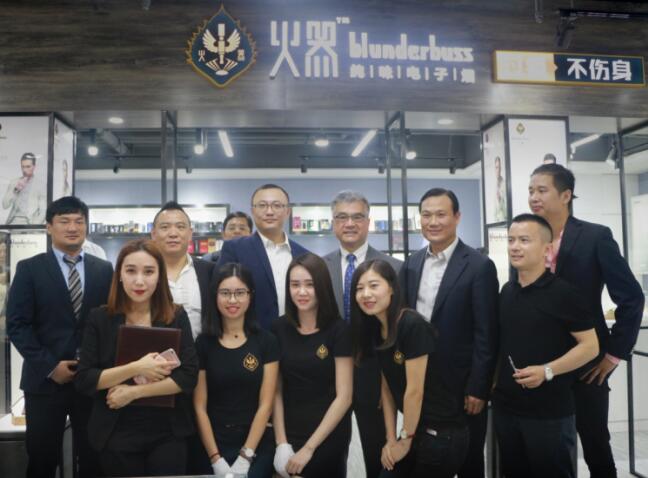 Development adheres to two major directions
Behind the rapid development of the e-cigarette industry is the continuous efforts and innovation of many e-cigarette people. In practice, enterprises that have achieved good development have basically embarked on a development path that transforms from Made in China to Intelligent Manufacturing in China.
What is China Intelligent Manufacturing? The popular explanation is that China Intelligent Manufacturing is relative to Made in China, and the role played by Made in China is that of a world OEM. ldquo; China Intelligent Manufacturing focuses on emphasizing that there must be things that China independently researched and developed and innovated. It is intelligence and wisdom, rather than simply becoming someone else's processing factory. It is to produce products for its own products and produce products that are creative and competitive.
Back in the e-cigarette industry, Chinese companies with Shenzhen as the core region produce 90% of the world's products. The top companies have reached a consensus that if China wants to realize intelligent manufacturing in the e-cigarette industry, we must adhere to two major directions. First, we must continue to innovate independently and regard strengthening intellectual property protection as an important strategic measure to maintain international competitive advantages. Second, we must firmly follow the path of branding and create China's own international brand of e-cigarettes.
Independent research and development of core technologies
About 90% of my country's export commodities are OEM or OEM, and the added value of products is low. Moreover, as a processing factory from the world, China is also under pressure from both sides. First, developed countries seized high-end manufacturing, and then emerging countries undertook the transfer of mid-to-low-end manufacturing. Ninety percent of the products in the e-cigarette industry have to go out of the way. Entrepreneurs on the front line have keenly realized that it is difficult for a company without core technology to achieve sustainable development. Only by occupying the commanding heights of industrial technology can we lead the technological progress of the industry and gain a first-mover advantage in competition.
It is very gratifying that many e-cigarette companies have transformed independent innovation into endogenous driving force, which is the key to transformation and development. In the second half of 2017, the E-Cigarette Professional Committee of China Electronic Chamber of Commerce held an expert committee to focus on studying the development path of the e-cigarette industry and formulate relevant research plans. Gefk Market Research Group (GFK) assisted in implementing a national e-cigarette enterprise questionnaire survey work, and finally formed three major reports: industrial policy report, safety assessment technical report, and market report. The report shows that mainstream e-cigarettes attach great importance to independent innovation, and there are two sets of data that can provide strong evidence: First, in the questionnaire survey, 30% of companies 'R & D investment accounted for more than 10% of profits, and 29% of companies had patents and More than 30 inventions; Second, in the questionnaire survey, as many as 67% of the companies developed independently, and 72% of them owned brands, and 28% of them were OEM or non-branded.
From Made in China to Intelligent Manufacturing in China
Zhao Changwen, Director of the Industrial Economics Research Department of the Development Research Center of the State Council, described China's intelligent manufacturing from five macro and micro aspects. He believes that from a macro perspective, China's intelligent manufacturing has five aspects. First, it means the integration of industrialization and informatization. Second, it means the transformation and upgrading of the industry. Third, it means gradually moving from the middle and low end of the value chain. Moving towards the middle and high-end, fourth, it means the continuous improvement of product quality and efficiency, and fifth, it means the further improvement of the international competitiveness of China's manufacturing products. There are also five aspects at the micro level. First, it means more personalized and differentiated product design, and second, it means more intelligent and digital production processes. Third, it means the integration of more efficient and low-cost manufacturing and services, emphasizing the entire industrial chain. Fourth, it means more refined and scientific enterprise management. The fifth means a more integrated and global standard system.
If we compare the above macro and micro descriptions, we will find that China's e-cigarette industry has met most of these standards, achieving the second to fifth points on the macro level, and comprehensively starting the first to fifth points on the micro level. Practice. It can also be said that in the e-cigarette industry, it has moved from Made in China to Intelligent Manufacturing in China.& nbsp;(Written by Wen Yu Chen Bang)
————————————————————————
Innovation Chapter——
R & D: The preferred tool for industry development
According to the description of the entire e-cigarette industry chain sorted out by professional investment institutions, the entire e-cigarette industry chain consists of upstream raw material companies, e-cigarette design and manufacturing companies, and downstream sales companies. Upstream raw materials include power batteries, chips, hardware and plastics and other raw materials. E-cigarette design and manufacturing companies are mainly manufacturers of cigarette oil, e-cigarette components and finished products. Downstream sales include trade agents, online and offline brand stores, retail stores, etc. The average design and production cycle of an e-cigarette product in the industry is 3 to 5 months.& rdquo; For this reason, the author interviewed leading figures from well-known companies in the industry such as Skire Technology, Hengxin Technology Group, and Bodi Technology, and asked us to follow them to deeply understand the development of e-cigarette and e-cigarette design and manufacturing companies.
Hengxin: R & D drives product quality
“Tobacco oil is a consumable of e-cigarettes, and the tobacco oil industry is essentially a fine chemical industry. All kinds of products need to go through laboratory development, small scale testing, pilot testing and then large-scale production. They are updated or improved according to the changing needs of downstream customers and feedback. They have high requirements for product quality stability and require enterprises to continuously improve the process and accumulate experience during the production process. The matching and preparation of various raw materials and production processes are the core competitiveness of the tobacco oil industry.& rdquo; Excerpted from Founder Securities Research Institute's E-Cigarette Industry Market Research Report
In 2005, Yao Jide, president of Hengxin Technology Group and executive vice president of the E-Cigarette Industry Committee of China Electronics Chamber of Commerce, invented the world's first bottle of propylene glycol and glycerol-based e-cigarette oil. He once worked in pharmaceuticals and learned about cigarette flavors while extracting raw materials from tobacco, which transformed into the production of e-cigarette oil.
Yao Jide designed the complete production process of e-cigarette oil by himself. The highly automated factory and workshop are all operated according to the sterility standards of the pharmaceutical factory. Strict product inspection has made Hengxin Technology the first company in China to pass the non-toxic experimental report of e-cigarette oil. Having built solid hardware for factory production, Hengxin continues to invest in software: in terms of talent reserve, there are postdoctoral students from Hong Kong University and Peking University who are responsible for biotechnology research and development, and overseas returnee students from Goldman Sachs who are engaged in financial management and overseas sales; In terms of product certification, a high-standard laboratory has been built, and the experimental report has been certified by the National Health and Family Planning Commission and the German Authoritative Testing Agency. It not only opens itself the door to many countries around the world, but also provides international and domestic counterparts with the latest data testing and sharing. Yao Jide proudly introduced that he had participated in the formulation of a series of standards for KFDA e-cigarette products in South Korea and signed multiple drafting documents. This was the case where China, as experts, participated in the formulation of foreign e-cigarette product standards. So far, Hengxin Technology's products have been enjoying green customs clearance treatment in South Korea.
Since 2012, Hengxin Technology has begun its global deployment: In 2012, its first overseas branch was established in Manchester, England, and its products were successfully entered into well-known large supermarket chains with thousands of local stores. In 2013, the first overseas manufacturing base was established in Poland. In 2014, a branch was established in Los Angeles, USA, and invested in establishing a fully automated factory of more than 2000 square meters.
Today, Hengxin Technology has become the world's earliest high-tech group to integrate the research and development, production, sales and service of e-cigarette products. It has five categories totaling more than 1000 different cigarette oil flavors, and its supply and marketing channels cover 80 countries around the world. and region.
Hengxin Technology's tobacco oil has been highly automated from production to packaging. The factory with an annual output of 10 million cigarettes has only 100 people engaged in production.
Skory: It changes with the fashion beat
“Since 2004, e-cigarettes have developed from the first generation to the third generation, with great improvement in quality and taste. At the same time, they have rich taste options and personalized design. From the first and second generation products that require manual voltage adjustment to the third generation products that can control power and temperature on a chip. Products with more advanced performance and more complete experience are constantly appearing in the market.& rdquo; Excerpted from Founder Securities Research Institute's E-Cigarette Industry Market Research Report
The development of Skire Technology is a vivid interpretation of this statement. When it comes to Sgray, almost everyone knows about companies in the e-cigarette industry and many e-cigarette enthusiasts. Guangdong Segelai Technology Co., Ltd. was born in 2011. After six or seven years of development, the company has rapidly grown from an industry recruit to an executive director unit of the China Electronics Chamber of Commerce and a chairman unit of the Electronic Cigarette Industry Committee of the China Electronics Chamber of Commerce. Its products sell well in the United States, the United Kingdom, France, Canada, Australia, the Netherlands, Southeast Asia and other places. The rapid development of the company relies on a professional team with strong technical force and rich practical experience, more than 100 independently developed patents and inventions, and a keen grasp of and timely response to the needs of fashionable customers.
In 2011, most e-cigarette companies produced and manufactured ordinary e-cigarette rods, and Skire Technology launched its first innovative product, the S618. This e-cigarette innovatively features an LCD screen and a small light on the tobacco rod. The LCD screen can also display the voltage, battery power, number of smoking ports and duration. At the beginning of 2012, Scarlet launched the e-cigarette V8, which was most unlike e-cigarettes. It was very popular at that time. Its success laid a solid foundation for Scarlet's development in the e-cigarette industry. At the beginning of 2013, in the smoke-filled e-cigarette market, Skire made the first true box cigarette. Since then, mechanical e-cigarettes have gradually declined, and the e-cigarette stage has entered the era of high-power box cigarettes. In the same year, Skyline's 50W, 100W and other series products were enthusiastically sought after by the vast European and American markets, setting a new global sales record. High-power box cigarettes were greatly loved by the market at that time and attracted other e-cigarette companies to follow suit.
In 2014, Skyray Technology firmly grasped the psychology of American e-smokers in pursuing fashion and showing off their individuality. It not only continued to launch boxes of cigarettes with increasing power, but also led the R & D team to create boxes of cigarettes with a power of 150W. Products, its industrial design and hardware configuration were second to none in the e-cigarette market at that time, becoming Skyray's masterpiece that once again occupied the technological peak of the e-cigarette industry. In 2015, Skire launched a variety of temperature-controlled e-cigarettes, all of which were loved by electronic smokers in Europe and the United States.
At the beginning of 2017, Skire launched a solicitation order for an e-cigarette product design competition. The competition takes creativity and innovation as the call of the times, calling for new trends that combine market and personality, and received a total of more than 100 creative works. The organizing committee selected 20 ultra-high-quality works and posted them on Instagram. The audience and professional judges voted on them. Three of the most creative typical works were selected. Ou Junbiao, Chairman of Skire Technology, presented the award and awarded them a prize of 5,000-$15,000.
Ou Junbiao also serves as the chairman of the Electronic Cigarette Industry Committee of China Electronics Chamber of Commerce. When looking forward to the work of the industry committee in 2018 at the end of 2017, he put forward a very forward-looking and constructive opinion: Putting more than 100 patents and inventions from each well-known company on the committee into a large patent pool and establishing an Intellectual Property Patent Legal Department can not only realize the mutually beneficial sharing of patents among participating companies, effectively protect intellectual property rights, but also build a strong patent moat for China's e-cigarette industry“”.
Skire has participated in professional exhibitions many times, and the audience was very popular.
Bodi: Focus on solving customer pain points
“New tobacco products are divided into the following categories: electronic cigarettes, heated non-combustible tobacco products, and smoke-free tobacco products. Among them, e-cigarettes and heated non-burning tobacco products are currently the main products. rdquo; Excerpted from Founder Securities Research Institute's E-Cigarette Industry Market Research Report
Liu Xiang, chairman of Bodi Technology, picked up a common e-cigarette BUD and said: We hope to make some products with longer vitality. For example, this BUD e-cigarette was launched in 2011 and has been sold for six years. Although there has been no change in appearance, the internal atomizer has been upgraded many times, in the real sense, except for oil guide cotton." rdquo;
Bodi Technology was established in Shenzhen in 2008. It is one of the earliest e-cigarette manufacturers in China integrating R & D, manufacturing and sales. In 2017, it became a national-level high-tech enterprise. Speaking of the origin of his involvement in the e-cigarette industry, Liu Xiang introduced that it was related to Ruyan. As the owner of a printing company, he bought Ruyan many times as gifts to his friends. In 2008, he came to Shenzhen to participate in a gift exhibition and happened to see e-cigarettes. The booth and the huge business opportunities he saw. Therefore, he resolutely decided to move from Hunan to Shenzhen and began to intervene in the e-cigarette industry.
Before becoming its own brand in 2017, Bodi Technology had been focusing on the research and development of e-cigarette heaters.& ldquo; We make well-known foreign OEM products, so we have been heroes behind the scenes for a long time, Liu Xiang said. On the company's official website, there is an introduction: As a senior e-cigarette manufacturer, Bodi Technology has attracted and cultivated a large number of talents in the e-cigarette industry. Whether it is R & D, production, quality control, or service sales, it has established a complete management system that can meet the expectations of any customer. rdquo; What fully endorses this sentence is that Bodi has obtained system certifications such as ISO 9001, ISO 14001, ISO 18000, GMP, QS and other system certifications, and has hundreds of CE, RoHS, FCC, FDA and KTL certifications. It has also obtained over 100 international and domestic inventions, utility models and appearance patents. Seeing the nearly two-foot-high invention and patent certificates carried over by the staff, I truly felt the confidence and professionalism of a company.
Bodi Technology's more than 100 inventions and patents are numbered by time, with a total height of nearly two feet.
Liu Xiang said that Bodi Technology has always focused on the research and development of e-cigarette heaters and likes to continue to work hard in vertical depth. For example, a needle-type low-temperature non-burning smoking set was first developed and designed in 2012, and was upgraded and revised five times later., after 3000 hours of repeated testing. Bodi Technology attaches great importance to scientific and technological research and development. Not only does R & D investment account for 13% of the company's profits, it has 60 R & D personnel, and has six branches in the R & D center. There are competition and cooperation with each other. It also proposes a R & D strategy to solve customer pain points. The slogan is: Either it's different or it's cheap.& rdquo;
Liu Xiang's view on the e-cigarette industry is: This is an invention of China. If we want to continue to maintain the first place in this market, we must lay a solid foundation in basic research to promote it. Regarding the future development direction, Bodi Technology plans to apply for a more stringent certification of Jian brand number, so that e-cigarettes will not only achieve harm reduction functions, but will be more likely to develop into health care functions.
Bodi Technology's products must be tested in various scenarios such as aircraft and automobile transportation before leaving the factory.
Green Yunda: Quality, high price, innovation and innovation
“E-cigarette products are upgraded quickly. The design and production cycle of a product is only 3-5 months, and the sales cycle is about half a year. rdquo; Excerpted from Founder Securities Research Institute's E-Cigarette Industry Market Research Report
As a rare female entrepreneur in the e-cigarette industry, Huang Guihua, chairman of Green Yunda, is capable and precise in charge of product direction, innovation progress, and employee status. On the day when the New Year of the Dog is approaching, we sat in her office for a long time. I deeply feel this.
“Since its establishment in 2010, Green Yunda has positioned its product direction on one thing, which is to mainly make Ganzi cigarettes.& rdquo; Huang Guihua introduced quickly. Mr. Huang is Korean, and the two have been engaged in foreign trade between China and South Korea. Therefore, it is natural that Green Yunda e-cigarettes will become a well-known brand of e-vapor cigarettes in South Korea and occupy the largest share in South Korea for a long time. Today, Green Yunda's products are exported to more than 60 countries and regions such as the United States, Japan, and the United Kingdom.
Green Yunda's e-cigarettes are independently developed, designed, produced and sold. The 312 transparent atomizer, H2 transparent atomizer, GS-SUB electronic cigarette, wooden cigarette, G3 electronic cigarette and other products it develops and produces sell well at home and abroad. In particular, the 312 transparent atomizer and H2 transparent atomizer have relatively extensive influence among their peers. During the key technology upgrade of the first generation of e-cigarettes from oil dripping to oil storage, Green Yunda developed the new 312 transparent atomizer at that time through two scientific research and development times, and then upgraded to the H2 transparent atomizer, effectively solving the problem. The industry problem of preventing dry burning and easy oil change for the first generation of e-cigarettes. Now, the H2 transparent atomizer has been selling well for five consecutive years, which shows the solid quality of the product. Quality and high price are exactly Green Yunda's pricing strategy. ldquo; I don't imagine getting rich overnight. I just hope that my products will be closer to consumers and make users feel realistic and at ease. Huang Guihua expressed her business experience this way.
Corresponding to her persistent focus on product positioning is Huang Guihua's high degree of execution in R & D and innovation. ldquo; I don't understand technology, and my husband is responsible for this, Huang Guihua said frankly. Huang Guihua's husband has knowledge in science, engineering and engineering. He has been responsible for the overall direction of technological innovation since the company was established. Huang Guihua is responsible for cooperating with engineers to promote the implementation of technology. ldquo; The e-cigarette industry must launch new products in a timely manner in order to gain the continuous attention of customers and consumers in the market competition, so new products must be launched every two to three months." rdquo; Huang Guihua's views are highly consistent with the research reports of professional investment institutions. At Green Yunda, R & D and design personnel do not have a holiday, because the market has high time limits for new products and must complete research and development within a specified time limit.& D. ldquo; For example, during the Spring Festival, people can have a holiday at home, but they still have to think about research and development. rdquo; In the company's product display area, hundreds of different shapes of pole cigarettes and more than 100 invention patent certificates are the best evidence of Green Yunda's continuous research and development.
In the Green Yunda product display area, hundreds of different shapes of pole cigarettes and more than 100 invention patents and award-winning certificates are displayed.
When subordinates walked into the office to report their work, their voices were natural, relaxed, and not nervous at all. This detail shows Huang Guihua's female affinity for employees. At lunch time, President Huang drove everyone out and entered the room. Everyone sat at will, regardless of priority. President Huang, who was sitting outside, would order everyone, which is rare in many companies. According to reports, in Green Yunda, which has been established less than 8 years ago, many of the backbone are employees who have worked for five or six years. When they joined the company, most of them were young people who had not worked for a long time. Now, they have bought a house and bought a car. ldquo; To allow employees to grow together with the company, we must fully consider their needs and interests. All distribution ratios at Green Yunda are made public, so that capable employees can get more income." rdquo;
As the initiator of the Electronic Cigarette Association and executive vice president of the Electronic Cigarette Industry Committee of the China Electronics Chamber of Commerce, Huang Guihua's original intention has not changed: that is, effectively protect patents and inventions, and effectively crack down on infringement and counterfeiting. ldquo; Enterprises engaged in R & D not only consume a lot of intelligence, energy and financial resources, but also have a lot of time costs. Infringement and plagiarism will lead to the emergence of counterfeit products and dampen the enthusiasm for innovative R & D. Therefore, I will continue to follow the path of patent protection.& rdquo; Huang Guihua revealed that many major e-cigarettes have reached a consensus on this and practical actions will be taken in 2018.
Corporate consensus: Adhere to original independent brands
Adhering to independent innovation and independent brands has become the consensus of mainstream e-cigarette companies, and many companies have included this at a strategic level.
Liu Tuanfang, chairman of Yitejia Technology, said that the company focuses on the innovation of atomizers, with more than 100 patents and inventions. The cornerstone of the company's development and growth is to insist on putting quality first. The future development of this industry lies in the hands of people with real revolutionary technology.
Chen Zhenjiang, general manager of Yihai Technology, believes that e-cigarettes must move from Made in China to Intelligent Manufacturing in China, we must adhere to the path of original independent brands. On the basis of making good products, we must adhere to our own characteristics. For example, he said that Yihai Technology's flagship products can be sold for US$200 -300 each in Europe and the United States, which is the first thing to achieve success in product quality. Chen Zhenjiang also said that Yihai Technology is developing some disruptive technologies and is expected to be applied to new products in the near future.
The international price of the Yihai SXmini G Class reaches US$300 and is still popular.
Avipos attaches great importance to product innovation and research and development. The company has 122 patents and a huge R & D team composed of more than 100 senior electronic engineers and ID designers, including many scientific research backbones from Huawei and other companies with top R & D capabilities in China. The company invests nearly 30 million yuan in R & D expenses every year, providing sufficient financial support for scientific research and innovation.
It is reported that the e-cigarette industry committee also has many internationally renowned e-cigarette brands, such as Kang 'er, Xinyikang, Aizhuo, Kleipeng, Zunyipin, etc. Due to limited interview time, they have not been able to report one by one. This year, we will continue to interview e-cigarette outstanding entrepreneurs.
Data: Self-owned brands account for 72%
In the second half of 2017, the E-Cigarette Professional Committee of China Electronics Chamber of Commerce held an expert committee to focus on studying the development path of the e-cigarette industry. The GFK Market Research Group (GFK) assisted in implementing a national e-cigarette enterprise questionnaire. The data worthy of attention are as follows——
·57% of companies sold 100,000 units in 2016, of which 15% sold 5 million units;
·76% of companies experienced sales growth in the first half of 2017;
·30% have successfully applied for support funds;
·30% of companies 'R & D investment accounts for more than 10% of profits;
·Up to 67% of enterprises 'core technology sources are independent development, with independent brands accounting for 72%, and OEM or non-brand accounting for 28%;
·The main domestic e-cigarette sales venues, 30% e-commerce and 28% physical stores;
·76% of products are produced in Guangdong;
·The layout of production lines of e-cigarette related enterprises is mainly 2 and 5;
·In 2016, sales were mainly exports, with the main destinations being the United States and Europe;
·In the first half of 2017, sales growth was more than 30%, accounting for 18%.
Draft matching: E-cigarette innovation Timeline
The development and innovation of e-cigarette products can be roughly divided into three main lines: simulated cigarettes, big cigarettes, and flat cigarettes.
Simulated smoke: change from three sections to two sections
When Ruyan was launched in 2005, the first generation of e-cigarettes was born. It is a three-section simulated cigarette, which includes three parts: battery, atomizer, and cigarette bomb. Typical representatives of this form are Ruyan and Seven Smoke.
In 2008, e-cigarettes began to enter the U.S. market, quickly triggering an e-cigarette craze in Europe and the United States. At this time, the second generation of e-cigarettes was born. It is a two-section simulated cigarette. Compared with the first generation of e-cigarettes, the second generation of e-cigarettes integrates the atomizer and the cigarette cartridge, that is, a second-generation e-cigarette contains two parts: a battery and a cigarette cartridge containing the atomizer. The earliest representative was K-smoke, and later major brands in the American market such as njoy, vuse, and greensmoke all used this form, and this form continues to this day.
At the same time, the second-generation e-cigarettes have also derived from disposable e-cigarettes, in which the battery, atomizer, and cigarette bomb form a single whole and are discarded immediately after smoking.
Entering 2012, the e-cigarette market in the United States has fully blossomed, and e-cigarettes have also entered a period of high-speed innovation-driven. In 2012, Shenzhen Bodi Technology took the lead in launching the second-generation e-cigarette in the form of BUD, the first to remove the oil storage cotton. Subsequently, major manufacturers launched the second-generation e-cigarettes of the eGo series. Simulated cigarettes tended to be stable in eGo form. CE4, CE5, and CE6 are all subdivided models of eGo. The difference lies in battery capacity and volume.
Big Smoke: China Brand Ranks Top of Global List
Entering 2013, e-cigarettes have moved from the first two generations of simulated cigarettes to the third generation of e-cigarettes, namely high-power e-cigarettes. The first was the launch of mechanical rod e-cigarettes. In the same year, Xinyikang launched a 15W power e-cigarette.
Subsequently, Yihai Technology launched 35W power e-cigarettes, and U.S. DNA launched 40W power e-cigarettes.
In 2014, Segrei teamed up with Yihai to launch the first e-cigarette with 100W power, which truly realized the large smoke demand of e-cigarettes and created the player e-cigarette market.
Before 2014, China companies generally did not pay attention to their own brands, and most of them were positioned as OEMs. Therefore, in the second-generation e-cigarette market, the European and American markets have been fully acquired by international tobacco giants after being guided and mature by overseas brands represented by njoy. Currently, the top five brands in the U.S. e-cigarette market in 2016 are all brands owned by tobacco giants.
In the third-generation e-cigarettes dominated by innovation by China manufacturers, namely, the tobacco market, China brands rank at the forefront of the global list. These include Segraire and Yihai, the first to achieve 100W high power, as well as Simoke and Kleipen, which have outstanding performance in industrial design innovation. It is no exaggeration to say that the current segment of e-cigarettes-the tobacco market, is completely led by China manufacturers and China brands, and China brands have pricing power.
Flat cigarettes: higher power and convenience
In 2016, JUUL, PHIX and other flat smoke forms were born in the American market. They have higher power than simulated cigarettes and at the same time have the convenience of simulated cigarettes. It launched a fierce attack on major tobacco giants in the alternative tobacco market. In 2017, JUUL's U.S. market share quickly climbed to nearly 40%, ranking first.
How China manufacturers continue to innovate under this new challenge and seize a more favorable position is a huge challenge for China e-cigarette companies.# p#pagination title #e#
Development adheres to two major directions
Behind the rapid development of the e-cigarette industry is the continuous efforts and innovation of many e-cigarette people. In practice, enterprises that have achieved good development have basically embarked on a development path that transforms from Made in China to Intelligent Manufacturing in China.
What is China Intelligent Manufacturing? The popular explanation is that China Intelligent Manufacturing is relative to Made in China, and the role played by Made in China is that of a world OEM. ldquo; China Intelligent Manufacturing focuses on emphasizing that there must be things that China independently researched and developed and innovated. It is intelligence and wisdom, rather than simply becoming someone else's processing factory. It is to produce products for its own products and produce products that are creative and competitive.
Back in the e-cigarette industry, Chinese companies with Shenzhen as the core region produce 90% of the world's products. The top companies have reached a consensus that if China wants to realize intelligent manufacturing in the e-cigarette industry, we must adhere to two major directions. First, we must continue to innovate independently and regard strengthening intellectual property protection as an important strategic measure to maintain international competitive advantages. Second, we must firmly follow the path of branding and create China's own international brand of e-cigarettes.
Independent research and development of core technologies
About 90% of my country's export commodities are OEM or OEM, and the added value of products is low. Moreover, as a processing factory from the world, China is also under pressure from both sides. First, developed countries seized high-end manufacturing, and then emerging countries undertook the transfer of mid-to-low-end manufacturing. Ninety percent of the products in the e-cigarette industry have to go out of the way. Entrepreneurs on the front line have keenly realized that it is difficult for a company without core technology to achieve sustainable development. Only by occupying the commanding heights of industrial technology can we lead the technological progress of the industry and gain a first-mover advantage in competition.
It is very gratifying that many e-cigarette companies have transformed independent innovation into endogenous driving force, which is the key to transformation and development. In the second half of 2017, the E-Cigarette Professional Committee of China Electronic Chamber of Commerce held an expert committee to focus on studying the development path of the e-cigarette industry and formulate relevant research plans. Gefk Market Research Group (GFK) assisted in implementing a national e-cigarette enterprise questionnaire survey work, and finally formed three major reports: industrial policy report, safety assessment technical report, and market report. The report shows that mainstream e-cigarettes attach great importance to independent innovation, and there are two sets of data that can provide strong evidence: First, in the questionnaire survey, 30% of companies 'R & D investment accounted for more than 10% of profits, and 29% of companies had patents and More than 30 inventions; Second, in the questionnaire survey, as many as 67% of the companies developed independently, and 72% of them owned brands, and 28% of them were OEM or non-branded.
From Made in China to Intelligent Manufacturing in China
Zhao Changwen, Director of the Industrial Economics Research Department of the Development Research Center of the State Council, described China's intelligent manufacturing from five macro and micro aspects. He believes that from a macro perspective, China's intelligent manufacturing has five aspects. First, it means the integration of industrialization and informatization. Second, it means the transformation and upgrading of the industry. Third, it means gradually moving from the middle and low end of the value chain. Moving towards the middle and high-end, fourth, it means the continuous improvement of product quality and efficiency, and fifth, it means the further improvement of the international competitiveness of China's manufacturing products. There are also five aspects at the micro level. First, it means more personalized and differentiated product design, and second, it means more intelligent and digital production processes. Third, it means the integration of more efficient and low-cost manufacturing and services, emphasizing the entire industrial chain. Fourth, it means more refined and scientific enterprise management. The fifth means a more integrated and global standard system.
If we compare the above macro and micro descriptions, we will find that China's e-cigarette industry has met most of these standards, achieving the second to fifth points on the macro level, and comprehensively starting the first to fifth points on the micro level. Practice. It can also be said that in the e-cigarette industry, it has moved from Made in China to Intelligent Manufacturing in China.& nbsp;(Written by Wen Yu Chen Bang)
————————————————————————
Innovation Chapter——
R & D: The preferred tool for industry development
According to the description of the entire e-cigarette industry chain sorted out by professional investment institutions, the entire e-cigarette industry chain consists of upstream raw material companies, e-cigarette design and manufacturing companies, and downstream sales companies. Upstream raw materials include power batteries, chips, hardware and plastics and other raw materials. E-cigarette design and manufacturing companies are mainly manufacturers of cigarette oil, e-cigarette components and finished products. Downstream sales include trade agents, online and offline brand stores, retail stores, etc. The average design and production cycle of an e-cigarette product in the industry is 3 to 5 months.& rdquo; For this reason, the author interviewed leading figures from well-known companies in the industry such as Skire Technology, Hengxin Technology Group, and Bodi Technology, and asked us to follow them to deeply understand the development of e-cigarette and e-cigarette design and manufacturing companies.
Hengxin: R & D drives product quality
“Tobacco oil is a consumable of e-cigarettes, and the tobacco oil industry is essentially a fine chemical industry. All kinds of products need to go through laboratory development, small scale testing, pilot testing and then large-scale production. They are updated or improved according to the changing needs of downstream customers and feedback. They have high requirements for product quality stability and require enterprises to continuously improve the process and accumulate experience during the production process. The matching and preparation of various raw materials and production processes are the core competitiveness of the tobacco oil industry.& rdquo; Excerpted from Founder Securities Research Institute's E-Cigarette Industry Market Research Report
In 2005, Yao Jide, president of Hengxin Technology Group and executive vice president of the E-Cigarette Industry Committee of China Electronics Chamber of Commerce, invented the world's first bottle of propylene glycol and glycerol-based e-cigarette oil. He once worked in pharmaceuticals and learned about cigarette flavors while extracting raw materials from tobacco, which transformed into the production of e-cigarette oil.
Yao Jide designed the complete production process of e-cigarette oil by himself. The highly automated factory and workshop are all operated according to the sterility standards of the pharmaceutical factory. Strict product inspection has made Hengxin Technology the first company in China to pass the non-toxic experimental report of e-cigarette oil. Having built solid hardware for factory production, Hengxin continues to invest in software: in terms of talent reserve, there are postdoctoral students from Hong Kong University and Peking University who are responsible for biotechnology research and development, and overseas returnee students from Goldman Sachs who are engaged in financial management and overseas sales; In terms of product certification, a high-standard laboratory has been built, and the experimental report has been certified by the National Health and Family Planning Commission and the German Authoritative Testing Agency. It not only opens itself the door to many countries around the world, but also provides international and domestic counterparts with the latest data testing and sharing. Yao Jide proudly introduced that he had participated in the formulation of a series of standards for KFDA e-cigarette products in South Korea and signed multiple drafting documents. This was the case where China, as experts, participated in the formulation of foreign e-cigarette product standards. So far, Hengxin Technology's products have been enjoying green customs clearance treatment in South Korea.
Since 2012, Hengxin Technology has begun its global deployment: In 2012, its first overseas branch was established in Manchester, England, and its products were successfully entered into well-known large supermarket chains with thousands of local stores. In 2013, the first overseas manufacturing base was established in Poland. In 2014, a branch was established in Los Angeles, USA, and invested in establishing a fully automated factory of more than 2000 square meters.
Today, Hengxin Technology has become the world's earliest high-tech group to integrate the research and development, production, sales and service of e-cigarette products. It has five categories totaling more than 1000 different cigarette oil flavors, and its supply and marketing channels cover 80 countries around the world. and region.
Hengxin Technology's tobacco oil has been highly automated from production to packaging. The factory with an annual output of 10 million cigarettes has only 100 people engaged in production.
Skory: It changes with the fashion beat
“Since 2004, e-cigarettes have developed from the first generation to the third generation, with great improvement in quality and taste. At the same time, they have rich taste options and personalized design. From the first and second generation products that require manual voltage adjustment to the third generation products that can control power and temperature on a chip. Products with more advanced performance and more complete experience are constantly appearing in the market.& rdquo; Excerpted from Founder Securities Research Institute's E-Cigarette Industry Market Research Report
The development of Skire Technology is a vivid interpretation of this statement. When it comes to Sgray, almost everyone knows about companies in the e-cigarette industry and many e-cigarette enthusiasts. Guangdong Segelai Technology Co., Ltd. was born in 2011. After six or seven years of development, the company has rapidly grown from an industry recruit to an executive director unit of the China Electronics Chamber of Commerce and a chairman unit of the Electronic Cigarette Industry Committee of the China Electronics Chamber of Commerce. Its products sell well in the United States, the United Kingdom, France, Canada, Australia, the Netherlands, Southeast Asia and other places. The rapid development of the company relies on a professional team with strong technical force and rich practical experience, more than 100 independently developed patents and inventions, and a keen grasp of and timely response to the needs of fashionable customers.
In 2011, most e-cigarette companies produced and manufactured ordinary e-cigarette rods, and Skire Technology launched its first innovative product, the S618. This e-cigarette innovatively features an LCD screen and a small light on the tobacco rod. The LCD screen can also display the voltage, battery power, number of smoking ports and duration. At the beginning of 2012, Scarlet launched the e-cigarette V8, which was most unlike e-cigarettes. It was very popular at that time. Its success laid a solid foundation for Scarlet's development in the e-cigarette industry. At the beginning of 2013, in the smoke-filled e-cigarette market, Skire made the first true box cigarette. Since then, mechanical e-cigarettes have gradually declined, and the e-cigarette stage has entered the era of high-power box cigarettes. In the same year, Skyline's 50W, 100W and other series products were enthusiastically sought after by the vast European and American markets, setting a new global sales record. High-power box cigarettes were greatly loved by the market at that time and attracted other e-cigarette companies to follow suit.
In 2014, Skyray Technology firmly grasped the psychology of American e-smokers in pursuing fashion and showing off their individuality. It not only continued to launch boxes of cigarettes with increasing power, but also led the R & D team to create boxes of cigarettes with a power of 150W. Products, its industrial design and hardware configuration were second to none in the e-cigarette market at that time, becoming Skyray's masterpiece that once again occupied the technological peak of the e-cigarette industry. In 2015, Skire launched a variety of temperature-controlled e-cigarettes, all of which were loved by electronic smokers in Europe and the United States.
At the beginning of 2017, Skire launched a solicitation order for an e-cigarette product design competition. The competition takes creativity and innovation as the call of the times, calling for new trends that combine market and personality, and received a total of more than 100 creative works. The organizing committee selected 20 ultra-high-quality works and posted them on Instagram. The audience and professional judges voted on them. Three of the most creative typical works were selected. Ou Junbiao, Chairman of Skire Technology, presented the award and awarded them a prize of 5,000-$15,000.
Ou Junbiao also serves as the chairman of the Electronic Cigarette Industry Committee of China Electronics Chamber of Commerce. When looking forward to the work of the industry committee in 2018 at the end of 2017, he put forward a very forward-looking and constructive opinion: Putting more than 100 patents and inventions from each well-known company on the committee into a large patent pool and establishing an Intellectual Property Patent Legal Department can not only realize the mutually beneficial sharing of patents among participating companies, effectively protect intellectual property rights, but also build a strong patent moat for China's e-cigarette industry“”.
Skire has participated in professional exhibitions many times, and the audience was very popular.
Bodi: Focus on solving customer pain points
“New tobacco products are divided into the following categories: electronic cigarettes, heated non-combustible tobacco products, and smoke-free tobacco products. Among them, e-cigarettes and heated non-burning tobacco products are currently the main products. rdquo; Excerpted from Founder Securities Research Institute's E-Cigarette Industry Market Research Report
Liu Xiang, chairman of Bodi Technology, picked up a common e-cigarette BUD and said: We hope to make some products with longer vitality. For example, this BUD e-cigarette was launched in 2011 and has been sold for six years. Although there has been no change in appearance, the internal atomizer has been upgraded many times, in the real sense, except for oil guide cotton." rdquo;
Bodi Technology was established in Shenzhen in 2008. It is one of the earliest e-cigarette manufacturers in China integrating R & D, manufacturing and sales. In 2017, it became a national-level high-tech enterprise. Speaking of the origin of his involvement in the e-cigarette industry, Liu Xiang introduced that it was related to Ruyan. As the owner of a printing company, he bought Ruyan many times as gifts to his friends. In 2008, he came to Shenzhen to participate in a gift exhibition and happened to see e-cigarettes. The booth and the huge business opportunities he saw. Therefore, he resolutely decided to move from Hunan to Shenzhen and began to intervene in the e-cigarette industry.
Before becoming its own brand in 2017, Bodi Technology had been focusing on the research and development of e-cigarette heaters.& ldquo; We make well-known foreign OEM products, so we have been heroes behind the scenes for a long time, Liu Xiang said. On the company's official website, there is an introduction: As a senior e-cigarette manufacturer, Bodi Technology has attracted and cultivated a large number of talents in the e-cigarette industry. Whether it is R & D, production, quality control, or service sales, it has established a complete management system that can meet the expectations of any customer. rdquo; What fully endorses this sentence is that Bodi has obtained system certifications such as ISO 9001, ISO 14001, ISO 18000, GMP, QS and other system certifications, and has hundreds of CE, RoHS, FCC, FDA and KTL certifications. It has also obtained over 100 international and domestic inventions, utility models and appearance patents. Seeing the nearly two-foot-high invention and patent certificates carried over by the staff, I truly felt the confidence and professionalism of a company.
Bodi Technology's more than 100 inventions and patents are numbered by time, with a total height of nearly two feet.
Liu Xiang said that Bodi Technology has always focused on the research and development of e-cigarette heaters and likes to continue to work hard in vertical depth. For example, a needle-type low-temperature non-burning smoking set was first developed and designed in 2012, and was upgraded and revised five times later., after 3000 hours of repeated testing. Bodi Technology attaches great importance to scientific and technological research and development. Not only does R & D investment account for 13% of the company's profits, it has 60 R & D personnel, and has six branches in the R & D center. There are competition and cooperation with each other. It also proposes a R & D strategy to solve customer pain points. The slogan is: Either it's different or it's cheap.& rdquo;
Liu Xiang's view on the e-cigarette industry is: This is an invention of China. If we want to continue to maintain the first place in this market, we must lay a solid foundation in basic research to promote it. Regarding the future development direction, Bodi Technology plans to apply for a more stringent certification of Jian brand number, so that e-cigarettes will not only achieve harm reduction functions, but will be more likely to develop into health care functions.
Bodi Technology's products must be tested in various scenarios such as aircraft and automobile transportation before leaving the factory.
Green Yunda: Quality, high price, innovation and innovation
“E-cigarette products are upgraded quickly. The design and production cycle of a product is only 3-5 months, and the sales cycle is about half a year. rdquo; Excerpted from Founder Securities Research Institute's E-Cigarette Industry Market Research Report
As a rare female entrepreneur in the e-cigarette industry, Huang Guihua, chairman of Green Yunda, is capable and precise in charge of product direction, innovation progress, and employee status. On the day when the New Year of the Dog is approaching, we sat in her office for a long time. I deeply feel this.
“Since its establishment in 2010, Green Yunda has positioned its product direction on one thing, which is to mainly make Ganzi cigarettes.& rdquo; Huang Guihua introduced quickly. Mr. Huang is Korean, and the two have been engaged in foreign trade between China and South Korea. Therefore, it is natural that Green Yunda e-cigarettes will become a well-known brand of e-vapor cigarettes in South Korea and occupy the largest share in South Korea for a long time. Today, Green Yunda's products are exported to more than 60 countries and regions such as the United States, Japan, and the United Kingdom.
Green Yunda's e-cigarettes are independently developed, designed, produced and sold. The 312 transparent atomizer, H2 transparent atomizer, GS-SUB electronic cigarette, wooden cigarette, G3 electronic cigarette and other products it develops and produces sell well at home and abroad. In particular, the 312 transparent atomizer and H2 transparent atomizer have relatively extensive influence among their peers. During the key technology upgrade of the first generation of e-cigarettes from oil dripping to oil storage, Green Yunda developed the new 312 transparent atomizer at that time through two scientific research and development times, and then upgraded to the H2 transparent atomizer, effectively solving the problem. The industry problem of preventing dry burning and easy oil change for the first generation of e-cigarettes. Now, the H2 transparent atomizer has been selling well for five consecutive years, which shows the solid quality of the product. Quality and high price are exactly Green Yunda's pricing strategy. ldquo; I don't imagine getting rich overnight. I just hope that my products will be closer to consumers and make users feel realistic and at ease. Huang Guihua expressed her business experience this way.
Corresponding to her persistent focus on product positioning is Huang Guihua's high degree of execution in R & D and innovation. ldquo; I don't understand technology, and my husband is responsible for this, Huang Guihua said frankly. Huang Guihua's husband has knowledge in science, engineering and engineering. He has been responsible for the overall direction of technological innovation since the company was established. Huang Guihua is responsible for cooperating with engineers to promote the implementation of technology. ldquo; The e-cigarette industry must launch new products in a timely manner in order to gain the continuous attention of customers and consumers in the market competition, so new products must be launched every two to three months." rdquo; Huang Guihua's views are highly consistent with the research reports of professional investment institutions. At Green Yunda, R & D and design personnel do not have a holiday, because the market has high time limits for new products and must complete research and development within a specified time limit.& D. ldquo; For example, during the Spring Festival, people can have a holiday at home, but they still have to think about research and development. rdquo; In the company's product display area, hundreds of different shapes of pole cigarettes and more than 100 invention patent certificates are the best evidence of Green Yunda's continuous research and development.
In the Green Yunda product display area, hundreds of different shapes of pole cigarettes and more than 100 invention patents and award-winning certificates are displayed.
When subordinates walked into the office to report their work, their voices were natural, relaxed, and not nervous at all. This detail shows Huang Guihua's female affinity for employees. At lunch time, President Huang drove everyone out and entered the room. Everyone sat at will, regardless of priority. President Huang, who was sitting outside, would order everyone, which is rare in many companies. According to reports, in Green Yunda, which has been established less than 8 years ago, many of the backbone are employees who have worked for five or six years. When they joined the company, most of them were young people who had not worked for a long time. Now, they have bought a house and bought a car. ldquo; To allow employees to grow together with the company, we must fully consider their needs and interests. All distribution ratios at Green Yunda are made public, so that capable employees can get more income." rdquo;
As the initiator of the Electronic Cigarette Association and executive vice president of the Electronic Cigarette Industry Committee of the China Electronics Chamber of Commerce, Huang Guihua's original intention has not changed: that is, effectively protect patents and inventions, and effectively crack down on infringement and counterfeiting. ldquo; Enterprises engaged in R & D not only consume a lot of intelligence, energy and financial resources, but also have a lot of time costs. Infringement and plagiarism will lead to the emergence of counterfeit products and dampen the enthusiasm for innovative R & D. Therefore, I will continue to follow the path of patent protection.& rdquo; Huang Guihua revealed that many major e-cigarettes have reached a consensus on this and practical actions will be taken in 2018.
Corporate consensus: Adhere to original independent brands
Adhering to independent innovation and independent brands has become the consensus of mainstream e-cigarette companies, and many companies have included this at a strategic level.
Liu Tuanfang, chairman of Yitejia Technology, said that the company focuses on the innovation of atomizers, with more than 100 patents and inventions. The cornerstone of the company's development and growth is to insist on putting quality first. The future development of this industry lies in the hands of people with real revolutionary technology.
Chen Zhenjiang, general manager of Yihai Technology, believes that e-cigarettes must move from Made in China to Intelligent Manufacturing in China, we must adhere to the path of original independent brands. On the basis of making good products, we must adhere to our own characteristics. For example, he said that Yihai Technology's flagship products can be sold for US$200 -300 each in Europe and the United States, which is the first thing to achieve success in product quality. Chen Zhenjiang also said that Yihai Technology is developing some disruptive technologies and is expected to be applied to new products in the near future.
The international price of the Yihai SXmini G Class reaches US$300 and is still popular.
Avipos attaches great importance to product innovation and research and development. The company has 122 patents and a huge R & D team composed of more than 100 senior electronic engineers and ID designers, including many scientific research backbones from Huawei and other companies with top R & D capabilities in China. The company invests nearly 30 million yuan in R & D expenses every year, providing sufficient financial support for scientific research and innovation.
It is reported that the e-cigarette industry committee also has many internationally renowned e-cigarette brands, such as Kang 'er, Xinyikang, Aizhuo, Kleipeng, Zunyipin, etc. Due to limited interview time, they have not been able to report one by one. This year, we will continue to interview e-cigarette outstanding entrepreneurs.
Data: Self-owned brands account for 72%
In the second half of 2017, the E-Cigarette Professional Committee of China Electronics Chamber of Commerce held an expert committee to focus on studying the development path of the e-cigarette industry. The GFK Market Research Group (GFK) assisted in implementing a national e-cigarette enterprise questionnaire. The data worthy of attention are as follows——
·57% of companies sold 100,000 units in 2016, of which 15% sold 5 million units;
·76% of companies experienced sales growth in the first half of 2017;
·30% have successfully applied for support funds;
·30% of companies 'R & D investment accounts for more than 10% of profits;
·Up to 67% of enterprises 'core technology sources are independent development, with independent brands accounting for 72%, and OEM or non-brand accounting for 28%;
·The main domestic e-cigarette sales venues, 30% e-commerce and 28% physical stores;
·76% of products are produced in Guangdong;
·The layout of production lines of e-cigarette related enterprises is mainly 2 and 5;
·In 2016, sales were mainly exports, with the main destinations being the United States and Europe;
·In the first half of 2017, sales growth was more than 30%, accounting for 18%.
Draft matching: E-cigarette innovation Timeline
The development and innovation of e-cigarette products can be roughly divided into three main lines: simulated cigarettes, big cigarettes, and flat cigarettes.
Simulated smoke: change from three sections to two sections
When Ruyan was launched in 2005, the first generation of e-cigarettes was born. It is a three-section simulated cigarette, which includes three parts: battery, atomizer, and cigarette bomb. Typical representatives of this form are Ruyan and Seven Smoke.
In 2008, e-cigarettes began to enter the U.S. market, quickly triggering an e-cigarette craze in Europe and the United States. At this time, the second generation of e-cigarettes was born. It is a two-section simulated cigarette. Compared with the first generation of e-cigarettes, the second generation of e-cigarettes integrates the atomizer and the cigarette cartridge, that is, a second-generation e-cigarette contains two parts: a battery and a cigarette cartridge containing the atomizer. The earliest representative was K-smoke, and later major brands in the American market such as njoy, vuse, and greensmoke all used this form, and this form continues to this day.
At the same time, the second-generation e-cigarettes have also derived from disposable e-cigarettes, in which the battery, atomizer, and cigarette bomb form a single whole and are discarded immediately after smoking.
Entering 2012, the e-cigarette market in the United States has fully blossomed, and e-cigarettes have also entered a period of high-speed innovation-driven. In 2012, Shenzhen Bodi Technology took the lead in launching the second-generation e-cigarette in the form of BUD, the first to remove the oil storage cotton. Subsequently, major manufacturers launched the second-generation e-cigarettes of the eGo series. Simulated cigarettes tended to be stable in eGo form. CE4, CE5, and CE6 are all subdivided models of eGo. The difference lies in battery capacity and volume.
Big Smoke: China Brand Ranks Top of Global List
Entering 2013, e-cigarettes have moved from the first two generations of simulated cigarettes to the third generation of e-cigarettes, namely high-power e-cigarettes. The first was the launch of mechanical rod e-cigarettes. In the same year, Xinyikang launched a 15W power e-cigarette.
Subsequently, Yihai Technology launched 35W power e-cigarettes, and U.S. DNA launched 40W power e-cigarettes.
In 2014, Segrei teamed up with Yihai to launch the first e-cigarette with 100W power, which truly realized the large smoke demand of e-cigarettes and created the player e-cigarette market.
Before 2014, China companies generally did not pay attention to their own brands, and most of them were positioned as OEMs. Therefore, in the second-generation e-cigarette market, the European and American markets have been fully acquired by international tobacco giants after being guided and mature by overseas brands represented by njoy. Currently, the top five brands in the U.S. e-cigarette market in 2016 are all brands owned by tobacco giants.
In the third-generation e-cigarettes dominated by innovation by China manufacturers, namely, the tobacco market, China brands rank at the forefront of the global list. These include Segraire and Yihai, the first to achieve 100W high power, as well as Simoke and Kleipen, which have outstanding performance in industrial design innovation. It is no exaggeration to say that the current segment of e-cigarettes-the tobacco market, is completely led by China manufacturers and China brands, and China brands have pricing power.
Flat cigarettes: higher power and convenience
In 2016, JUUL, PHIX and other flat smoke forms were born in the American market. They have higher power than simulated cigarettes and at the same time have the convenience of simulated cigarettes. It launched a fierce attack on major tobacco giants in the alternative tobacco market. In 2017, JUUL's U.S. market share quickly climbed to nearly 40%, ranking first.
How China manufacturers continue to innovate under this new challenge and seize a more favorable position is a huge challenge for China e-cigarette companies.# p#pagination title #e#Related Articles

Vaping News
Ahead of a Nationwide Ban, Hundreds of Russian Retailers Voluntarily Stop Selling Vapes
2026-04-16

Vaping News
Illegal Vape Brands Try to Evade FDA Scrutiny by Posing as “Made in the USA”
2026-04-08

Vaping News
Jordan’s New Tobacco Control Rules: Waterpipe Tobacco Market Set for Major Changes
2026-03-17