
Tobacco Litigation in China and the U.S.: Why Is the Gap So Large?
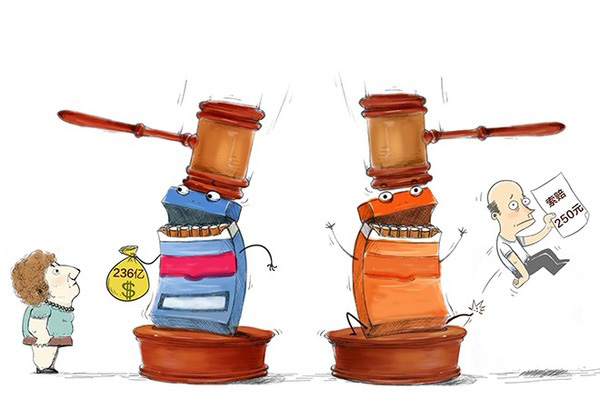
The experience of tobacco litigation in the U.S. has no fertile ground in China, as Chinese tobacco companies are state-owned enterprises, operating under the same team as the State Tobacco Monopoly Administration. (He Zi / Photo)
Due to her husband's smoking addiction, which led to his death from lung cancer, Cynthia "Qiu Ju" sued Reynolds Tobacco in the U.S., and six years later, the court ordered Reynolds to pay $23.6 billion; meanwhile, in Beijing, consumer Li Enze sued Jiangxi Tobacco for allegedly fraudulent advertising of "low tar, low harm" and sought 250 yuan in damages, but lost the case.
In the U.S., lawsuits that have impacted the anti-smoking movement began to emerge only after class actions and government lawsuits against tobacco companies. However, the American experience has no fertile ground in China.
$23.6 billion, approximately 145.4 billion yuan, is equivalent to the local fiscal revenue of Henan Province in the first half of 2014. This is the compensation that Cynthia "Qiu Ju" from Florida may receive.
Cynthia's husband, Michael, died of lung cancer in 1996. He was addicted to smoking and "was still smoking on the day he died," said Chris, one of Cynthia's attorneys.
To seek justice for Michael, in 2008, Cynthia's family sued Reynolds Tobacco Company, the second-largest tobacco company in the U.S., claiming that it deliberately concealed the health hazards of smoking.
In late July 2014, almost simultaneously with the jury's decision awarding Cynthia a massive compensation, in Beijing, cigarette consumer Li Enze received the second-instance judgment from the Beijing First Intermediate Court, where he sought 250 yuan in damages from Jiangxi Tobacco Industrial Co., Ltd. and lost the case.
In 2013, Li sued Jiangxi Tobacco in Haidian District Court, alleging that its advertising of "low tar, low harm" was fraudulent. On August 11, 2014, Li Enze told Southern Weekend reporters that he would "appeal to the court for a retrial."
In the U.S., an angry Reynolds Tobacco stated in a response to Southern Weekend reporters that "the damages are excessively high and are not permitted by national laws and the constitution."
Why was the compensation set at $23.6 billion?
How was the $23.6 billion calculated? For Americans who are not very good at math, this seems to be a difficult question.
"I think the jury members each wrote a number on paper and then took the average," joked Richard, a distinguished law professor at Northeastern University in the U.S. and one of the most well-known anti-smoking legal experts, who has led many lawsuits against tobacco companies.
He further explained that "the final amount must be unanimously agreed upon by all jury members."
The jury's ruling in the Florida District Court included two parts: the first part is compensatory damages, totaling about $17 million, to be shared by Michael's two wives and children; the second part, widely reported by the media, is the $23.6 billion in punitive damages.
Punitive damages were first defined in a case in 1763, where the judge stated in the ruling that punitive damages not only compensate the actual harm suffered by the victim but also punish the wrongdoer, restrict similar cases in the future, and reflect the jury's disdain for the defendant's behavior.
Chinese-American lawyer Song Yi, practicing in New York, explained to Southern Weekend reporters that in large class actions, some plaintiffs with identical facts can receive substantial compensation, while others may be ruled against and receive nothing. "The outcome of the lawsuit is directly related to the court where the case is filed and the jury members."
The tobacco industry has long been known for its "sky-high" compensation lawsuits. In 1999, the U.S. Department of Justice sued the five largest tobacco companies for fraud, seeking $280 billion, making it the highest compensation and fine case in U.S. history. However, six years later, the request was dismissed.
However, the calculation model for the astronomical compensation in this case has provided a reference for similar cases in the U.S. It is reported that the U.S. Department of Justice received assistance from two economists from MIT, Fisher and Johnson. This included the profits made by tobacco companies from selling cigarettes to young smokers, interest, and additional profits.
The punitive damages in Cynthia's case were also inspired by the aforementioned case.
In almost all cases, the harm caused by tobacco to young people has become the core strategy of the plaintiff's attorneys. "Keeping young people away from tobacco has been a core goal of the anti-smoking community in recent years," said Angela, an official from the WHO's office in China, to Southern Weekend reporters.
Another attorney in this case, Gai, also stated to the American media that the goal of this lawsuit is to stop tobacco companies from using cigarette advertising to poison young people.
"Engel Generation" Lawsuit
In Florida, all cases similar to Cynthia's that sued tobacco companies have a unified name—"Engel Generation" lawsuit.
In 1994, pediatrician Engel, practicing in Miami, sued a tobacco company, triggering a "domino effect" that led about 700,000 residents of Florida to join the class action. Cynthia's husband was also a member of the original class action; he was a heavy smoker who started smoking at 13 and died of lung cancer at the age of 36 in 1996.
This lawsuit rewrote the history of the U.S. judiciary and is one of the landmark victories of the anti-smoking movement. Prior to this, smokers had almost no victories in judicial battles against tobacco interest groups.
In 2002, a jury in Miami ruled on the Engel class action, stating that tobacco companies concealed information, sold defective products, and caused lung cancer, ordering the tobacco victim litigation group to pay $145 billion in punitive damages. If smokers and their families can prove that their addiction led to illness or even death, they can claim compensation.
"Because these lawsuits are mostly class actions and involve punitive damages, the amounts are very large, as the compensation is not only for individual cases but also for all similar 'group' cases," Song Yi explained to Southern Weekend reporters.
However, tobacco companies appealed the ruling to the Florida Supreme Court, which overturned the previous district court's ruling in 2006, requiring smokers to file individual lawsuits because "the circumstances vary from person to person."
Since then, thousands of similar individual lawsuits have emerged. Because Dr. Engel was the first to file a lawsuit, this type of lawsuit is referred to as the "Engel Generation" lawsuit.
According to Southern Weekend reporters' search of related cases, there have been 23 "Engel Generation" lawsuits that have won, but the $23.6 billion compensation is the largest amount to date. In November 2009, a Florida court ordered the largest tobacco company, Philip Morris, to pay $300 million to female smoker Cindy.
In the U.S., tobacco lawsuits often drag on for years, and the Cynthia case also lasted six years. "The ongoing lawsuits and some research reports from related agencies have gradually exposed some information that tobacco companies have intentionally concealed. Common knowledge about the health hazards of smoking has also been popularized and strengthened, especially among the youth," Richard said.
Compensation amounts may be significantly reduced
Reynolds Tobacco stated in a letter to Southern Weekend reporters that "we have filed a post-judgment motion with the court to request a stay of the judgment, as such a judgment should not be allowed to exist."
U.S. media reports that Reynolds Tobacco has already appealed. According to The New York Times, starting this year, the U.S. Supreme Court has refused to hear tobacco cases from Florida.
"The Supreme Court hears very few cases each year, selecting only about 80 out of around 7,000. These cases generally have significant implications, such as allowing same-sex marriage or removing limits on individual political donations," said Huang Jinrong, a research fellow at the Chinese Academy of Social Sciences, to Southern Weekend reporters.
Although there is still uncertainty, it is almost certain that Cynthia's family will not receive the $23.6 billion.
The U.S. Supreme Court has clear regulations on punitive damages in large class actions. In 2008, the ruling in the Alaska oil spill case pointed out that punitive damages should not be "excessive," and the ratio of punitive damages to compensatory damages should not exceed 1:1.
In Cynthia's case, the punitive damages are nearly 1,400 times the compensatory damages. The reasons emphasized in Reynolds Tobacco's statement that "the judgment breaks common sense and reason" and that the punitive amount is "seriously excessive" are based on this.
Previously, in October 2002, a jury in Los Angeles ruled that Philip Morris should pay $28 billion in punitive damages. However, eight years later, the U.S. Supreme Court ruled that the tobacco company should pay $28 million.
Song Yi analyzed that if the compensation were proportionate, Cynthia's family might still receive over $30 million. During the trial of Cynthia's case, the plaintiffs stated that the purpose of filing the lawsuit was not to seek compensation but to stop tobacco companies from targeting young people with advertising.
Chinese Version of the "Cynthia Case"
At the time the $23.6 billion ruling was issued, in the "Chinese version" of the Cynthia case, plaintiff Li Enze sought 250 yuan from Jiangxi Tobacco, which was dismissed by the Beijing First Intermediate Court.
Li sued Jiangxi Tobacco in Haidian District Court in August 2013, claiming that the latter's advertisement stating that low tar equals low harm and that herbal medicine can reduce harm was fraudulent, seeking 250 yuan in compensation.
The first-instance judgment showed that Jiangxi Tobacco's advertising for Jinsheng brand cigarettes, claiming "low tar, low harm" and "adding herbal medicine to reduce harm," was based on scientific experiments and evaluations from the Chinese Toxicology Society, and could not be proven to be false or exaggerated. Therefore, the court ruled against consumer Li Enze, who subsequently appealed to the Beijing First Intermediate Court.
The second-instance judgment stated that the court found that the evidence submitted by the plaintiff could not prove that Jiangxi Tobacco's "low tar, low harm" claims were false or exaggerated, and that "the harm of smoking to health" is a recognized fact. Li Enze's behavior of consuming tobacco products despite knowing the harm of smoking should not be encouraged.
Li Enze's attorney, Wang Zhenyu, told Southern Weekend reporters that "the facts were not clearly established, and the application of the law was incorrect; we will apply for a retrial."
Not receiving the 250 yuan compensation is not surprising for anti-smoking advocates in China. The most encouraging aspect is that after years of battling against powerful tobacco groups, Chinese anti-smoking advocates have finally begun to learn from their American counterparts—taking up legal weapons and confronting tobacco companies in court.
This is indeed one of the most successful experiences of the American anti-smoking movement: ongoing tobacco lawsuits and high punitive damages have put immense pressure on American tobacco companies. Data shows that in these lawsuits, about 70% of plaintiffs win, with compensation amounts ranging from tens of thousands to millions of dollars.
"In the U.S., lawsuits that have impacted the anti-smoking process began to emerge only after class actions and government lawsuits against tobacco companies, but the American experience has no fertile ground in China," said Yu Xiuyan, a visiting researcher at the Health Law Research Center of China University of Political Science and Law, to Southern Weekend reporters.
The American experience has no fertile ground in China, as Chinese tobacco companies are state-owned enterprises, operating under the same team as the State Tobacco Monopoly Administration, and are part of the government itself. The realistic choice is that "tobacco lawsuits should not become the main means of anti-smoking in China," Yu Xiuyan also suggested that "if the government treats anti-smoking as a primary task, it can completely achieve its goals through the formulation and implementation of anti-smoking legislation and policies."
Network Editor: Zero Editor: Cao Haidong Assistant Editor: Yuan Duanduan Interns: Li Yajuan, Sun Ran, Yang Guoyao
Taxation for Anti-Smoking: Aspirations are Full, Reality is Slim
Anti-smoking advocates believe that raising tobacco taxes can both increase government revenue and reduce consumption; however, the tobacco system believes that raising taxes will not only lead to...
Related Articles

Ahead of a Nationwide Ban, Hundreds of Russian Retailers Voluntarily Stop Selling Vapes

Illegal Vape Brands Try to Evade FDA Scrutiny by Posing as “Made in the USA”
