
Does the NRX E-Cigarette Leak?
Does the NRX e-cigarette leak? Recently, the issue most frequently raised in the NRX community and on our official account has been leakage. Leakage has a major impact on the user experience, so from the early design stage of our second-generation product
Does the NRX e-cigarette leak?? Recently, it has been observed that the most frequently reported issue in the NRX community and on our official account is related to "leaking." The most significant factor affecting user experience with e-cigarettes is the "leakage" issue, so we made every effort to address this problem during the design phase of our second-generation product.
In the latest second-generation atomizer technology, we adopted a dual-layer isolation technique, minimizing leakage while pursuing greater capacity.
According to user feedback regarding "leaking" cartridges, I will provide guidance on how to identify whether it is leakage and solutions:
For e-cigarette novices, the appearance of "condensate" is often mistaken for the atomizer "leaking." In essence, condensate and leakage are two different phenomena. Their causes differ; the former is determined by the working principle of the e-cigarette, while leakage is related to the quality of the cartridge or installation issues, which are fundamentally different.
How is condensate produced?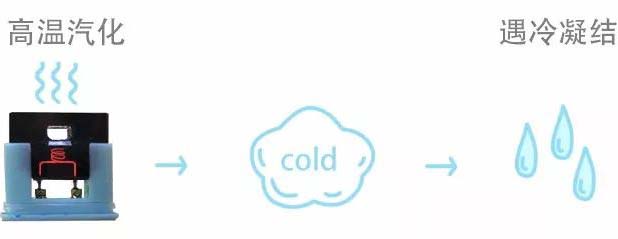 Since the simulated smoke can be viewed as liquid particles of varying sizes, some will condense or adhere to objects before exiting the air outlet, eventually merging into a visible liquid, which is the "condensate."
Friends who have played with DIY atomizers will easily understand this. When adjusting the coil, the alloy wire can become red-hot, reaching high temperatures. Similarly, during the operation of the atomizer, the heat generated by the coil vaporizes the e-liquid, and the smoke temperature exceeds that of the atomizer chamber and the external environment, leading to the liquefaction of the smoke. If you do not understand the principle of condensate formation, you can think of it like the condensation of water when steaming buns.
This is determined by the working principle of e-cigarette products, so under current conditions, the issue of condensate cannot be completely eliminated; it can only be reduced through daily maintenance to minimize its negative impact during use.
What impact does condensate have?
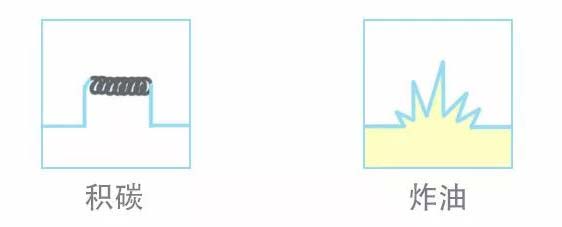
If condensate is not cleared for a long time, it can affect the heating of the device, causing it to heat up and impacting the user experience. If too much condensate accumulates at the mouthpiece, it can easily lead to issues with inhaling. Additionally, if condensate on the chamber walls is not cleaned in time, it can accelerate carbon buildup on the coil, discolor the atomizer core, and negatively affect the lifespan of the atomizer core.
Where does condensate accumulate in the atomizer?
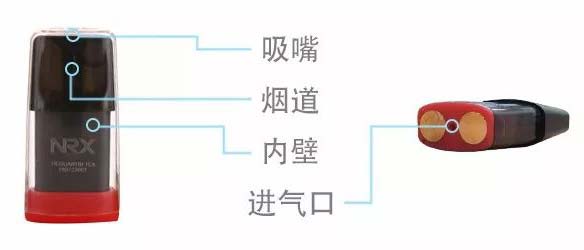
In the NRX atomizer, prolonged use can lead to condensate accumulation on the inner wall of the cartridge and the mouthpiece. In comparison, dripper atomizers are relatively easy to clean, requiring only the removal of the chamber cover for wiping. Disposable cartridges, however, can accumulate condensate on the inner walls, airways, and even at the base and intake of the cartridge, making disassembly and cleaning more labor-intensive.
How to determine whether the e-cigarette's external e-liquid is due to leakage or condensate accumulation?
To determine whether the external e-liquid is caused by leakage or condensate accumulation, you can follow these simple steps:
1. Clean the atomizer thoroughly, including the exterior, base, and airways, ensuring the e-cigarette is clean and tidy. If possible, replace the cartridge to avoid interference with our judgment.
2. Insert the cartridge into the atomizer and let it sit for more than 30 minutes.
3. Observe whether there is any e-liquid seeping out. If there is no e-liquid seeping out, you can conclude that the previously seeping liquid was condensate; if e-liquid continues to seep out, it can be determined that the device is leaking. The PG (propylene glycol) in the e-liquid condenses in the air, forming a liquid that contains a small amount of e-liquid, which can give a sweet and irritating sensation when inhaled, leading people to mistakenly believe it is leakage.
How to resolve issues caused by condensate?
Dealing with condensate falls under the category of device maintenance and can be resolved through the following methods:
1. Wipe the connection between the "battery" and "cartridge" (also confirming whether it is condensate accumulation). It is recommended to wipe after using each cartridge; 2. Shake the mouthpiece downwards to expel accumulated condensate; NRX uses disposable cartridges, and by replacing the cartridge, we have minimized the damage caused by condensate accumulation, ensuring the best user experience. Daily care and maintenance of your NRX atomizer are still necessary.
If you have reached this point and your issue is still unresolved, then it is definitely not a problem of "condensate" but rather a case of "true leakage!"
Here, we sincerely apologize for any unpleasant experiences caused by our product issues during your use of the NRX device.
At the same time, we solemnly promise to help you resolve the issue as soon as possible. If there is leakage, please contact our customer service, and our product team will confirm and provide you with a free replacement.
In the latest second-generation atomizer technology, we adopted a dual-layer isolation technique, minimizing leakage while pursuing greater capacity.
According to user feedback regarding "leaking" cartridges, I will provide guidance on how to identify whether it is leakage and solutions:
For e-cigarette novices, the appearance of "condensate" is often mistaken for the atomizer "leaking." In essence, condensate and leakage are two different phenomena. Their causes differ; the former is determined by the working principle of the e-cigarette, while leakage is related to the quality of the cartridge or installation issues, which are fundamentally different.
How is condensate produced?
Since the simulated smoke can be viewed as liquid particles of varying sizes, some will condense or adhere to objects before exiting the air outlet, eventually merging into a visible liquid, which is the "condensate."Friends who have played with DIY atomizers will easily understand this. When adjusting the coil, the alloy wire can become red-hot, reaching high temperatures. Similarly, during the operation of the atomizer, the heat generated by the coil vaporizes the e-liquid, and the smoke temperature exceeds that of the atomizer chamber and the external environment, leading to the liquefaction of the smoke. If you do not understand the principle of condensate formation, you can think of it like the condensation of water when steaming buns.
This is determined by the working principle of e-cigarette products, so under current conditions, the issue of condensate cannot be completely eliminated; it can only be reduced through daily maintenance to minimize its negative impact during use.
What impact does condensate have?
If condensate is not cleared for a long time, it can affect the heating of the device, causing it to heat up and impacting the user experience. If too much condensate accumulates at the mouthpiece, it can easily lead to issues with inhaling. Additionally, if condensate on the chamber walls is not cleaned in time, it can accelerate carbon buildup on the coil, discolor the atomizer core, and negatively affect the lifespan of the atomizer core.
Where does condensate accumulate in the atomizer?
In the NRX atomizer, prolonged use can lead to condensate accumulation on the inner wall of the cartridge and the mouthpiece. In comparison, dripper atomizers are relatively easy to clean, requiring only the removal of the chamber cover for wiping. Disposable cartridges, however, can accumulate condensate on the inner walls, airways, and even at the base and intake of the cartridge, making disassembly and cleaning more labor-intensive.
How to determine whether the e-cigarette's external e-liquid is due to leakage or condensate accumulation?
To determine whether the external e-liquid is caused by leakage or condensate accumulation, you can follow these simple steps:
1. Clean the atomizer thoroughly, including the exterior, base, and airways, ensuring the e-cigarette is clean and tidy. If possible, replace the cartridge to avoid interference with our judgment.
2. Insert the cartridge into the atomizer and let it sit for more than 30 minutes.
3. Observe whether there is any e-liquid seeping out. If there is no e-liquid seeping out, you can conclude that the previously seeping liquid was condensate; if e-liquid continues to seep out, it can be determined that the device is leaking. The PG (propylene glycol) in the e-liquid condenses in the air, forming a liquid that contains a small amount of e-liquid, which can give a sweet and irritating sensation when inhaled, leading people to mistakenly believe it is leakage.
How to resolve issues caused by condensate?
Dealing with condensate falls under the category of device maintenance and can be resolved through the following methods:
1. Wipe the connection between the "battery" and "cartridge" (also confirming whether it is condensate accumulation). It is recommended to wipe after using each cartridge; 2. Shake the mouthpiece downwards to expel accumulated condensate; NRX uses disposable cartridges, and by replacing the cartridge, we have minimized the damage caused by condensate accumulation, ensuring the best user experience. Daily care and maintenance of your NRX atomizer are still necessary.
If you have reached this point and your issue is still unresolved, then it is definitely not a problem of "condensate" but rather a case of "true leakage!"
Here, we sincerely apologize for any unpleasant experiences caused by our product issues during your use of the NRX device.
At the same time, we solemnly promise to help you resolve the issue as soon as possible. If there is leakage, please contact our customer service, and our product team will confirm and provide you with a free replacement.
Related Articles

Vaping News
Ahead of a Nationwide Ban, Hundreds of Russian Retailers Voluntarily Stop Selling Vapes
2026-04-16

Vaping News
Illegal Vape Brands Try to Evade FDA Scrutiny by Posing as “Made in the USA”
2026-04-08

Vaping News
Jordan’s New Tobacco Control Rules: Waterpipe Tobacco Market Set for Major Changes
2026-03-17