
Who Did E-Cigarettes Threaten? Did the 315 Gala Cool Down the Industry?
Who did e-cigarettes threaten? Did being named on the CCTV 315 Gala cool down the e-cigarette industry? The 315 Gala reported that e-cigarettes pose significant risks to human health, once again pushing the industry into the spotlight. That same night, e-
Whose cheese did the e-cigarette touch? The 315 party named the e-cigarette cold? The e-cigarette industry exposed at the CCTV 315 party that e-cigarettes are very dangerous to the human body. For a time, the e-cigarette industry was once again pushed to the forefront. That night, on e-cigarette-related search terms had been blocked on e-commerce platforms such as Jingdong and Suning, and relevant products could not be found during the search.
On March 17, A-share listed company Yiwei Lithium Energy (300014.sz) received an inquiry letter from the Shenzhen Stock Exchange, requesting to explain its participation in McWare (834742), one of the earliest domestic e-cigarette manufacturers and a company listed on the New Third Board. At the same time, the National Stock Transfer Company also launched a verification and inquiry of companies listed on the New Third Board involved in e-cigarettes. Ewei Lithium Energy is one of McWeir's major shareholders and also provides commonly used lithium-carbon batteries for the e-cigarette industry.
As the first outlet in 2019, the heat of e-cigarettes almost dropped to freezing point overnight.
But all this did not happen suddenly. At an e-cigarette public forum in February this year, an entrepreneur said that there have been rumors in the industry that e-cigarettes are likely to be on the list on March 15 this year.
From that moment on, the attention of the e-cigarette industry broke through the ice from the silent capital winter.
Although e-cigarettes have attracted the enthusiasm of a large number of investors and entrepreneurs in a short period of time, when the trend rose, it was accompanied by the outside world's continuous criticism of e-cigarettes, concerns about policy supervision, and the entire circle. Uneasiness.
“This is an industry that needs to be low-key.& rdquo; said Qiu Yiwu, founder of Whale Light Smoke.
An investor said that in the past, there were countless companies in the e-cigarette industry that made a fortune. But with the influx of a large number of new entrepreneurial projects, everything has become a thing of the past. rdquo;
Some netizens joked: Luo Yonghao has a bad life. Making mobile phones, the industry has shrunk. Making air purifiers, the weather was particularly good that year. We have just started making e-cigarettes, and the entire industry has reached 315 again.& rdquo;
Whose cheese did e-cigarettes touch? China is the world's largest tobacco consumer and producer. Every year, China smokers consume 44% of the world's tobacco market. According to data released by the State Tobacco Monopoly Administration, as of the end of 2018, there were 320 million smokers across the country, and the huge smoker market can only choose products from China Tobacco Group.
Why did the Tobacco Bureau sell cigarettes costing 5 yuan 13 times to 65 yuan? The reason is that there is a super heavy tobacco tax in the tobacco industry. As we all know, the Tobacco Bureau has always been a big taxpayer. How high is the tobacco tax in China? Many people can't believe it! The consumption tax rate for Class A cigarettes is as high as 56%, with an additional 0.003 yuan per cigarette. In addition, a value-added tax of about 17%. In 2017, the total tax revenue from China's tobacco was 1.1 trillion yuan, which means that 3.01 billion yuan was handed over to the national treasury every day. Therefore, the high profits of cigarettes are actually caused by heavy tobacco taxes.
By 2017, the output value of China's e-cigarette industry has increased to 12.65 billion yuan, with an output of 1.651 billion cigarettes. According to Tencent's "Shenzhen.com" report, the profit of traditional cigarettes can reach 10 times or even 50 times the cost. Judging from the current non-uniform model of e-cigarettes with multiple molds and multiple cartridges, the profit margin of e-cigarettes will only be higher than that of the traditional cigarette industry.
At present, there are hundreds of e-cigarette companies in China, among which companies such as McWeir and Avips have been listed on the New Third Board. The products of most domestic e-cigarette brands are produced by McWeir and others. But most of these companies are not widely known. The concept of e-cigarettes is not clearly reflected in their company names.
Domestic e-cigarette manufacturers have always maintained a low-key style.
“Ruyan was knocked out on suspicion of false advertising.& rdquo; Qiu Yiwu said that before this year's CCTV 315 party exposed the e-cigarette problem, the fall of this country's first e-cigarette manufacturer sounded an alarm for all e-cigarette practitioners ten years ago.
One year after its establishment, Ruyan's turnover reached 200 million yuan, and it quickly went public through a backdoor listing, with a market value of nearly 120 billion Hong Kong dollars. However, due to its slogan, Ruyan was exposed by CCTV that its smoking cessation effect was fake. The State Tobacco Monopoly Administration publicly stated that Ruyan's propaganda was inaccurate and should be controlled by the Tobacco Monopoly Administration. Since then, Ruyan's market has shrunk rapidly, its share price has collapsed, and it was acquired by Imperial Tobacco in 2013. #p #Pagination Title #e #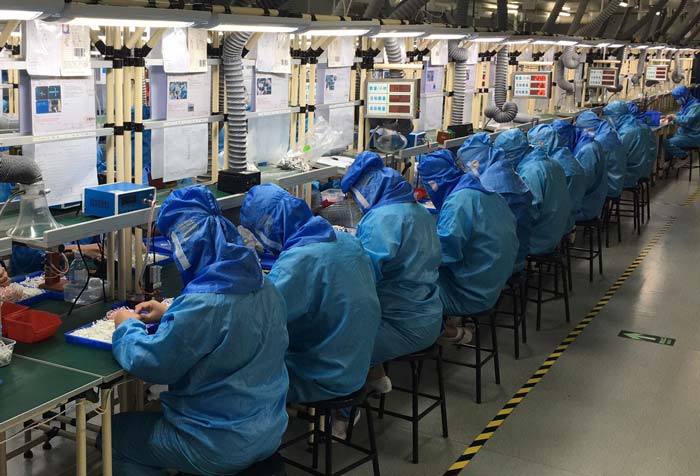 Other manufacturers took over the market left by Ruyan and once ushered in a period of rapid development a few years ago. As smoking and tobacco control has become a mainstream trend around the world, countries have proposed stricter tobacco control regulations in public places, and the demand for e-cigarettes has surged.
“People who have been deeply involved in e-cigarettes have all made a fortune quietly. Most of their previous work was in overseas markets, but no one knows who owns this brand." rdquo; Zhou Jie said.
Shenzhen is one of the world's largest clusters of e-cigarette foundries. Some industry insiders revealed to Financial News Tonight that there are about 500 e-cigarette foundries scattered in Shenzhen. According to the research team of Tianfeng Securities, nearly 90% of the world's e-cigarettes and accessories are produced in my country.
The foundry where Li Yuan (pseudonym) works is one of these little-known private manufacturers. But at the peak of the factory, there were hundreds of employees. When orders for e-cigarettes were at their peak, they had to work from 8 a.m. to 10:30 p.m. before leaving work.
Most of this company's orders come from overseas.& ldquo; Mainly the United States.& rdquo; Li Yuan said that I only do the process of pressing e-cigarette casings, and I can press more than 10,000 e-cigarette casings a day. During 2016, the factory made at least several million yuan a year.& rdquo;
However, the traditional e-cigarette industry's always low-key code of conduct was completely broken in early 2019.
“Internet celebrities disrupt the situation
In fact, the trend of e-cigarettes has been blowing in the venture capital circle since the end of 2017. With the entry of a group of traffic-based
In December last year, Zhu Xiaomu also refuted the rumor on Weibo that he had not resigned from Hammer; but a month later, Luo Yonghao had already started selling goods for him.
According to technology media Ai Fan 'er, Luo Yonghao and Zhu Xiaomu had a conflict over the e-cigarette project. Luo Yonghao preferred to lead his team to build one alone. Soon, a netizen broke the news on Weibo that Luo Yonghao had come to Shenzhen to find a foundry, and exposed a photo of Luo Yonghao and Liu Qiuming, chairman of Jirui Technology, an e-cigarette related manufacturer.
This has made the e-cigarette industry well-known.
After Uncle Tongdao was acquired by Meisheng Holdings for 200 million yuan, founder Cai Yuedong cashed in 178 million yuan and left the market. In September 2018, he and Huang Taiji founder He Chang jointly launched the e-cigarette brand YOOZ grapefruit.
Coincidentally, Zhang Jinyuan, chairman of Tongdao Uncle, Sha Xiaopi, CEO of Visual Zhi, Zeng Hang, CEO of the Military and Military Sublevel, and other self-media people also became members of the e-cigarette army in the sea and co-founded Lingxi LINX.
In January 2019, the annual meeting of Jianan Yunzhi Company, the world's second largest mining machinery manufacturer, was held. However, at this annual meeting, the gifts displayed by participants were different from before: it was an e-cigarette called Whale Qingyan, and the major shareholder behind the company was the shareholder of Jianan Yunzhi.
This can easily remind industry insiders of the annual meeting of Juul, an American e-cigarette company. In 2018, Marlboro cigarette manufacturer Altria Group and Juul reached a US$12.8 billion investment agreement. Juul decided to pay a total of US$2 billion in year-end bonuses to the company's 1500 employees in the form of special dividends. This means that on average, each employee in the company gets $1.3 million.
It was Juul that opened the door to the domestic e-cigarette entrepreneurship boom.
Unlike most people's impression of the simulated e-cigarettes in the Ruyan era ten years ago and the later high-power large cigarettes that can be filled with oil, Juul led the emergence of an era of small cigarettes.
Small cigarettes, represented by Juul, are no longer synonymous with smoking cessation tools, but use e-cigarettes to provide the true feeling of lighting cigarettes. Although the use of e-cigarettes by minors in the United States is also banned, Juul's e-cigarettes are still very popular among young Americans. Juul's early marketing channels were also more innovative, paying special attention to social media, such as Instagram, where young people gathered.
Three years after its establishment, by the end of 2018, Juul's valuation had reached US$38 billion, accounting for 75% of the U.S. e-cigarette market.
The rise speed, marketing methods and influence of this new unicorn among young consumers seem to have a great overlap with the roads traveled by these people who have fought from the era of Internet traffic. As a result, more entrepreneurs began to flock to this track. Most of them are in the earliest stages of development and are in the pre-A financing stage.# p#pagination title #e#
An investor told Financial News Tonight that there are no less than hundreds of projects in progress, basically all of which have occurred in the past one or two months.
The entry of these traffic marketing entrepreneurs has also brought Internet-style thinking and disrupted the e-cigarette market.
The founder of firearms e-cigarettes once said in an interview: As a new consumer product, e-cigarettes will become a standard for many people in the future like mobile phones. rdquo; When too many e-cigarette projects emerged in early 2019, the industry suddenly showed a barbaric growth posture. Some investors revealed to Financial News Tonight that whether it is e-cigarette atomizers or batteries, production is not difficult. Although the products are not much different, there is no threshold at all to enter the market. Invest millions of yuan, find a foundry, contact suppliers, and you can sell them by OEM. Whoever advertises well will sell more.
But Li Oucheng, investment partner at Autopai Capital, said that too many people think of the industry too simply. rdquo;
In fact, the current small cigarette products are not really mature. Using traditional ceramic atomizing core technology, problems such as oil leakage and core paste are still several major problems that are difficult to solve for e-cigarette products.
Zhou Jie said: The iteration of technology is really too fast. Nowadays, no manufacturer can say that it can make a perfect product. Many people may not know that Marlboro once invested heavily in building a production line in the United States, but gave up before it was put into production for a day. rdquo;
The technological research and development path for e-cigarettes is still very long. For alternative tobacco products, the research and development of nicotine salts is the key. According to Tencent Technology's "Shenwang" report, there are no more than 10 companies in China that have the research and development capabilities of artificially synthesized nicotine salts.
In 2017, Jiukou e-cigarettes cooperated with a tobacco oil factory in Shenzhen to jointly develop nicotine salts.
“At that time, there were only 20 people in the factory.& rdquo; According to Li Xiang, co-founder of Jiukou, in 2017, we made 200,000 pieces and received many overseas orders. But at that time, we were still using ceramic cores, and the technology was not up to standard. As soon as the product was sent, it died. The result was very miserable. rdquo;
Survival under the wind outlet
For the early e-cigarette projects that entered this field, after suddenly being focused by the public, they could only embark on the road of building brands.
Entrepreneurs who started early in this field have carefully avoided sensitive keywords such as smoking cessation, health care and culture in their promotion methods, and instead used cigarette replacement products as their label.
Gong Zijia, founder of Yishuang ESUN, concluded that the essence of e-cigarettes is an electronic version of nicotine chewing gum. Zhou Jie, CMO of moti e-cigarettes, said that the consensus within the company is that e-cigarettes are only functional products and should not be given any cultural attributes. The so-called health preservation and clearing lung are misleading to consumers; for the target group of e-cigarettes, Not inducing any non-smokers to use e-cigarettes is also the moral bottom line of the industry.
“However, the past has passed. The newly entered project and the previous e-cigarette products are two different things.& rdquo; Zhou Jie said.
Since Ruyan, the e-cigarette industry has never received such attention, but it has never been as pessimistic as in 2019.
At an e-cigarette event, Qiu Yiwu, founder of Whale Light Cigarette, said that in the long run, legislation on e-cigarettes is inevitable.
At present, some local governments have included e-cigarettes in the scope of supervision. Following the ban on the use of e-cigarettes in public places in Hangzhou and Nanning, Shenzhen also introduced a ban on e-cigarettes in early 2019. The ban expands the concept of smoking to include the use of e-cigarettes or possession of other lit tobacco products, thereby adding e-cigarettes to the tobacco control blacklist.
Prior to this, e-cigarette entrepreneurs still held out hope. According to the law, my country implements a national tobacco monopoly system. The new e-cigarettes are just playing a marginal role: in 2016, China Tobacco Corporation tried to include cigarette bomb-type e-cigarettes into the scope of monopoly, but it was rejected by the Supreme Law.# p#pagination title #e#
Gong Zijia, founder of Yishuang e-cigarettes, once said that he is not too worried about policies because e-cigarettes are an irreversible trend and there is a high probability that e-cigarettes will move into the general health category in the future.
Qiu Yiwu believes that legislation has a long time period, and e-cigarettes may also develop in the direction of standardization and franchising.
Li Oucheng, investment partner of Bopai Capital, predicts that it will take 3-5 years to fully legislate in the field of e-cigarettes.
Before the 315 party, the e-cigarette circle had been waiting uneasily to see whether the policy, the sword of Damolis hanging over the heads of practitioners in the e-cigarette industry, would fall ahead of schedule. The entire industry was named and criticized at the March 15 party, which made the industry feel like a bucket of cold water was poured on its head.
The 315 party clearly pointed out the harm of e-cigarette components: some e-cigarette cigarette liquids have irregular nicotine content labeling, and some have excessive nicotine content; the harm of e-cigarettes is actually no less than that of cigarettes. Currently, in the United States and other countries, e-cigarettes have been listed as tobacco products, while in Japan and some European countries, e-cigarettes are listed as medical products. Once domestic e-cigarettes are also included in the category of such products, strict legislative supervision will come soon, and the possibility of smoking bans will not even be ruled out.
As more and more factories and companies join the battle, competition in this industry has also become fierce. Since the Spring Festival in 2017, Li Yuan felt that the surrounding environment had changed. Many of his colleagues began to leave and join larger factories, and orders from the factory began to decline.
“There are only about twenty or thirty people left in our factory now. Our rest periods are also starting to get longer and longer, working 8 hours a day and having two days off on weekends.& rdquo; He said that the factory was beginning to be unable to receive orders. rdquo;
Before the Spring Festival in 2019, Li Yuan decided to resign. Moreover, he does not plan to return to Shenzhen again. Regarding the hazards of e-cigarettes mentioned at the 315 party, Li Yuan was not very clear about the specific classification of the e-cigarettes he produced. But in his impression, the e-cigarette industry does not have regulations on qualifications or healthy production standards.
On March 17, A-share listed company Yiwei Lithium Energy (300014.sz) received an inquiry letter from the Shenzhen Stock Exchange, requesting to explain its participation in McWare (834742), one of the earliest domestic e-cigarette manufacturers and a company listed on the New Third Board. At the same time, the National Stock Transfer Company also launched a verification and inquiry of companies listed on the New Third Board involved in e-cigarettes. Ewei Lithium Energy is one of McWeir's major shareholders and also provides commonly used lithium-carbon batteries for the e-cigarette industry.
As the first outlet in 2019, the heat of e-cigarettes almost dropped to freezing point overnight.
But all this did not happen suddenly. At an e-cigarette public forum in February this year, an entrepreneur said that there have been rumors in the industry that e-cigarettes are likely to be on the list on March 15 this year.
From that moment on, the attention of the e-cigarette industry broke through the ice from the silent capital winter.
Although e-cigarettes have attracted the enthusiasm of a large number of investors and entrepreneurs in a short period of time, when the trend rose, it was accompanied by the outside world's continuous criticism of e-cigarettes, concerns about policy supervision, and the entire circle. Uneasiness.
“This is an industry that needs to be low-key.& rdquo; said Qiu Yiwu, founder of Whale Light Smoke.
An investor said that in the past, there were countless companies in the e-cigarette industry that made a fortune. But with the influx of a large number of new entrepreneurial projects, everything has become a thing of the past. rdquo;
Some netizens joked: Luo Yonghao has a bad life. Making mobile phones, the industry has shrunk. Making air purifiers, the weather was particularly good that year. We have just started making e-cigarettes, and the entire industry has reached 315 again.& rdquo;
Whose cheese did e-cigarettes touch?
China is the world's largest tobacco consumer and producer. Every year, China smokers consume 44% of the world's tobacco market. According to data released by the State Tobacco Monopoly Administration, as of the end of 2018, there were 320 million smokers across the country, and the huge smoker market can only choose products from China Tobacco Group.Why did the Tobacco Bureau sell cigarettes costing 5 yuan 13 times to 65 yuan? The reason is that there is a super heavy tobacco tax in the tobacco industry. As we all know, the Tobacco Bureau has always been a big taxpayer. How high is the tobacco tax in China? Many people can't believe it! The consumption tax rate for Class A cigarettes is as high as 56%, with an additional 0.003 yuan per cigarette. In addition, a value-added tax of about 17%. In 2017, the total tax revenue from China's tobacco was 1.1 trillion yuan, which means that 3.01 billion yuan was handed over to the national treasury every day. Therefore, the high profits of cigarettes are actually caused by heavy tobacco taxes.
By 2017, the output value of China's e-cigarette industry has increased to 12.65 billion yuan, with an output of 1.651 billion cigarettes. According to Tencent's "Shenzhen.com" report, the profit of traditional cigarettes can reach 10 times or even 50 times the cost. Judging from the current non-uniform model of e-cigarettes with multiple molds and multiple cartridges, the profit margin of e-cigarettes will only be higher than that of the traditional cigarette industry.
At present, there are hundreds of e-cigarette companies in China, among which companies such as McWeir and Avips have been listed on the New Third Board. The products of most domestic e-cigarette brands are produced by McWeir and others. But most of these companies are not widely known. The concept of e-cigarettes is not clearly reflected in their company names.
Domestic e-cigarette manufacturers have always maintained a low-key style.
“Ruyan was knocked out on suspicion of false advertising.& rdquo; Qiu Yiwu said that before this year's CCTV 315 party exposed the e-cigarette problem, the fall of this country's first e-cigarette manufacturer sounded an alarm for all e-cigarette practitioners ten years ago.
One year after its establishment, Ruyan's turnover reached 200 million yuan, and it quickly went public through a backdoor listing, with a market value of nearly 120 billion Hong Kong dollars. However, due to its slogan, Ruyan was exposed by CCTV that its smoking cessation effect was fake. The State Tobacco Monopoly Administration publicly stated that Ruyan's propaganda was inaccurate and should be controlled by the Tobacco Monopoly Administration. Since then, Ruyan's market has shrunk rapidly, its share price has collapsed, and it was acquired by Imperial Tobacco in 2013. #p #Pagination Title #e #
Other manufacturers took over the market left by Ruyan and once ushered in a period of rapid development a few years ago. As smoking and tobacco control has become a mainstream trend around the world, countries have proposed stricter tobacco control regulations in public places, and the demand for e-cigarettes has surged.“People who have been deeply involved in e-cigarettes have all made a fortune quietly. Most of their previous work was in overseas markets, but no one knows who owns this brand." rdquo; Zhou Jie said.
Shenzhen is one of the world's largest clusters of e-cigarette foundries. Some industry insiders revealed to Financial News Tonight that there are about 500 e-cigarette foundries scattered in Shenzhen. According to the research team of Tianfeng Securities, nearly 90% of the world's e-cigarettes and accessories are produced in my country.
The foundry where Li Yuan (pseudonym) works is one of these little-known private manufacturers. But at the peak of the factory, there were hundreds of employees. When orders for e-cigarettes were at their peak, they had to work from 8 a.m. to 10:30 p.m. before leaving work.
Most of this company's orders come from overseas.& ldquo; Mainly the United States.& rdquo; Li Yuan said that I only do the process of pressing e-cigarette casings, and I can press more than 10,000 e-cigarette casings a day. During 2016, the factory made at least several million yuan a year.& rdquo;
However, the traditional e-cigarette industry's always low-key code of conduct was completely broken in early 2019.
“Internet celebrities disrupt the situation
In fact, the trend of e-cigarettes has been blowing in the venture capital circle since the end of 2017. With the entry of a group of traffic-based
In December last year, Zhu Xiaomu also refuted the rumor on Weibo that he had not resigned from Hammer; but a month later, Luo Yonghao had already started selling goods for him.
According to technology media Ai Fan 'er, Luo Yonghao and Zhu Xiaomu had a conflict over the e-cigarette project. Luo Yonghao preferred to lead his team to build one alone. Soon, a netizen broke the news on Weibo that Luo Yonghao had come to Shenzhen to find a foundry, and exposed a photo of Luo Yonghao and Liu Qiuming, chairman of Jirui Technology, an e-cigarette related manufacturer.
This has made the e-cigarette industry well-known.
After Uncle Tongdao was acquired by Meisheng Holdings for 200 million yuan, founder Cai Yuedong cashed in 178 million yuan and left the market. In September 2018, he and Huang Taiji founder He Chang jointly launched the e-cigarette brand YOOZ grapefruit.
Coincidentally, Zhang Jinyuan, chairman of Tongdao Uncle, Sha Xiaopi, CEO of Visual Zhi, Zeng Hang, CEO of the Military and Military Sublevel, and other self-media people also became members of the e-cigarette army in the sea and co-founded Lingxi LINX.
In January 2019, the annual meeting of Jianan Yunzhi Company, the world's second largest mining machinery manufacturer, was held. However, at this annual meeting, the gifts displayed by participants were different from before: it was an e-cigarette called Whale Qingyan, and the major shareholder behind the company was the shareholder of Jianan Yunzhi.
This can easily remind industry insiders of the annual meeting of Juul, an American e-cigarette company. In 2018, Marlboro cigarette manufacturer Altria Group and Juul reached a US$12.8 billion investment agreement. Juul decided to pay a total of US$2 billion in year-end bonuses to the company's 1500 employees in the form of special dividends. This means that on average, each employee in the company gets $1.3 million.
It was Juul that opened the door to the domestic e-cigarette entrepreneurship boom.
Unlike most people's impression of the simulated e-cigarettes in the Ruyan era ten years ago and the later high-power large cigarettes that can be filled with oil, Juul led the emergence of an era of small cigarettes.
Small cigarettes, represented by Juul, are no longer synonymous with smoking cessation tools, but use e-cigarettes to provide the true feeling of lighting cigarettes. Although the use of e-cigarettes by minors in the United States is also banned, Juul's e-cigarettes are still very popular among young Americans. Juul's early marketing channels were also more innovative, paying special attention to social media, such as Instagram, where young people gathered.
Three years after its establishment, by the end of 2018, Juul's valuation had reached US$38 billion, accounting for 75% of the U.S. e-cigarette market.
The rise speed, marketing methods and influence of this new unicorn among young consumers seem to have a great overlap with the roads traveled by these people who have fought from the era of Internet traffic. As a result, more entrepreneurs began to flock to this track. Most of them are in the earliest stages of development and are in the pre-A financing stage.# p#pagination title #e#
An investor told Financial News Tonight that there are no less than hundreds of projects in progress, basically all of which have occurred in the past one or two months.
The entry of these traffic marketing entrepreneurs has also brought Internet-style thinking and disrupted the e-cigarette market.
The founder of firearms e-cigarettes once said in an interview: As a new consumer product, e-cigarettes will become a standard for many people in the future like mobile phones. rdquo; When too many e-cigarette projects emerged in early 2019, the industry suddenly showed a barbaric growth posture.
Some investors revealed to Financial News Tonight that whether it is e-cigarette atomizers or batteries, production is not difficult. Although the products are not much different, there is no threshold at all to enter the market. Invest millions of yuan, find a foundry, contact suppliers, and you can sell them by OEM. Whoever advertises well will sell more.But Li Oucheng, investment partner at Autopai Capital, said that too many people think of the industry too simply. rdquo;
In fact, the current small cigarette products are not really mature. Using traditional ceramic atomizing core technology, problems such as oil leakage and core paste are still several major problems that are difficult to solve for e-cigarette products.
Zhou Jie said: The iteration of technology is really too fast. Nowadays, no manufacturer can say that it can make a perfect product. Many people may not know that Marlboro once invested heavily in building a production line in the United States, but gave up before it was put into production for a day. rdquo;
The technological research and development path for e-cigarettes is still very long. For alternative tobacco products, the research and development of nicotine salts is the key. According to Tencent Technology's "Shenwang" report, there are no more than 10 companies in China that have the research and development capabilities of artificially synthesized nicotine salts.
In 2017, Jiukou e-cigarettes cooperated with a tobacco oil factory in Shenzhen to jointly develop nicotine salts.
“At that time, there were only 20 people in the factory.& rdquo; According to Li Xiang, co-founder of Jiukou, in 2017, we made 200,000 pieces and received many overseas orders. But at that time, we were still using ceramic cores, and the technology was not up to standard. As soon as the product was sent, it died. The result was very miserable. rdquo;
Survival under the wind outlet
For the early e-cigarette projects that entered this field, after suddenly being focused by the public, they could only embark on the road of building brands.
Entrepreneurs who started early in this field have carefully avoided sensitive keywords such as smoking cessation, health care and culture in their promotion methods, and instead used cigarette replacement products as their label.
Gong Zijia, founder of Yishuang ESUN, concluded that the essence of e-cigarettes is an electronic version of nicotine chewing gum. Zhou Jie, CMO of moti e-cigarettes, said that the consensus within the company is that e-cigarettes are only functional products and should not be given any cultural attributes. The so-called health preservation and clearing lung are misleading to consumers; for the target group of e-cigarettes, Not inducing any non-smokers to use e-cigarettes is also the moral bottom line of the industry.
“However, the past has passed. The newly entered project and the previous e-cigarette products are two different things.& rdquo; Zhou Jie said.
Since Ruyan, the e-cigarette industry has never received such attention, but it has never been as pessimistic as in 2019.
At an e-cigarette event, Qiu Yiwu, founder of Whale Light Cigarette, said that in the long run, legislation on e-cigarettes is inevitable.
At present, some local governments have included e-cigarettes in the scope of supervision. Following the ban on the use of e-cigarettes in public places in Hangzhou and Nanning, Shenzhen also introduced a ban on e-cigarettes in early 2019. The ban expands the concept of smoking to include the use of e-cigarettes or possession of other lit tobacco products, thereby adding e-cigarettes to the tobacco control blacklist.
Prior to this, e-cigarette entrepreneurs still held out hope. According to the law, my country implements a national tobacco monopoly system. The new e-cigarettes are just playing a marginal role: in 2016, China Tobacco Corporation tried to include cigarette bomb-type e-cigarettes into the scope of monopoly, but it was rejected by the Supreme Law.# p#pagination title #e#
Gong Zijia, founder of Yishuang e-cigarettes, once said that he is not too worried about policies because e-cigarettes are an irreversible trend and there is a high probability that e-cigarettes will move into the general health category in the future.
Qiu Yiwu believes that legislation has a long time period, and e-cigarettes may also develop in the direction of standardization and franchising.
Li Oucheng, investment partner of Bopai Capital, predicts that it will take 3-5 years to fully legislate in the field of e-cigarettes.
Before the 315 party, the e-cigarette circle had been waiting uneasily to see whether the policy, the sword of Damolis hanging over the heads of practitioners in the e-cigarette industry, would fall ahead of schedule. The entire industry was named and criticized at the March 15 party, which made the industry feel like a bucket of cold water was poured on its head.
The 315 party clearly pointed out the harm of e-cigarette components: some e-cigarette cigarette liquids have irregular nicotine content labeling, and some have excessive nicotine content; the harm of e-cigarettes is actually no less than that of cigarettes. Currently, in the United States and other countries, e-cigarettes have been listed as tobacco products, while in Japan and some European countries, e-cigarettes are listed as medical products. Once domestic e-cigarettes are also included in the category of such products, strict legislative supervision will come soon, and the possibility of smoking bans will not even be ruled out.
As more and more factories and companies join the battle, competition in this industry has also become fierce. Since the Spring Festival in 2017, Li Yuan felt that the surrounding environment had changed. Many of his colleagues began to leave and join larger factories, and orders from the factory began to decline.
“There are only about twenty or thirty people left in our factory now. Our rest periods are also starting to get longer and longer, working 8 hours a day and having two days off on weekends.& rdquo; He said that the factory was beginning to be unable to receive orders. rdquo;
Before the Spring Festival in 2019, Li Yuan decided to resign. Moreover, he does not plan to return to Shenzhen again. Regarding the hazards of e-cigarettes mentioned at the 315 party, Li Yuan was not very clear about the specific classification of the e-cigarettes he produced. But in his impression, the e-cigarette industry does not have regulations on qualifications or healthy production standards.
Related Articles

Vaping News
Ahead of a Nationwide Ban, Hundreds of Russian Retailers Voluntarily Stop Selling Vapes
2026-04-16

Vaping News
Illegal Vape Brands Try to Evade FDA Scrutiny by Posing as “Made in the USA”
2026-04-08

Vaping News
Jordan’s New Tobacco Control Rules: Waterpipe Tobacco Market Set for Major Changes
2026-03-17