
Behind Hong Kong’s Full E-Cigarette Ban Lies the Cancer Fate of 350 Million Chinese Smokers
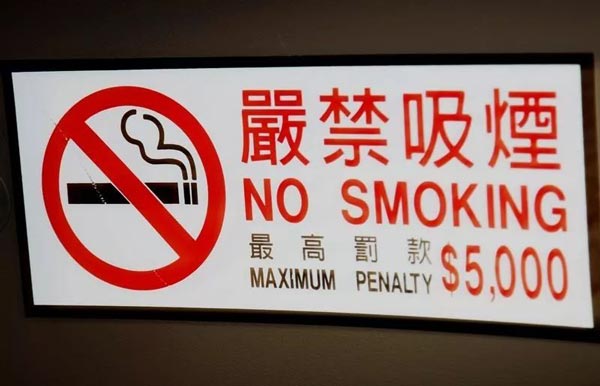
News of Hong Kong’s comprehensive e-cigarette ban has caused a huge stir. At present it is still only a proposal, but the signal is very dangerous. More and more data show that the harm of e-cigarettes is far lower than that of traditional cigarettes, yet
The news of Hong Kong's full ban on e-cigarettes has stirred up a lot of discussion. Currently, it is just a proposal, but this signal is very dangerous. Increasing data shows that the harm of e-cigarettes is far less than that of traditional cigarettes, a fact that is rarely known to the public. If Hong Kong truly implements a full ban on e-cigarettes, residents will be forced to smoke traditional cigarettes, putting smokers at risk.
Recently, the Chief Executive of Hong Kong announced a full ban on e-cigarettes. Carrie Lam, the Chief Executive of the Hong Kong Special Administrative Region, officially declared the ban. Previously, the Governor of New York State in the U.S. also signed a related bill prohibiting the use of e-cigarettes indoors. More and more countries and regions are viewing e-cigarettes as equivalent to cigarettes, rather than the "smoking cessation companions" touted by tobacco companies.
As early as 2015, a study from Harvard University's T.H. Chan School of Public Health indicated that some chemicals contained in e-cigarettes could trigger an incurable lung disease, commonly known as "popcorn lung disease," scientifically referred to as "obstructive bronchiolitis."
A year later, the U.S. Food and Drug Administration (FDA) issued regulations to begin overseeing the e-cigarette industry. Since then, all manufacturers selling e-cigarettes in the U.S. must submit information to the government regarding ingredients, product design, health risks, and the appeal of products to young people and non-e-cigarette users. Sales can only commence after FDA approval.
At this year's tobacco conference, e-cigarettes did not receive special treatment; they were defined by the World Health Organization (WHO) as substitutes for traditional cigarettes. The conference aimed to update the details of the WHO Framework Convention on Tobacco Control, which has had a significant impact on public health since its implementation in 2005. The treaty outlines many smoking control measures, such as advertising bans, graphic warning labels on packaging, establishing smoke-free zones, and imposing tobacco taxes, leading to a decline in tobacco usage rates in many countries and earning widespread acclaim.
 However, this year, representatives and public health regulatory agencies worldwide are facing a new and serious issue: how to respond to the explosive growth of combustible cigarette alternatives? These alternatives include e-cigarettes that allow users to inhale flavored nicotine vapor, "heat-not-burn" devices that heat tobacco sticks without combustion, thus not releasing carcinogens, and new electronic products like "Juul"—which resembles a USB flash drive and has seen a recent surge in use among American high school students.
All these cigarette alternatives claim to be safer than traditional cigarettes because they do not combust tobacco, thus not producing toxic smoke. However, tobacco companies have not addressed what health impacts the inhaled chemicals may have. Public health officials are concerned that such devices may entice many non-smokers, creating a new generation of nicotine addicts.
Dr. Judith Mackay, a tobacco expert with years of experience in the field and a senior advisor to the global health advocacy organization Vital Strategies, stated at the conference: "All jurisdictions worldwide are struggling to study e-cigarettes. Are they encouraging young people to smoke, or do they genuinely help smokers quit? We will only have answers to this in a few years."
From a medical perspective, the harms of e-cigarettes are evident; from an industrial structure perspective, e-cigarettes are entirely new products derived from the traditional cigarette industry. Large tobacco companies are acquiring smaller vapor companies one after another and launching new nicotine alternatives. Philip Morris International, British American Tobacco, and other traditional tobacco companies are now selling nicotine delivery alternatives.
Tobacco companies insist that "nicotine is not the enemy of humanity," but most medical evidence indicates that tobacco is not only directly related to lung cancer but also associated with over a dozen other cancers. Former WHO Director-General Hiroshi Nakajima stated: "Many people do not die from diseases but from ignorance."
Recently, the National Cancer Center of China released the latest cancer statistics. In China, more than 10,000 people are diagnosed with malignant tumors every day on average. Lung cancer is undoubtedly the "number one"—it accounts for 20.55% of all malignant tumors, which is twice as much as stomach cancer, the second leading cause. One in five cancer patients is fighting lung cancer, and their future is not optimistic: the mortality rate for lung cancer remains the highest.
Reports indicate that there are nearly 350 million smokers in China—almost one-third of the world's smokers. Including secondhand smoke, over 500 million people are exposed to tobacco environments. Another set of data shows that smokers are ten times more likely to die from lung cancer than non-smokers. In other words, these 350 million smokers may not escape the fate of lung cancer, and the health conditions of over 200 million "secondhand smokers" are also concerning.
In fact, China began its anti-smoking campaign back in 1979 when the State Council approved a notice from four ministries regarding the harmful effects of smoking and smoking control. However, China's unique national conditions mean that, as a major tobacco-producing country, its fiscal revenue heavily relies on the tobacco industry. For example, in 2015, the Chinese tobacco industry achieved a total tax revenue of 1.1436 trillion yuan (approximately $183.5 billion at the 2015 average exchange rate), contributing 1.095 trillion yuan to the national treasury, accounting for about 8.77% of the total national tax revenue that year, and surpassing the total fiscal revenue of Guangdong Province, which ranked first in the country.
 Just as the economic environment affects all consumption, the U.S. experienced a decline in cigarette consumption after the economic recession in 1979. Similarly, Germany's cigarette consumption decreased after 1980, coinciding with a decline in GDP. China's situation in recent years has been quite similar, with a noticeable slowdown in GDP growth since 2011.
Regarding e-cigarettes, the Chinese government remains in a wait-and-see state. E-cigarette brands that are popular in Europe, America, and Japan still find it challenging to enter the Chinese market, and products like Japan's popular "IQOS," which is a "heat-not-burn" type, cannot officially enter China because it requires tobacco sticks, which are state-owned monopoly products in China.
An anonymous e-cigarette industry insider stated: "The most chaotic times are often the most profitable."
Thus, it is not difficult to understand the Hong Kong government's "ruthlessness" towards e-cigarettes—since e-cigarette manufacturers and retailers have not ensured that their products are kept away from minors, regardless of whether e-cigarettes lead to addiction or lung cancer, they should not become "snacks," toys, or even daily necessities for teenagers.
Stanton Glantz, the head of the Center for Tobacco Control Research and Education at the University of California, San Francisco, expressed a pessimistic view on e-cigarettes, stating that in the absence of regulation, e-cigarette companies will act recklessly. He believes that due to the lack of health data, existing indoor smoking bans should also apply to e-cigarettes. He said: "The biggest problem with these products is that due to poor quality control, you can never be sure what you are inhaling."
Recommended Reading: Why Did Hong Kong Ban E-Cigarettes?
Recently, the Chief Executive of Hong Kong announced a full ban on e-cigarettes. Carrie Lam, the Chief Executive of the Hong Kong Special Administrative Region, officially declared the ban. Previously, the Governor of New York State in the U.S. also signed a related bill prohibiting the use of e-cigarettes indoors. More and more countries and regions are viewing e-cigarettes as equivalent to cigarettes, rather than the "smoking cessation companions" touted by tobacco companies.
As early as 2015, a study from Harvard University's T.H. Chan School of Public Health indicated that some chemicals contained in e-cigarettes could trigger an incurable lung disease, commonly known as "popcorn lung disease," scientifically referred to as "obstructive bronchiolitis."
A year later, the U.S. Food and Drug Administration (FDA) issued regulations to begin overseeing the e-cigarette industry. Since then, all manufacturers selling e-cigarettes in the U.S. must submit information to the government regarding ingredients, product design, health risks, and the appeal of products to young people and non-e-cigarette users. Sales can only commence after FDA approval.
At this year's tobacco conference, e-cigarettes did not receive special treatment; they were defined by the World Health Organization (WHO) as substitutes for traditional cigarettes. The conference aimed to update the details of the WHO Framework Convention on Tobacco Control, which has had a significant impact on public health since its implementation in 2005. The treaty outlines many smoking control measures, such as advertising bans, graphic warning labels on packaging, establishing smoke-free zones, and imposing tobacco taxes, leading to a decline in tobacco usage rates in many countries and earning widespread acclaim.
However, this year, representatives and public health regulatory agencies worldwide are facing a new and serious issue: how to respond to the explosive growth of combustible cigarette alternatives? These alternatives include e-cigarettes that allow users to inhale flavored nicotine vapor, "heat-not-burn" devices that heat tobacco sticks without combustion, thus not releasing carcinogens, and new electronic products like "Juul"—which resembles a USB flash drive and has seen a recent surge in use among American high school students.All these cigarette alternatives claim to be safer than traditional cigarettes because they do not combust tobacco, thus not producing toxic smoke. However, tobacco companies have not addressed what health impacts the inhaled chemicals may have. Public health officials are concerned that such devices may entice many non-smokers, creating a new generation of nicotine addicts.
Dr. Judith Mackay, a tobacco expert with years of experience in the field and a senior advisor to the global health advocacy organization Vital Strategies, stated at the conference: "All jurisdictions worldwide are struggling to study e-cigarettes. Are they encouraging young people to smoke, or do they genuinely help smokers quit? We will only have answers to this in a few years."
From a medical perspective, the harms of e-cigarettes are evident; from an industrial structure perspective, e-cigarettes are entirely new products derived from the traditional cigarette industry. Large tobacco companies are acquiring smaller vapor companies one after another and launching new nicotine alternatives. Philip Morris International, British American Tobacco, and other traditional tobacco companies are now selling nicotine delivery alternatives.
Tobacco companies insist that "nicotine is not the enemy of humanity," but most medical evidence indicates that tobacco is not only directly related to lung cancer but also associated with over a dozen other cancers. Former WHO Director-General Hiroshi Nakajima stated: "Many people do not die from diseases but from ignorance."
Recently, the National Cancer Center of China released the latest cancer statistics. In China, more than 10,000 people are diagnosed with malignant tumors every day on average. Lung cancer is undoubtedly the "number one"—it accounts for 20.55% of all malignant tumors, which is twice as much as stomach cancer, the second leading cause. One in five cancer patients is fighting lung cancer, and their future is not optimistic: the mortality rate for lung cancer remains the highest.
Reports indicate that there are nearly 350 million smokers in China—almost one-third of the world's smokers. Including secondhand smoke, over 500 million people are exposed to tobacco environments. Another set of data shows that smokers are ten times more likely to die from lung cancer than non-smokers. In other words, these 350 million smokers may not escape the fate of lung cancer, and the health conditions of over 200 million "secondhand smokers" are also concerning.
In fact, China began its anti-smoking campaign back in 1979 when the State Council approved a notice from four ministries regarding the harmful effects of smoking and smoking control. However, China's unique national conditions mean that, as a major tobacco-producing country, its fiscal revenue heavily relies on the tobacco industry. For example, in 2015, the Chinese tobacco industry achieved a total tax revenue of 1.1436 trillion yuan (approximately $183.5 billion at the 2015 average exchange rate), contributing 1.095 trillion yuan to the national treasury, accounting for about 8.77% of the total national tax revenue that year, and surpassing the total fiscal revenue of Guangdong Province, which ranked first in the country.
Just as the economic environment affects all consumption, the U.S. experienced a decline in cigarette consumption after the economic recession in 1979. Similarly, Germany's cigarette consumption decreased after 1980, coinciding with a decline in GDP. China's situation in recent years has been quite similar, with a noticeable slowdown in GDP growth since 2011.Regarding e-cigarettes, the Chinese government remains in a wait-and-see state. E-cigarette brands that are popular in Europe, America, and Japan still find it challenging to enter the Chinese market, and products like Japan's popular "IQOS," which is a "heat-not-burn" type, cannot officially enter China because it requires tobacco sticks, which are state-owned monopoly products in China.
An anonymous e-cigarette industry insider stated: "The most chaotic times are often the most profitable."
Thus, it is not difficult to understand the Hong Kong government's "ruthlessness" towards e-cigarettes—since e-cigarette manufacturers and retailers have not ensured that their products are kept away from minors, regardless of whether e-cigarettes lead to addiction or lung cancer, they should not become "snacks," toys, or even daily necessities for teenagers.
Stanton Glantz, the head of the Center for Tobacco Control Research and Education at the University of California, San Francisco, expressed a pessimistic view on e-cigarettes, stating that in the absence of regulation, e-cigarette companies will act recklessly. He believes that due to the lack of health data, existing indoor smoking bans should also apply to e-cigarettes. He said: "The biggest problem with these products is that due to poor quality control, you can never be sure what you are inhaling."
Recommended Reading: Why Did Hong Kong Ban E-Cigarettes?
Related Articles

Vaping News
Ahead of a Nationwide Ban, Hundreds of Russian Retailers Voluntarily Stop Selling Vapes
2026-04-16

Vaping News
Illegal Vape Brands Try to Evade FDA Scrutiny by Posing as “Made in the USA”
2026-04-08

Vaping News
Jordan’s New Tobacco Control Rules: Waterpipe Tobacco Market Set for Major Changes
2026-03-17