Americans Are Quietly Quitting Smoking, and E-Cigarettes Are Playing a Role
According to data from the Centers for Disease Control and Prevention (CDC), the smoking rate among American adults has reached a historic low, dropping from 15.5% in 2016 to 13.9% in 2017.
Many people may be influenced by smoking scenes in movies, thinking that smoking looks cool. These scenes are abundant in American films, but did you know that the smoking rate among Americans has been declining year by year in recent years?
Brian King, deputy director of the Office on Smoking and Health, stated: "For decades, adult smoking has been on a downward trajectory. This is the lowest percentage we have seen since we began monitoring smoking rates in 1965. Nevertheless, preliminary data for 2017 still shows that 34 million Americans smoke. According to the latest CDC data, an estimated 480,000 Americans die each year due to smoking and secondhand smoke exposure.
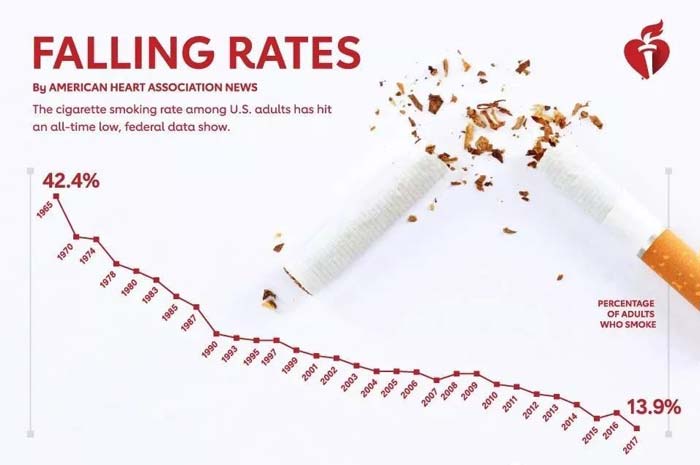
Fifty years ago, it seemed unimaginable that less than 15% of adults would smoke. At that time, about 42% of American adults smoked, and smoking was a normal part of daily life. You could smoke in workplaces, restaurants, bars, and on airplanes. You could buy cigarettes from vending machines. Tobacco was dramatically portrayed in movies and advertised on billboards along highways.
In 1964, when a surgeon released the first report on smoking and health, things began to change. The landmark report stated that smoking causes lung cancer and laryngeal cancer and is a major cause of health conditions such as cardiovascular disease.
The decline in smoking rates has not happened overnight; anti-smoking campaigns and policies take time to unfold, and quitting a highly addictive habit requires tools and resources. Measures such as rising cigarette prices, anti-smoking campaigns, smoke-free laws, and access to cessation programs through health advocacy groups have indeed contributed to the decline in tobacco use.
Higher cigarette prices make smoking more expensive, especially for teenagers—the age at which most smokers first try smoking. Funds raised from taxes finance advertisements showing the harmful effects of tobacco, sometimes with frightening details. The inability to smoke in workplaces, bars, or public places has created smoke-free environments, making it easier for people to refrain from smoking. Additionally, in 2010, most commercial health insurance plans and Medicaid programs began requiring coverage for cessation programs, allowing smokers to access the resources and tools they need to quit.

The real progress in reducing smoking comes from prevention efforts. The strong educational campaigns that began in 1965, especially those targeting children, have raised awareness of the effects of tobacco and health warnings. While lower smoking rates are a major public health success, experts say there is still work to be done.
These numbers have declined, but they seem to be stabilizing. Among current smokers, the vast majority smoke daily. According to a review published in the January 2018 issue of the British Medical Journal, although smoking amounts are lower, smoking just one cigarette a day still increases the risk of heart disease and stroke.
Additionally, with the emergence of products like electronic cigarettes, the tobacco landscape is diversifying, and researchers are still working to understand the popularity of these products among young people. According to CDC data, in 2016, 11.7% of high school students reported using electronic cigarettes, an increase of 1.5% from 2011. Experts say that updated approaches are needed to prevent a new generation from using tobacco and becoming addicted to nicotine. New interventions and strategies are emerging, such as raising the legal age for tobacco sales to 21, including electronic cigarettes, and banning the sale of flavored tobacco products. By 2020, a smoking rate of 12% is expected to be achieved. So, are you worried?
Related Articles

Ahead of a Nationwide Ban, Hundreds of Russian Retailers Voluntarily Stop Selling Vapes

Illegal Vape Brands Try to Evade FDA Scrutiny by Posing as “Made in the USA”