
Is Secondhand Exposure from E-cigarettes Harmful to People?
Quietly originating in China, e-cigarettes were first introduced to the West by small independent companies, but as their popularity soared, large corporations followed the trend and joined the production and sale of e-cigarettes. Is secondhand exposure f
Starting quietly in China, e-cigarettes were initially introduced to the West by small independent companies. However, as their popularity surged, large corporations followed suit and began participating in the production and sale of e-cigarettes. Are e-cigarettes harmful to people?
As e-cigarettes became popular, we saw major players in the tobacco industry and multinational corporations entering the market, acquiring these e-cigarette manufacturers.
Large tobacco companies are the main participants in the e-cigarette manufacturing industry. David O'Reilly is the head of the research and development department. Working for one of these large tobacco companies, we specifically asked him to address our concerns.
 As a plant, tobacco is indeed beautiful. It’s hard to imagine that this plant, when processed, leads to massive destruction and death. So, what components does this plant contain? How can it cause such severe damage to the human body?
David says: Plants used for smoking are toxic. For example, if we dry lettuce, roll it into a rod shape, light it, and inhale, the toxic substances you inhale are basically the same as those from tobacco leaves.
Are you saying that this plant itself is not particularly harmful? The toxic substances are mainly produced during the burning process, right?
David: Exactly. So, if you ignite the substance, about 100 toxic substances are produced. Some of these 100 substances are confirmed to be harmful to the human body, while others may be harmful. Therefore, our goal is to completely eliminate the burning process, allowing consumers to obtain the nicotine they desire, along with their preferred flavors, in a way that they can accept. And e-cigarettes are the best way to achieve this because they do not involve combustion but rather direct heating.
In 2013, British American Tobacco began selling e-cigarettes, and today, they produce a range of products, including e-cigarette liquids.
What makes e-cigarette liquid so appealing to me?
David: The components of e-cigarette liquid are quite simple, including nicotine, water, and flavorings. There are also two simple compounds: propylene glycol and glycerin. When people smoke, they help thicken the vapor, producing visible clouds.
Are there differences in the substances inhaled between traditional cigarettes and e-cigarettes?
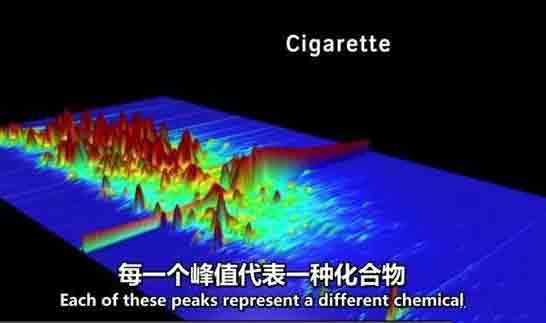
This is a scan of the toxic substances produced by traditional cigarettes, showing approximately 6000 compounds.
Traditional cigarettes produce over 6000 compounds
Each peak in the graph represents a compound, with about a hundred substances known to be harmful or potentially harmful to humans.
Answer: Scanning e-cigarettes using the same method shows that many peaks are absent from the graph. Most of the toxic substances found in traditional cigarettes are not present.
 The levels of harmful substances in e-cigarettes are at a low level. Low enough that we need not worry. No one dares to say that e-cigarettes are absolutely safe. However, the latest evidence suggests they are approximately 95% safer than traditional cigarettes. This result is also one of the supporting pieces of evidence. The chemical composition of e-cigarettes is completely different from that of traditional cigarettes.
Experimental analyses show that the compounds in e-cigarettes are vastly different from those in traditional tobacco, but what people are truly concerned about is the impact of e-cigarettes on humans. This is also what David and his team want to study.
The following image shows the changes in healthy human cells (time-lapse photography of cell recovery).
Healthy human cells healing small wounds
Under a microscope, we can see the cells on the blood vessels; the gaps in between are caused by slight tearing injuries, which are common in daily life. For healthy individuals, these small wounds can heal easily. We see in the time-lapse photography that the cells slowly move back to fill the gaps. David: This is a healthy normal human body.
To study the effects of smoking on the human body, David's team conducted a project called the scratch test. They created a gap in normal vascular cells to simulate the tearing that occurs in daily life. Then they dissolved tobacco smoke in cell culture medium and observed the changes in the cells.
Tobacco smoke solution's damage to cells
David: You can see that the middle wound looks completely different; it looks terrible, doesn’t it? There are many black spots, which are dead or dying cells. The cells cannot fill the gap. The movement of the cells is chaotic, lacking clear direction. The wound did not heal even after twenty-one hours. Indeed, this result is quite shocking, isn’t it?
#p#分页标题#e#
Tobacco smoke damages cellular behavior. We can see that the wound cannot heal.
David: I am now watching the footage at a tobacco company, listening to employees tell me about the harms of tobacco. This all feels quite ironic. I never imagined this scene before.
Now, the more important question is, what does vaping lead to? The experimental team repeated the scratch test using e-cigarette vapor.
David: You can see that the cells exposed to e-cigarette vapor can still repair normally. After twelve to thirteen hours, the wound is nearly healed. After about twenty-one hours, the wound will be completely healed. This is strong evidence that e-cigarette vapor does not damage the repair ability of vascular cells after normal daily damage.
The above experiment is very convincing.
Now let’s look at the following three groups of time-lapse photography comparisons of wound healing in vascular cells.
The top vascular cells were only exposed to fresh air; the middle ones were exposed to e-cigarette vapor. The bottom ones were exposed to traditional cigarette smoke. The differences are very obvious.
David: So this experiment shows that the repair ability of cells exposed to fresh air is similar to those exposed to e-cigarette vapor. In fact, it is almost indistinguishable. However, traditional cigarette smoke hinders the repair ability of vascular cells.
This single experiment cannot prove that e-cigarette vapor is completely harmless, but it does indicate that e-cigarettes do not damage the repair capabilities of the body like traditional cigarettes do. So, how can I know if you have other experimental studies proving that e-cigarettes are harmful, but you just haven’t made the results public?
David: All the research we conduct at British American Tobacco must be published in international peer-reviewed journals, regardless of the results. This is a principle. Moreover, all our research institutions adhere to uniform research management standards.
When an employee of a tobacco company tells you that vaping is healthier, it does indeed feel quite strange. However, the true significance of e-cigarettes lies in helping people quit smoking.
As e-cigarettes became popular, we saw major players in the tobacco industry and multinational corporations entering the market, acquiring these e-cigarette manufacturers.
Large tobacco companies are the main participants in the e-cigarette manufacturing industry. David O'Reilly is the head of the research and development department. Working for one of these large tobacco companies, we specifically asked him to address our concerns.
As a plant, tobacco is indeed beautiful. It’s hard to imagine that this plant, when processed, leads to massive destruction and death. So, what components does this plant contain? How can it cause such severe damage to the human body?David says: Plants used for smoking are toxic. For example, if we dry lettuce, roll it into a rod shape, light it, and inhale, the toxic substances you inhale are basically the same as those from tobacco leaves.
Are you saying that this plant itself is not particularly harmful? The toxic substances are mainly produced during the burning process, right?
David: Exactly. So, if you ignite the substance, about 100 toxic substances are produced. Some of these 100 substances are confirmed to be harmful to the human body, while others may be harmful. Therefore, our goal is to completely eliminate the burning process, allowing consumers to obtain the nicotine they desire, along with their preferred flavors, in a way that they can accept. And e-cigarettes are the best way to achieve this because they do not involve combustion but rather direct heating.
In 2013, British American Tobacco began selling e-cigarettes, and today, they produce a range of products, including e-cigarette liquids.
What makes e-cigarette liquid so appealing to me?
David: The components of e-cigarette liquid are quite simple, including nicotine, water, and flavorings. There are also two simple compounds: propylene glycol and glycerin. When people smoke, they help thicken the vapor, producing visible clouds.
Are there differences in the substances inhaled between traditional cigarettes and e-cigarettes?
This is a scan of the toxic substances produced by traditional cigarettes, showing approximately 6000 compounds.
Traditional cigarettes produce over 6000 compounds
Each peak in the graph represents a compound, with about a hundred substances known to be harmful or potentially harmful to humans.
Answer: Scanning e-cigarettes using the same method shows that many peaks are absent from the graph. Most of the toxic substances found in traditional cigarettes are not present.
The levels of harmful substances in e-cigarettes are at a low level. Low enough that we need not worry. No one dares to say that e-cigarettes are absolutely safe. However, the latest evidence suggests they are approximately 95% safer than traditional cigarettes. This result is also one of the supporting pieces of evidence. The chemical composition of e-cigarettes is completely different from that of traditional cigarettes.Experimental analyses show that the compounds in e-cigarettes are vastly different from those in traditional tobacco, but what people are truly concerned about is the impact of e-cigarettes on humans. This is also what David and his team want to study.
The following image shows the changes in healthy human cells (time-lapse photography of cell recovery).
Healthy human cells healing small wounds
Under a microscope, we can see the cells on the blood vessels; the gaps in between are caused by slight tearing injuries, which are common in daily life. For healthy individuals, these small wounds can heal easily. We see in the time-lapse photography that the cells slowly move back to fill the gaps. David: This is a healthy normal human body.
To study the effects of smoking on the human body, David's team conducted a project called the scratch test. They created a gap in normal vascular cells to simulate the tearing that occurs in daily life. Then they dissolved tobacco smoke in cell culture medium and observed the changes in the cells.
Tobacco smoke solution's damage to cells
David: You can see that the middle wound looks completely different; it looks terrible, doesn’t it? There are many black spots, which are dead or dying cells. The cells cannot fill the gap. The movement of the cells is chaotic, lacking clear direction. The wound did not heal even after twenty-one hours. Indeed, this result is quite shocking, isn’t it?
#p#分页标题#e#
Tobacco smoke damages cellular behavior. We can see that the wound cannot heal.
David: I am now watching the footage at a tobacco company, listening to employees tell me about the harms of tobacco. This all feels quite ironic. I never imagined this scene before.
Now, the more important question is, what does vaping lead to? The experimental team repeated the scratch test using e-cigarette vapor.
David: You can see that the cells exposed to e-cigarette vapor can still repair normally. After twelve to thirteen hours, the wound is nearly healed. After about twenty-one hours, the wound will be completely healed. This is strong evidence that e-cigarette vapor does not damage the repair ability of vascular cells after normal daily damage.
The above experiment is very convincing.
Now let’s look at the following three groups of time-lapse photography comparisons of wound healing in vascular cells.
The top vascular cells were only exposed to fresh air; the middle ones were exposed to e-cigarette vapor. The bottom ones were exposed to traditional cigarette smoke. The differences are very obvious.
David: So this experiment shows that the repair ability of cells exposed to fresh air is similar to those exposed to e-cigarette vapor. In fact, it is almost indistinguishable. However, traditional cigarette smoke hinders the repair ability of vascular cells.
This single experiment cannot prove that e-cigarette vapor is completely harmless, but it does indicate that e-cigarettes do not damage the repair capabilities of the body like traditional cigarettes do. So, how can I know if you have other experimental studies proving that e-cigarettes are harmful, but you just haven’t made the results public?
David: All the research we conduct at British American Tobacco must be published in international peer-reviewed journals, regardless of the results. This is a principle. Moreover, all our research institutions adhere to uniform research management standards.
When an employee of a tobacco company tells you that vaping is healthier, it does indeed feel quite strange. However, the true significance of e-cigarettes lies in helping people quit smoking.
Related Articles

Vaping News
Ahead of a Nationwide Ban, Hundreds of Russian Retailers Voluntarily Stop Selling Vapes
2026-04-16

Vaping News
Illegal Vape Brands Try to Evade FDA Scrutiny by Posing as “Made in the USA”
2026-04-08

Vaping News
Jordan’s New Tobacco Control Rules: Waterpipe Tobacco Market Set for Major Changes
2026-03-17