
740 Million People Exposed to Secondhand Smoke as Health Authorities Push for Higher Tobacco Taxes
 <\/p>
<\/p>
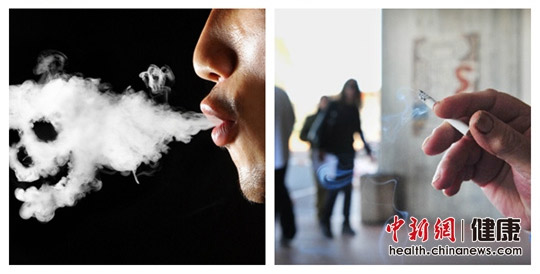
On December 11, the China News Service reported (Health Channel, Yuan Ye) that the National Health and Family Planning Commission held a press conference on the construction of smoking control legislation on the 10th. Deputy Director of the Publicity Department, Yao Hongwen, stated that there are over 300 million smokers in China. Currently, the smoking rate among people aged 15 and above is 28.1%, and 740 million non-smokers are exposed to the harms of secondhand smoke. Each year, the number of deaths from smoking-related diseases reaches 1.366 million, with about 100,000 deaths caused by diseases related to secondhand smoke exposure. The Health Commission will work with relevant departments to research and formulate measures to promote higher taxes and prices on tobacco products to better protect public health. Recently, the much-discussed "Beijing Smoking Control Regulations" was also passed on November 28 and will take effect on June 1 next year. At that time, smoking will be completely banned indoors in Beijing, and those who smoke in non-smoking areas and do not heed warnings may face fines of up to 200 yuan. Penalties for operators will vary from 2,000 to 10,000 yuan depending on their violations. Violations by tobacco product sellers will also be penalized based on the severity of the offense, ranging from 10,000 to 200,000 yuan. According to Yao Hongwen, the National Health and Family Planning Commission is currently entrusting a third party to conduct undercover evaluations of nationwide smoke-free health institutions, with on-site investigations already completed. "We are currently compiling relevant information and will announce it to the public around early next year."
China plans to introduce national-level new smoking control regulations: Individuals violating the rules will be fined 50 to 500 yuan.<\/strong>
Shenzhen and 15 other cities have successively implemented or revised local smoking control regulations.<\/strong>
Yao Hongwen stated at the press conference that China is the world's largest producer and consumer of tobacco and one of the countries most severely affected by tobacco harm.
In the face of the severe situation of smoking control, the State Council has taken strong measures. Recently, the State Council publicly solicited opinions from all sectors of society on the "Regulations on Smoking Control in Public Places" (hereinafter referred to as the "Regulations"). According to the regulations, individuals violating the rules will be fined between 50 and 500 yuan, while venue operators who violate the law will face fines of up to 30,000 yuan.
"We believe that this fine amount is not high compared to other countries and regions, including our Hong Kong Special Administrative Region," Yao Hongwen stated. The purpose of the fines is not to punish but to educate and deter violators, thereby changing uncivilized smoking behaviors.
Since 2008, 15 cities including Harbin, Tianjin, Qingdao, Changchun, and Shenzhen have successively issued or revised local smoking control regulations.<\/p>
It is worth noting that the "Beijing Smoking Control Regulations" also has clear provisions for tobacco product sellers. For example, the regulations require sellers to prominently display signs stating "Smoking is harmful to health" and "Do not sell tobacco products to minors" in their sales locations. Additionally, sellers are prohibited from engaging in behaviors such as selling tobacco products to minors, and selling tobacco products within 100 meters of kindergartens, primary and secondary schools, and youth palaces. Selling tobacco products through vending machines or online platforms is also prohibited.
Furthermore, the regulations clearly state that smoking is also prohibited in outdoor areas of venues primarily serving minors and maternal and child health institutions, and teachers are not allowed to smoke in front of students or sell tobacco products to minors.
The "Shenzhen Special Economic Zone Smoking Control Regulations" officially took effect on March 1 this year. According to Sun Meihua, Deputy Director of the Shenzhen Health and Family Planning Commission and Director of the Shenzhen Smoking Control Office, as of November 30, a total of 155,115 law enforcement personnel have been dispatched in Shenzhen; 90,417 smokers have been advised, and 8,277 have been fined, totaling 415,725 yuan in personal fines; 94,374 venues have been inspected, 6,059 supervision opinions have been issued, 2,031 venues have received warning administrative penalties, and 2 cases of fines against violating venues totaling 40,000 yuan.
China studies increasing tobacco product taxes and prices for smoking control.<\/strong>
Legal experts: Smoking control should involve multi-department enforcement.<\/strong><\/p>
"We note that this is a smoking control regulation for public places, meaning that aspects such as tobacco cultivation, tobacco prices, and taxes are not included in this part of public smoking control, as it only addresses a portion of the issue." Liu Xin, a professor at China University of Political Science and Law, believes that the State Council's smoking control regulations effectively segment the smoking control work. As a result, the enforcement targets for smoking control are limited to public places and do not involve tobacco cultivation, tobacco prices, taxes, etc. Additionally, smoking is a very brief and personal behavior, requiring a very timely and on-site control mechanism for enforcement. "This is also a key reason for designing multi-department enforcement."
Liu Xin believes that given the large number of smokers, a single department's enforcement power is insufficient, and multi-department enforcement is necessary.
Yao Hongwen stated that China is deepening fiscal and tax system reforms, providing a rare historical opportunity for implementing measures to increase taxes for smoking control. The Health Commission will work with relevant departments to research and formulate measures to promote higher taxes and prices on tobacco products to better protect public health. The most cost-effective smoking control measure recognized worldwide is increasing tobacco taxes and prices, which is also the most effective single smoking control strategy recommended by the World Health Organization. The World Health Organization's Framework Convention on Tobacco Control states that tax and price measures are effective and important means to reduce tobacco consumption among all demographic groups, especially minors, achieving a win-win effect. This means that it can reduce smoking rates while increasing fiscal revenue.
According to the World Health Organization's recommendations, the consumption tax rate on tobacco products should be raised to over 70% of the retail price; only in this way can effective smoking control be achieved. Currently, many countries around the world have explored and accumulated successful experiences in increasing tobacco taxes and prices. For example, from 1993 to 2009, South Africa's total tax burden on cigarettes increased from 32% to 52% of the retail price, during which time cigarette sales decreased by 30%, while government tobacco tax revenue increased eightfold, and the adult smoking rate dropped from 32% to 20.5%. (China News Service Health Channel)
Related Articles

Ahead of a Nationwide Ban, Hundreds of Russian Retailers Voluntarily Stop Selling Vapes

Illegal Vape Brands Try to Evade FDA Scrutiny by Posing as “Made in the USA”
