
Can Vaping Devices Really Help You Quit Smoking?
Can vaping devices really help you quit smoking, and do they actually work for smoking cessation? From a medical perspective, let’s analyze the feasibility of using vaping devices to quit smoking. Vaping for smoking cessation has become especially popular
Can vaping devices really help you quit smoking? From a medical perspective, I will analyze the feasibility of using vaping devices for smoking cessation. Vaping devices have gained popularity in recent years, especially in the past six months, with many vaping products starting to circulate in the market. Notable entrepreneur, educator, and cross-talk artist Luo Yonghao introduced a vaping device produced by a new startup team led by former Smartisan Technology executive Zhu Xiaomu at a press conference in January 2019.
What are the harms of vaping devices? How significant are these harms? This is the topic I want to discuss today.
1. What is my attitude towards vaping devices?
When I was studying at Tsinghua University's Public Health Research Center, teachers in law and economics often used tobacco as a typical case. I have been very sensitive to the topic of vaping devices over the years, and I have always based my understanding on the World Health Organization's stance on vaping devices.
As early as 2008, the WHO issued a notice stating that vaping devices are not a suitable smoking cessation therapy.
However, more than a decade has passed. Are there any new research developments in medicine? Have there been updates in the design of vaping products? I am not aware of these changes.
I often encounter health communicators who promote healthy lifestyles in an exaggerated manner, not based on the best current evidence, but using fear-based tactics. This can damage the credibility of health communicators and leave the public confused.
Therefore, I want to verify the relevant evidence as rigorously as possible and engage in a comprehensive and objective exchange with everyone.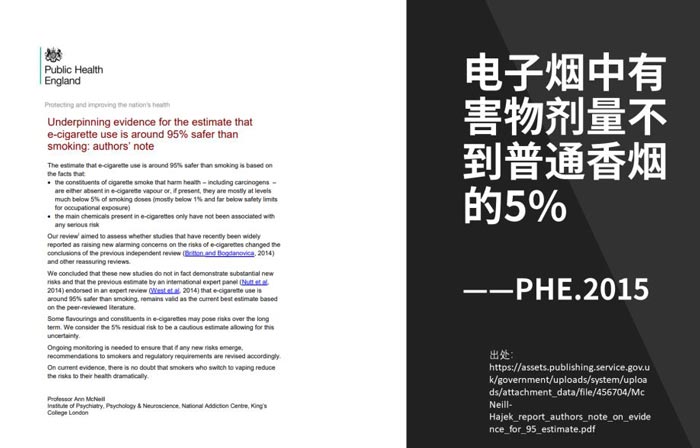 2. What are the harms of vaping devices?
Structure
Vaping devices can be subdivided into many types. The WHO and the American Heart Association refer to "Electronic Nicotine Delivery Systems" (ENDS) as a common type.
The biggest feature of vaping devices is that they do not burn like regular cigarettes. Their basic structure consists of a cartridge, an atomizer, and a battery. The main components of the e-liquid are nicotine and propylene glycol, which may also contain glycerin and various flavorings. When powered on, the e-liquid turns into aerosol, which is then inhaled into the lungs.
Nicotine
From a component analysis perspective, vaping devices do not produce harmful substances generated by the combustion of regular tobacco, such as tar and carbon monoxide, thus reducing the potential harm to the human body.
However, nicotine itself is toxic. I once wrote about "Seven Shocking Details Before the Fall of Six Ye"; in the movie "Old Pao Er," the male protagonist's dissatisfaction with his sex life is likely related to his years of smoking, which causes microcirculation ischemia and affects cardiovascular function due to nicotine.
Nicotine is also addictive, and children and adolescents are particularly sensitive to it, which can affect their brain function and is associated with type 2 diabetes, obesity, hypertension, and other diseases. Excessive intake may also pose life risks.
The National Tobacco Monopoly Bureau has also specifically reminded that minors' respiratory systems are not fully developed, and inhaling nicotine may have adverse effects on their lungs.
Other components
Due to the current lack of comprehensive market regulation and the absence of relevant national standards, the raw materials, flavorings, and processes used in vaping products are quite arbitrary. Manufacturers may add harmful substances to the human body to enhance the novelty of the experience.
Even some common additives that are safe for normal consumption may pose potential risks when inhaled into the lungs. For example, propylene glycol is a common food additive, but it can easily irritate the respiratory tract when burned, and some vaping device aerosols may also contain heavy metals.
Accidents
Additionally, poor-quality batteries and e-liquid leaks can also lead to accidents. In 2014, there was a report of a young man who spent 300 yuan on a vaping device, which exploded and injured his hand.
3. Are vaping devices effective for smoking cessation?
Many people explain that they do not vape for no reason, but rather use vaping devices as a substitute for cigarettes to quit smoking. Is this approach scientifically valid?
Benefits of quitting smoking
First of all, actively quitting smoking is encouraged! Currently, the FDA in the United States has approved several smoking cessation therapies (none of which include vaping devices), such as nicotine replacement therapies, which can achieve a smoking cessation rate of about 10% to 20% within a year.
Some may feel that this success rate is not high, but considering the impact of smoking on lifespan, the average effective extension of life for quitters can be several years. Even if only a small portion of people succeed, it is still worthwhile. #p#分页标题#e#
Vaping devices are widely recognized to have been invented by Chinese individuals and were mass-produced and sold in the market starting in 2003 under the brand "Ruyan." According to the founder, the purpose of developing this product was to replace nicotine patches, as he had previously used nicotine patches to quit smoking but was awakened by nightmares at night (which is also a common side effect of nicotine patches).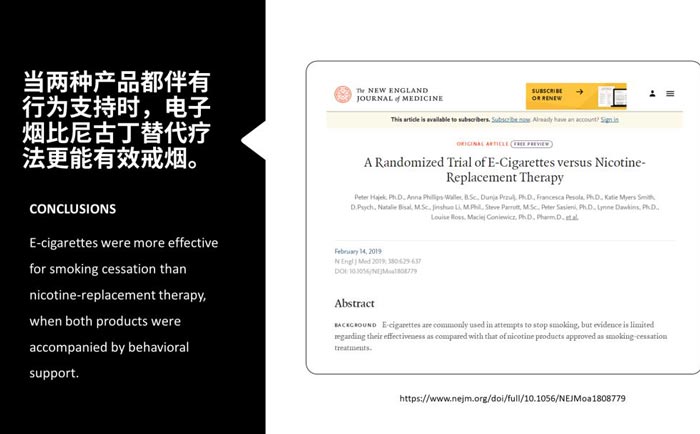 Are the harms of vaping devices less than smoking?
However, as I mentioned earlier, the WHO did not consider vaping devices to be an appropriate smoking cessation therapy in its 2008 announcement.
However, Luo Yonghao's press conference provided a statement:
I verified that Public Health England (PHE) issued this statement in August 2015:
PHE is an executive agency under the UK Department of Health and Social Care, composed of thousands of scientists and public health personnel, established in 2013. PHE conducted research and concluded that vaping devices could potentially help smokers quit, stating that the risks of vaping devices are much lower than those of smoking (less than 5%), but they are not without risks.
However, the scientific community does not fully agree with this document. The Lancet quickly published a response, criticizing the weak evidence behind it and noting that two authors had potential conflicts of interest, and the peer review process was not sufficiently rigorous, failing to complete the task based on high-quality evidence.
Among the institutions that excel in evidence-based work on disease prevention strategies, the U.S. Preventive Services Task Force is one of the best. In September 2015, this agency updated its recommendations regarding smoking cessation for adults, stating that the current evidence is insufficient to recommend the use of electronic nicotine delivery systems (ENDS) for smoking cessation in adults (including pregnant women).
The controversy from that year has come to a close.
Latest high-quality evidence?
In terms of evidence level, clinical trials are clearly more credible than component analysis and animal experiments.
In January 2019, a randomized controlled trial conducted by the National Health Institute of the UK, supported by the UK Cancer Research Center, was published in the top medical journal New England Journal of Medicine, which is on par with The Lancet.
The trial showed that when combined with behavioral support therapy, vaping devices were more effective for smoking cessation compared to nicotine replacement therapy, with fewer adverse reactions, indicating that vaping devices may be slightly more effective for quitting smoking than nicotine replacement therapies.
Don't be overly optimistic
It is important to note that all participants in this study received at least four weeks of one-on-one behavioral support therapy. The earlier statement from the UK Department of Public Health also mentioned "with the help of smoking cessation service agencies," which means that these participants had a completely different knowledge base compared to those who casually vaped without guidance, and their attitudes would also differ. Moreover, this study did not employ a "blinding" method, making the results more susceptible to psychological suggestion or subjective bias.
More importantly, although the vaping group appeared to have better outcomes and conditions within the year, after one year, the proportion of participants continuing to use vaping devices reached 79.8%, while only 9.1% continued using nicotine replacement products. The frequency and duration of vaping were also slightly higher than those in the nicotine replacement group.
In other words, while these individuals may have quit smoking, they have not been able to part with vaping devices.
Do you consider this a successful smoking cessation?
4. Final advice
This concludes my popular science discussion. Finally, I would like to offer a few reminders:
Minors should stay away
As I have analyzed earlier, vaping devices may lead to nicotine addiction and also affect brain function. In closed environments, they can produce inhalable particulate matter.
Therefore, minors should be particularly cautious and stay away from vaping devices! Anyone trying to tempt you to try them is a bad person! Additionally, these individuals are breaking the law!
Why bother with vaping devices? Is playing Honor of Kings not fun?
Smokers seeking professional help
#p#分页标题#e#
If you are a smoker and genuinely want to quit, you can visit a smoking cessation clinic at a reputable hospital, or even call the 12320 health hotline for free smoking cessation assistance. Guidance from professionals can significantly enhance the effectiveness of quitting smoking.
You might also consider reading books about smoking cessation, such as the "Chinese Clinical Smoking Cessation Guidelines (2015 Edition)," and using approved medications under the guidance of professionals. In addition to nicotine replacement products, the FDA in the U.S. has also approved bupropion and varenicline as smoking cessation medications.
If these existing smoking cessation medications do not work, then consider using vaping devices to quit smoking. After all, these smoking cessation medications are backed by a wealth of clinical data, making them more reliable compared to the relatively scarce data on vaping devices.
The American Heart Association's 2014 position statement also recommends mature smoking cessation methods over vaping devices.
Quitting smoking requires patience
I would also like to remind everyone that quitting smoking can be a lengthy process, and patience is essential. According to a study published in BMJ Open in 2016, some individuals may need 30 attempts or more before successfully quitting smoking...
But looking at it from another perspective, if you succeed after just five attempts, wouldn't you feel accomplished? The best way to quit smoking is to avoid all forms of smoking.
What are the harms of vaping devices? How significant are these harms? This is the topic I want to discuss today.
1. What is my attitude towards vaping devices?
When I was studying at Tsinghua University's Public Health Research Center, teachers in law and economics often used tobacco as a typical case. I have been very sensitive to the topic of vaping devices over the years, and I have always based my understanding on the World Health Organization's stance on vaping devices.
As early as 2008, the WHO issued a notice stating that vaping devices are not a suitable smoking cessation therapy.
However, more than a decade has passed. Are there any new research developments in medicine? Have there been updates in the design of vaping products? I am not aware of these changes.
I often encounter health communicators who promote healthy lifestyles in an exaggerated manner, not based on the best current evidence, but using fear-based tactics. This can damage the credibility of health communicators and leave the public confused.
Therefore, I want to verify the relevant evidence as rigorously as possible and engage in a comprehensive and objective exchange with everyone.
2. What are the harms of vaping devices?Structure
Vaping devices can be subdivided into many types. The WHO and the American Heart Association refer to "Electronic Nicotine Delivery Systems" (ENDS) as a common type.
The biggest feature of vaping devices is that they do not burn like regular cigarettes. Their basic structure consists of a cartridge, an atomizer, and a battery. The main components of the e-liquid are nicotine and propylene glycol, which may also contain glycerin and various flavorings. When powered on, the e-liquid turns into aerosol, which is then inhaled into the lungs.
Nicotine
From a component analysis perspective, vaping devices do not produce harmful substances generated by the combustion of regular tobacco, such as tar and carbon monoxide, thus reducing the potential harm to the human body.
However, nicotine itself is toxic. I once wrote about "Seven Shocking Details Before the Fall of Six Ye"; in the movie "Old Pao Er," the male protagonist's dissatisfaction with his sex life is likely related to his years of smoking, which causes microcirculation ischemia and affects cardiovascular function due to nicotine.
Nicotine is also addictive, and children and adolescents are particularly sensitive to it, which can affect their brain function and is associated with type 2 diabetes, obesity, hypertension, and other diseases. Excessive intake may also pose life risks.
The National Tobacco Monopoly Bureau has also specifically reminded that minors' respiratory systems are not fully developed, and inhaling nicotine may have adverse effects on their lungs.
Other components
Due to the current lack of comprehensive market regulation and the absence of relevant national standards, the raw materials, flavorings, and processes used in vaping products are quite arbitrary. Manufacturers may add harmful substances to the human body to enhance the novelty of the experience.
Even some common additives that are safe for normal consumption may pose potential risks when inhaled into the lungs. For example, propylene glycol is a common food additive, but it can easily irritate the respiratory tract when burned, and some vaping device aerosols may also contain heavy metals.
Accidents
Additionally, poor-quality batteries and e-liquid leaks can also lead to accidents. In 2014, there was a report of a young man who spent 300 yuan on a vaping device, which exploded and injured his hand.
3. Are vaping devices effective for smoking cessation?
Many people explain that they do not vape for no reason, but rather use vaping devices as a substitute for cigarettes to quit smoking. Is this approach scientifically valid?
Benefits of quitting smoking
First of all, actively quitting smoking is encouraged! Currently, the FDA in the United States has approved several smoking cessation therapies (none of which include vaping devices), such as nicotine replacement therapies, which can achieve a smoking cessation rate of about 10% to 20% within a year.
Some may feel that this success rate is not high, but considering the impact of smoking on lifespan, the average effective extension of life for quitters can be several years. Even if only a small portion of people succeed, it is still worthwhile. #p#分页标题#e#
Vaping devices are widely recognized to have been invented by Chinese individuals and were mass-produced and sold in the market starting in 2003 under the brand "Ruyan." According to the founder, the purpose of developing this product was to replace nicotine patches, as he had previously used nicotine patches to quit smoking but was awakened by nightmares at night (which is also a common side effect of nicotine patches).
Are the harms of vaping devices less than smoking?However, as I mentioned earlier, the WHO did not consider vaping devices to be an appropriate smoking cessation therapy in its 2008 announcement.
However, Luo Yonghao's press conference provided a statement:
I verified that Public Health England (PHE) issued this statement in August 2015:
PHE is an executive agency under the UK Department of Health and Social Care, composed of thousands of scientists and public health personnel, established in 2013. PHE conducted research and concluded that vaping devices could potentially help smokers quit, stating that the risks of vaping devices are much lower than those of smoking (less than 5%), but they are not without risks.
However, the scientific community does not fully agree with this document. The Lancet quickly published a response, criticizing the weak evidence behind it and noting that two authors had potential conflicts of interest, and the peer review process was not sufficiently rigorous, failing to complete the task based on high-quality evidence.
Among the institutions that excel in evidence-based work on disease prevention strategies, the U.S. Preventive Services Task Force is one of the best. In September 2015, this agency updated its recommendations regarding smoking cessation for adults, stating that the current evidence is insufficient to recommend the use of electronic nicotine delivery systems (ENDS) for smoking cessation in adults (including pregnant women).
The controversy from that year has come to a close.
Latest high-quality evidence?
In terms of evidence level, clinical trials are clearly more credible than component analysis and animal experiments.
In January 2019, a randomized controlled trial conducted by the National Health Institute of the UK, supported by the UK Cancer Research Center, was published in the top medical journal New England Journal of Medicine, which is on par with The Lancet.
The trial showed that when combined with behavioral support therapy, vaping devices were more effective for smoking cessation compared to nicotine replacement therapy, with fewer adverse reactions, indicating that vaping devices may be slightly more effective for quitting smoking than nicotine replacement therapies.
Don't be overly optimistic
It is important to note that all participants in this study received at least four weeks of one-on-one behavioral support therapy. The earlier statement from the UK Department of Public Health also mentioned "with the help of smoking cessation service agencies," which means that these participants had a completely different knowledge base compared to those who casually vaped without guidance, and their attitudes would also differ. Moreover, this study did not employ a "blinding" method, making the results more susceptible to psychological suggestion or subjective bias.
More importantly, although the vaping group appeared to have better outcomes and conditions within the year, after one year, the proportion of participants continuing to use vaping devices reached 79.8%, while only 9.1% continued using nicotine replacement products. The frequency and duration of vaping were also slightly higher than those in the nicotine replacement group.
In other words, while these individuals may have quit smoking, they have not been able to part with vaping devices.
Do you consider this a successful smoking cessation?
4. Final advice
This concludes my popular science discussion. Finally, I would like to offer a few reminders:
Minors should stay away
As I have analyzed earlier, vaping devices may lead to nicotine addiction and also affect brain function. In closed environments, they can produce inhalable particulate matter.
Therefore, minors should be particularly cautious and stay away from vaping devices! Anyone trying to tempt you to try them is a bad person! Additionally, these individuals are breaking the law!
Why bother with vaping devices? Is playing Honor of Kings not fun?
Smokers seeking professional help
#p#分页标题#e#
If you are a smoker and genuinely want to quit, you can visit a smoking cessation clinic at a reputable hospital, or even call the 12320 health hotline for free smoking cessation assistance. Guidance from professionals can significantly enhance the effectiveness of quitting smoking.
You might also consider reading books about smoking cessation, such as the "Chinese Clinical Smoking Cessation Guidelines (2015 Edition)," and using approved medications under the guidance of professionals. In addition to nicotine replacement products, the FDA in the U.S. has also approved bupropion and varenicline as smoking cessation medications.
If these existing smoking cessation medications do not work, then consider using vaping devices to quit smoking. After all, these smoking cessation medications are backed by a wealth of clinical data, making them more reliable compared to the relatively scarce data on vaping devices.
The American Heart Association's 2014 position statement also recommends mature smoking cessation methods over vaping devices.
Quitting smoking requires patience
I would also like to remind everyone that quitting smoking can be a lengthy process, and patience is essential. According to a study published in BMJ Open in 2016, some individuals may need 30 attempts or more before successfully quitting smoking...
But looking at it from another perspective, if you succeed after just five attempts, wouldn't you feel accomplished? The best way to quit smoking is to avoid all forms of smoking.
Related Articles

Vaping News
Ahead of a Nationwide Ban, Hundreds of Russian Retailers Voluntarily Stop Selling Vapes
2026-04-16

Vaping News
Illegal Vape Brands Try to Evade FDA Scrutiny by Posing as “Made in the USA”
2026-04-08

Vaping News
Jordan’s New Tobacco Control Rules: Waterpipe Tobacco Market Set for Major Changes
2026-03-17