
In-Depth Analysis of Nicotine Content in E-Liquid: Even Veteran Users May Not Fully Understand It!
Nicotine, commonly known as tobacco alkaloid, is an alkaloid found in plants of the Solanaceae family and is an important component of tobacco. Nicotine can be synthesized artificially, but it has not become widespread due to its high cost. Nicotine is no
Nicotine, commonly known as nicotine, is an alkaloid found in the nightshade family (Solanaceae) and is a key component of tobacco. Nicotine can be synthesized artificially, but it is not widely used due to high costs.
Nicotine is not only present in tobacco leaves but also in the fruits of various nightshade plants, such as potatoes, tomatoes, eggplants, and goji berries.
Clinically, nicotine is used as a relaxant and stimulant to enhance or calm a person's mood and increase alertness.
For novice vaping enthusiasts, understanding how to choose the right nicotine content in e-liquid is crucial. If the nicotine content is too high, you might find yourself coughing and unable to speak; if it's too low, it may feel bland. The saddest scenario is when you spend a lot of money on e-liquid, only to find it doesn't satisfy your cravings.
Typically, the nicotine content in e-liquids ranges from 0-50mg/ml, which can also be expressed as a percentage.
New users may find this confusing, but don't worry, today I will explain how to choose the right e-liquid based on nicotine content!
Note: The nicotine content and selection methods discussed in this article apply only to commercially available e-liquids, excluding DIY e-liquids.~
Nicotine & Nicotine Salts
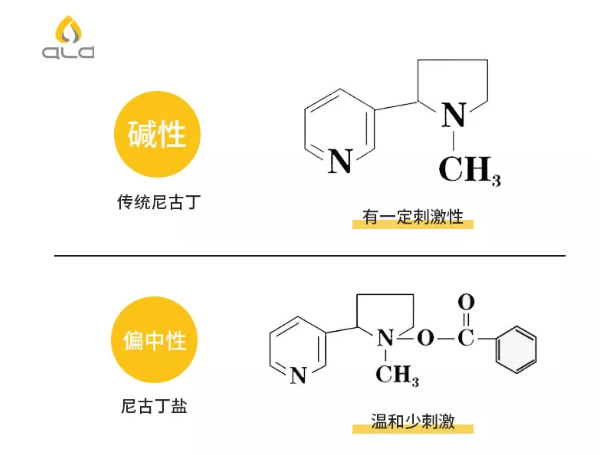
Generally, e-liquids can be divided into regular nicotine (also known as “freebase nicotine”) and nicotine salt e-liquids.
For beginners, nicotine salts (due to the addition of benzoic acid) provide a smooth and mild experience, allowing you to comfortably enjoy high nicotine concentrations in e-liquids.
For most people, a 6mg regular nicotine e-liquid provides a throat hit similar to that of a 20-25mg nicotine salt e-liquid. This is because nicotine salts penetrate the bloodstream more effectively than “freebase nicotine,” delivering higher nicotine levels in the same time frame without overly irritating the throat.
Nicotine Content - Percentage vs. mg/ml
For example, an e-liquid labeled “20mg” contains 20mg of nicotine per 1ml of e-liquid, with the density of e-liquid being approximately 1g/ml, meaning 1ml equals 1000mg. Therefore, the nicotine percentage in this e-liquid is approximately: 20mg/ml = 20mg/1000mg = 2%.
Similarly, an e-liquid labeled as 50mg contains a nicotine content of about 5%.
Thus, 1mg/ml = 10*1%, meaning the nicotine content labeled as “Nmg” (where N is a number) can be divided by 10 to obtain the percentage content.
How to Choose the Best Nicotine Concentration?
For beginners, selecting nicotine concentration mainly depends on your usual smoking habits and the type of vaping device you choose. To help you make a more scientific choice, I have categorized e-liquids based on the amount of vapor produced, which is also a determining factor for the nicotine content in each puff.
If you smoke less than 10 cigarettes a day for social reasons, you are in the low nicotine demand range. Smoking a pack a day is considered moderate demand, while two packs a day is high demand for heavy smokers (hereafter referred to as “low demand,” “moderate demand,” and “high demand”).
Now, let's categorize common vaping devices on the market based on vapor production and provide corresponding e-liquid recommendations:
1. Low Vapor Production Vaping Devices
These low vapor production devices are quite common on the market, typically with a power output of 10 watts or less. They produce a vapor amount similar to that of a single cigarette. These devices often use 20-50mg nicotine salt e-liquids; if using regular nicotine e-liquids, the concentration is between 6-18mg. Currently, the most common and popular flat pod devices fall into this category.
For enthusiasts using low vapor devices, my recommendations are as follows:
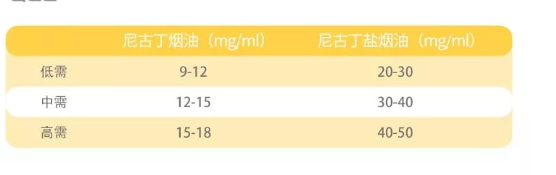
2. Medium Vapor Production Vaping Devices
Medium vapor production devices produce a moderate amount of vapor, with power outputs between 15-30 watts, such as sub-ohm coil devices, some mouth-to-lung (MTL) devices, and smaller lung-hit devices.
For enthusiasts using medium vapor production devices, the recommendations are as follows:
 #p#分页标题#e#
3. High Vapor Production Vaping Devices
These devices typically have a power output of 30 watts or more, reaching up to 200 watts, such as high-power sub-ohm devices and customizable high airflow devices. These devices mostly use regular nicotine e-liquids, while nicotine salt e-liquids are less common.
For enthusiasts using high vapor devices, the recommendations are as follows:
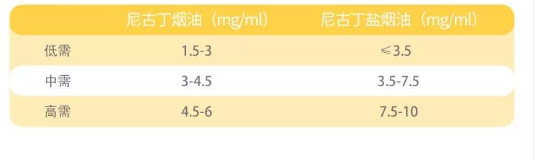
*Note: High vapor devices rarely use nicotine salt e-liquids.
Finally, I recommend vaping enthusiasts start with low vapor devices to gradually replace cigarettes. For those seeking a direct lung hit, high-power low vapor or sub-ohm devices are excellent choices.
Nicotine is not only present in tobacco leaves but also in the fruits of various nightshade plants, such as potatoes, tomatoes, eggplants, and goji berries.
Clinically, nicotine is used as a relaxant and stimulant to enhance or calm a person's mood and increase alertness.
For novice vaping enthusiasts, understanding how to choose the right nicotine content in e-liquid is crucial. If the nicotine content is too high, you might find yourself coughing and unable to speak; if it's too low, it may feel bland. The saddest scenario is when you spend a lot of money on e-liquid, only to find it doesn't satisfy your cravings.
Typically, the nicotine content in e-liquids ranges from 0-50mg/ml, which can also be expressed as a percentage.
New users may find this confusing, but don't worry, today I will explain how to choose the right e-liquid based on nicotine content!
Note: The nicotine content and selection methods discussed in this article apply only to commercially available e-liquids, excluding DIY e-liquids.~
Nicotine & Nicotine Salts
Generally, e-liquids can be divided into regular nicotine (also known as “freebase nicotine”) and nicotine salt e-liquids.
For beginners, nicotine salts (due to the addition of benzoic acid) provide a smooth and mild experience, allowing you to comfortably enjoy high nicotine concentrations in e-liquids.
For most people, a 6mg regular nicotine e-liquid provides a throat hit similar to that of a 20-25mg nicotine salt e-liquid. This is because nicotine salts penetrate the bloodstream more effectively than “freebase nicotine,” delivering higher nicotine levels in the same time frame without overly irritating the throat.
Nicotine Content - Percentage vs. mg/ml
For example, an e-liquid labeled “20mg” contains 20mg of nicotine per 1ml of e-liquid, with the density of e-liquid being approximately 1g/ml, meaning 1ml equals 1000mg. Therefore, the nicotine percentage in this e-liquid is approximately: 20mg/ml = 20mg/1000mg = 2%.
Similarly, an e-liquid labeled as 50mg contains a nicotine content of about 5%.
Thus, 1mg/ml = 10*1%, meaning the nicotine content labeled as “Nmg” (where N is a number) can be divided by 10 to obtain the percentage content.
How to Choose the Best Nicotine Concentration?
For beginners, selecting nicotine concentration mainly depends on your usual smoking habits and the type of vaping device you choose. To help you make a more scientific choice, I have categorized e-liquids based on the amount of vapor produced, which is also a determining factor for the nicotine content in each puff.
If you smoke less than 10 cigarettes a day for social reasons, you are in the low nicotine demand range. Smoking a pack a day is considered moderate demand, while two packs a day is high demand for heavy smokers (hereafter referred to as “low demand,” “moderate demand,” and “high demand”).
Now, let's categorize common vaping devices on the market based on vapor production and provide corresponding e-liquid recommendations:
1. Low Vapor Production Vaping Devices
These low vapor production devices are quite common on the market, typically with a power output of 10 watts or less. They produce a vapor amount similar to that of a single cigarette. These devices often use 20-50mg nicotine salt e-liquids; if using regular nicotine e-liquids, the concentration is between 6-18mg. Currently, the most common and popular flat pod devices fall into this category.
For enthusiasts using low vapor devices, my recommendations are as follows:
2. Medium Vapor Production Vaping Devices
Medium vapor production devices produce a moderate amount of vapor, with power outputs between 15-30 watts, such as sub-ohm coil devices, some mouth-to-lung (MTL) devices, and smaller lung-hit devices.
For enthusiasts using medium vapor production devices, the recommendations are as follows:
#p#分页标题#e#3. High Vapor Production Vaping Devices
These devices typically have a power output of 30 watts or more, reaching up to 200 watts, such as high-power sub-ohm devices and customizable high airflow devices. These devices mostly use regular nicotine e-liquids, while nicotine salt e-liquids are less common.
For enthusiasts using high vapor devices, the recommendations are as follows:
*Note: High vapor devices rarely use nicotine salt e-liquids.
Finally, I recommend vaping enthusiasts start with low vapor devices to gradually replace cigarettes. For those seeking a direct lung hit, high-power low vapor or sub-ohm devices are excellent choices.
Related Articles

Vaping News
Ahead of a Nationwide Ban, Hundreds of Russian Retailers Voluntarily Stop Selling Vapes
2026-04-16

Vaping News
Illegal Vape Brands Try to Evade FDA Scrutiny by Posing as “Made in the USA”
2026-04-08

Vaping News
Jordan’s New Tobacco Control Rules: Waterpipe Tobacco Market Set for Major Changes
2026-03-17