
Big News! The Industry Group Standard for Vape Lithium Batteries Is About to Be Released
As the source of power and energy for vaping devices, batteries are a very important part of vaping. Industry data predicts that by 2025, the global vaping market will exceed 300 billion yuan. Since lithium batteries account for 10%-30% of the cost of vap
As the energy and power source for e-cigarettes, batteries are a crucial part of e-cigarettes. Industry data predicts that by 2025, the global e-cigarette market will exceed 300 billion yuan, and with lithium batteries accounting for 10%-30% of the cost of e-cigarettes, the market size for lithium batteries used in e-cigarettes is expected to reach a hundred billion market scale.
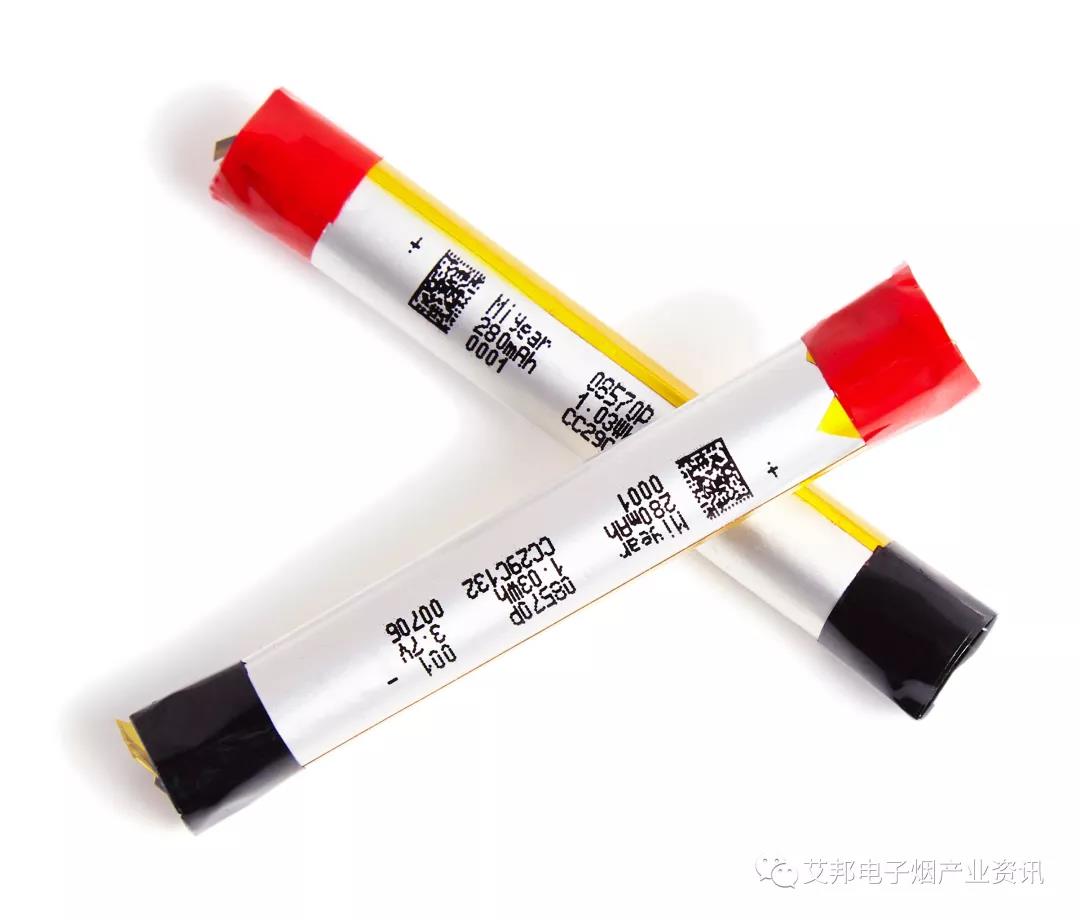 Image: E-cigarette battery
E-cigarettes use high-rate lithium-ion batteries, which have characteristics such as high energy density, high average output voltage, and long cycle life. However, if battery production is not standardized and lacks corresponding standards for regulation, accidents can easily occur.
Experts from the Guangdong Provincial Power Battery Standardization Committee pointed out that when using e-cigarettes, the internal lithium battery needs to withstand high current discharge, generating significant heat. If the battery's rate performance is poor and the e-cigarette's heat dissipation design is flawed, the e-cigarette is highly likely to catch fire or explode.
Although the formulation of industry standards for e-cigarettes is being expedited, there is still a significant lack of standard regulations for e-cigarette batteries. Currently, the standards for e-cigarette batteries exported from China mainly follow the internationally recognized UL certification standards.
In this context, the production standards for e-cigarette batteries need to be implemented as soon as possible to strictly ensure consumer safety.
Below, we will comprehensively analyze e-cigarette batteries from five aspects for your reference and learning.
Types of e-cigarette batteries
Key performance indicators of e-cigarette batteries
Key points for selecting e-cigarette batteries
The impact of different power levels on vaping experience
Discussion on e-cigarette battery standards
1. Types of e-cigarette batteries
Currently, the market for e-cigarettes is flourishing, with various types and specifications of batteries continuously increasing. Let's take a look at the types of e-cigarette batteries, which can be roughly divided into the following four categories;
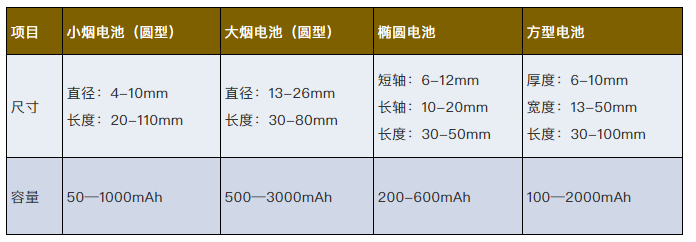 E-cigarette batteries can also be divided into external batteries and internal batteries.
External lithium batteries are mostly of the 18650, 18500, 18350, and 26650 models, also known as hard-shell batteries. The batteries used in e-cigarettes typically have high discharge rates and high power to achieve the set output power for better performance. The "18350" is a commonly used type for mechanical e-cigarettes, where the number 18 indicates a diameter of 18mm, 35 indicates a length of 35mm, and 0 indicates a cylindrical battery.
Internal batteries, also known as soft-pack batteries. Due to the current popularity of disposable e-cigarettes, most are similar to the square soft-pack batteries shown below, while hard-shell batteries, such as the 18650 hard-shell batteries from the big smoke era, are rarely seen now.
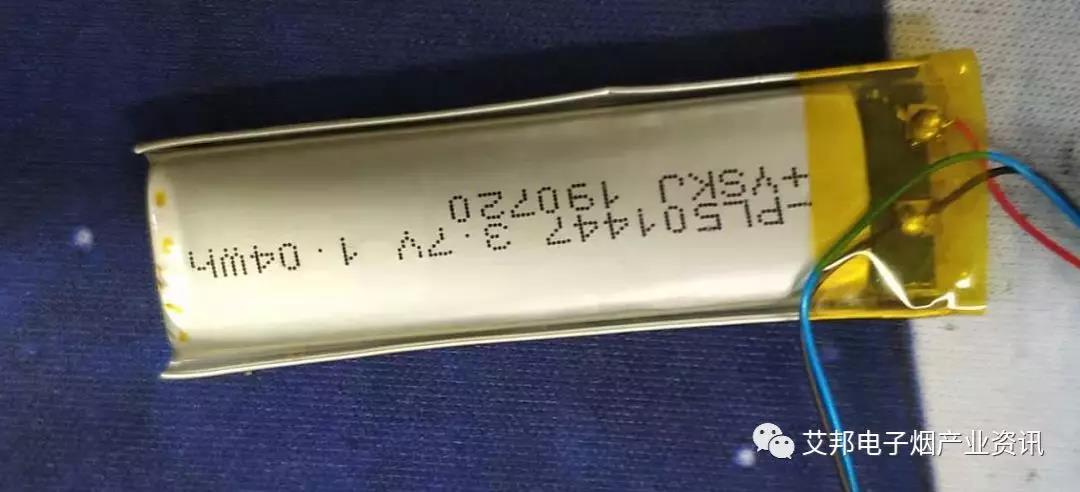 Image: Disposable small vape battery
2. Key performance indicators of e-cigarette batteries
1. Capacity
We often see the mAh marking on batteries, which is the unit of measurement for battery capacity. The physical standard unit is the familiar coulomb. The international standard unit for coulombs is the product of current and time in ampere-seconds: 1mAh = 0.001 amperes * 3600 seconds = 3.6 ampere-seconds = 3.6 coulombs. For example, a 900mAh battery can provide a continuous power supply of 300mA for 3 hours.
2. Lifespan
Generally, several factors affect the lifespan of e-cigarette batteries, including the battery's amperage, atomizer, battery size, manufacturer, etc. For example, an iTaste VV V3.0 battery can be charged 250 to 300 times, and each full charge can last two to three days. Below is a chart showing the relationship between battery capacity (mAh) and the number of puffs.
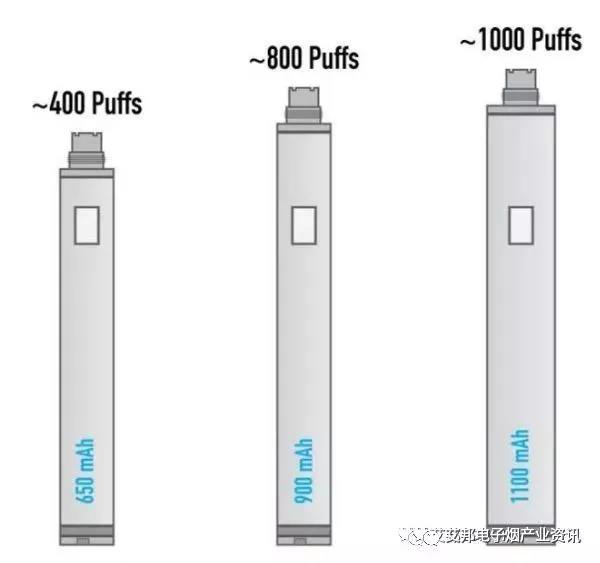
Image: Typical relationship between battery capacity and number of puffs (source: Zhihu)
3. High rate
High-rate e-cigarette batteries refer to batteries that can withstand high current discharges. The main difference between e-cigarette batteries and mobile phone batteries is the discharge current; mobile phone batteries are generally used at a discharge current of 0.2C.
E-cigarette batteries typically have a regular discharge current of 1.2A, with discharge rates generally above 5C. E-cigarettes generate high temperatures during operation, so the internal batteries of e-cigarettes are also affected, which is why e-cigarette batteries, especially rechargeable batteries, are generally required to withstand temperatures above 65°C.
Batteries are important components in e-cigarettes; generally, small vapes have an internal lithium battery of about 150-400mAh, while high-power e-cigarettes typically use two batteries. The quality of the battery directly affects the atomization quality and taste of the e-liquid.
3. Key points for selecting e-cigarette batteries
The two important factors for selecting e-cigarette batteries are battery capacity and discharge capability:
Small e-cigarette battery requirements: small size, high discharge rate, high energy density, fast charging, long cycle life, low self-discharge rate;
Large capacity e-cigarette battery requirements: large size, high safety, high power.
In addition to the above two types of battery requirements, there are also several other points based on current industry requirements for e-cigarettes:
The volume of the battery and its unit density capacity and discharge performance must also be improved through the application of new materials to enhance the design and appearance of e-cigarettes;
For material selection, low self-discharge rate batteries require materials with small particle sizes, concentrated distribution, and high surface smoothness;
From the production cycle perspective, long production lead times increase the risk of inventory and tie up significant capital and cash flow, which also extends the product manufacturing cycle, greatly restricting the rapid development of enterprises;
Currently, e-cigarettes come in various shapes, and the corresponding battery processing requirements have not adopted a public mold like USB interface protocols, resulting in multiple mold verifications and resource waste.
4. The impact of different power levels on vaping experience
Research using the e-cigarette puffing method recommended by the Coresta working group (puffing curve square wave, puff volume 55mL, puff frequency 30s, puff duration 3s) was conducted to investigate the impact of different power levels on the nicotine release of e-cigarette aerosols. The experimental results are shown in Figures 1 and 2.
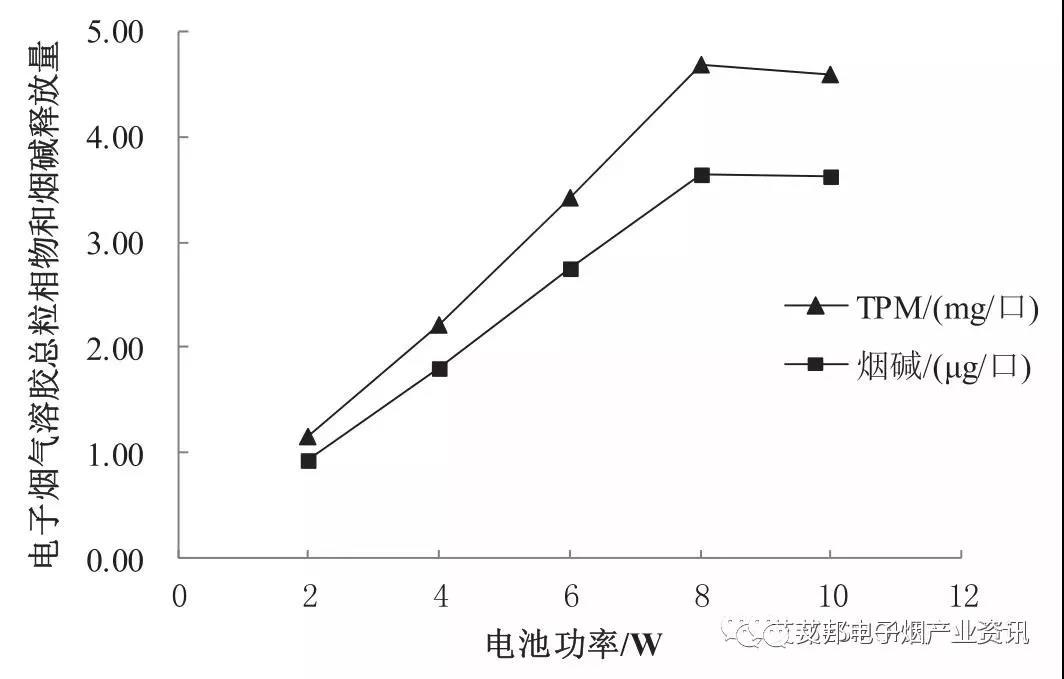
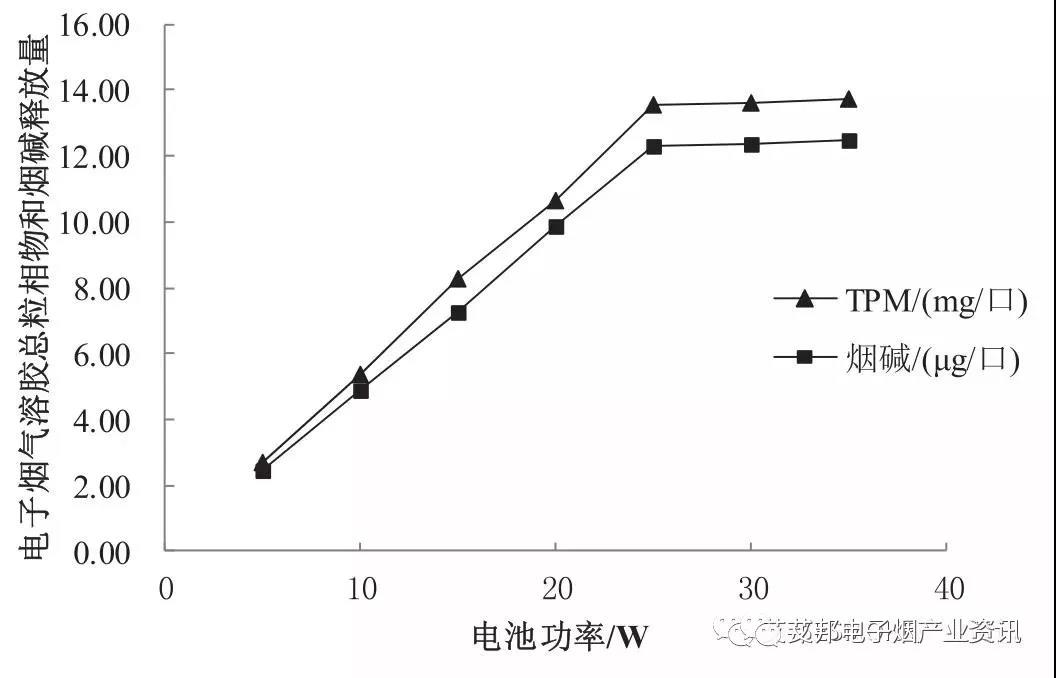
Figure 1: The impact of different battery power on nicotine release in e-cigarettes (disposable replaceable pods, resistance 3.1Ω)
Figure 2: The impact of different battery power on nicotine release in e-cigarettes (refillable pods, resistance 0.5Ω)
The experimental results indicate that as the power of the e-cigarette battery increases, the nicotine release and total aerosol particle mass (TPM) also increase linearly.
For disposable replaceable pod e-cigarettes with a fixed resistance of 3.1Ω, when the power of the e-cigarette battery exceeds 8W, the nicotine release and total aerosol particle mass remain relatively constant; for refillable e-cigarettes with a fixed resistance of 0.5Ω, when the power of the e-cigarette battery exceeds 25W, the nicotine release and total aerosol particle mass remain relatively constant.
This may be because the oil delivery capacity of the e-cigarette's cotton wick has an upper limit; when the power of the e-cigarette battery exceeds a certain value, the oil delivery capacity of the wick reaches its limit, leading to insufficient oil delivery and dry burning phenomena, resulting in the nicotine release and total aerosol particle mass remaining relatively constant.
In simpler terms, the higher the power, the greater the amount of e-liquid atomized per unit time, but due to the wick's oil delivery capacity limitations, there is an upper limit; for disposable replaceable pod e-cigarettes with a fixed resistance of 3.1Ω, the maximum effective power of the battery is 8W, and exceeding this power is redundant.
5. Discussion on e-cigarette battery standards
For manufacturers, safety is paramount; batteries should not catch fire, explode, leak, or exceed 150°C during short circuits. Choosing high reliability, high energy density, long cycle life, low self-discharge, and low cost is the industry's unchanging requirement for batteries.
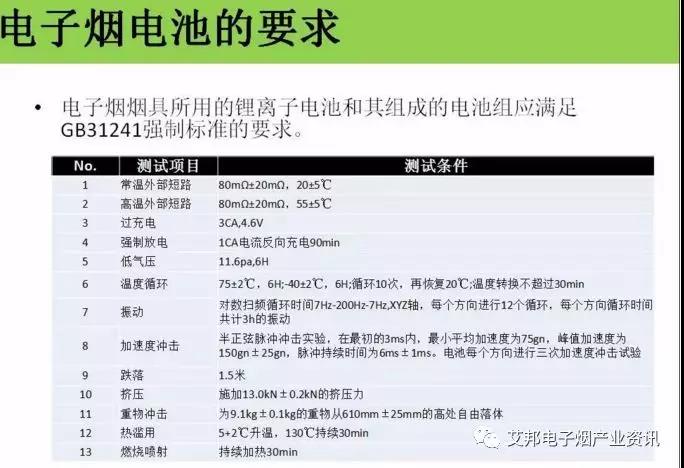
Image: E-cigarette batteryE-cigarettes use high-rate lithium-ion batteries, which have characteristics such as high energy density, high average output voltage, and long cycle life. However, if battery production is not standardized and lacks corresponding standards for regulation, accidents can easily occur.
Experts from the Guangdong Provincial Power Battery Standardization Committee pointed out that when using e-cigarettes, the internal lithium battery needs to withstand high current discharge, generating significant heat. If the battery's rate performance is poor and the e-cigarette's heat dissipation design is flawed, the e-cigarette is highly likely to catch fire or explode.
Although the formulation of industry standards for e-cigarettes is being expedited, there is still a significant lack of standard regulations for e-cigarette batteries. Currently, the standards for e-cigarette batteries exported from China mainly follow the internationally recognized UL certification standards.
In this context, the production standards for e-cigarette batteries need to be implemented as soon as possible to strictly ensure consumer safety.
Below, we will comprehensively analyze e-cigarette batteries from five aspects for your reference and learning.
Types of e-cigarette batteries
Key performance indicators of e-cigarette batteries
Key points for selecting e-cigarette batteries
The impact of different power levels on vaping experience
Discussion on e-cigarette battery standards
1. Types of e-cigarette batteries
Currently, the market for e-cigarettes is flourishing, with various types and specifications of batteries continuously increasing. Let's take a look at the types of e-cigarette batteries, which can be roughly divided into the following four categories;
E-cigarette batteries can also be divided into external batteries and internal batteries.External lithium batteries are mostly of the 18650, 18500, 18350, and 26650 models, also known as hard-shell batteries. The batteries used in e-cigarettes typically have high discharge rates and high power to achieve the set output power for better performance. The "18350" is a commonly used type for mechanical e-cigarettes, where the number 18 indicates a diameter of 18mm, 35 indicates a length of 35mm, and 0 indicates a cylindrical battery.
Internal batteries, also known as soft-pack batteries. Due to the current popularity of disposable e-cigarettes, most are similar to the square soft-pack batteries shown below, while hard-shell batteries, such as the 18650 hard-shell batteries from the big smoke era, are rarely seen now.
Image: Disposable small vape battery2. Key performance indicators of e-cigarette batteries
1. Capacity
We often see the mAh marking on batteries, which is the unit of measurement for battery capacity. The physical standard unit is the familiar coulomb. The international standard unit for coulombs is the product of current and time in ampere-seconds: 1mAh = 0.001 amperes * 3600 seconds = 3.6 ampere-seconds = 3.6 coulombs. For example, a 900mAh battery can provide a continuous power supply of 300mA for 3 hours.
2. Lifespan
Generally, several factors affect the lifespan of e-cigarette batteries, including the battery's amperage, atomizer, battery size, manufacturer, etc. For example, an iTaste VV V3.0 battery can be charged 250 to 300 times, and each full charge can last two to three days. Below is a chart showing the relationship between battery capacity (mAh) and the number of puffs.
Image: Typical relationship between battery capacity and number of puffs (source: Zhihu)
3. High rate
High-rate e-cigarette batteries refer to batteries that can withstand high current discharges. The main difference between e-cigarette batteries and mobile phone batteries is the discharge current; mobile phone batteries are generally used at a discharge current of 0.2C.
E-cigarette batteries typically have a regular discharge current of 1.2A, with discharge rates generally above 5C. E-cigarettes generate high temperatures during operation, so the internal batteries of e-cigarettes are also affected, which is why e-cigarette batteries, especially rechargeable batteries, are generally required to withstand temperatures above 65°C.
Batteries are important components in e-cigarettes; generally, small vapes have an internal lithium battery of about 150-400mAh, while high-power e-cigarettes typically use two batteries. The quality of the battery directly affects the atomization quality and taste of the e-liquid.
3. Key points for selecting e-cigarette batteries
The two important factors for selecting e-cigarette batteries are battery capacity and discharge capability:
Small e-cigarette battery requirements: small size, high discharge rate, high energy density, fast charging, long cycle life, low self-discharge rate;
Large capacity e-cigarette battery requirements: large size, high safety, high power.
In addition to the above two types of battery requirements, there are also several other points based on current industry requirements for e-cigarettes:
The volume of the battery and its unit density capacity and discharge performance must also be improved through the application of new materials to enhance the design and appearance of e-cigarettes;
For material selection, low self-discharge rate batteries require materials with small particle sizes, concentrated distribution, and high surface smoothness;
From the production cycle perspective, long production lead times increase the risk of inventory and tie up significant capital and cash flow, which also extends the product manufacturing cycle, greatly restricting the rapid development of enterprises;
Currently, e-cigarettes come in various shapes, and the corresponding battery processing requirements have not adopted a public mold like USB interface protocols, resulting in multiple mold verifications and resource waste.
4. The impact of different power levels on vaping experience
Research using the e-cigarette puffing method recommended by the Coresta working group (puffing curve square wave, puff volume 55mL, puff frequency 30s, puff duration 3s) was conducted to investigate the impact of different power levels on the nicotine release of e-cigarette aerosols. The experimental results are shown in Figures 1 and 2.
Figure 1: The impact of different battery power on nicotine release in e-cigarettes (disposable replaceable pods, resistance 3.1Ω)
Figure 2: The impact of different battery power on nicotine release in e-cigarettes (refillable pods, resistance 0.5Ω)
The experimental results indicate that as the power of the e-cigarette battery increases, the nicotine release and total aerosol particle mass (TPM) also increase linearly.
For disposable replaceable pod e-cigarettes with a fixed resistance of 3.1Ω, when the power of the e-cigarette battery exceeds 8W, the nicotine release and total aerosol particle mass remain relatively constant; for refillable e-cigarettes with a fixed resistance of 0.5Ω, when the power of the e-cigarette battery exceeds 25W, the nicotine release and total aerosol particle mass remain relatively constant.
This may be because the oil delivery capacity of the e-cigarette's cotton wick has an upper limit; when the power of the e-cigarette battery exceeds a certain value, the oil delivery capacity of the wick reaches its limit, leading to insufficient oil delivery and dry burning phenomena, resulting in the nicotine release and total aerosol particle mass remaining relatively constant.
In simpler terms, the higher the power, the greater the amount of e-liquid atomized per unit time, but due to the wick's oil delivery capacity limitations, there is an upper limit; for disposable replaceable pod e-cigarettes with a fixed resistance of 3.1Ω, the maximum effective power of the battery is 8W, and exceeding this power is redundant.
5. Discussion on e-cigarette battery standards
For manufacturers, safety is paramount; batteries should not catch fire, explode, leak, or exceed 150°C during short circuits. Choosing high reliability, high energy density, long cycle life, low self-discharge, and low cost is the industry's unchanging requirement for batteries.
Related Articles

Vaping News
Ahead of a Nationwide Ban, Hundreds of Russian Retailers Voluntarily Stop Selling Vapes
2026-04-16

Vaping News
Illegal Vape Brands Try to Evade FDA Scrutiny by Posing as “Made in the USA”
2026-04-08

Vaping News
Jordan’s New Tobacco Control Rules: Waterpipe Tobacco Market Set for Major Changes
2026-03-17