
The First Vaping Price War: Down to 99 Yuan, Now a Game for Top Players?
Vaping has existed for more than a decade, but in the Chinese market it has only recently entered a true boom period. According to incomplete statistics, since the second half of 2018, nearly 20 vaping brands have received financing, with total funding ex
E-cigarettes have been around for over a decade, but for the Chinese market, they have just begun to truly explode.
According to incomplete statistics, since the second half of 2018, nearly 20 e-cigarette brands have received funding, with total financing exceeding 1 billion RMB.
Especially since 2019, popular brands like Flow, YOOZ, LINX, and Xiaoye have emerged collectively, leveraging the internet to reach a wider audience.
Additionally, the CCTV 315 Gala's mention of e-cigarettes has furthered public understanding, and the demonization of e-cigarettes is gradually changing. Discussions and opinions on e-cigarette regulation are also ongoing, and competition is intensifying in this hot market.
From a consumer perspective, the current price of e-cigarettes, ranging from 200 to 300 RMB, is still not low. Recently, the popular e-cigarette brand LINX launched its second-generation pod system, with a standard kit of 1 device and 2 pods priced at 99 RMB, marking the first time a pod-style e-cigarette has been priced below 100 RMB.
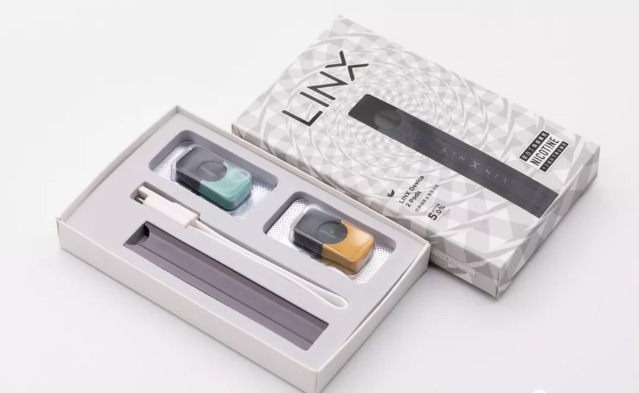
Compared to mainstream industry prices, LINX's price drop is significant, seemingly igniting a "price war" in the e-cigarette market. What is the motivation behind this, and will it lead to the emergence of an oligopoly in the e-cigarette industry?
1. E-cigarettes in the spotlight: one strong player among many, with low market concentration
After over a decade, what is the current state of e-cigarettes in the domestic market?
As the country with the largest number of smokers in the world, China has over 300 million smokers, while the U.S. has nearly 100 million, and the global total is around 1 billion. However, the penetration rate of e-cigarette users in China is less than 1%, compared to 13% in the U.S., showing a significant gap.
Source: Guanyan Tianxia
Moreover, in terms of market size, according to data from the China Electronic Chamber of Commerce, the global market value of e-cigarettes was 110 billion RMB in 2018, while the domestic market was only 4 billion RMB.
In 2018, China ranked sixth in the global e-cigarette sales market with 580 million USD, compared to the U.S. at 8.5 billion USD, which is also a huge gap.
Zhang Jinyuan, the founder of LINX, estimates that the overall sales scale of the Chinese e-cigarette market in 2019 should be between 30 billion and 50 billion RMB.
He also revealed that the leading domestic e-cigarette brand, RELX, has a monthly sales exceeding 100 million RMB, while second-tier brands hover between several million to tens of millions RMB in monthly sales. Even if RELX's annual sales are calculated at 3 billion RMB, its market share is only about 10%.
In a mature market like the U.S., a single leading e-cigarette brand, Juul, already occupies over 70% of the market share, showing a clear head effect.
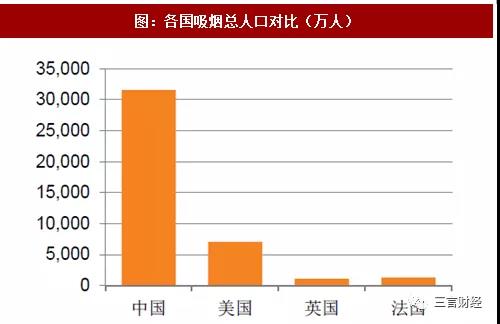
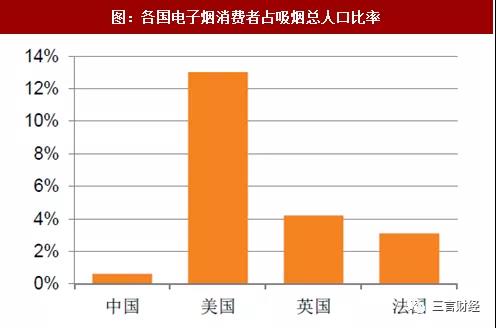
From the above data, it can be seen that compared to Europe and America, China's e-cigarette market is still very early. Zhang Jinyuan describes the Chinese e-cigarette market as a situation of "one strong player among many," with very low market concentration, which is a very accurate description.
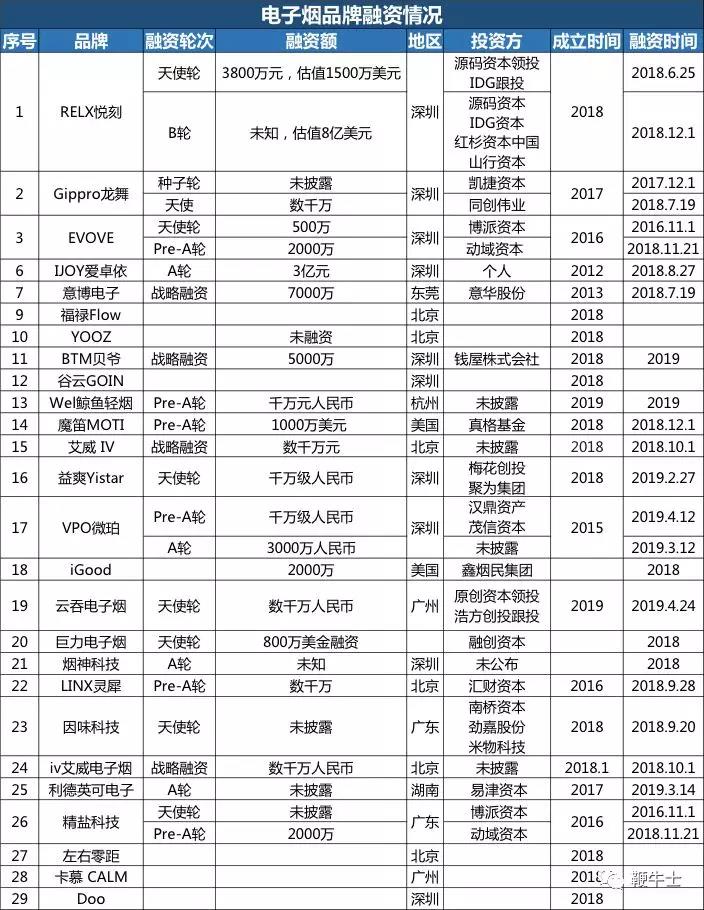
From an investment perspective, e-cigarette financing has concentrated in 2018 and 2019. This also indicates that the current domestic e-cigarette market is in a land-grabbing phase, with a clear windfall effect.
In this context, looking at LINX's price drop gives us a new understanding. In the currently immature market, the overall product pricing of e-cigarettes is still relatively high, indicating there is room for price reduction in consumer products. We can compare this to traditional tobacco prices, where 200 or 300 RMB can already buy a decent pack of cigarettes.
However, not all brands are willing to be the first to take the shot, because for a consumer product, this reflects not only the brand's strategy for product pricing but also the strength of the brand's supply chain capabilities.
2. Price reduction is inevitable, but oligopoly is still hard to emerge in the early stages
In the early market, there are many private label products, and at this time, the supply chain holds a strong position, with e-cigarette companies facing rising supply chain costs. If they can have an equal dialogue with the supply chain, costs can be controlled in a more reasonable environment, making price reductions a reality.

According to industry insiders, the components of products at various price points in the market are almost identical, and the appearance of products is also highly similar.
Zhang Jinyuan revealed that he has reached a strategic equity exchange agreement with the supply chain, achieving exclusive cooperation at the industrial level of e-cigarettes. This is a prerequisite for achieving price reductions.
It is understood that this supply chain company has previously served major companies like Apple, Huawei, LeEco, and Xiaomi, covering the entire e-cigarette industry chain, including e-liquids, molds, and industrial design.
In addition, Zhang Jinyuan has his own understanding of the market. He stated that although e-cigarettes are booming, they are still a new thing, and users need a lower threshold to accept them, as the user education cost remains too high.
E-cigarettes are different from 3C products; their consumption frequency is higher, which requires all products and the entire market to settle into a reasonable price range.
Zhang Jinyuan stated that each brand has its own pricing strategy. He does not believe LINX has initiated a "price war" but rather that the demand for high cost-performance ratios from users is objectively present, and the price drop of e-cigarettes is only a matter of time. "What LINX needs to do is to judge whether there is an advantage in taking the first shot under such circumstances."
He does not believe e-cigarettes will enter an oligopoly era, but this price reduction will definitely impact other manufacturers, and the market price will decrease, though the extent is still uncertain.
In fact, besides LINX, another e-cigarette brand has also begun exploring the downward market. On May 21, Beijing Mogu Technology launched a new e-cigarette brand, Xike TAKI, with a price of 121 RMB for 1 device and 4 pods, attracting significant attention.
Zhang Jinyuan also revealed that as of 9 AM today, the pre-sale volume of LINX's new 99 RMB product has exceeded 6,000 sets, equivalent to over 600,000 in sales, which makes him very satisfied. Tonight at 7 PM, this product will be fully launched on JD, Tmall, and Youzan platforms, and the data should increase further.
3. E-cigarettes enter deep waters: offline retail becomes the main battlefield
The more you understand the e-cigarette market, the more you will find that e-cigarettes are a very standard consumer product model, where product cost-performance and offline channels are crucial capabilities for brands.

Industry insiders say that the domestic e-cigarette market has shifted from a relatively light internet model to a more consumer goods-oriented channel operation model. How to expand, maintain, and develop channels is a heavy model, different from the internet or media.
From the mature U.S. market, it is known that e-cigarettes often adopt a combination of online e-commerce and offline retail. Offline channels can account for 40% to 50% of sales.
However, the current domestic market still has an absolute advantage in online e-commerce channels, with many brands still leaning towards a relatively light internet model.
It is understood that in the e-cigarette market, the gross margin for self-operated sales is about 70%, while the gross margin for channels is about 35%. The prospects for the offline market are very promising.
However, some brands have already started offline competition. Zhang Jinyuan pointed out that LINX has begun selling in 3,800 bars, KTVs, and other venues nationwide, and has promoted over 1,000 physical stores in Shanghai. In terms of sales, offline will account for more than half.
In the offline market, convenience stores, KTVs, bars, and internet cafes will become key areas of competition in the near future.
4. What other possibilities do e-cigarettes have?
E-cigarettes in China are relatively loosely regulated, which gives the e-cigarette market room to grow. Especially for atomized e-cigarettes, most domestic brands are of this type, and the new media communication environment is relatively relaxed.
In the new media environment, the demonization of e-cigarettes is gradually disappearing, and the silence on the harms of nicotine is also changing. Users' understanding of e-cigarettes is becoming more rational, which is beneficial for the development of the domestic e-cigarette market.
#p#分页标题#e#
The difference from heated non-combustion e-cigarettes, which are strictly regulated, lies in the greater product possibilities of atomized e-cigarettes.
Removing nicotine while retaining only the flavor after atomization, atomized products offer an alternative experience.
Currently, many brands have launched nicotine-free e-cigarette products, which resemble a new form of consumer goods.
Zhang Jinyuan pointed out that LINX's brand philosophy is "atomizing everything"; he does not see LINX as merely an e-cigarette brand, as nicotine is not the most important part of the product.
"We hope to provide new ways for people to gain more joy beyond the traditional mainstream consumption of eating and drinking," Zhang Jinyuan said, emphasizing that LINX's goal is to atomize everything.
Atomized coffee and atomized watermelon may seem like an interesting idea. However, these products still face certain skepticism in promotion, as people traditionally associate atomization with smoking. Whether the atomized form of these products will lead to certain guidance for young people still requires investigation and research verification.
What do you think about this? Feel free to leave a comment.
According to incomplete statistics, since the second half of 2018, nearly 20 e-cigarette brands have received funding, with total financing exceeding 1 billion RMB.
Especially since 2019, popular brands like Flow, YOOZ, LINX, and Xiaoye have emerged collectively, leveraging the internet to reach a wider audience.
Additionally, the CCTV 315 Gala's mention of e-cigarettes has furthered public understanding, and the demonization of e-cigarettes is gradually changing. Discussions and opinions on e-cigarette regulation are also ongoing, and competition is intensifying in this hot market.
From a consumer perspective, the current price of e-cigarettes, ranging from 200 to 300 RMB, is still not low. Recently, the popular e-cigarette brand LINX launched its second-generation pod system, with a standard kit of 1 device and 2 pods priced at 99 RMB, marking the first time a pod-style e-cigarette has been priced below 100 RMB.
Compared to mainstream industry prices, LINX's price drop is significant, seemingly igniting a "price war" in the e-cigarette market. What is the motivation behind this, and will it lead to the emergence of an oligopoly in the e-cigarette industry?
1. E-cigarettes in the spotlight: one strong player among many, with low market concentration
After over a decade, what is the current state of e-cigarettes in the domestic market?
As the country with the largest number of smokers in the world, China has over 300 million smokers, while the U.S. has nearly 100 million, and the global total is around 1 billion. However, the penetration rate of e-cigarette users in China is less than 1%, compared to 13% in the U.S., showing a significant gap.
Source: Guanyan Tianxia
Moreover, in terms of market size, according to data from the China Electronic Chamber of Commerce, the global market value of e-cigarettes was 110 billion RMB in 2018, while the domestic market was only 4 billion RMB.
In 2018, China ranked sixth in the global e-cigarette sales market with 580 million USD, compared to the U.S. at 8.5 billion USD, which is also a huge gap.
Zhang Jinyuan, the founder of LINX, estimates that the overall sales scale of the Chinese e-cigarette market in 2019 should be between 30 billion and 50 billion RMB.
He also revealed that the leading domestic e-cigarette brand, RELX, has a monthly sales exceeding 100 million RMB, while second-tier brands hover between several million to tens of millions RMB in monthly sales. Even if RELX's annual sales are calculated at 3 billion RMB, its market share is only about 10%.
In a mature market like the U.S., a single leading e-cigarette brand, Juul, already occupies over 70% of the market share, showing a clear head effect.
From the above data, it can be seen that compared to Europe and America, China's e-cigarette market is still very early. Zhang Jinyuan describes the Chinese e-cigarette market as a situation of "one strong player among many," with very low market concentration, which is a very accurate description.
From an investment perspective, e-cigarette financing has concentrated in 2018 and 2019. This also indicates that the current domestic e-cigarette market is in a land-grabbing phase, with a clear windfall effect.
In this context, looking at LINX's price drop gives us a new understanding. In the currently immature market, the overall product pricing of e-cigarettes is still relatively high, indicating there is room for price reduction in consumer products. We can compare this to traditional tobacco prices, where 200 or 300 RMB can already buy a decent pack of cigarettes.
However, not all brands are willing to be the first to take the shot, because for a consumer product, this reflects not only the brand's strategy for product pricing but also the strength of the brand's supply chain capabilities.
2. Price reduction is inevitable, but oligopoly is still hard to emerge in the early stages
In the early market, there are many private label products, and at this time, the supply chain holds a strong position, with e-cigarette companies facing rising supply chain costs. If they can have an equal dialogue with the supply chain, costs can be controlled in a more reasonable environment, making price reductions a reality.
According to industry insiders, the components of products at various price points in the market are almost identical, and the appearance of products is also highly similar.
Zhang Jinyuan revealed that he has reached a strategic equity exchange agreement with the supply chain, achieving exclusive cooperation at the industrial level of e-cigarettes. This is a prerequisite for achieving price reductions.
It is understood that this supply chain company has previously served major companies like Apple, Huawei, LeEco, and Xiaomi, covering the entire e-cigarette industry chain, including e-liquids, molds, and industrial design.
In addition, Zhang Jinyuan has his own understanding of the market. He stated that although e-cigarettes are booming, they are still a new thing, and users need a lower threshold to accept them, as the user education cost remains too high.
E-cigarettes are different from 3C products; their consumption frequency is higher, which requires all products and the entire market to settle into a reasonable price range.
Zhang Jinyuan stated that each brand has its own pricing strategy. He does not believe LINX has initiated a "price war" but rather that the demand for high cost-performance ratios from users is objectively present, and the price drop of e-cigarettes is only a matter of time. "What LINX needs to do is to judge whether there is an advantage in taking the first shot under such circumstances."
He does not believe e-cigarettes will enter an oligopoly era, but this price reduction will definitely impact other manufacturers, and the market price will decrease, though the extent is still uncertain.
In fact, besides LINX, another e-cigarette brand has also begun exploring the downward market. On May 21, Beijing Mogu Technology launched a new e-cigarette brand, Xike TAKI, with a price of 121 RMB for 1 device and 4 pods, attracting significant attention.
Zhang Jinyuan also revealed that as of 9 AM today, the pre-sale volume of LINX's new 99 RMB product has exceeded 6,000 sets, equivalent to over 600,000 in sales, which makes him very satisfied. Tonight at 7 PM, this product will be fully launched on JD, Tmall, and Youzan platforms, and the data should increase further.
3. E-cigarettes enter deep waters: offline retail becomes the main battlefield
The more you understand the e-cigarette market, the more you will find that e-cigarettes are a very standard consumer product model, where product cost-performance and offline channels are crucial capabilities for brands.
Industry insiders say that the domestic e-cigarette market has shifted from a relatively light internet model to a more consumer goods-oriented channel operation model. How to expand, maintain, and develop channels is a heavy model, different from the internet or media.
From the mature U.S. market, it is known that e-cigarettes often adopt a combination of online e-commerce and offline retail. Offline channels can account for 40% to 50% of sales.
However, the current domestic market still has an absolute advantage in online e-commerce channels, with many brands still leaning towards a relatively light internet model.
It is understood that in the e-cigarette market, the gross margin for self-operated sales is about 70%, while the gross margin for channels is about 35%. The prospects for the offline market are very promising.
However, some brands have already started offline competition. Zhang Jinyuan pointed out that LINX has begun selling in 3,800 bars, KTVs, and other venues nationwide, and has promoted over 1,000 physical stores in Shanghai. In terms of sales, offline will account for more than half.
In the offline market, convenience stores, KTVs, bars, and internet cafes will become key areas of competition in the near future.
4. What other possibilities do e-cigarettes have?
E-cigarettes in China are relatively loosely regulated, which gives the e-cigarette market room to grow. Especially for atomized e-cigarettes, most domestic brands are of this type, and the new media communication environment is relatively relaxed.
In the new media environment, the demonization of e-cigarettes is gradually disappearing, and the silence on the harms of nicotine is also changing. Users' understanding of e-cigarettes is becoming more rational, which is beneficial for the development of the domestic e-cigarette market.
#p#分页标题#e#
The difference from heated non-combustion e-cigarettes, which are strictly regulated, lies in the greater product possibilities of atomized e-cigarettes.
Removing nicotine while retaining only the flavor after atomization, atomized products offer an alternative experience.
Currently, many brands have launched nicotine-free e-cigarette products, which resemble a new form of consumer goods.
Zhang Jinyuan pointed out that LINX's brand philosophy is "atomizing everything"; he does not see LINX as merely an e-cigarette brand, as nicotine is not the most important part of the product.
"We hope to provide new ways for people to gain more joy beyond the traditional mainstream consumption of eating and drinking," Zhang Jinyuan said, emphasizing that LINX's goal is to atomize everything.
Atomized coffee and atomized watermelon may seem like an interesting idea. However, these products still face certain skepticism in promotion, as people traditionally associate atomization with smoking. Whether the atomized form of these products will lead to certain guidance for young people still requires investigation and research verification.
What do you think about this? Feel free to leave a comment.
Related Articles

Vaping News
Ahead of a Nationwide Ban, Hundreds of Russian Retailers Voluntarily Stop Selling Vapes
2026-04-16

Vaping News
Illegal Vape Brands Try to Evade FDA Scrutiny by Posing as “Made in the USA”
2026-04-08

Vaping News
Jordan’s New Tobacco Control Rules: Waterpipe Tobacco Market Set for Major Changes
2026-03-17