
Are Bluetooth E-Cigarettes the Next Trend?
A few days ago, I came across a news story about Juul on an overseas website. It was roughly about this: at the end of July, Juul opened its first retail store in Canada, located at 495 Queen Street West in Toronto. Health Canada believes vaping is less h
A few days ago, I saw a news article about Juul on a foreign website. It roughly talked about this:
At the end of July, Juul opened its first retail store in Canada, located at 495 Queen Street West. The Canadian Ministry of Health believes that "vaping is less harmful than smoking," so they support Juul's establishment of direct retail stores in Canada, considering that offline stores can serve as educational venues for e-cigarettes.
At the same time, Juul's co-founder, James Monsees, was attending a U.S. congressional hearing primarily discussing the surge in youth usage of Juul.
Monsees believes that e-cigarettes are "satisfying combustible cigarette alternatives" intended for adult use, suitable for those who want to quit smoking but cannot. The direct retail stores are places for Juul to talk directly to adult smokers about their products. Juul will make every effort to prevent teenagers from accessing e-cigarettes through connected devices, which can effectively prevent underage use.
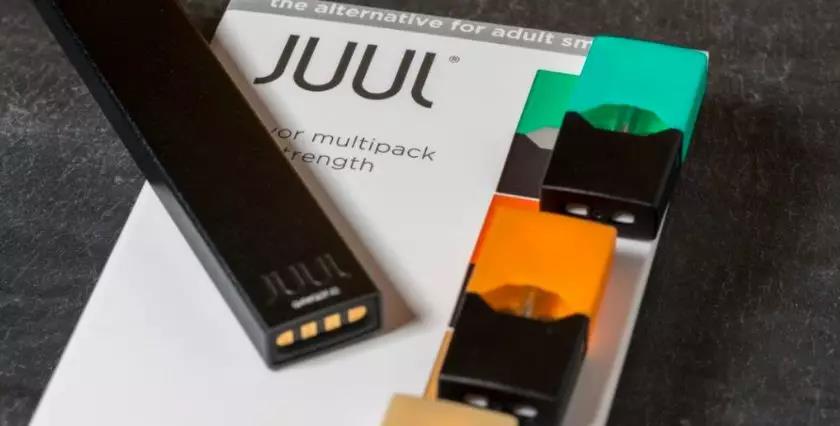
The connected device mentioned by Monsees is the Bluetooth feature involved in Juul's newly launched second-generation product. Currently, Juul has not revealed much about the functions enabled by Bluetooth, only stating that customers can monitor their nicotine intake through an Android app. Canada is one of the first test markets, and this device can be purchased online and in stores. Monsees believes that Bluetooth-connected devices will provide current adult smokers with features they find valuable.
What caught my attention in this news was not that Juul opened a direct retail experience store; I was not surprised by Juul's store opening. I previously expressed some views on e-cigarette offline stores in the article "Offending People Again, This Time It's All My Own People!—Some Thoughts on E-Cigarette Offline Stores." However, when I saw that Juul's second-generation product included Bluetooth functionality, I felt like I found a kindred spirit.
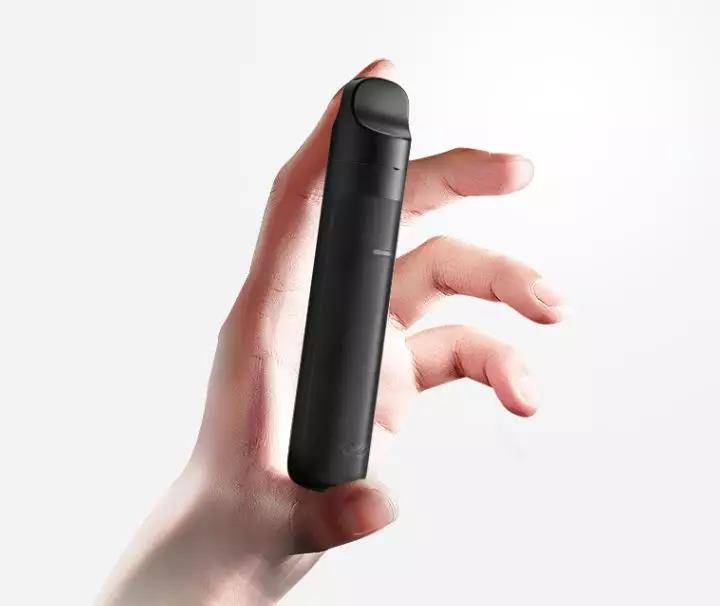
In fact, Bluetooth functionality is no longer a novelty; the first generation of the Dazhan brand already included a Bluetooth module in 2017. At that time, when I first encountered e-cigarettes, I discussed the Bluetooth feature of Dazhan with friends. If I remember correctly, Dazhan's Bluetooth was mainly for adjusting voltage and child lock. The voltage adjustment retained the demand for large vapor, and the child lock idea was quite advanced; I respect Dazhan for this idea.
My friends also highly praised Dazhan's Bluetooth design for two reasons: first, smart hardware is a trend, and it has a user-friendly interface with mobile devices, allowing for expansion; second, Bluetooth can eliminate the need for physical buttons on e-cigarettes, making the overall design more aesthetically pleasing.
However, I was not optimistic at that time for two reasons. First, in 2017, the e-cigarette market in China was still in its early stages, and the market penetration was too low. At that time, the market was dominated by large vapor products, and small salt nicotine devices had not yet appeared. Even if smart hardware is a trend, the basic needs of e-cigarettes had not been met, making Bluetooth too early. Second, the functions enabled by Bluetooth were not appropriate. At that time, very few teenagers used e-cigarettes, and the child lock was quite advanced, while adjusting voltage via Bluetooth was less convenient than using physical buttons on the device. Imagine having to open your phone, wait for Bluetooth to connect, and then open the app to adjust the voltage each time. This design could make it inconvenient for users. Of course, I admit that having no physical buttons would look better, but the practicality is the mainstream culture for us Chinese. Good looks without practicality can only be niche products.
I have no intention of criticizing Dazhan; I have always held the highest respect for pioneers and innovators. In my impression, Dazhan is the representative of Bluetooth e-cigarettes. Whenever I think of Dazhan, I always remember their Bluetooth feature, and I believe Dazhan has made consumers remember the characteristics of their products. From this perspective, it is undoubtedly a success. Moreover, I am about to contradict myself.
Because in January of this year, when I chatted with a friend who makes e-cigarettes, I suggested that he start preparing to make Bluetooth e-cigarettes. Why has my attitude changed completely in just one year? I thought simply that in 2019, the industry would emerge, and e-cigarette products would gradually mature, while homogenization would become increasingly serious. Bluetooth might become an attractive factor, at least a selling point and differentiator. Therefore, the timing of the emergence of Bluetooth e-cigarettes is very important; being too early lacks a user base, and being too late means falling behind. I speculate that in 2020, Bluetooth will become an important development branch of e-cigarettes, so preparations need to start in 2019. However, I did not expect that well-known figures from various industries, like Luo Yonghao, would jump in together. I also did not expect that the 315 incident would push e-cigarettes into the spotlight, tarnishing the industry and forcing practitioners to clean up their image, making it difficult for many media and the public to distinguish between right and wrong.
#p#分页标题#e#
Now, the mainstream media's tone is conveying a message to us—e-cigarettes may be regulated in the direction of traditional cigarettes. It seems that the entry of capital and internet celebrities has undoubtedly accelerated the regulatory process of the e-cigarette market. However, before this, I did not have the foresight of Dazhan; I even thought that China would not temporarily require Bluetooth to prevent teenagers from accessing e-cigarettes like the U.S. At that time, I only focused on two functions of Bluetooth.
First, it can provide timely feedback on how many puffs users take each day, how much nicotine they intake, how many traditional cigarettes they have effectively reduced, and how much tar and carbon monoxide they have decreased. E-cigarettes have always emphasized that they are healthier than traditional cigarettes; if this can be reflected in numerical values, it would be more intuitive and help reinforce users' continued use. Human nature is inherently proud. One of the reasons games are attractive is that players can see the results of their impressive actions immediately, gaining recognition. Thus, I can feel proud that I have not smoked traditional cigarettes today and am healthier than those who still smoke traditional cigarettes.
Second, connecting via Bluetooth allows users to share their e-cigarette usage data and experiences on WeChat and Weibo. Sharing could lead to social interactions, which may create opportunities for significant business growth.

Originally, I intended to write an article urging everyone to start researching Bluetooth e-cigarettes, but a few days ago, after discussing the above ideas with a friend in the e-cigarette industry, he shook his head and said:
What you mentioned, I have thought about. Monitoring how many puffs users take daily may not reinforce their continued use of e-cigarettes; it may have the opposite effect, prompting users to reduce their usage. From a business perspective, this is contradictory. Additionally, having users share their e-cigarette usage on their phones is not very realistic. That is a false demand; it is merely the wishful thinking of e-cigarette companies. Users have no reason to share their e-cigarette usage because, in today's society, smoking is considered a bad behavior, and even e-cigarettes are viewed similarly. Just think about how someone would be willing to publicly share that they are engaging in a bad habit?
After hearing this, I was uncertain. It seems that to promote Bluetooth e-cigarettes, one must uncover the genuine needs of users. Although I still haven't found a reason that users cannot refuse Bluetooth e-cigarettes, I have a vague feeling that Bluetooth e-cigarettes will be a trend.
At the end of July, Juul opened its first retail store in Canada, located at 495 Queen Street West. The Canadian Ministry of Health believes that "vaping is less harmful than smoking," so they support Juul's establishment of direct retail stores in Canada, considering that offline stores can serve as educational venues for e-cigarettes.
At the same time, Juul's co-founder, James Monsees, was attending a U.S. congressional hearing primarily discussing the surge in youth usage of Juul.
Monsees believes that e-cigarettes are "satisfying combustible cigarette alternatives" intended for adult use, suitable for those who want to quit smoking but cannot. The direct retail stores are places for Juul to talk directly to adult smokers about their products. Juul will make every effort to prevent teenagers from accessing e-cigarettes through connected devices, which can effectively prevent underage use.
The connected device mentioned by Monsees is the Bluetooth feature involved in Juul's newly launched second-generation product. Currently, Juul has not revealed much about the functions enabled by Bluetooth, only stating that customers can monitor their nicotine intake through an Android app. Canada is one of the first test markets, and this device can be purchased online and in stores. Monsees believes that Bluetooth-connected devices will provide current adult smokers with features they find valuable.
What caught my attention in this news was not that Juul opened a direct retail experience store; I was not surprised by Juul's store opening. I previously expressed some views on e-cigarette offline stores in the article "Offending People Again, This Time It's All My Own People!—Some Thoughts on E-Cigarette Offline Stores." However, when I saw that Juul's second-generation product included Bluetooth functionality, I felt like I found a kindred spirit.
In fact, Bluetooth functionality is no longer a novelty; the first generation of the Dazhan brand already included a Bluetooth module in 2017. At that time, when I first encountered e-cigarettes, I discussed the Bluetooth feature of Dazhan with friends. If I remember correctly, Dazhan's Bluetooth was mainly for adjusting voltage and child lock. The voltage adjustment retained the demand for large vapor, and the child lock idea was quite advanced; I respect Dazhan for this idea.
My friends also highly praised Dazhan's Bluetooth design for two reasons: first, smart hardware is a trend, and it has a user-friendly interface with mobile devices, allowing for expansion; second, Bluetooth can eliminate the need for physical buttons on e-cigarettes, making the overall design more aesthetically pleasing.
However, I was not optimistic at that time for two reasons. First, in 2017, the e-cigarette market in China was still in its early stages, and the market penetration was too low. At that time, the market was dominated by large vapor products, and small salt nicotine devices had not yet appeared. Even if smart hardware is a trend, the basic needs of e-cigarettes had not been met, making Bluetooth too early. Second, the functions enabled by Bluetooth were not appropriate. At that time, very few teenagers used e-cigarettes, and the child lock was quite advanced, while adjusting voltage via Bluetooth was less convenient than using physical buttons on the device. Imagine having to open your phone, wait for Bluetooth to connect, and then open the app to adjust the voltage each time. This design could make it inconvenient for users. Of course, I admit that having no physical buttons would look better, but the practicality is the mainstream culture for us Chinese. Good looks without practicality can only be niche products.
I have no intention of criticizing Dazhan; I have always held the highest respect for pioneers and innovators. In my impression, Dazhan is the representative of Bluetooth e-cigarettes. Whenever I think of Dazhan, I always remember their Bluetooth feature, and I believe Dazhan has made consumers remember the characteristics of their products. From this perspective, it is undoubtedly a success. Moreover, I am about to contradict myself.
Because in January of this year, when I chatted with a friend who makes e-cigarettes, I suggested that he start preparing to make Bluetooth e-cigarettes. Why has my attitude changed completely in just one year? I thought simply that in 2019, the industry would emerge, and e-cigarette products would gradually mature, while homogenization would become increasingly serious. Bluetooth might become an attractive factor, at least a selling point and differentiator. Therefore, the timing of the emergence of Bluetooth e-cigarettes is very important; being too early lacks a user base, and being too late means falling behind. I speculate that in 2020, Bluetooth will become an important development branch of e-cigarettes, so preparations need to start in 2019. However, I did not expect that well-known figures from various industries, like Luo Yonghao, would jump in together. I also did not expect that the 315 incident would push e-cigarettes into the spotlight, tarnishing the industry and forcing practitioners to clean up their image, making it difficult for many media and the public to distinguish between right and wrong.
#p#分页标题#e#
Now, the mainstream media's tone is conveying a message to us—e-cigarettes may be regulated in the direction of traditional cigarettes. It seems that the entry of capital and internet celebrities has undoubtedly accelerated the regulatory process of the e-cigarette market. However, before this, I did not have the foresight of Dazhan; I even thought that China would not temporarily require Bluetooth to prevent teenagers from accessing e-cigarettes like the U.S. At that time, I only focused on two functions of Bluetooth.
First, it can provide timely feedback on how many puffs users take each day, how much nicotine they intake, how many traditional cigarettes they have effectively reduced, and how much tar and carbon monoxide they have decreased. E-cigarettes have always emphasized that they are healthier than traditional cigarettes; if this can be reflected in numerical values, it would be more intuitive and help reinforce users' continued use. Human nature is inherently proud. One of the reasons games are attractive is that players can see the results of their impressive actions immediately, gaining recognition. Thus, I can feel proud that I have not smoked traditional cigarettes today and am healthier than those who still smoke traditional cigarettes.
Second, connecting via Bluetooth allows users to share their e-cigarette usage data and experiences on WeChat and Weibo. Sharing could lead to social interactions, which may create opportunities for significant business growth.
Originally, I intended to write an article urging everyone to start researching Bluetooth e-cigarettes, but a few days ago, after discussing the above ideas with a friend in the e-cigarette industry, he shook his head and said:
What you mentioned, I have thought about. Monitoring how many puffs users take daily may not reinforce their continued use of e-cigarettes; it may have the opposite effect, prompting users to reduce their usage. From a business perspective, this is contradictory. Additionally, having users share their e-cigarette usage on their phones is not very realistic. That is a false demand; it is merely the wishful thinking of e-cigarette companies. Users have no reason to share their e-cigarette usage because, in today's society, smoking is considered a bad behavior, and even e-cigarettes are viewed similarly. Just think about how someone would be willing to publicly share that they are engaging in a bad habit?
After hearing this, I was uncertain. It seems that to promote Bluetooth e-cigarettes, one must uncover the genuine needs of users. Although I still haven't found a reason that users cannot refuse Bluetooth e-cigarettes, I have a vague feeling that Bluetooth e-cigarettes will be a trend.
Related Articles

Vaping News
Ahead of a Nationwide Ban, Hundreds of Russian Retailers Voluntarily Stop Selling Vapes
2026-04-16

Vaping News
Illegal Vape Brands Try to Evade FDA Scrutiny by Posing as “Made in the USA”
2026-04-08

Vaping News
Jordan’s New Tobacco Control Rules: Waterpipe Tobacco Market Set for Major Changes
2026-03-17