
Analysis of the global e-cigarette industry market status and trends in 2020
1. E-cigarettes are driving growth in the global tobacco market. The global tobacco market refers to sectors related to the cultivation, manufacturing, distribution, and retail of tobacco products.
1. E-cigarettes Drive Growth in the Global Tobacco Market
The global tobacco market refers to the market related to the planting, manufacturing, distribution, and retail of tobacco products. In terms of revenue, the global tobacco product market was valued at $859.3 billion in 2019. In the future, under the influence of increasingly strict control policies worldwide, the retail volume of traditional tobacco will continue to decline. However, the rise in tobacco retail prices and the emergence of e-cigarettes will offset the impact of declining sales.
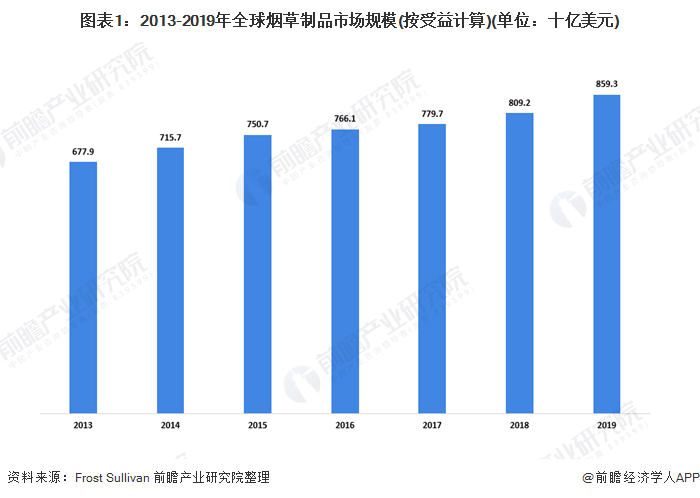
Chart 1: Global Tobacco Product Market Size (by revenue) from 2013 to 2019 (in billions of dollars)
Currently, the global tobacco market is primarily dominated by cigarettes and e-cigarettes. In terms of sales, cigarettes dominate the global tobacco product market, accounting for 89% of total tobacco product sales in 2018. However, as e-cigarettes become increasingly popular worldwide, their market share will continue to grow.
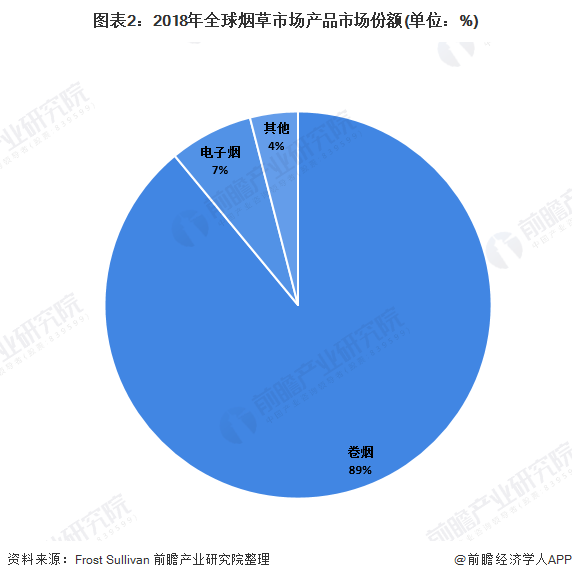
Chart 2: Global Tobacco Market Product Market Share in 2018 (in %)
2. Closed E-cigarettes Become Mainstream Products
E-cigarettes are battery-powered devices designed to resemble traditional cigarettes, and they emit vaporized e-liquid when the user inhales. E-cigarette products include closed e-cigarettes, open e-cigarettes, and heated non-combustion devices.
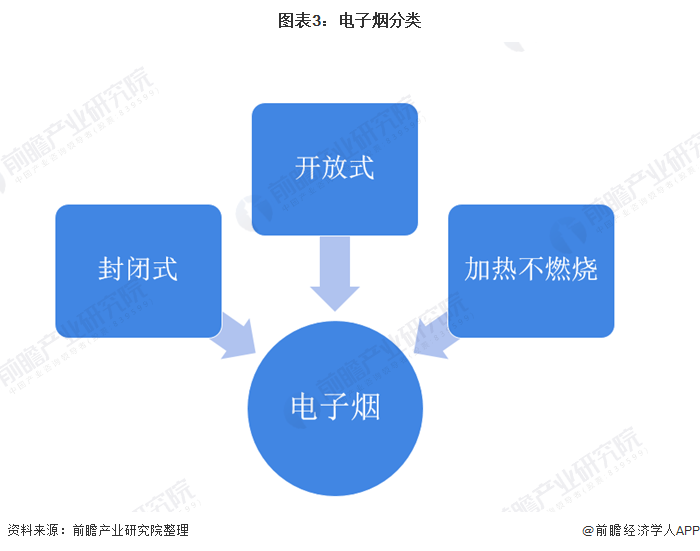
Chart 3: Classification of E-cigarettes
Upstream suppliers in the e-cigarette industry chain include raw materials, equipment, and labor service providers; midstream includes e-cigarette manufacturers; and the downstream market consists of e-cigarette distributors.
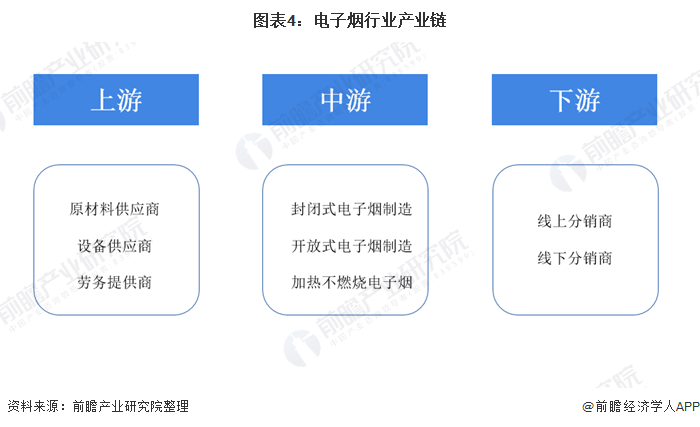
Chart 4: E-cigarette Industry Chain
E-cigarettes have become an innovative electronic consumer product, gaining popularity globally. The strong growth of the global e-cigarette market is mainly attributed to the increasing acceptance of e-cigarette products by consumers, aggressive marketing efforts by tobacco companies, and accelerated innovation and product development by e-cigarette manufacturers. In 2019, the global e-cigarette market was valued at $44.7 billion (by revenue).
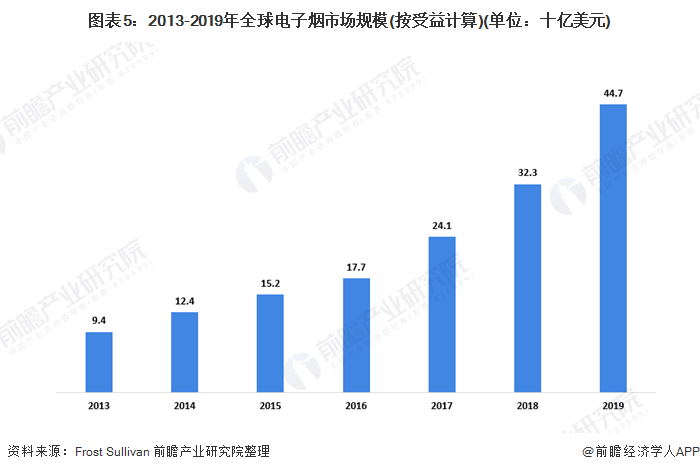
Chart 5: Global E-cigarette Market Size (by revenue) from 2013 to 2019 (in billions of dollars)
In 2019, the global e-cigarette market was primarily composed of closed and open e-cigarettes. The market share of closed e-cigarettes was 51.90%, while open e-cigarettes accounted for 34.68%.
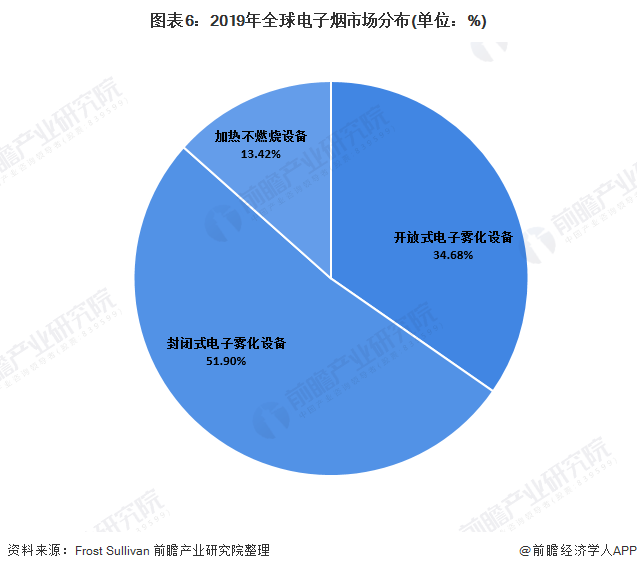
Chart 6: Distribution of the Global E-cigarette Market in 2019 (in %)
3. The United States Becomes the Largest E-cigarette Market
As the number of e-cigarette users continues to rise in the United States, the European Union, China, and Japan, the market size in these countries or regions continues to grow. Due to the formation of e-cigarette culture in the United States, it has the largest e-cigarette market globally, with a market size of $18.1 billion in 2018. The increasing demand from users in the EU, China, and Japan in recent years has provided opportunities for the development of the e-cigarette market. In 2018, the market sizes for e-cigarettes in the EU, China, and Japan were $6.5 billion, $2.4 billion, and $0.4 billion, respectively.
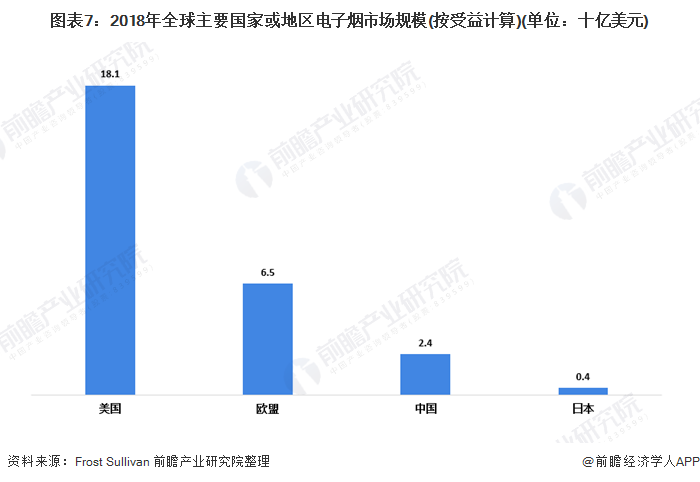
Chart 7: Market Size of Major Countries or Regions for E-cigarettes in 2018 (by revenue) (in billions of dollars)
From the perspective of regional market share, the United States occupies 57% of the global market share, while the EU and China account for 19.6% and 6.6%, respectively; Japan's market share is only 1%.
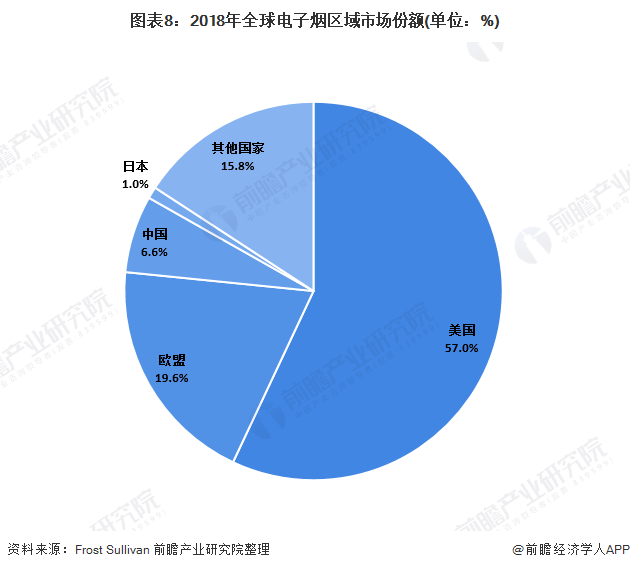
Chart 8: Regional Market Share of Global E-cigarettes in 2018 (in %)
4. The Chinese E-cigarette Market Lacks Industry Standards
Regulations and policies regarding e-cigarettes vary by country or region. In major markets for electronic vaporizers, such as the United States and Europe, industry-related regulations are primarily aimed at guiding the development of the e-cigarette market, with the principle of ensuring the quality of e-cigarettes and the health of consumers. In the case of the Chinese e-cigarette market, there are currently no clear relevant policies and regulations, leading to significant uncertainty in the development of the e-cigarette industry.
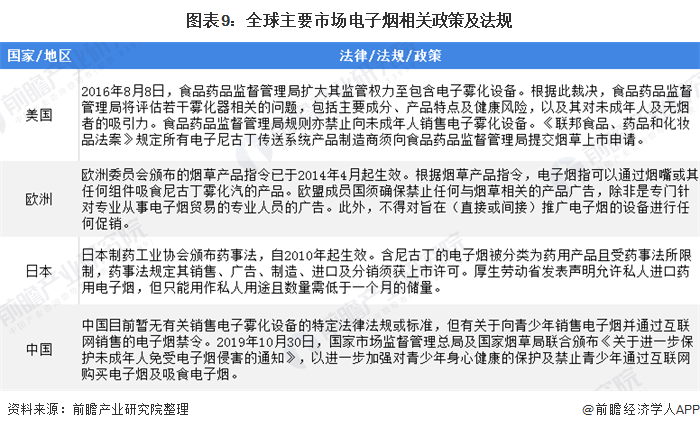
Chart 9: Relevant Policies and Regulations for E-cigarettes in Major Global Markets
5. Future Trends in the E-cigarette Market:
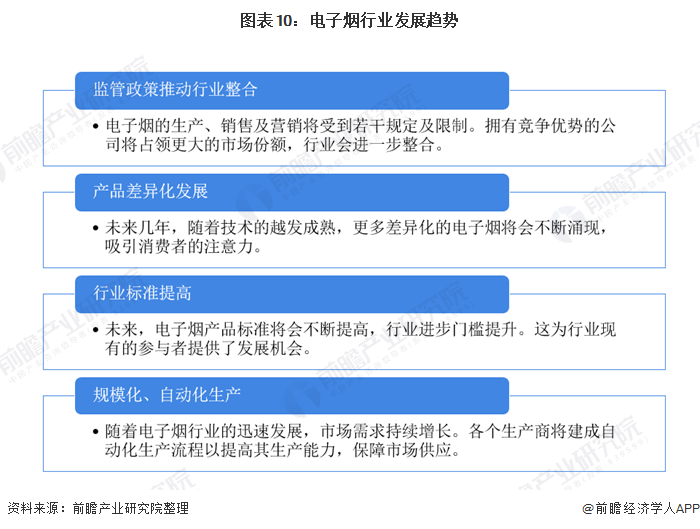
Chart 10: Development Trends in the E-cigarette Industry
The above data and analysis are referenced from the "Market Demand Forecast and Investment Strategy Planning Analysis Report for China's New Tobacco Products Industry" by the Forward Industry Research Institute, which also provides solutions for industry big data, industry planning, industry application, industrial park planning, and investment attraction.
The global tobacco market refers to the market related to the planting, manufacturing, distribution, and retail of tobacco products. In terms of revenue, the global tobacco product market was valued at $859.3 billion in 2019. In the future, under the influence of increasingly strict control policies worldwide, the retail volume of traditional tobacco will continue to decline. However, the rise in tobacco retail prices and the emergence of e-cigarettes will offset the impact of declining sales.
Chart 1: Global Tobacco Product Market Size (by revenue) from 2013 to 2019 (in billions of dollars)
Currently, the global tobacco market is primarily dominated by cigarettes and e-cigarettes. In terms of sales, cigarettes dominate the global tobacco product market, accounting for 89% of total tobacco product sales in 2018. However, as e-cigarettes become increasingly popular worldwide, their market share will continue to grow.
Chart 2: Global Tobacco Market Product Market Share in 2018 (in %)
2. Closed E-cigarettes Become Mainstream Products
E-cigarettes are battery-powered devices designed to resemble traditional cigarettes, and they emit vaporized e-liquid when the user inhales. E-cigarette products include closed e-cigarettes, open e-cigarettes, and heated non-combustion devices.
Chart 3: Classification of E-cigarettes
Upstream suppliers in the e-cigarette industry chain include raw materials, equipment, and labor service providers; midstream includes e-cigarette manufacturers; and the downstream market consists of e-cigarette distributors.
Chart 4: E-cigarette Industry Chain
E-cigarettes have become an innovative electronic consumer product, gaining popularity globally. The strong growth of the global e-cigarette market is mainly attributed to the increasing acceptance of e-cigarette products by consumers, aggressive marketing efforts by tobacco companies, and accelerated innovation and product development by e-cigarette manufacturers. In 2019, the global e-cigarette market was valued at $44.7 billion (by revenue).
Chart 5: Global E-cigarette Market Size (by revenue) from 2013 to 2019 (in billions of dollars)
In 2019, the global e-cigarette market was primarily composed of closed and open e-cigarettes. The market share of closed e-cigarettes was 51.90%, while open e-cigarettes accounted for 34.68%.
Chart 6: Distribution of the Global E-cigarette Market in 2019 (in %)
3. The United States Becomes the Largest E-cigarette Market
As the number of e-cigarette users continues to rise in the United States, the European Union, China, and Japan, the market size in these countries or regions continues to grow. Due to the formation of e-cigarette culture in the United States, it has the largest e-cigarette market globally, with a market size of $18.1 billion in 2018. The increasing demand from users in the EU, China, and Japan in recent years has provided opportunities for the development of the e-cigarette market. In 2018, the market sizes for e-cigarettes in the EU, China, and Japan were $6.5 billion, $2.4 billion, and $0.4 billion, respectively.
Chart 7: Market Size of Major Countries or Regions for E-cigarettes in 2018 (by revenue) (in billions of dollars)
From the perspective of regional market share, the United States occupies 57% of the global market share, while the EU and China account for 19.6% and 6.6%, respectively; Japan's market share is only 1%.
Chart 8: Regional Market Share of Global E-cigarettes in 2018 (in %)
4. The Chinese E-cigarette Market Lacks Industry Standards
Regulations and policies regarding e-cigarettes vary by country or region. In major markets for electronic vaporizers, such as the United States and Europe, industry-related regulations are primarily aimed at guiding the development of the e-cigarette market, with the principle of ensuring the quality of e-cigarettes and the health of consumers. In the case of the Chinese e-cigarette market, there are currently no clear relevant policies and regulations, leading to significant uncertainty in the development of the e-cigarette industry.
Chart 9: Relevant Policies and Regulations for E-cigarettes in Major Global Markets
5. Future Trends in the E-cigarette Market:
Chart 10: Development Trends in the E-cigarette Industry
The above data and analysis are referenced from the "Market Demand Forecast and Investment Strategy Planning Analysis Report for China's New Tobacco Products Industry" by the Forward Industry Research Institute, which also provides solutions for industry big data, industry planning, industry application, industrial park planning, and investment attraction.
Related Articles

Vaping News
Ahead of a Nationwide Ban, Hundreds of Russian Retailers Voluntarily Stop Selling Vapes
2026-04-16

Vaping News
Illegal Vape Brands Try to Evade FDA Scrutiny by Posing as “Made in the USA”
2026-04-08

Vaping News
Jordan’s New Tobacco Control Rules: Waterpipe Tobacco Market Set for Major Changes
2026-03-17