
European Heart Journal Study: No Proof Yet That Vaping Causes Lung Cancer
The use of e-cigarettes and hookahs is an emerging trend, especially among younger generations. Researchers now warn that both vaping and smoking—whether cigarettes, e-cigarettes, or hookahs—can stiffen arteries, trigger inflammation, and damage DNA, pote
The use of e-cigarettes and hookahs is an emerging trend, especially among the younger generation. Now, researchers are warning that using e-cigarettes and smoking, whether through traditional cigarettes, e-cigarettes, or hookahs, can lead to arterial stiffness, inflammation, and DNA damage, resulting in various health issues.
The research team also found that using e-cigarettes and smoking may increase the risk of more severe symptoms and death among those infected with Covid-19. As outlined by the World Health Organization (WHO), compared to non-smokers, using e-cigarettes and hookahs may increase the symptom burden caused by Covid-19, including the need for intensive care, mechanical ventilation, and severe health impacts.
This study was published in the European Heart Journal.
They added that since smoking itself is a recognized risk factor for respiratory infections and increases the likelihood of pre-existing conditions such as cardiovascular diseases, it may make Covid-19 patients more susceptible to severe symptoms, leading to increased mortality.
The team included experts from Johannes Gutenberg University Medical Center in Germany, Mainz University, the University of Massachusetts Medical School, and University College London.
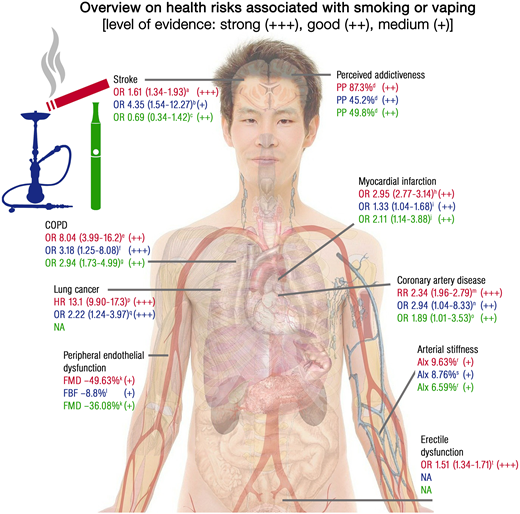
They compared the health impacts of using e-cigarettes and smoking across three forms and examined the function of cells lining the blood vessels (endothelium). The study provides an overview of existing evidence regarding the harmful chemicals produced and the mechanisms by which smoking and vaping affect the body. The researchers also investigated the effects of each substance on medical conditions such as stroke, heart attacks, and lung cancer.
The research shows a sharp increase in the number of users of e-cigarettes and hookah devices, with e-cigarettes being the most commonly used smoking product in the U.S. in 2014 (usage increased ninefold from 2011 to 2015), and global sales are expected to reach $26.84 billion by 2023. Additionally, the prevalence of hookah use is concerning, ranging from 2.1% to 44.0% in the U.S., 11.6% to 40.1% in the UK, and 20.0% to 28.9% in Germany.
The review graded the studies to provide strong, good, or moderate levels of evidence regarding the harms of the three forms of smoking and vaping. They found several good studies indicating that, overall, cigarettes are more harmful than e-cigarettes. However, there is limited research on the adverse effects of hookah and e-cigarettes on endothelial dysfunction, and no large-scale studies have been conducted, leading to variable evidence.
The research team stated that more studies are needed to understand the long-term effects of hookah and e-cigarettes.
However, they noted that smoking hookah is not less harmful than smoking cigarettes and should not be considered a healthy alternative. The team stated that the amount of smoke produced from hookahs is greater than that from cigarettes, potentially leading to greater exposure to toxic substances. Overall, the increase in the use of e-cigarettes and hookahs is concerning.
According to the analysis, compared to non-smokers, smoking cigarettes increases the risk of chronic obstructive pulmonary disease (COPD) by 704% (good evidence level), hookah increases it by 218% (strong), and e-cigarettes increase it by 194% (good); smoking cigarettes and hookah respectively increase the risk of lung cancer by 1210% (strong) and 122% (strong). The evidence level for e-cigarettes is insufficient to draw reliable conclusions.
The review stated that smoking cigarettes increases the risk of chronic obstructive pulmonary disease (COPD) by 704% compared to non-smokers, while hookah increases it by 218% and e-cigarettes by 194%.
The research team also analyzed the degree of arterial stiffness caused by the three smoking methods, as arterial stiffness is an important prognostic indicator for heart disease and stroke risk.
Compared to non-smokers, smoking cigarettes increased arterial stiffness by 10%, hookah by 9%, and e-cigarettes by 7% (with moderate evidence level for all three).
The first author of the paper, Professor Thomas Münzel from the Department of Cardiology at Mainz University Medical Center, stated that all three smoking methods lead to an increase in the production of oxygen free radicals, such as superoxide, in vascular tissues. This breakdown of nitric oxide released by the endothelium is crucial for helping blood vessels dilate and preventing inflammation and arterial blockage.
Researchers noted that the main toxic chemicals in e-cigarette vapor include formaldehyde and acrolein, as well as chemicals known as transition metals and volatile organic compounds (VOCs), all of which can damage cells.
In contrast, cigarettes and hookahs contain a much more complex mixture of harmful chemicals and other substances. Hookah smoke contains solid particulate matter, primarily from the charcoal used to burn the tobacco. This is also present at lower concentrations in cigarette smoke.
They stated that nicotine is present in all three tobacco products, is addictive, and is responsible for harmful biological effects as well as some beneficial effects to a lesser extent.
Professor Münzel stated that the overlapping characteristics of these different and toxic compounds may be key to understanding the similarities and differences in health impacts between smoking and vaping, and should be further detailed through additional research.
Based on their findings, the experts concluded that there is no doubt that quitting smoking is and will remain the most effective way to prevent cardiovascular and respiratory diseases caused by smoking.
The research team warned that, given the Covid-19 pandemic, this may be even more critical, as using tobacco products may increase the risk of cardiovascular diseases associated with Covid-19 and other serious complications for smokers and vapers.
The research team also found that using e-cigarettes and smoking may increase the risk of more severe symptoms and death among those infected with Covid-19. As outlined by the World Health Organization (WHO), compared to non-smokers, using e-cigarettes and hookahs may increase the symptom burden caused by Covid-19, including the need for intensive care, mechanical ventilation, and severe health impacts.
This study was published in the European Heart Journal.
They added that since smoking itself is a recognized risk factor for respiratory infections and increases the likelihood of pre-existing conditions such as cardiovascular diseases, it may make Covid-19 patients more susceptible to severe symptoms, leading to increased mortality.
The team included experts from Johannes Gutenberg University Medical Center in Germany, Mainz University, the University of Massachusetts Medical School, and University College London.
They compared the health impacts of using e-cigarettes and smoking across three forms and examined the function of cells lining the blood vessels (endothelium). The study provides an overview of existing evidence regarding the harmful chemicals produced and the mechanisms by which smoking and vaping affect the body. The researchers also investigated the effects of each substance on medical conditions such as stroke, heart attacks, and lung cancer.
The research shows a sharp increase in the number of users of e-cigarettes and hookah devices, with e-cigarettes being the most commonly used smoking product in the U.S. in 2014 (usage increased ninefold from 2011 to 2015), and global sales are expected to reach $26.84 billion by 2023. Additionally, the prevalence of hookah use is concerning, ranging from 2.1% to 44.0% in the U.S., 11.6% to 40.1% in the UK, and 20.0% to 28.9% in Germany.
The review graded the studies to provide strong, good, or moderate levels of evidence regarding the harms of the three forms of smoking and vaping. They found several good studies indicating that, overall, cigarettes are more harmful than e-cigarettes. However, there is limited research on the adverse effects of hookah and e-cigarettes on endothelial dysfunction, and no large-scale studies have been conducted, leading to variable evidence.
The research team stated that more studies are needed to understand the long-term effects of hookah and e-cigarettes.
However, they noted that smoking hookah is not less harmful than smoking cigarettes and should not be considered a healthy alternative. The team stated that the amount of smoke produced from hookahs is greater than that from cigarettes, potentially leading to greater exposure to toxic substances. Overall, the increase in the use of e-cigarettes and hookahs is concerning.
According to the analysis, compared to non-smokers, smoking cigarettes increases the risk of chronic obstructive pulmonary disease (COPD) by 704% (good evidence level), hookah increases it by 218% (strong), and e-cigarettes increase it by 194% (good); smoking cigarettes and hookah respectively increase the risk of lung cancer by 1210% (strong) and 122% (strong). The evidence level for e-cigarettes is insufficient to draw reliable conclusions.
The review stated that smoking cigarettes increases the risk of chronic obstructive pulmonary disease (COPD) by 704% compared to non-smokers, while hookah increases it by 218% and e-cigarettes by 194%.
The research team also analyzed the degree of arterial stiffness caused by the three smoking methods, as arterial stiffness is an important prognostic indicator for heart disease and stroke risk.
Compared to non-smokers, smoking cigarettes increased arterial stiffness by 10%, hookah by 9%, and e-cigarettes by 7% (with moderate evidence level for all three).
The first author of the paper, Professor Thomas Münzel from the Department of Cardiology at Mainz University Medical Center, stated that all three smoking methods lead to an increase in the production of oxygen free radicals, such as superoxide, in vascular tissues. This breakdown of nitric oxide released by the endothelium is crucial for helping blood vessels dilate and preventing inflammation and arterial blockage.
Researchers noted that the main toxic chemicals in e-cigarette vapor include formaldehyde and acrolein, as well as chemicals known as transition metals and volatile organic compounds (VOCs), all of which can damage cells.
In contrast, cigarettes and hookahs contain a much more complex mixture of harmful chemicals and other substances. Hookah smoke contains solid particulate matter, primarily from the charcoal used to burn the tobacco. This is also present at lower concentrations in cigarette smoke.
They stated that nicotine is present in all three tobacco products, is addictive, and is responsible for harmful biological effects as well as some beneficial effects to a lesser extent.
Professor Münzel stated that the overlapping characteristics of these different and toxic compounds may be key to understanding the similarities and differences in health impacts between smoking and vaping, and should be further detailed through additional research.
Based on their findings, the experts concluded that there is no doubt that quitting smoking is and will remain the most effective way to prevent cardiovascular and respiratory diseases caused by smoking.
The research team warned that, given the Covid-19 pandemic, this may be even more critical, as using tobacco products may increase the risk of cardiovascular diseases associated with Covid-19 and other serious complications for smokers and vapers.
Related Articles

Vaping News
Ahead of a Nationwide Ban, Hundreds of Russian Retailers Voluntarily Stop Selling Vapes
2026-04-16

Vaping News
Illegal Vape Brands Try to Evade FDA Scrutiny by Posing as “Made in the USA”
2026-04-08

Vaping News
Jordan’s New Tobacco Control Rules: Waterpipe Tobacco Market Set for Major Changes
2026-03-17