
Can the Vaping Industry Survive Long Term?
Can the vaping industry last for the long term? What e-cigarettes produce is not smoke but vapor. Because synthetic e-liquid contains added nicotine, inhaling it creates a throat hit that many smokers find satisfying. It is a product used by smokers to ea
Can the vaping industry survive long term? The vapor produced by e-cigarettes is not smoke but steam. Due to the addition of synthetic nicotine in the e-liquid, taking a puff produces a throat hit, satisfying the cravings of smokers. This is a tool for smokers to relieve their cravings, and the e-cigarette market has matured abroad.
Because it does not contain tar, it does not pollute indoor air, and e-cigarettes once became the best alternative to cigarettes.
A Chinese pharmacist named Han Li invented the e-cigarette earlier, naming it "Like Smoke." However, this product had a troubled fate in China, remaining on the fringes of health and regulation until it was taken off the shelves due to false advertising.
After disappearing, e-cigarettes blossomed in Europe and America, becoming extremely popular. In 2019, after a roundabout journey, e-cigarettes returned to the Chinese market and became the new darling of capital.
This new circle includes self-media people, Bitcoin mining machine manufacturers, former mobile phone industry executives, tech enthusiasts, and various big shots.
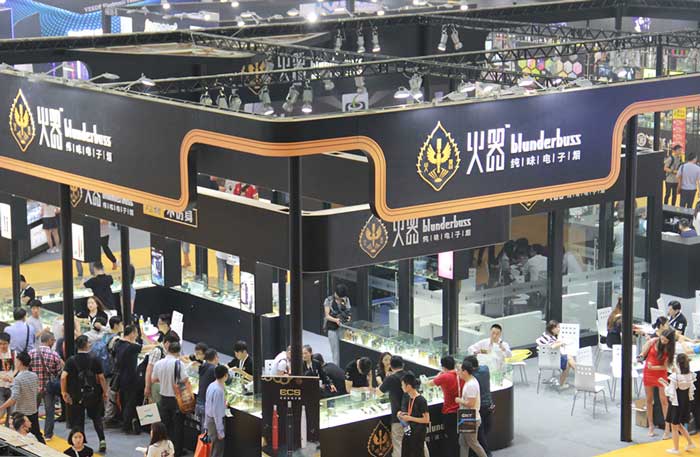 They are all involved in e-cigarettes, believing that there are two reasons sufficient to attract capital:
1. People are naive; 2. There is a lot of money.
In January 2019, Jia Nan Yun Zhi held its annual meeting.
Jia Nan Yun Zhi is a digital currency mining machine manufacturing company, and during the boom of Bitcoin, Jia Nan Yun Zhi's brand was quite glamorous.
But looking at the current state of Bitcoin and blockchain technology, you can see that the days of mining machine tycoons are not easy. Just a few days ago, it was said that Bitcoin needed to be expanded, but as the mining volume increased, the price of mining naturally fell. Moreover, there are not many naive investors left in this field, so the mining machine business is not as good as before.
However, there were still gifts at the annual meeting. Some attendees shared pictures on social media: "No gifts for the New Year, just giving out whale e-cigarettes"—referring to a product called "Wel Whale Light Smoke."
The appearance of e-cigarette products at the annual meeting of a blockchain company seems to connect two seemingly unrelated fields.
According to "Deep Chain Finance," the company behind Wel Whale Light Smoke is Hangzhou Whale Smoke Network Technology Co., Ltd. Tianyancha information shows that this company was registered on January 11, 2019, and has completed tens of millions in Pre-A financing, with the major shareholder and legal person being Kong Jianping.
Interestingly, the co-chairman of Jia Nan Yun Zhi is also named Kong Jianping. Reports indicate that the controlling team behind Wel Whale Light Smoke is the executive team of Jia Nan Yun Zhi.
However, this claim was later denied by Jia Nan Yun Zhi's executives. "Wel Whale Light Smoke is invested by the shareholders of Jia Nan Yun Zhi themselves and has nothing to do with Jia Nan Yun Zhi."
The former blockchain hardware tycoon entering the e-cigarette market sounds unreliable, regardless of its truth. The e-cigarette market is right there—data shows that from $416 million in 2010 to $7.1 billion in 2016, the e-cigarette market expanded 17 times in six years, with a compound annual growth rate of 60.5%.
However, the booming foreign market does not mean that the domestic market will follow suit. It is important to note that in 2016, the consumption scale of the e-cigarette market was only 3.2 billion yuan, while the total sales revenue of the cigarette industry in 2016 was 1.3706 trillion yuan. The current Chinese e-cigarette market only accounts for 0.23% of the tobacco industry.
Just when this industry was about to cool down in China, the market suddenly opened up.
Let’s take a look at the well-known year-end bonus legend. In July 2018, the American startup e-cigarette brand Juul was valued at $15 billion. It held 68% of the American e-cigarette market share, which was already half of the valuation of Imperial Brands, a century-old tobacco company, making Juul the sixth highest-valued startup in the U.S. After Juul reached a $12.8 billion investment agreement with Altria, the producer of Marlboro cigarettes, Juul's management decided to distribute $2 billion in year-end bonuses. This was distributed as a special dividend to the company's 1,500 employees, with an average of $1.3 million per person, equivalent to ten years' salary for a junior programmer in Silicon Valley.
Perhaps Juul's year-end bonus touched the capital. The booming e-cigarette market across the sea has transmitted to this side, and in China, a brand new "old" market has begun to attract adventurers to invest.
For example, Zhu Xiaomu, the former product director of Smartisan Technology, left to create the Flow e-cigarette. Naturally, there is investment from Lao Luo in this capital. This announcement at the Smartisan press conference earlier this year initially drew laughter, but as people began to understand the e-cigarette market, they all gave Zhu Xiaomu a thumbs up, praising his good vision.
#p#分页标题#e#
In fact, during the two months from the end of 2018 to the beginning of 2019, nearly ten new e-cigarette brands emerged, including Wel Whale, Lingxi LINX, YOOZ, MOTI, TRYMIX, GOIN, APOC, and others, while there were still nine e-cigarette projects crowdfunding on the JD crowdfunding platform.
Reports indicate that brands like MOTI, Wel Whale, Lingxi LINX, and Huoqi e-cigarettes have received tens of millions in Pre-A round financing.
The new e-cigarette brand Lingxi LINX is actually operated by several self-media big shots. The founders of platforms like Tongdao Dashi, Junwu Ciweimian, Weimei Holdings, and Visual志 are part of the main creative team of this brand. It is said that the idea to enter the e-cigarette market was unanimously approved during a gathering in a courtyard in Beijing.
It is said that these major self-media platforms have a total of about 350 million followers, and they have already achieved considerable profits in their attempts in new media e-commerce. Therefore, Lingxi did not focus on e-cigarettes when launching its products but rather on "new consumer goods."
If you carefully read the interviews about Lingxi LINX, you will find that they rarely talk about technology, focusing instead on marketing. The promotional posters for Lingxi LINX also confirm this point—exquisite design, business-like composition, and multi-dimensional product displays make LINX appear full of fashion and high-end design flavor.
On January 27, Lingxi began pre-sales, and according to data released by LINX's official WeChat account, they sold 5,000 e-cigarettes within 45 hours of launching. If calculated at the price of a set (1 pen + 4 pods for 299 yuan), the total sales for this pre-sale exceeded 1.5 million yuan.
It seems that this market is huge. However, the heat that has returned from abroad makes e-cigarettes seem more like a trendy toy rather than the original concept of quitting or replacing smoking.
 In reality, due to the many unknown additives, e-cigarettes have already faced very strict regulations abroad.
Data can illustrate the problem. An article published on the website "Business Friends Circle" pointed out that the gross profit of doing pure OEM orders for e-cigarettes has now dropped to 15%. A few years ago, it could even reach 80%.
A few years ago refers to the period from 2008 to 2010. At that time, the e-cigarette market was still in its cultivation phase, with no more than ten companies in the industry. However, around 2012, as the market in Europe and America began to rise, domestic OEM companies rapidly increased, reaching over a hundred at one point.
By the second half of 2017, some countries and cities abroad began to cut back on e-cigarette production plans due to restrictions from the FDA and other agencies. However, the reductions were not solely due to regulation. For example, the Irish company Healthier Smoker terminated plans to invest millions of euros in e-cigarette production and closed its e-cigarette factory.
The reason for the closure was that the e-liquids produced by this e-cigarette company infringed on the intellectual property rights of several internationally renowned cigarette brands owned by Japan Tobacco.
Therefore, the overall environment for e-cigarettes has never stabilized. Additionally, although the domestic e-cigarette market has been cultivated for many years, Chinese smokers still tend to resist this new thing. Data shows that by 2017, the global number of e-cigarette users reached 35 million, while the number of e-cigarette users in China was only 500,000.
Can the vaping industry survive long term? From an industrial perspective, the domestic e-cigarette market, under the shine of hot money, is closer to profit than ever. One reason for this is the low entry barriers and diverse promotional methods. After all, we are still in a stage where "you can say whatever you want." As the industry becomes more regulated in the future, and giants establish their moats, there will be fewer opportunities for small players to profit. Those interested in learning about the e-cigarette industry can contact the hotline: 17682343645 or reach out via WeChat: vapeos;
Because it does not contain tar, it does not pollute indoor air, and e-cigarettes once became the best alternative to cigarettes.
A Chinese pharmacist named Han Li invented the e-cigarette earlier, naming it "Like Smoke." However, this product had a troubled fate in China, remaining on the fringes of health and regulation until it was taken off the shelves due to false advertising.
After disappearing, e-cigarettes blossomed in Europe and America, becoming extremely popular. In 2019, after a roundabout journey, e-cigarettes returned to the Chinese market and became the new darling of capital.
This new circle includes self-media people, Bitcoin mining machine manufacturers, former mobile phone industry executives, tech enthusiasts, and various big shots.
They are all involved in e-cigarettes, believing that there are two reasons sufficient to attract capital: 1. People are naive; 2. There is a lot of money.
In January 2019, Jia Nan Yun Zhi held its annual meeting.
Jia Nan Yun Zhi is a digital currency mining machine manufacturing company, and during the boom of Bitcoin, Jia Nan Yun Zhi's brand was quite glamorous.
But looking at the current state of Bitcoin and blockchain technology, you can see that the days of mining machine tycoons are not easy. Just a few days ago, it was said that Bitcoin needed to be expanded, but as the mining volume increased, the price of mining naturally fell. Moreover, there are not many naive investors left in this field, so the mining machine business is not as good as before.
However, there were still gifts at the annual meeting. Some attendees shared pictures on social media: "No gifts for the New Year, just giving out whale e-cigarettes"—referring to a product called "Wel Whale Light Smoke."
The appearance of e-cigarette products at the annual meeting of a blockchain company seems to connect two seemingly unrelated fields.
According to "Deep Chain Finance," the company behind Wel Whale Light Smoke is Hangzhou Whale Smoke Network Technology Co., Ltd. Tianyancha information shows that this company was registered on January 11, 2019, and has completed tens of millions in Pre-A financing, with the major shareholder and legal person being Kong Jianping.
Interestingly, the co-chairman of Jia Nan Yun Zhi is also named Kong Jianping. Reports indicate that the controlling team behind Wel Whale Light Smoke is the executive team of Jia Nan Yun Zhi.
However, this claim was later denied by Jia Nan Yun Zhi's executives. "Wel Whale Light Smoke is invested by the shareholders of Jia Nan Yun Zhi themselves and has nothing to do with Jia Nan Yun Zhi."
The former blockchain hardware tycoon entering the e-cigarette market sounds unreliable, regardless of its truth. The e-cigarette market is right there—data shows that from $416 million in 2010 to $7.1 billion in 2016, the e-cigarette market expanded 17 times in six years, with a compound annual growth rate of 60.5%.
However, the booming foreign market does not mean that the domestic market will follow suit. It is important to note that in 2016, the consumption scale of the e-cigarette market was only 3.2 billion yuan, while the total sales revenue of the cigarette industry in 2016 was 1.3706 trillion yuan. The current Chinese e-cigarette market only accounts for 0.23% of the tobacco industry.
Just when this industry was about to cool down in China, the market suddenly opened up.
Let’s take a look at the well-known year-end bonus legend. In July 2018, the American startup e-cigarette brand Juul was valued at $15 billion. It held 68% of the American e-cigarette market share, which was already half of the valuation of Imperial Brands, a century-old tobacco company, making Juul the sixth highest-valued startup in the U.S. After Juul reached a $12.8 billion investment agreement with Altria, the producer of Marlboro cigarettes, Juul's management decided to distribute $2 billion in year-end bonuses. This was distributed as a special dividend to the company's 1,500 employees, with an average of $1.3 million per person, equivalent to ten years' salary for a junior programmer in Silicon Valley.
Perhaps Juul's year-end bonus touched the capital. The booming e-cigarette market across the sea has transmitted to this side, and in China, a brand new "old" market has begun to attract adventurers to invest.
For example, Zhu Xiaomu, the former product director of Smartisan Technology, left to create the Flow e-cigarette. Naturally, there is investment from Lao Luo in this capital. This announcement at the Smartisan press conference earlier this year initially drew laughter, but as people began to understand the e-cigarette market, they all gave Zhu Xiaomu a thumbs up, praising his good vision.
#p#分页标题#e#
In fact, during the two months from the end of 2018 to the beginning of 2019, nearly ten new e-cigarette brands emerged, including Wel Whale, Lingxi LINX, YOOZ, MOTI, TRYMIX, GOIN, APOC, and others, while there were still nine e-cigarette projects crowdfunding on the JD crowdfunding platform.
Reports indicate that brands like MOTI, Wel Whale, Lingxi LINX, and Huoqi e-cigarettes have received tens of millions in Pre-A round financing.
The new e-cigarette brand Lingxi LINX is actually operated by several self-media big shots. The founders of platforms like Tongdao Dashi, Junwu Ciweimian, Weimei Holdings, and Visual志 are part of the main creative team of this brand. It is said that the idea to enter the e-cigarette market was unanimously approved during a gathering in a courtyard in Beijing.
It is said that these major self-media platforms have a total of about 350 million followers, and they have already achieved considerable profits in their attempts in new media e-commerce. Therefore, Lingxi did not focus on e-cigarettes when launching its products but rather on "new consumer goods."
If you carefully read the interviews about Lingxi LINX, you will find that they rarely talk about technology, focusing instead on marketing. The promotional posters for Lingxi LINX also confirm this point—exquisite design, business-like composition, and multi-dimensional product displays make LINX appear full of fashion and high-end design flavor.
On January 27, Lingxi began pre-sales, and according to data released by LINX's official WeChat account, they sold 5,000 e-cigarettes within 45 hours of launching. If calculated at the price of a set (1 pen + 4 pods for 299 yuan), the total sales for this pre-sale exceeded 1.5 million yuan.
It seems that this market is huge. However, the heat that has returned from abroad makes e-cigarettes seem more like a trendy toy rather than the original concept of quitting or replacing smoking.
In reality, due to the many unknown additives, e-cigarettes have already faced very strict regulations abroad.Data can illustrate the problem. An article published on the website "Business Friends Circle" pointed out that the gross profit of doing pure OEM orders for e-cigarettes has now dropped to 15%. A few years ago, it could even reach 80%.
A few years ago refers to the period from 2008 to 2010. At that time, the e-cigarette market was still in its cultivation phase, with no more than ten companies in the industry. However, around 2012, as the market in Europe and America began to rise, domestic OEM companies rapidly increased, reaching over a hundred at one point.
By the second half of 2017, some countries and cities abroad began to cut back on e-cigarette production plans due to restrictions from the FDA and other agencies. However, the reductions were not solely due to regulation. For example, the Irish company Healthier Smoker terminated plans to invest millions of euros in e-cigarette production and closed its e-cigarette factory.
The reason for the closure was that the e-liquids produced by this e-cigarette company infringed on the intellectual property rights of several internationally renowned cigarette brands owned by Japan Tobacco.
Therefore, the overall environment for e-cigarettes has never stabilized. Additionally, although the domestic e-cigarette market has been cultivated for many years, Chinese smokers still tend to resist this new thing. Data shows that by 2017, the global number of e-cigarette users reached 35 million, while the number of e-cigarette users in China was only 500,000.
Can the vaping industry survive long term? From an industrial perspective, the domestic e-cigarette market, under the shine of hot money, is closer to profit than ever. One reason for this is the low entry barriers and diverse promotional methods. After all, we are still in a stage where "you can say whatever you want." As the industry becomes more regulated in the future, and giants establish their moats, there will be fewer opportunities for small players to profit. Those interested in learning about the e-cigarette industry can contact the hotline: 17682343645 or reach out via WeChat: vapeos;
Related Articles

Vaping News
Ahead of a Nationwide Ban, Hundreds of Russian Retailers Voluntarily Stop Selling Vapes
2026-04-16

Vaping News
Illegal Vape Brands Try to Evade FDA Scrutiny by Posing as “Made in the USA”
2026-04-08

Vaping News
Jordan’s New Tobacco Control Rules: Waterpipe Tobacco Market Set for Major Changes
2026-03-17