
WHO report clearly says switching from cigarettes to vaping can reduce harm
Can vaping help smokers quit, and does switching reduce harm? The WHO addressed these questions in its 2020 report, citing solid evidence that moving from cigarettes to vaping can reduce harm.
Can e-cigarettes help with quitting smoking? The question of whether smokers can reduce harm by switching to e-cigarettes has been a focal point of concern and debate across various sectors regarding the e-cigarette industry. The World Health Organization (WHO) addressed these controversies in its 2020 report on e-cigarettes, providing a clear answer: there is solid evidence that switching from cigarettes to e-cigarettes can reduce harm.
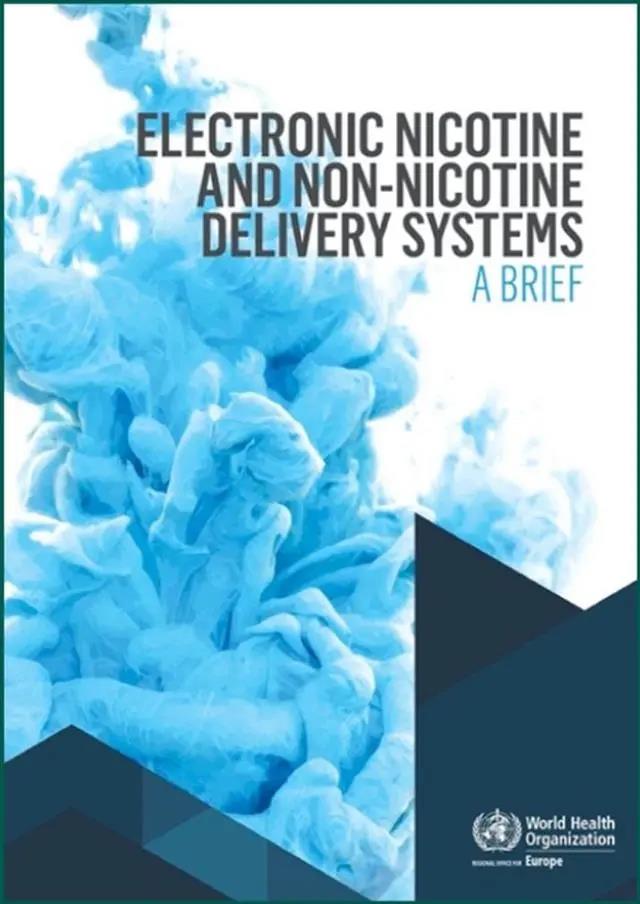
The WHO report cites an assessment of e-cigarettes by the National Academies of Sciences, Engineering, and Medicine (NASEM). The solid evidence states: "Completely substituting e-cigarettes for combustible cigarettes can reduce users' exposure to various toxicants and carcinogens produced by cigarette combustion." There is substantial evidence indicating that: "Using e-cigarettes can lead to nicotine dependence, but the level of dependence is lower than that of cigarettes; long-term exposure to e-cigarette vapor may increase the risk of some diseases, but the risk is lower than that of cigarettes; completely switching from cigarettes to e-cigarettes can improve the health of multiple organs in the body."
The WHO specifically points out that recent studies show that dual use of cigarettes and e-cigarettes leads to higher levels of oxidative stress and increased risks to cardiovascular and pulmonary health, thus dual use is not recommended.
The report concludes that WHO, NASEM, and the CDC (Centers for Disease Control and Prevention) have all recognized the potential of e-cigarettes to improve public health. Additionally, the WHO has made several recommendations for countries planning to regulate e-cigarettes: including requiring e-cigarette companies to standardize sales channels (including online sales), strictly enforcing laws regarding minimum purchase age; through standardized regulations, minimizing health risks for e-cigarette users; and prohibiting the addition of carcinogens, mutagens, and other harmful substances.
Taking the UK as an example, the UK has been pursuing a smoke-free plan: to eliminate combustible cigarettes by 2030, allowing smokers to completely quit or switch to lower-risk nicotine delivery systems, such as e-cigarettes. Although the smoking rate among the Chinese population is currently showing a downward trend, it remains at a high level.
Maliang, a researcher at the National Development and Strategic Research Institute of Renmin University of China, commented that while absolute harm reduction from smoking is the best choice, in the short term, rather than advocating for an ideal smoke-free situation that is difficult to achieve, it is more realistic to promote harm reduction through smoking cessation and reduction methods to mitigate the health hazards of smoking and secondhand smoke exposure.
The WHO report cites an assessment of e-cigarettes by the National Academies of Sciences, Engineering, and Medicine (NASEM). The solid evidence states: "Completely substituting e-cigarettes for combustible cigarettes can reduce users' exposure to various toxicants and carcinogens produced by cigarette combustion." There is substantial evidence indicating that: "Using e-cigarettes can lead to nicotine dependence, but the level of dependence is lower than that of cigarettes; long-term exposure to e-cigarette vapor may increase the risk of some diseases, but the risk is lower than that of cigarettes; completely switching from cigarettes to e-cigarettes can improve the health of multiple organs in the body."
The WHO specifically points out that recent studies show that dual use of cigarettes and e-cigarettes leads to higher levels of oxidative stress and increased risks to cardiovascular and pulmonary health, thus dual use is not recommended.
The report concludes that WHO, NASEM, and the CDC (Centers for Disease Control and Prevention) have all recognized the potential of e-cigarettes to improve public health. Additionally, the WHO has made several recommendations for countries planning to regulate e-cigarettes: including requiring e-cigarette companies to standardize sales channels (including online sales), strictly enforcing laws regarding minimum purchase age; through standardized regulations, minimizing health risks for e-cigarette users; and prohibiting the addition of carcinogens, mutagens, and other harmful substances.
Taking the UK as an example, the UK has been pursuing a smoke-free plan: to eliminate combustible cigarettes by 2030, allowing smokers to completely quit or switch to lower-risk nicotine delivery systems, such as e-cigarettes. Although the smoking rate among the Chinese population is currently showing a downward trend, it remains at a high level.
Maliang, a researcher at the National Development and Strategic Research Institute of Renmin University of China, commented that while absolute harm reduction from smoking is the best choice, in the short term, rather than advocating for an ideal smoke-free situation that is difficult to achieve, it is more realistic to promote harm reduction through smoking cessation and reduction methods to mitigate the health hazards of smoking and secondhand smoke exposure.
Related Articles

Vaping News
Ahead of a Nationwide Ban, Hundreds of Russian Retailers Voluntarily Stop Selling Vapes
2026-04-16

Vaping News
Illegal Vape Brands Try to Evade FDA Scrutiny by Posing as “Made in the USA”
2026-04-08

Vaping News
Jordan’s New Tobacco Control Rules: Waterpipe Tobacco Market Set for Major Changes
2026-03-17