
Tighter Vaping Rules Arrive as China Tobacco-Linked Firms Emerge
On March 22, the Ministry of Industry and Information Technology publicly solicited comments on amendments to the Regulations for the Implementation of the Tobacco Monopoly Law of the People’s Republic of China, proposing a new Article 65 stating that e-c
On March 22, the Ministry of Industry and Information Technology publicly solicited opinions on the amendment to the "Implementation Regulations of the Tobacco Monopoly Law of the People's Republic of China," proposing to add a clause in the appendix as Article 65: "New tobacco products such as e-cigarettes shall be implemented in accordance with the relevant provisions regarding cigarettes in these regulations."
This means that e-cigarettes and other new tobacco products are set to be formally included under specialized legal regulation for the first time, and may soon follow the same regulatory policies as cigarettes, leading to significant upheaval and restructuring in the entire e-cigarette industry.
In the future, e-cigarettes are likely to be incorporated into the tobacco monopoly system, managing e-cigarettes from three dimensions: raw materials, production, and sales channels. The era of low barriers and disorderly operations will come to a complete end.
As a result, the release of the draft for public opinion has thrown the e-cigarette industry into turmoil and panic. However, industry insiders generally believe that in the long run, standardized regulation and clear standards will be extremely beneficial for the comprehensive and healthy development of the e-cigarette industry.
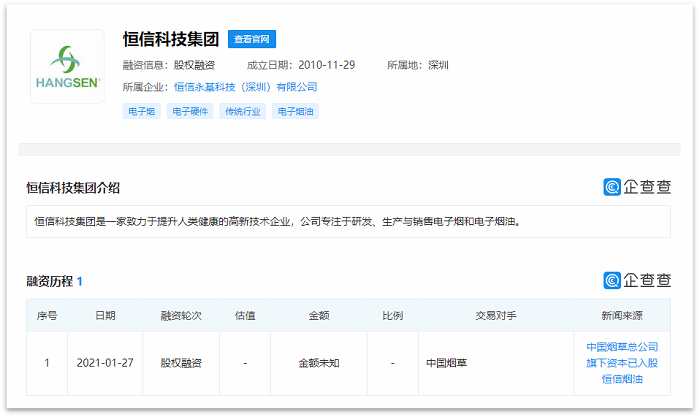
Recently, media reports have drawn attention to several e-cigarette industry chain companies with shares held by China National Tobacco Corporation. According to data from Qichacha, an investment fund under China Tobacco acquired a stake in domestic e-liquid company Hengxin Group in January this year. Hengxin's operating company, Hengxin Yongji, has a 4.997% stake held by Kunming Shuangwei Technology Co., Ltd., which, upon further investigation, reveals ties to China National Tobacco Corporation.
Additionally, data from Qichacha shows that the shareholder structure of the well-known e-cigarette manufacturer Zhuolinen includes Xiangwei Tobacco Chain (Beijing) Technology Co., Ltd. Further investigation reveals that Xiangwei Tobacco Chain has shares held by China National Tobacco Corporation and Zhejiang Tobacco.
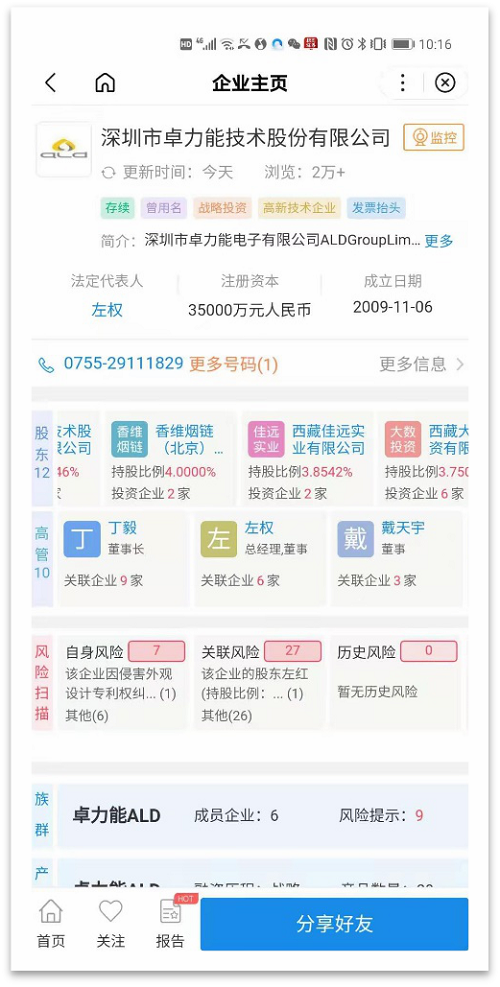
Against the backdrop of impending strict regulation of e-cigarettes, the shareholder backgrounds of these two companies have sparked industry interest and discussion.
Coincidentally, while researching the layout of China National Tobacco Corporation in the industry chain, I learned from an industry insider that another newly created e-cigarette brand, COEE, which is partially owned by a subsidiary of China Tobacco Group, has recently begun intensive channel negotiations and is set to launch e-cigarette products in April.
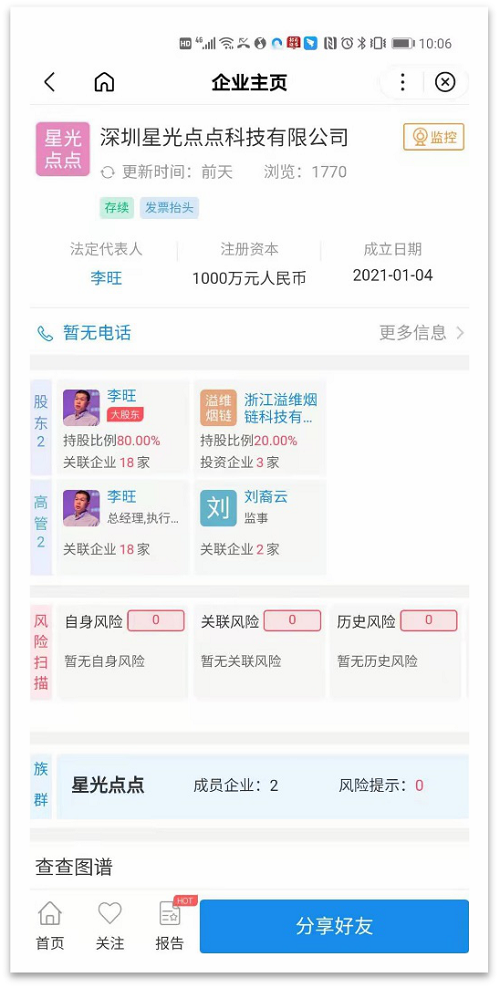
Currently, the information disclosed online is very limited. Through Qichacha, I learned that on January 4, 2021, COEE's parent company, Shenzhen Xingguang Diandian Technology Co., Ltd., was established in Shenzhen, with founding shareholders including Zhejiang Yiwei Tobacco Chain Technology Co., Ltd., holding a 20% stake.
Tracing the equity of Zhejiang Yiwei Tobacco Chain leads to Zhejiang Xiangyi Rongmei Technology Co., Ltd., which is further backed by Zhongwei Capital, controlled by China Shuangwei Investment and Zhejiang Tobacco Company, with China Shuangwei Investment being a 100% owned investment enterprise of China National Tobacco Corporation. This indicates that another e-cigarette brand partially owned by China National Tobacco Corporation is about to emerge.

Behind this are three companies with shares held by China Tobacco: Hengxin is an e-liquid company, Zhuolinen is an e-cigarette manufacturer, and COEE is an e-cigarette brand. This shows that China Tobacco has already laid out its strategy across the upstream and downstream of the e-cigarette industry chain.
Hengxin and Zhuolinen are well-known veteran companies in the e-cigarette industry chain, while COEE, backed by China Tobacco, is a newly created e-cigarette brand that undoubtedly piques the curiosity and expectations of industry insiders.
This means that e-cigarettes and other new tobacco products are set to be formally included under specialized legal regulation for the first time, and may soon follow the same regulatory policies as cigarettes, leading to significant upheaval and restructuring in the entire e-cigarette industry.
In the future, e-cigarettes are likely to be incorporated into the tobacco monopoly system, managing e-cigarettes from three dimensions: raw materials, production, and sales channels. The era of low barriers and disorderly operations will come to a complete end.
As a result, the release of the draft for public opinion has thrown the e-cigarette industry into turmoil and panic. However, industry insiders generally believe that in the long run, standardized regulation and clear standards will be extremely beneficial for the comprehensive and healthy development of the e-cigarette industry.
Recently, media reports have drawn attention to several e-cigarette industry chain companies with shares held by China National Tobacco Corporation. According to data from Qichacha, an investment fund under China Tobacco acquired a stake in domestic e-liquid company Hengxin Group in January this year. Hengxin's operating company, Hengxin Yongji, has a 4.997% stake held by Kunming Shuangwei Technology Co., Ltd., which, upon further investigation, reveals ties to China National Tobacco Corporation.
Additionally, data from Qichacha shows that the shareholder structure of the well-known e-cigarette manufacturer Zhuolinen includes Xiangwei Tobacco Chain (Beijing) Technology Co., Ltd. Further investigation reveals that Xiangwei Tobacco Chain has shares held by China National Tobacco Corporation and Zhejiang Tobacco.
Against the backdrop of impending strict regulation of e-cigarettes, the shareholder backgrounds of these two companies have sparked industry interest and discussion.
Coincidentally, while researching the layout of China National Tobacco Corporation in the industry chain, I learned from an industry insider that another newly created e-cigarette brand, COEE, which is partially owned by a subsidiary of China Tobacco Group, has recently begun intensive channel negotiations and is set to launch e-cigarette products in April.
Currently, the information disclosed online is very limited. Through Qichacha, I learned that on January 4, 2021, COEE's parent company, Shenzhen Xingguang Diandian Technology Co., Ltd., was established in Shenzhen, with founding shareholders including Zhejiang Yiwei Tobacco Chain Technology Co., Ltd., holding a 20% stake.
Tracing the equity of Zhejiang Yiwei Tobacco Chain leads to Zhejiang Xiangyi Rongmei Technology Co., Ltd., which is further backed by Zhongwei Capital, controlled by China Shuangwei Investment and Zhejiang Tobacco Company, with China Shuangwei Investment being a 100% owned investment enterprise of China National Tobacco Corporation. This indicates that another e-cigarette brand partially owned by China National Tobacco Corporation is about to emerge.
Behind this are three companies with shares held by China Tobacco: Hengxin is an e-liquid company, Zhuolinen is an e-cigarette manufacturer, and COEE is an e-cigarette brand. This shows that China Tobacco has already laid out its strategy across the upstream and downstream of the e-cigarette industry chain.
Hengxin and Zhuolinen are well-known veteran companies in the e-cigarette industry chain, while COEE, backed by China Tobacco, is a newly created e-cigarette brand that undoubtedly piques the curiosity and expectations of industry insiders.
Related Articles

Vaping News
Ahead of a Nationwide Ban, Hundreds of Russian Retailers Voluntarily Stop Selling Vapes
2026-04-16

Vaping News
Illegal Vape Brands Try to Evade FDA Scrutiny by Posing as “Made in the USA”
2026-04-08

Vaping News
Jordan’s New Tobacco Control Rules: Waterpipe Tobacco Market Set for Major Changes
2026-03-17