
Russia: Vaping Devices to Be Regulated Like Cigarettes
Russia’s anti-smoking legislative campaign began in 2013 with the federal law on protecting public health from secondhand smoke and the consequences of tobacco use. That tobacco control law was limited to combustible cigarettes, restricting smoking in pub
The anti-smoking legislative movement in Russia began in 2013 with the federal law "On Protecting Citizens' Health from the Effects of Secondhand Smoke and Tobacco Consumption." This Tobacco Control Law was limited to combustible cigarettes, restricting smoking in public places and banning various tobacco advertisements.<\/div>
<\/div>
Since then, the Russian government has been working to strengthen regulations related to tobacco manufacturing, sales, and permitted consumption levels. Subsequently, in 2018, Russian Minister of Industry and Trade Denis Manturov announced that Russia was preparing to classify electronic cigarette products differently from tobacco products, thus regulating them separately.<\/div>
<\/div>
The minister noted that the Russian Ministry of Health supported this and urged smokers to switch to safer alternatives. Additionally, the ministry announced restrictions on selling products to minors and using these products in schools.<\/div>
<\/div>
<\/div>
Cigarettes and safer alternatives fall under the same regulations.<\/div>
Unfortunately, the opposite is true. Last July, Putin approved new amendments to the Tobacco Control Law initiated by the Russian parliament. These regulations placed tobacco and other nicotine products (including electronic cigarettes) under the same umbrella. Although they do acknowledge the different types of technologies involved, they are regulated in the same way regardless of their risk levels.<\/div>
<\/div>
The category of "Nicotine Containing Products" (NCP) includes electronic nicotine delivery systems, heated tobacco products, solutions, nicotine-containing liquids and gels, as well as nicotine powders and mixtures for sucking, chewing, and snuffing. Now, NCPs are subject to the same restrictions and prohibitions as traditional cigarettes.<\/div>
<\/div>
The regulation of NCPs is as follows:<\/div>
<\/div>
Sale of NCPs, hookah pipes, and NCP consumption devices to individuals under 18 years old.<\/div>
Sale of NCPs through vending machines and the internet, as well as public display in stores.<\/div>
Sale of new NCPs without specific regulations and requirements.<\/div>
Consumption of NCPs, hookahs, and devices in restaurants and commercial facilities without a prescription.<\/div>
Advertising, promotion, sponsorship, and display of NCPs, hookahs, and their trademarks, including using these trademarks for other products.<\/div>
Labeling of tobacco products.<\/div>
At the same time, earlier this month, it was announced that Russian authorities might be conducting a study to examine the labeling effectiveness of tobacco products from heated tobacco devices and smokeless hookah mixtures. Participation in this government experiment will initially be on a voluntary basis.<\/div>
<\/div>


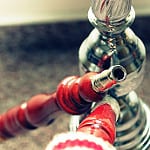
Additionally, Congressman Sultan Khamzaev recently urged Health Minister Mikhail Murashko to restrict the operation of hookah bars until the end of this year due to the coronavirus pandemic. According to Khamzaev, a temporary ban should be established to reduce the spread of infections in the fall.<\/div>
Related Articles
Vaping News
Ahead of a Nationwide Ban, Hundreds of Russian Retailers Voluntarily Stop Selling Vapes
2026-04-16
Vaping News
Illegal Vape Brands Try to Evade FDA Scrutiny by Posing as “Made in the USA”
2026-04-08
Vaping News
Jordan’s New Tobacco Control Rules: Waterpipe Tobacco Market Set for Major Changes
2026-03-17