Is Herbal Vaping Making a Comeback in 2023?
Herbal vaping seems to be making a comeback.
Recently, several e-cigarette practitioners have approached Ge Wu Consumption, inquiring about whether "herbal vaping can be done," and provided us with some promotional materials from their social circles. From the images, it appears that herbal vaping not only has a rich product line but is also gradually opening specialty stores:
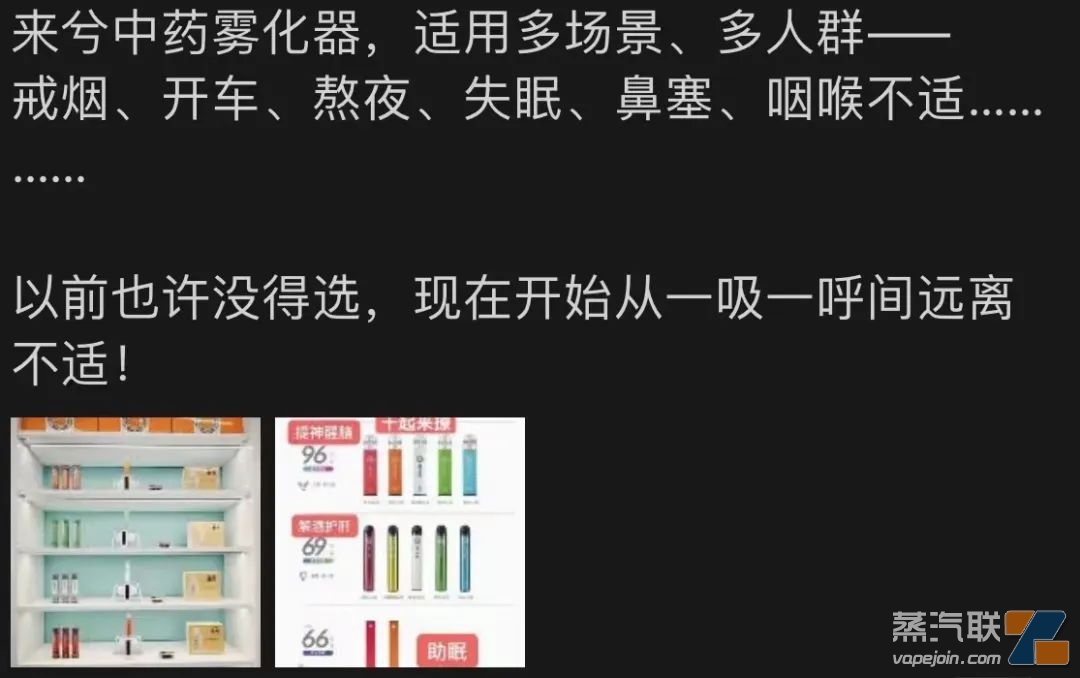
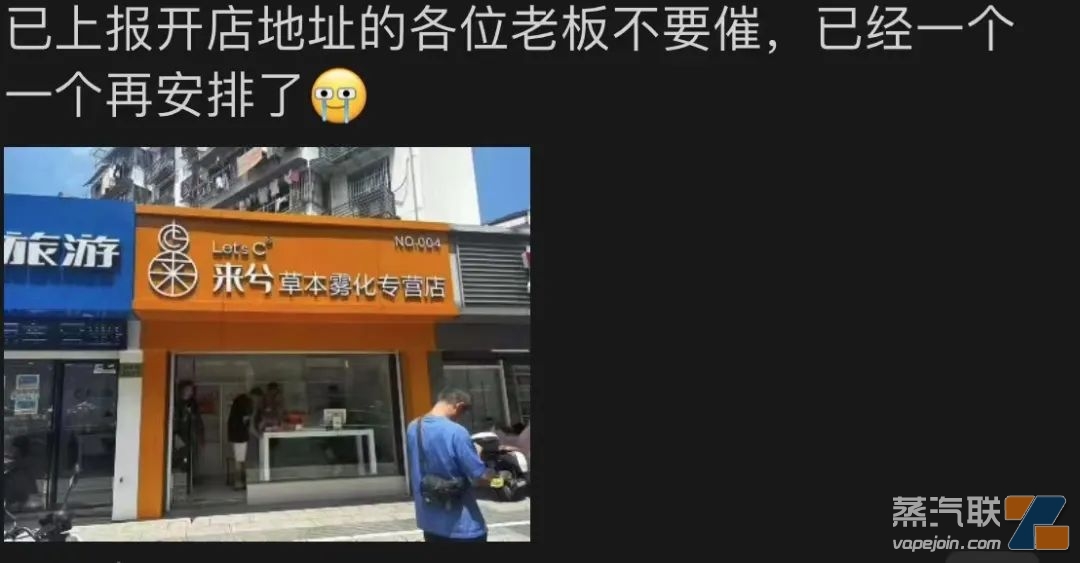
Many friends expressed confusion during their discussions with Ge Wu Consumption: "Wasn't it said that herbal vaping cannot be sold?" With this doubt, Ge Wu Consumption organized the situation regarding herbal vaping products and concluded that the herbal vaping sector has indeed warmed up again in recent months. The product forms and channel policies differ from the previous wave of popularity, but it still faces "identity anxiety".
Contains traditional Chinese medicine, emphasizing "not a drug"
According to Ge Wu's analysis, there are not many herbal vaping brands with a certain level of recognition, mainly including "Lai Xi," "Wei Duo," "Xi Hu," and "Zhi She." Based on details mentioned by several practitioners during our communications, Lai Xi is currently the most recognized brand.
From the promotional materials provided by practitioners, it appears that these herbal vaping products cover price ranges from 66 to 96 yuan, seemingly differentiated by claimed effects and ingredients: for example, the licorice + monk fruit series priced at 96 yuan per stick, aimed at soothing the throat, resembles mainstream square box disposables; the lemongrass + sweet orange series priced at 79 yuan per stick, aimed at the nose, resembles pod systems.
Salespeople describe this product in their social circles as: "Herbal vaping traditional Chinese medicine vaporizer, suitable for multiple scenarios and groups— quitting smoking, driving, staying up late, insomnia, nasal congestion, throat discomfort..." This seems to imply that herbal vaping has the effect of alleviating certain discomfort symptoms.
However, according to Gao Wei, the legal representative of Lai Xi Biotechnology (Shanghai) Co., Ltd., in an interview on the program "City Evening Peak": "We have a genuine traditional Chinese medicine formula; we are not a drug, but we will have one in the future." In other words, the current positioning of herbal vaping is not as a drug.
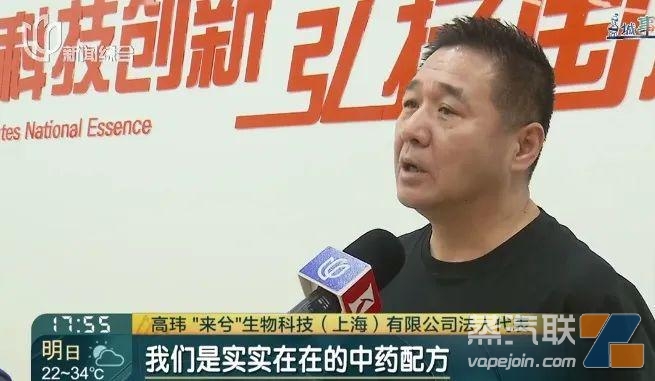
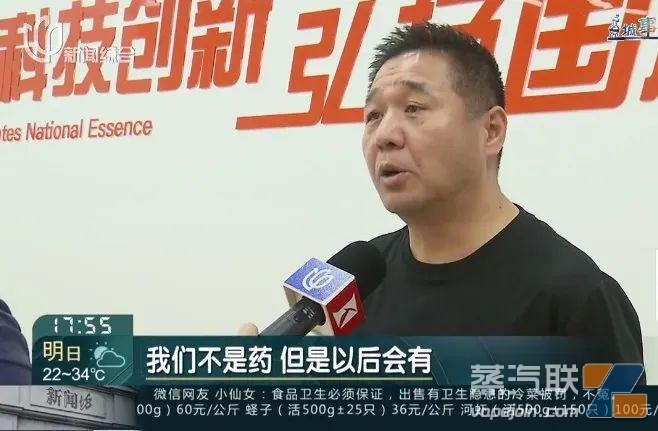
(Source: Screenshot from the "City Evening Peak" program)
Additionally, each different ingredient combination in herbal vaping offers various flavor choices. For instance, the licorice + monk fruit series has five flavors available: watermelon, mung bean, rock candy pear, green tea, and mint.
From the above details, it appears that the official pricing of herbal vaping products is higher than that of e-cigarettes, but the current appearance does not differ significantly from e-cigarettes. The ingredients emphasize the inclusion of traditional Chinese medicine, but the flavors offered include fruits and beverages. While it claims to alleviate certain discomforts, the official statement clearly indicates that herbal vaping is not a drug.
Open stores with less than 100,000 yuan, but limited repurchase
To further restore the true situation of herbal vaping, Ge Wu also had a conversation with an operator named Lao Liu, who runs Lai Xi. As a former e-cigarette practitioner, he clearly stated to us: "There are two reasons for doing herbal vaping. On one hand, it is difficult to scale up after e-cigarettes become compliant, and profits are limited; we considered transitioning to overseas markets, but competition is fierce now."
In the conversation, Lao Liu revealed to Ge Wu that the channel policies currently adopted by herbal vaping are similar to those during the crazy expansion period of e-cigarettes: opening specialty stores with free renovations, herbal vaping will assess the store owner's location, provide distance protection, and must avoid schools, with an initial order requiring a minimum of 50,000 yuan. According to Lao Liu's estimate, a small store of about ten square meters would not cost more than 100,000 yuan, mostly around 70,000 to 80,000 yuan.
When Ge Wu asked, "What if e-cigarette practitioners sell herbal vaping?" Lao Liu replied: "Currently, we almost never connect with people from the e-cigarette circle; this aspect is indeed quite sensitive. Moreover, e-cigarette stores cannot operate other products. If we find someone secretly selling in the store, we will stop it."
In the conversation, Lao Liu did not show concern about being defined as an e-cigarette. He emphasized that, on one hand, the factory will assist in providing relevant certifications to prove that herbal vaping is not an e-cigarette; on the other hand, the sales side has also actively registered and cooperated with inspections.
"It indeed contains traditional Chinese medicine ingredients, and some flavors even have a hint of traditional Chinese medicine taste. It has certain effects, but it is not a product for treatment. It is fundamentally different from the previous zero-nicotine products," Lao Liu emphasized to us.
Theoretically, herbal vaping is actively avoiding previous e-cigarette users and targeting a so-called new group of "health-conscious individuals." According to the user profile provided by Lao Liu, the defined age range for herbal vaping users is higher than that of e-cigarette users, potentially covering individuals up to 60 years old.
Currently, it seems that, compared to regulatory pressures, the bigger challenge facing herbal vaping is the less-than-ideal repurchase rate. Lao Liu believes the reason lies in the fact that many store owners' sales targets are still people who have accepted years of e-cigarette market education. Herbal vaping neither satisfies nicotine cravings nor is it cheaper, making it hard to appeal to this group.
Supply chain constraints, aiming for traditional Chinese medicine to go global
From Lao Liu, we further learned that Lai Xi does not seem to be worried about the current situation; its long-term goal is more focused on the direction of "traditional Chinese medicine going global." Lai Xi's factory in Qingdao will serve as a project for attracting investment in the Shanghai Cooperation Organization demonstration zone. Therefore, the regulatory and repurchase issues faced by domestic retail will gradually be "resolved along the way."
At this point, Lao Liu further discussed the criteria for choosing brands. He mentioned that he decided after visiting Lai Xi in Shanghai, the national medicine innovation in Hainan, and the OEM factory Wei Duo in Guangxi multiple times.
According to Lao Liu, the role of National Medicine Materials (Hainan National Medicine Innovation Medical Co., Ltd.) is to co-produce and is specifically responsible for providing national-level confidential formulas, so the former does not appear in the equity information of the herbal vaping company.
"As far as I know, currently, Wei Duo is the only one that can produce this in China, and there are about three or four other brands from National Medicine. Previously, the manufacturers were also mostly Wei Duo." In Lao Liu's view, it seems that anyone wanting to do herbal vaping cannot escape Wei Duo. However, Lao Liu further stated that a few days ago, herbal vaping completed the switch of OEM factories, and the new batch of products is now produced by National Medicine Materials.
According to Lao Liu, herbal vaping currently seems to be facing a tight supply chain situation.
Inspired by Lao Liu, Ge Wu Consumption indeed discovered this notation on the outer packaging of Lai Xi products, indicating that there are two key roles behind the Lai Xi brand: the producer and the entrusted manufacturing enterprise.

(Image source: Lai Xi Biotechnology WeChat Mall)
The producer is "Hainan National Medicine Innovation Medical Co., Ltd." Company registration information shows that the company's controlling shareholder is National Medicine Materials Health Holdings (Hainan) Co., Ltd., a state-owned holding enterprise.

The second entrusted manufacturing enterprise, or OEM factory, is "Guangxi Wei Duo Technology Co., Ltd.," established in 2022. Information from the National Medical Products Administration shows that it has medical device manufacturing enterprise (registration) and multiple domestic medical device (registration) qualifications.

Unfortunately becoming the "tool" of the supply chain
To clarify the origins of Lai Xi, Ge Wu contacted several individuals close to the Lai Xi OEM factory, including an individual named Lao Li. Lao Wang confirmed to us: "Indeed, some of Lai Xi's products are OEMed by Wei Duo." When asked why Wei Duo has the old popsicle and mung bean formula, Lao Wang stated: "Wei Duo does not have the old popsicle and mung bean formula."
Why can Wei Duo, which is not a licensed e-cigarette enterprise, produce "herbal vaping" products? Regarding this question, Lao Li, who is familiar with Wei Duo, stated that Wei Duo has always wanted to make non-e-cigarette products. According to Lao Li, on one hand, Wei Duo has no history of producing e-cigarettes and is not a traditional e-cigarette factory; on the other hand, Wei Duo has a lot of animal testing data proving that the products are not e-cigarettes, so they are not regulated as e-cigarette enterprises.
Ge Wu learned that some herbal brands on the market are also promoting herbal vaping, but at much lower prices. "Wei Duo has not yet produced much volume, and just as they are starting, they are surrounded by 'counterfeits,' which is quite troublesome for them," Lao Chen revealed. According to Lao Chen, to ensure that Wei Duo's traditional Chinese medicine ingredients are effective, the cost of equipment for such herbal vaping products can be 30% higher than that of e-cigarettes, and the cost of the vaping liquid can even be 5 to 10 times higher, making counterfeiting lucrative. #p#分页标题#e#
Clearly, the herbal vaping category is still in a vague stage, and related OEM factories can only try to actively "avoid suspicion": "Since we are doing herbal vaping, the medicinal materials should taste like what they are, and as medical devices, we should not promote efficacy, only auxiliary effects." Lao Li does not agree with the practices of the market regarding flavors like old popsicle and peach.
However, when asked about the role of Hainan National Medicine Innovation Medical Co., Ltd. in Lai Xi's project, distributor Lao Zhang frankly stated, "As far as I know, there is none, nothing at all." In Lao Zhang's view, this seems more like a relationship of endorsement. When asked about the authorization issue regarding Lai Xi and National Medicine personnel, no clear response was received.
Finally: Herbal vaping trapped in "identity anxiety"
In the process of sorting through related reports, Ge Wu found that prior to this, two media outlets, "Consumer Reports" and "News Workshop," had reported on herbal vaping. The tweet from "Consumer Reports" cited a statement from personnel at the Guangzhou Tobacco Bureau: products of this type of vaporizer that resemble e-cigarettes but have medical device registration numbers cannot be immediately classified as illegal e-cigarettes.
Meanwhile, the report from "News Workshop" mentioned the viewpoint of Yang Yun, director of the legal research department of the Shanghai Consumer Protection Committee: for some special products that do not contain nicotine and resemble e-cigarettes, both the industry and regulatory authorities should develop corresponding standards to better protect consumer safety in response to new consumer developments and demands.
From the perspectives of the aforementioned authoritative figures, it appears that herbal vaping products with medical device registration numbers seem to be caught in "identity anxiety" similar to that of e-cigarettes back in the day. On one hand, they cannot simply and crudely be defined as e-cigarettes; on the other hand, "herbal vaping" products still do not have an accurate, compliant new identity card.
In response to this doubt, Ge Wu Consumption consulted legal expert Tang Shunliang in the tobacco and new tobacco field, who stated to Ge Wu Consumption: "The biggest risk of these products lies in the lack of regulation regarding the safety of the vaporized substances. Although they may not contain nicotine, they have effectively returned to the chaotic era of fruit-flavored e-cigarettes. If approved as medical devices, theoretically, the composition of the vaporized substances would not be reviewed."
"If the composition of the vaporized substances is to be reviewed, logically, it must be approved according to drug standards. Simply put, anything sold through industrial production for consumer intake is either food or medicine; whichever it is should have corresponding approval numbers. Another category is tobacco and e-cigarettes, which involve aerosol intake, while oral tobacco involves dissolved liquids, both of which require regulatory approval before they can be marketed and sold. To be precise, if the vaporized substances do not have corresponding approvals, they are essentially unregulated products, posing health risks."