Henan 2021 Youth Tobacco Survey: 18.40% of Middle School Students Have Used E-cigarettes
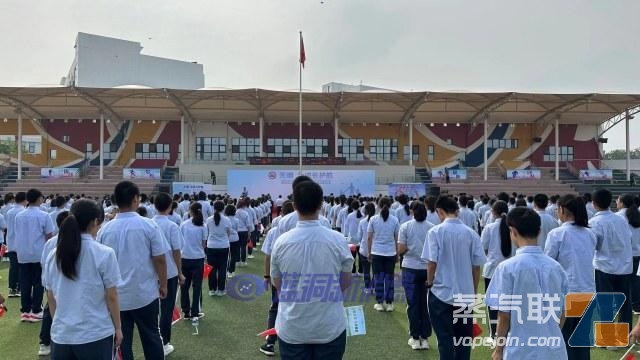
At the launch ceremony of the 36th World No Tobacco Day theme promotion and the collection of excellent paintings, calligraphy, and short videos on youth tobacco control in Henan Province, the Henan Provincial Health Commission released the results of the 2021 youth tobacco epidemic monitoring. The results show that the smoking initiation and current smoking rates among middle and high school students have fluctuated, and the impact of e-cigarettes on teenagers continues to grow.
It is understood that from October to November 2021, the Provincial Center for Disease Control and Prevention organized the representative youth tobacco epidemic monitoring work in Henan Province according to the requirements of the China CDC's "Youth Tobacco Epidemic Monitoring Program," sampling 58 middle and high schools (including vocational high schools) and 174 classes, with a total of 10,851 students participating in the survey. The survey covered tobacco use, e-cigarette use, tobacco dependence and cessation, secondhand smoke exposure, tobacco product acquisition and pricing, anti-smoking publicity and tobacco advertising, and knowledge and attitudes towards tobacco control.
Results of the 2021 Youth Tobacco Epidemic Monitoring in Henan Province:
1. The smoking initiation and current smoking rates among middle and high school students have fluctuated. In 2021, the smoking initiation rate among middle school students was 18.48%, with 15.74% for junior high school students, higher than the 13.2% level in 2019; high school students had a rate of 23.06%, lower than the 27.2% level in 2019. The current smoking rate among middle school students was 4.57%, slightly lower than the national level of 4.7%, but higher than the provincial level in 2019. Among junior high school students, the rate was 4.08%, higher than the 3.2% level in 2019; high school students had a rate of 5.40%, lower than the 7.8% level in 2019.
2. The impact of e-cigarettes on teenagers continues to grow: 85.65% of middle school students have heard of e-cigarettes, with 81.15% of junior high school students and 93.17% of high school students, both higher than the 71.2% and 87.8% levels in 2019. 18.40% of middle school students have used e-cigarettes, with 17.79% of junior high school students and 19.42% of high school students, both higher than the 11.1% and 16.2% levels in 2019. In 2018, the State Administration for Market Regulation and the State Tobacco Monopoly Administration issued a notice prohibiting the sale of e-cigarettes to minors, requiring all market entities not to sell e-cigarettes to minors; e-cigarette manufacturers and sellers must promptly shut down e-cigarette online sales websites or apps.
3. The phenomenon of secondhand smoke exposure in various public places and on campuses is quite common. 62.08% of middle school students have seen someone smoking in homes, indoor public places, outdoor public places, and public transportation, while 44.69% have seen someone smoking on campus, and 45.39% have seen teachers smoking on campus. The newly revised Article 16 of the "Henan Provincial Patriotic Health Regulations" stipulates that smoking (including e-cigarettes) is prohibited in indoor areas of public places and workplaces and on public transportation.
4. The issue of minors currently smoking being refused to buy cigarettes is serious. Among minors who currently smoke, 80.27% of junior high school students were not refused to buy cigarettes due to their age, and 84.89% of high school students were not refused for the same reason, a slight decrease compared to the 2019 figures (80.4%/91.5%); 7.02% of current smoking middle school students can buy cigarettes by the stick, indicating that the policy of not selling cigarettes to minors has not been effectively implemented. The newly revised Article 59 of the "Law on the Protection of Minors of the People's Republic of China" stipulates that no sales outlets for tobacco, alcohol, or lottery tickets may be set up around schools and kindergartens. It prohibits the sale of tobacco and alcohol to minors, and operators must set up signs stating "No sale of tobacco and alcohol to minors" in prominent locations; for those whose age is difficult to determine, they must be asked to show identification.
5. Tobacco advertising, promotions, and smoking scenes in films and television have decreased: various tobacco marketing activities still exist widely, with 66.77% of middle school students having seen smoking scenes in films and television, including 65.94% of junior high school students and 68.27% of high school students, both lower than the 69.2% and 72.4% levels in 2019. Additionally, the proportions of middle school students who have seen tobacco advertisements and promotions in tobacco retail stores and on the internet are 37.36% and 19.16%, respectively. Article 22 of the "Advertising Law of the People's Republic of China (2018 Revision)" prohibits the publication of tobacco advertisements in mass media or public places, public transportation, and outdoors. It also prohibits sending any form of tobacco advertisements to minors.
It is understood that the "Healthy China 2030 Planning Outline" clearly states that "by 2030, the smoking rate among people aged 15 and above should be reduced to 20%." Only by strengthening tobacco control education for teenagers and reducing youth smoking can we effectively reduce the number of new smokers, thereby gradually diluting the smoking rate among those aged 15 and above, ultimately achieving tobacco control goals. Conducting youth tobacco epidemic monitoring is one of the important components of tobacco control strategies, which can promote the government, industry, organizations, and individuals to fulfill their tobacco control responsibilities and provide key data support for evaluating the effectiveness of tobacco control.
(According to Zhengzhou Radio and Television Station's Meeting Client)