Tobacco control tightened again: Nantong fully bans smoking indoors in public places, including e-ci
May 31st marks the 36th World No Tobacco Day, with the theme "Smoke-Free for Growth". To promote tobacco control education in Nantong City and advance tobacco control efforts comprehensively, the Nantong Health Commission held a "World No Tobacco Day" promotional event, along with related lectures and knowledge competitions at the Municipal Maternal and Child Health Hospital on May 31st.
Smoking is one of the most serious public health issues today. Prospective cohort studies conducted in China indicate that there are currently 1 million deaths annually due to tobacco-related diseases. If smoking is not effectively controlled, it is estimated that by 2050, 100 million people will die from tobacco-related diseases, half of whom will die in middle age (ages 35-60). There is substantial evidence that exposure to secondhand smoke can lead to lung cancer, with the probability of lung cancer increasing by 30% for those exposed to secondhand smoke. Cardiovascular diseases are the leading causes of death and disability globally, and smoking and exposure to secondhand smoke are the primary preventable factors for these diseases.
"Smoking significantly increases the incidence of breast cancer, posing a greater risk to women. Passive smoking can lead to sudden infant death syndrome, with studies showing that the incidence rate for passive smokers is 3.5 times higher than for non-passive smokers," said Fan Jianmin, director of the Occupational Disease Prevention Department at the Nantong Municipal Maternal and Child Health Hospital. He noted that the number of patients visiting the hospital's smoking cessation clinic has significantly increased this year, especially after learning about the dangers to pregnant women and children, leading many to start quitting smoking. Additionally, some university students have also joined the ranks of those quitting smoking.
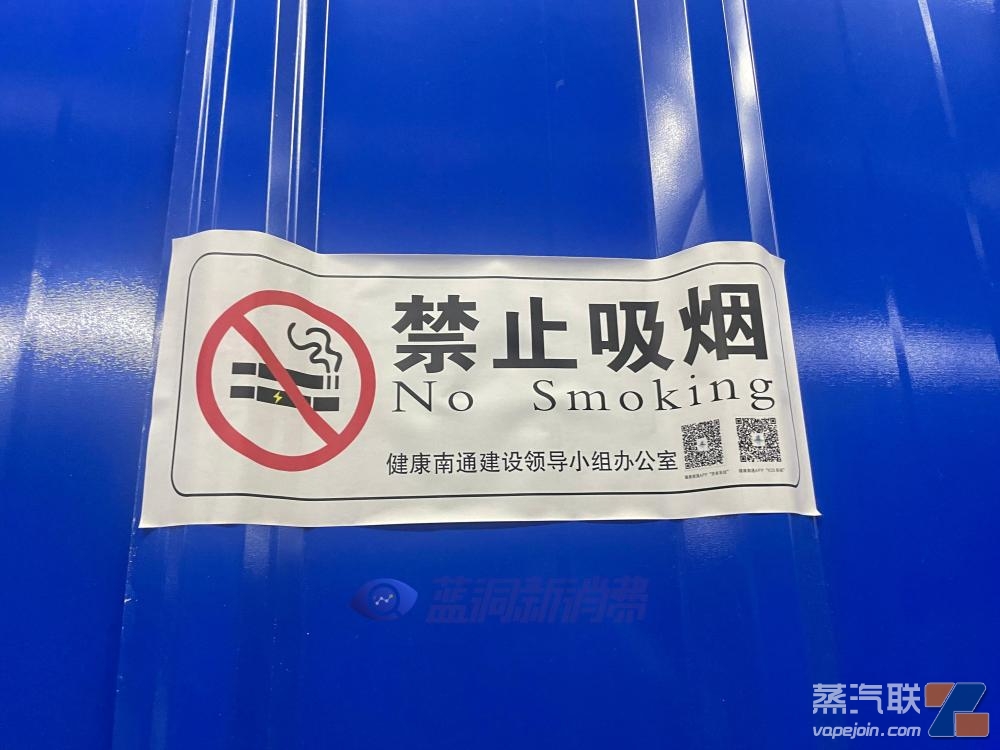
"Have you noticed that the no smoking sign now shows two cigarettes? Previously, it only showed one, but now there is an additional e-cigarette because smoking e-cigarettes is also prohibited in indoor public places in Nantong City," said Wang Hui, deputy director of the Public Places (Patriotic Health) Supervision Department of the Nantong Health Supervision Institute, who explained the dangers of e-cigarettes on-site. He stated that the corresponding tobacco control measures at major medical institutions are currently well implemented. Public places should set up no smoking signs and warnings, establish tobacco control management systems, and equip tobacco control counselors, while also providing training on tobacco control knowledge for staff within these venues. Furthermore, a combination of special inspections and regular guidance will be employed to focus on the establishment of tobacco control systems in medical institutions, tobacco control signage, prohibition of tobacco product sales, tobacco control counseling, and enriching promotional forms, thereby promoting the institutionalization, standardization, and normalization of tobacco control efforts.
"Tobacco control is a consensus of the entire society," said Wang Xiadong, director of the Health Promotion Department of the Nantong Health Commission. He emphasized that Nantong currently requires a ban on smoking in all indoor and public places, and while promoting this among major medical institutions and hospitals, it is also essential to call on citizens to create a smoke-free environment for the health of themselves and others, contributing to a green, environmentally friendly, and healthy living environment.
At the event, Fan Jianmin gave a popular science lecture on "The Harms of Smoking and Common Smoking Cessation Methods," and during the interactive segment of the knowledge competition on smoking cessation, participants eagerly raised their hands to answer questions, achieving a 100% correct response rate.