Shenzhen releases tobacco control policy assessment report: e-cigarette use is trending younger
May 31 is "World No Tobacco Day". On the 29th, the Shenzhen Tobacco Control Office released the "2022 Shenzhen Adult Tobacco Epidemic Survey Report" and the "2022 Annual Implementation Effectiveness Assessment Report". The survey results show that the smoking rate among adults aged 15 and above in Shenzhen is 19.1%, with a male smoking rate of 33.4% and a female smoking rate of 1.2%.
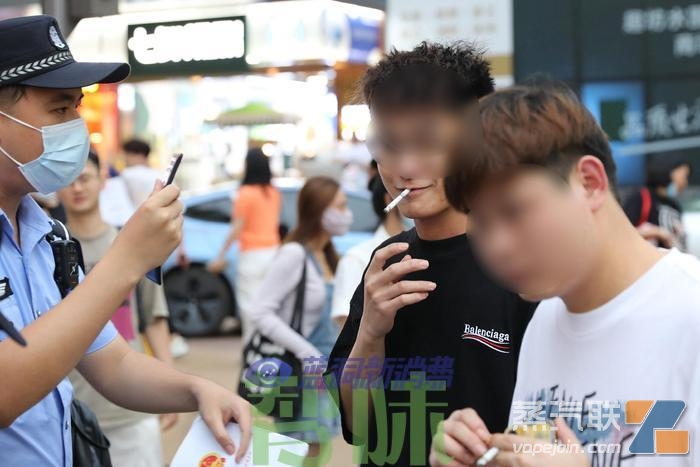
Tobacco Control Scene, provided by Shenzhen Tobacco Control Office
Additionally, since the implementation of the "Shenzhen Special Economic Zone Smoking Control Regulations" on March 1, 2014, Shenzhen has dispatched over 1.71 million law enforcement personnel; discouraged smoking over 1.81 million times, and penalized over 147,000 individuals for illegal smoking, with total fines exceeding 7.42 million yuan; supervised and inspected over 963,000 venues, issued warnings and administrative penalties to 8,230 illegal venues, and imposed administrative fines on 99 illegal venues, totaling over 940,000 yuan in fines.
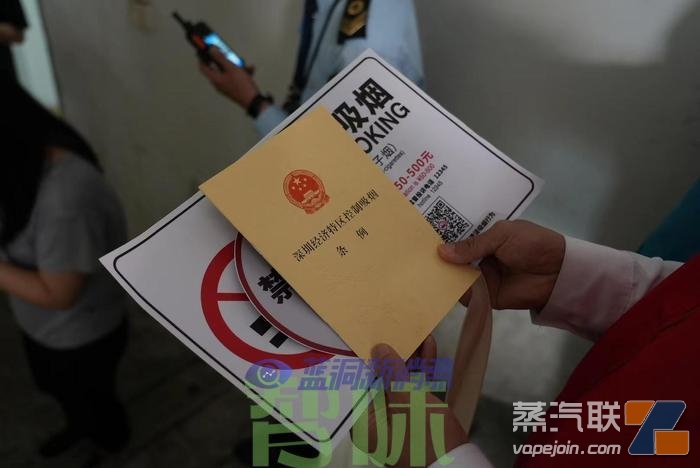
Tobacco Control Scene, provided by Shenzhen Tobacco Control Office
Younger E-cigarette Use
The survey results show that among the population aged 15 and above in Shenzhen, 65.2% have heard of e-cigarettes, 5.4% have used e-cigarettes, and 2.3% are currently using e-cigarettes, with 3.5% being male and 0.8% female. The highest percentage of current e-cigarette users is among the 15-24 age group, reaching 4.3%, indicating a significant trend towards younger e-cigarette use.
Furthermore, the secondhand smoke exposure rate among non-smokers aged 15 and above in Shenzhen is 50.5%, with a 17.4% exposure rate at home and a 20.4% exposure rate in indoor workplaces. The highest percentage of survey respondents who have seen someone smoking in restaurants is 33.5%; followed by universities at 24.8%, government buildings at 15.4%, primary and secondary schools at 15.1%, and medical institutions at 10.0%; the lowest percentage of seeing someone smoking on public transport is 4.4%.
The report indicates that 79.8% of respondents know that smoking can lead to lung cancer, the highest percentage; however, only 49.3% know that smoking can lead to stroke, 50.4% know it can lead to heart disease, and 31.1% know it can lead to erectile dysfunction. Regarding the harms of secondhand smoke, 73.9% of respondents are aware that secondhand smoke can cause lung cancer in adults, 53.7% know it can cause lung diseases in children, and 45.1% know it can lead to heart disease in adults.
Recommendations for Strengthening Industry Regulation of Ride-Hailing Services
The survey found that the posting rate of no-smoking signs in smoke-free venues in Shenzhen is 91.7%. Among these, government agencies/street offices have a posting rate of 98.4%, medical and health/CDC/social welfare institutions at 98.3%, and educational institutions at 97.9%, ranking the top three. The posting rate of no-smoking signs in ride-hailing vehicles is relatively low, at only 21.2%.
In terms of the overall compliance rate for posting no-smoking signs, the total compliance rate is 86.6%. The top three are government agencies/street offices at 98.4%, educational institutions at 97.9%, and parks/tourist attractions at 93.1%; the compliance rate for ride-hailing vehicles is the lowest, at only 15.2%. In comparison, the compliance rate for no-smoking signs in taxis is much higher, reaching 87.5%. The report recommends strengthening industry regulation of ride-hailing services, making the standardization of no-smoking sign postings and prohibiting smoking in vehicles a key focus for industry associations to continuously promote, and enhancing public supervision.
The survey results show that the illegal smoking rate in various venues has dropped to 16.6%, with the highest rates found in internet cafes/game halls at 45.0%, bars at 37.3%, and bus stops/subway entrances at 31.5%; while educational institutions, public transport, and financial/postal/communication venues are below 5.0%. The percentage of illegal smokers who were discouraged is 40.6%, slightly down from 2021.
Survey respondents rated the effectiveness of smoking control in various venues, with the top five being medical institutions at 87.9%, schools at 85.9%, government departments at 74.1%, public transport venues at 38.4%, and bus, train, and high-speed rail stations at 27.5%; the five least effective venues are bars/dance halls at 77.9%, internet cafes/game halls at 73.5%, leisure service venues at 49.8%, dining venues at 46.1%, and hotels at 37.4%.
The report suggests continuing to strengthen training for venue managers, clarifying smoking control responsibilities and consequences for violations, conducting special smoking control law enforcement in key venues and areas, enhancing the supervision of smoking control volunteers, and continuously improving the smoking control capabilities of venue managers; it also recommends that all smoke-free venues standardize the setting of smoking areas, ensuring that smoking areas are far from pedestrian thoroughfares and densely populated areas; and advocates for no-smoking actions in places like sidewalks and beaches, promoting the expansion of outdoor smoke-free areas.