Practical legal study on criminal liability in e-cigarette manufacturing and sales
Reviewer: Feng Jinxi, a lawyer at Fujian Tianheng United (Fuzhou) Law Firm,
Contributor: Huang Yexin, intern
Tobacco is a product that can be operated only after obtaining a monopoly license after obtaining a national license. In recent years,e-cigarettesWith slogans such as "Smoking Quit Weapon","Health Steam" and "Trend Technology" as selling points, it has attracted batches of consumers to compete to buy, and the e-cigarette industry has rapidly become popular at home and abroad. The "2022 Blue Book on E-Cigarette Industry Exports" shows that in 2022, the globale-cigarette marketThe scale will exceed US$108 billion. It is expected that the scale of the overseas e-cigarette market will maintain a growth rate of 35% in 2022, with the total scale exceeding US$100 billion. While the e-cigarette industry is developing rapidly, unlicensed operations, illegal production and sales and other behaviors are also emerging one after another, seriously disrupting market order and damaging the physical and mental health of our citizens, especially minors. In view of this, this article combines the currente-cigarette industryBased on the relevant laws and regulations of the company, combined with specific jurisprudence in practice, discuss the controversial focuses of criminal cases related to e-cigarettes in practice, and explore how to reasonably manage and regulate the production and sale of e-cigarettes.
1. Overview of e-cigarette products
(1) Concept and classification of e-cigarette products
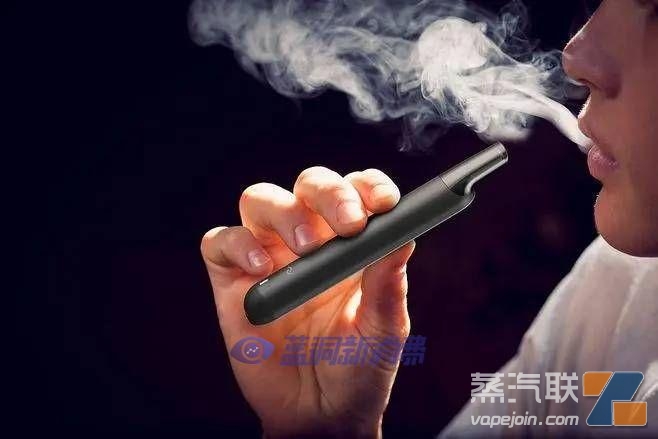
An e-cigarette is an electronic product that imitates cigarettes. Its appearance, smoke, taste and feel are similar to cigarettes and are driven by power supply.atomizer, by heating the oil tanksmoke oilA product that turns nicotine, etc. into vapor for users to smoke.
According to the principle of smoking, e-cigarettes can be divided into tobacco oil atomizing e-cigarettes (also known as liquid e-cigarettes),Solid state electronic cigaretteand heating cigarettes. Liquid e-cigarettes are produced throughoil storage atomizerUsing the tobacco oil in e-cigarettes as fuel, steam is generated by heating the liquid in the atomizer, and then the steam is sprayed into the air through the atomizing nozzle of the e-cigarette atomizer to form a certain airflow, thereby achieving the purpose of smoking; both solid e-cigarettes and heated e-cigarettes haveheating non-burningThe characteristics of heating non-combustible tobacco products are the use of a special heating device (smoking set) to heat processed shredded tobacco (the cartridge) Heating to a certain temperature without igniting the tobacco, so that the tobacco is only heated but not burnednew tobaccoThe product is heated enough to emit smoke, and the taste is closer to real smoke. Temperature control devices and temperature-sensitive protective elements will be installed in e-cigarettes. A low degree of thermal cracking can occur when electric heating is around 300℃.# p#pagination title #e#
(2) Hazards of e-cigarettes
From the perspective of composition and working principle, the main component of liquid e-cigarettes is atomized matter, which is also nicotine solution; solid-state e-cigarettes actually adopt the structure of "cigarette bomb + host", in which the atomized matter of cigarette bomb uses herbal (non-tobacco) plants as raw materials and adds nicotine; heating cigarettes releases heat by heating shredded tobacco, which also produces nicotine.
Although e-cigarettes work differently from traditional cigarettes, they are no less harmful than traditional cigarettes. Compared with traditional cigarettes, e-cigarettes usually add less or no tar, but tobacco oil also contains nicotine. In order to make people addicted, e-cigarette merchants usually add excessive nicotine, and the content is even as high as traditional cigarettes. Three times; E-cigarettes can confuse smokers with a variety of strange appearances and colorful flavors, and diacetyl, the fragrant chemical component in the airflow of e-cigarettes, can cause a kind of bronchio-occlusive pneumonia, making patients 'lungs lose elasticity and have difficulty breathing; The cigarette liquid of e-cigarettes is usually made by mixing propylene glycol and vegetable glycerin in different ratios. When these two substances are heated, toxic aldehydes such as formaldehyde, acrolein, and acetaldehyde may be produced, increasing the risk of cancer; Using e-cigarettes significantly increases the risk of stroke and heart attack. Researchers believe that smoke aerosols from e-cigarettes can cause increased platelet aggregation and lead to microthrombus formation in blood vessels.
Even though e-cigarettes have so many hazards, their operators 'slogan of "safe and harmless", coupled with their fashionable appearance and rich taste, have caused many smokers who do not understand the working principles of e-cigarettes to relax their vigilance. They mistakenly believe that e-cigarettes are harmless to the body and smoke them in large quantities; in addition, the production threshold of e-cigarettes is low and the supervision mechanism is not yet perfect. In order to increase sales, lawless elements add various dangerous ingredients to cigarette oil to gain profits.
Therefore, e-cigarettes can also make smokers addicted and dependent, causing serious damage to the physical and mental health of smokers and other people exposed to second-hand smoke, and confusing minors whose physical and mental development is not yet complete.
2. Legal status of e-cigarette products
In November 2021, the State Council announced the "State Council's Decision on Amendments
On March 11, 2022, the national announcement announced the "Measures for the Management of Electronic Cigarettes." The method provides relatively comprehensive provisions on the definition, physical characteristics, and various regulatory links of e-cigarettes production, wholesale and sales, and provides detailed regulations on the basis of determining the legal status of e-cigarettes.e-cigarette productsAt the same time, the sale of flavored e-cigarettes other than tobacco flavors is clearly prohibited. This measure marks that my country's e-cigarette supervision has entered a standardized and legal path.
To sum up, at present, in my country, e-cigarettes have the same legal status as traditional cigarettes, and are supplemented by relevant regulations to clarify their regulatory methods.# p#pagination title #e#
3. Current regulatory status of e-cigarette products
The above-mentioned "State Council's Decision on Amendments
(1) Licensing for the sale of e-cigarettes
The "Decision" is the foundation of my country's current regulatory system for e-cigarettes. It clarifies the legal status of e-cigarettes as traditional cigarettes. At the same time, the "E-Cigarette Management Measures" implement license management for e-cigarette production and operation entities. It can be seen that market entities engaged in e-cigarette-related production, wholesale, retail, import and export and other businesses must apply for a tobacco monopoly license in accordance with the provisions of the "Measures for the Administration of E-Cigarettes" and the "Implementation Regulations of the Tobacco Monopoly Law." my country's "Measures for the Administration of Tobacco Monopoly Licenses" and "Guiding Opinions on the Layout and Licensing Management of E-Cigarette Retail Points" and other normative documents clarify the types of licenses and their application objects, handling agencies and validity periods related to e-cigarette sales licenses. Details issues.
(2) E-cigarette production
Regarding the production standards of e-cigarette products, the "Electronic Cigarettes"(GB41700-2022) have mandatory national standards for nicotine concentration and additive concentration. The "Measures for the Management of Electronic Cigarettes" clearly prohibits the sale of fruity, aroma and other flavored e-cigarettes other than tobacco flavors. Regarding the trademarks and packaging of e-cigarette production, my country has also specially promulgated the "Regulations on the Use and Management of Trademarks of Tobacco Products" and the "Implementation Rules for the Packaging of E-cigarette Products", which govern the use and management of trademarks in the production process of e-cigarettes, as well as the information that should be marked on e-cigarette packaging. Detailed provisions are made respectively.
(3) E-cigarette trading
The Tobacco Monopoly Administration Department of the State Council has established a unified e-cigarette transaction management platform. The transaction behaviors of buyers and sellers on the platform, including ordering, settlement, transportation, etc., are open and transparent processes, truly achieving transaction visualization. At the same time, the "Several Policies and Measures on Promoting the Legalization and Standardization of the E-Cigarette Industry (Trial)" and the "Detailed Rules for the Management of E-Cigarette Transactions (Trial)" have established a complete e-cigarette price formation mechanism and strictly controlled the price of the e-cigarette industry. At the same time, regarding marketing behavior in the sales of e-cigarettes, Article 22 of my country's Advertising Law revised and implemented in 2015 clearly stipulates that it is prohibited to publish tobacco advertisements in mass media or public places, public transportation, and outdoors. It is prohibited to send any form of tobacco advertising to minors. The regulation clearly states that it is prohibited to publish "tobacco" advertisements to the public and minors. At the same time, the "Law of the People's Republic of China on the Protection of Minors" and the "Measures for the Management of Electronic Cigarettes" also strictly prohibit the sale of e-cigarettes to minors.
To sum up, my country has currently formed a "1 + 2 + 2" based on the "Regulations on the Implementation of the Tobacco Monopoly Law", based on the "Measures for the Management of Electronic Cigarettes" and the mandatory national standards of the "Electronic Cigarettes", and supported by multiple policy documents. The + N "e-cigarette supervision system has achieved full-chain protection in the production, sales, export and other aspects of the e-cigarette industry, and has also focused on and protected minors.# p #pagination title #e #
4. Criminal law regulations and controversial points in the e-cigarette industry
The high incidence of crimes in the field of e-cigarettes include illegal business operations, sales of goods with counterfeit registered trademarks, production and sales of counterfeit and inferior products, smuggling, trafficking, transportation, and manufacturing drugs. In this paper, the high-incidence crimes in the e-cigarette industry are divided into ordinary e-cigarette related crimes and "high-level" e-cigarette related crimes. Ordinary e-cigarette related crimes take the crime of illegal business operations as an example, and "high-level" e-cigarettes are e-cigarettes containing cannabinoids. The crimes involved take the crimes of smuggling, trafficking, transportation, and manufacturing drugs as examples, and analyze the logic of criminalization, applicable legal basis and relevant arguments in practice.
(1) Relevant charges
1. illegal business operations
The crime of illegal business operations refers to the unauthorized operation of monopolized, monopolized goods or other goods whose trading is restricted, the purchase and sale of import and export licenses, import and export certificates of origin, and other business licenses or approval documents stipulated in laws and administrative regulations, and other illegal business activities, disrupting market order, and the circumstances are serious. Article 1, paragraph 5, of the "Interpretation of the Supreme People's Court and the Supreme People's Procuratorate on Several Issues Concerning the Specific Application of the Law in Handling Criminal Cases such as Illegal Production and Sale of Tobacco Monopoly Goods" clearly stipulates that if the circumstances of illegally operating tobacco monopoly goods without a tobacco monopoly license are serious, constitute the crime of illegal business operation.
On October 26, 2017, the "Notice on Carrying out the Identification and Inspection of New Cigarette Products" issued by the State Tobacco Monopoly Administration clarified that raw materials for heated non-burning electronic cigarettes (such as IQOS, Glo, Ploom, Revo) contain shredded tobacco and are tobacco monopoly goods. In accordance with the Tobacco Monopoly Law of the People's Republic of China and the Implementation Rules for the Administration of Tobacco Monopoly Licenses, a monopoly license system should be implemented. The "Notice" clearly includes heating and non-burning electronic cigarettes into the scope of regulation of the Tobacco Monopoly Law.
Regarding the threshold for criminalization, Article 79, paragraph 2, of the Notice of the Supreme People's Procuratorate and the Ministry of Public Security on Printing and Issuing the "Provisions of the Supreme People's Procuratorate and the Ministry of Public Security on the Standards for Filing and Prosecuting Criminal Cases under the Jurisdiction of Public Security Organs (2)" stipulates that illegal trading of tobacco monopoly products is more than 50,000 yuan, or illegal income is more than 20,000 yuan, or illegal trading of more than 200,000 cigarettes, Or if you have received more than two administrative penalties within three years for illegally trading in tobacco monopoly products, and illegally trading in tobacco monopoly products with the amount exceeding 30,000 yuan, you should file a case for prosecution for the crime of illegal business operation.
Regarding the specific manifestations of illegal sales of e-cigarettes, in practice, it is mainly divided into two types: sales of e-cigarettes without sales licenses, and sales of flavored e-cigarettes whose production is explicitly prohibited by the country. The first situation is to sell authentic cigarettes without obtaining a monopoly license. The second situation is the sale of flavored e-cigarettes whose production is explicitly prohibited by the state. Article 5, paragraph 1, of the "Measures for the Administration of Electronic Cigarettes" stipulates: "E-cigarette products shall comply with the mandatory national standards for e-cigarettes." The "Measures" also clearly prohibit sales that are prone to inductiveness to minors, and the characteristics and flavors of the products are presented. E-cigarette products with other flavors other than tobacco. Therefore, selling flavored e-cigarettes is an act of selling illegally produced e-cigarette products.# p#pagination title #e#
2. Crime of smuggling, trafficking, transportation, and manufacturing drugs
At present, among e-cigarettes on the market, in addition to the above-mentioned classification standards, there is also an e-cigarette containing cannabinoid ingredients, commonly known as "Shangtou e-cigarette". On July 1, 2021, synthetic cannabinoid substances were included in the "Supplementary Catalogue of Controlled Varieties of Non-Medicinal Narcotic Drugs and Psychotropic Substances" and were officially listed as drugs for control in my country. According to the provisions of Article 347 of the Criminal Law, criminal responsibility and criminal punishment shall be imposed for smuggling, trafficking, transportation and manufacturing of drugs, regardless of the quantity. According to the above-mentioned legal provisions, selling e-cigarettes containing cannabinoid substances, regardless of the quantity, constitutes a crime of trafficking in drugs.
(2) Focus of controversy in practice
1. Case characterization
(2019) In the case of Zhao Moumou's illegal business operation No. 5358, Shanghai 0115, the defender put forward the view that heating without burning e-cigarettes is not a tobacco monopoly product. Regarding this statement, the court quoted Articles 2 and 3 of the Tobacco Monopoly Law of the People's Republic of China to determine the characteristics and characteristics of tobacco monopoly products and clarify the monopoly license system for tobacco products. At the same time, it quoted normative documents such as the "Reply Letter on Soliciting Relevant Opinions on the Characterization of New Tobacco Products such as Electronic Cigarettes"(State Tobacco Ban Zong [2018] No. 182) and the "Notice on Carrying out the Identification and Inspection of New Cigarette Products" to clarify that heated non-combustible tobacco products conform to the characteristics of cigarettes and belong to new types of cigarettes and should be supervised as cigarettes in tobacco monopoly products.
For this kind of determination, it may be possible to convict the crime "based on the attributes of national standards." According to the Supreme People's Court's "Notice on Relevant Issues Concerning the Accurate Understanding and Application of" National Provisions "in the Criminal Law," National Provisions "in the Criminal Law refer to the laws and decisions formulated by the National People's Congress and its Standing Committee, and administrative regulations formulated by the State Council., prescribed administrative measures, decisions and orders issued. At present, except for the "Regulations for the Implementation of the Tobacco Monopoly Law of the People's Republic of China" promulgated by the State Council, the "Measures for the Administration of Electronic Cigarettes" and the "Notice of the State Tobacco Monopoly Administration on Strengthening the Supervision of Electronic Cigarettes", which are mainly referred to for the management of electronic cigarettes, are not "national regulations" and cannot be used as a criterion for judging the crime of "illegal business operations."
Regarding the criminal act of selling "Shangtou e-cigarettes", that is, e-cigarettes containing cannabinoids, taking into account the social harm of abuse of synthetic cannabinoids, according to the provisions of Article 357, paragraph 1, of the Criminal Law and the "Reply on whether the Supplementary Catalogue of Controlled Varieties of Non-Medicinal Narcotic Drugs and Psychotropic Substances can be Used as the basis for identifying drugs","Shangtou cigarettes" are essentially new drugs and are not legally sold e-cigarettes. Selling e-cigarette oil containing synthetic cannabinoids is drug trafficking.
2. Determination of subjective intention
The subjective aspect of crime can be divided into two aspects: "no illegal cognition" and "wrong object cognition". Regarding the defense of "no illegal cognition", the author believes that under the background of the reshuffle and rectification of the electronic cigarette industry, a certain period of grace and exemption should be given. In practice, we should judge whether the party concerned has the possibility to understand the relevant laws and regulations in combination with the living environment of the party concerned, the criminal behavior, the popularity of relevant knowledge, etc., and comprehensively judge what kind of criminal responsibility should be recognized. For the case of "object recognition error", focus on selling e-cigarette products that are not similar in appearance to e-cigarettes, or "e-cigarette on top" products, the parties will defend themselves on the grounds that they do not know that the product is an e-cigarette or that they do not know that the product is a drug. Taking the behavior of selling "high-level e-cigarettes" as an example, in the case of Hu Mouhui's drug trafficking case at No. 565, Gan 0111 (2021), the defendant Hu Mouhui purchased 10 e-cigarettes that were rumored to be able to "high-level" online and sold them on WeChat. And continue to sell the product after there is clear evidence that it knows that the product is illegal. In the end, the defendant Hu Mouhui was sentenced to drug trafficking. Drug crimes must practice the principle of consistency between subjective and objective. In this case, the main focus of controversy is whether the criminals subjectively have the subjective intention of knowing that "e-cigarettes on the top" are drugs. In 2008, the Supreme People's Court's "Minutes of the National Symposium on the Trial of Drug Crime Cases in Some Courts"(hereinafter referred to as the "Minutes of the Dalian Meeting") clearly stipulates: "To judge whether the defendant knows about the drugs involved in the case, we cannot rely solely on the defendant's confession, but should conduct comprehensive analysis and judgment based on the defendant's process, method, circumstances when the drugs were seized and other evidence, combined with the defendant's age, experience, intelligence and other conditions." In this case, the court comprehensively determined that the defendant had subjective intention to sell drugs based on factors such as the extremely high price of selling e-cigarettes, the secret transaction method and the party's past behaviors.# p#pagination title #e#
3. Sentencing aspects
The defense points in terms of sentencing can be divided into two aspects: the behavior involved and the number involved.
In terms of acts involved in the case, the procuratorate and the court will analyze the role played by the parties in the case and the amount they participate in to determine whether to prosecute and how to impose the sentence. For example, in the decision not to prosecute Lou Moumou's illegal business case No. 41, Qi Jian Xing Bu Sue [2021], the person who was not prosecuted was mainly responsible for packaging and posting express orders, and used his Alipay and WeChat account to transfer money and withdraw cash play a secondary role in the case, and the circumstances of the crime were minor, so the procuratorate made the decision not to prosecute.
In terms of the number and amount involved, in practice, the illegal gains of the parties involved in the case should be strictly reviewed to determine whether they meet the criteria for criminalization. When determining the amount of the crime committed by the parties, it should start from the clear standard of the crime object and implement the principle of "non-retroactivity of the law". For example, in the decision not to prosecute Liu Moumou's illegal business case No. 30, Kangjian Punishment No. 30, the party's illegal income was 11000 yuan, which did not meet the criminalization standard, so a decision was made not to prosecute. In the case of Zheng Wanglei, Liu Liebin, Zhou Xiaobing and others for illegal business operations (2020) Zhejiang 0603 Xingchu No. 901, the defender proposed that the amount of the crime should be calculated from the time when the tobacco product standard GB/T18771.2-2015(XG1 -2019) was revised and implemented. In the end, the court found that the amount of the crime started from June 2018 when the determination characteristics of cigarettes were disclosed.
What needs special attention is the calculation method of the amount of drugs in drug-related cases. In the case of Wang Moumou's crime of smuggling, trafficking, transporting, and manufacturing drugs (2022) Jing 02 Criminal Court No. 171), the defender proposed in his appeal opinion that the e-cigarettes that Wang had stored at home and had not yet been sold should not be counted as drug trafficking. In the amount, and when calculating the amount of drugs, the actual amount of synthetic cannabinoids mixed into e-cigarette oil should be recognized as the amount of drugs involved in the case. In this regard, the court's decision cited Article 357, paragraph 2, of the Criminal Law of the People's Republic of China,"The quantity of drugs is calculated based on the verified quantity of smuggled, trafficked, transported, manufactured, and illegally held drugs, not calculated based on purity." It was determined that drugs in the offender's home should also be included in the crime amount, and the actual amount of drugs should be calculated based on the total amount of tobacco oil rather than concentration.
5. Analysis of the improvement path of e-cigarette regulation
(1) Strengthen publicity on the dangers of e-cigarettes
E-cigarette dealers often promote e-cigarettes as "harmless","healthy" and even "helping to quit smoking", which prevents people, especially teenagers, from having a correct understanding of e-cigarettes. In fact, e-cigarettes are no less harmful to smokers and non-smokers around them than ordinary cigarettes. Therefore, it is necessary to strictly supervise the publicity content of e-cigarette products, strictly review the publicity and promotion of e-cigarettes on social platforms, and vigorously promote publicity and education on the dangers of e-cigarettes, so that smokers can know the dangers of this product and stay away from e-cigarettes as much as possible. Tobacco products.
#p#Pagination Title #e#(2) Light punishment and heavy rectification
Regarding illegal business activities in the e-cigarette industry, there are currently two regulatory paths in practice: administrative law and criminal law. At present, my country has numerous laws, regulations and related normative regulations on the e-cigarette industry, and the disposal methods are also very confusing, leaving law enforcement agencies and industry practitioners at a loss. In practice, it is necessary to clarify the nature of relevant normative regulations, draw a clear line between crime and non-crime, make strict value choices and trade-offs based on the current transitional period of my country's e-cigarette industry, and decide on the regulation of relevant behaviors in practice.
In 2022, the Ministry of Public Security and other four departments will jointly carry out special clean-up and rectification work to clean up and rectify the sale of e-cigarettes to minors in accordance with the law, severely crack down on illegal crimes involving e-cigarettes, and effectively protect the physical and mental health of minors, and introduce a series of management measures to incorporate e-cigarettes into the scope of tobacco management for effective supervision, and thoroughly rectify the e-cigarette market. For practitioners in the e-cigarette industry, it takes a process to learn relevant regulations and rectify business methods. However, the rectification methods in different places are different, which will lead to unfair handling methods and cause public dissatisfaction with law enforcement agencies. In addition, there are some problems in connection between different regulations. If you blindly impose heavy penalties, it will be even more detrimental to the stability of the industry. Therefore, under the background that existing laws and regulations are not yet systematic and the scope of "national regulations" is still too limited, it is not appropriate to blindly adopt criminal punishment to punish relevant behaviors. While improving "national regulations" as much as possible, administrative penalties should be taken first, the transition from "illegal" to "criminalization" should be carefully carried out, the rectification of industries rather than severely punishing illegal behaviors should be the goal of execution in judicial practice, and the connection of executions should be carried out in a reasonable and prudent manner.
conclusion
It is urgent to rectify and regulate the e-cigarette industry. At present, my country's governance system has been relatively complete. In practice, we should improve legislation and clarify the boundaries of criminalization, identify the core controversy focus in practical cases, achieve a balance between governance structure and value orientation, step by step, and combine leniency and severity. Punishing violations in the e-cigarette market. With the ultimate goal of standardizing the entire chain of the e-cigarette industry, we will promote the rectification and regulation of the e-cigarette industry.