Yale Study: ENDS Taxes Can Be Effective, but the Side Effects May Be Greater
Taxes are an important factor for Electronic Nicotine Delivery Systems (ENDS), as the price increases brought about by taxes can have a significant impact on users. As harm reduction products, these effects will also directly influence tobacco harm reduction efforts.
Many public health experts have made similar predictions, but a recent study from Yale University has proven this point—e-cigarette taxes can lead to an increase in smoking rates, resulting in serious unintended consequences for smoking control and tobacco harm reduction.
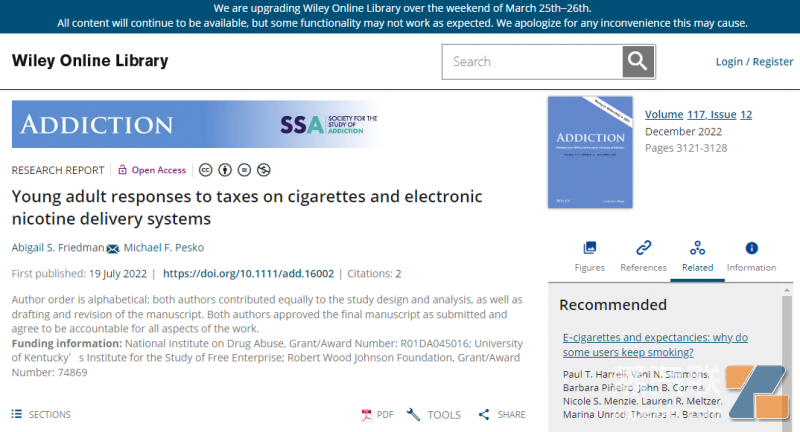
Yale professor Abigail Friedman and Georgia State University professor Michael Pesko initiated a study titled "Young Adult Responses to Taxes on Cigarettes and Electronic Nicotine Delivery Systems," surveying 38,906 individuals aged 18 to 25. The results showed that while higher e-cigarette tax rates can significantly reduce e-cigarette usage, they also lead to an increase in smoking.
The study report mentioned: "When the e-cigarette tax increases by one dollar, it significantly reduces the number of young people who use e-cigarettes daily, but at the same time, the number of smokers increases. Higher tax rates on electronic nicotine delivery systems (ENDS) can indeed have a controlling effect, but they will increase smoking rates among the 18-25 age group." Interestingly, an increase in cigarette taxes also leads to an increase in e-cigarette usage. This is actually a very common "substitution effect"; when the sales of one type of product decline, it is often because consumers are turning to cheaper alternatives. When San Francisco implemented a flavor ban in 2020, Chief Economist Ted Egan's office was responsible for analyzing the economic impact of the legislation, confirming that the ban would only lead to an increase in smoking rates. Egan stated that while the flavor ban would reduce e-cigarette usage, it would not affect the overall economy of San Francisco, as the money consumers spent on e-cigarette products would not be saved but would instead be spent on other nicotine products, such as traditional cigarettes, as consumers choose replaceable products based on availability. As a harm reduction product, electronic nicotine delivery systems (ENDS) naturally have a relationship with tobacco products that is one of "mutual exclusivity." The difficulty of quitting smoking means that most smokers can only choose the more "available" option between cigarettes and ENDS. However, regardless of the choices smokers make, there is not much change in the overall economy. Therefore, the best way is to quit smoking as soon as possible, and for those without a nicotine addiction, especially teenagers, it is crucial to avoid the bad habit of smoking. References: "Yale Study: Vape Taxes Have Serious Negative Repercussions," "Young Adult Responses to Taxes on Cigarettes and Electronic Nicotine Delivery Systems."