
Former WHO Senior Official: WHO Tobacco Control Policy Is Outdated, and Acknowledging E-Cigarette Ha
Recently, former WHO Deputy Director-General Derek Yach sharply pointed out in a speech that the WHO Framework Convention on Tobacco Control (FCTC), which does not prioritize harm reduction products, is outdated and needs to be revised as soon as possible. He emphasized the critical role of Chinese regulatory authorities in global tobacco control efforts, as China has the world's most innovative e-cigarette and related technology companies.
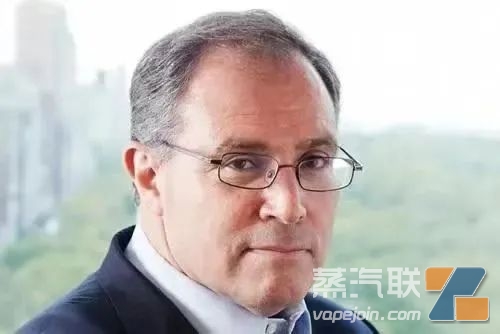
Image: Derek Yach, a global public health expert, former WHO Deputy Director-General, and director of the Smoke-Free World Foundation, has been engaged in tobacco control for over 30 years.

Derek Yach organized the drafting of the WHO Framework Convention on Tobacco Control in 1998. However, years of practice have shown him that many of its provisions do not apply to countries with high smoking rates and large populations. WHO data indicates that by 2025, there will be 1.27 billion smokers globally, which he believes is a sign of failure in tobacco control.
“Now, China holds the key to the comprehensive transformation of the global tobacco industry.” Derek Yach reviewed the patent application data in China and found that tobacco harm reduction is one of the fields with the most patent applications, with the vast majority related to e-cigarettes. However, regulatory authorities do not pay enough attention, leading to slow progress in tobacco harm reduction in China.
Currently, over 50% of the world's cigarettes are sold by China, and this proportion is increasing. In December 2022, the authoritative medical journal The Lancet published a paper stating that nearly 20% of adult men in China die from smoking. “Most male smokers in China start smoking before the age of 20. Unless they quit, about half will eventually die from smoking,” said Professor Li Liming from Peking University, one of the study's authors.
Derek Yach stated, “Two years ago, many countries announced goals to fully electrify new car sales by 2035. Imagine if similar commitments and policy support were made for tobacco harm reduction products; how many smokers could be saved, and how much energy could be generated.”
Not only China but also the WHO needs to change. To effectively control tobacco, revising the WHO Framework Convention on Tobacco Control is imperative. The problem is that the WHO's tobacco control leadership refuses to accept industry innovation. “They always view the tobacco industry as a dirty traditional industry and never reflect, even when there is evidence proving them wrong, they remain adamant.”
Many tobacco and e-cigarette companies worldwide are actively promoting harm reduction research. However, the WHO believes that the innovations from these companies cannot be trusted, viewing them as interference, deception, and the greatest threat to tobacco control. With this serious bias, the WHO refuses to accept the scientific teams' suggestions from tobacco and e-cigarette companies and even denies them participation in meetings.
“If we do not allow those frontline corporate scientists to participate, how can we fundamentally change the industry? No other industry—energy, food, pharmaceuticals—would tolerate such behavior. Encouraging governments to ban harm reduction products is even more unacceptable,” Derek Yach said.
He believes the industry is moving toward a whole new world. In this world, nicotine is completely separated from tobacco, which can help people combat aging and reduce the incidence of various diseases; harm reduction products like e-cigarettes can play a significant role in saving millions of smokers. “Technological innovation led by tobacco and e-cigarette companies is the fastest way to achieve progress in tobacco control, and it is time for the WHO to recognize this. Acknowledging the harm reduction potential of e-cigarettes is not shameful; now is the best time to revise the WHO Framework Convention on Tobacco Control.”
Derek Yach proposed several revision suggestions, including emphasizing the critical role of Chinese regulatory authorities; correcting the bias that “tobacco and e-cigarette companies are incompatible with tobacco control”; explicitly including “harm reduction” in tobacco control plans; dispelling rumors like “nicotine is carcinogenic”; and inviting institutions like the UK government and the US FDA, which have recognized the harm reduction potential of e-cigarettes and achieved progress in tobacco control, to share their experiences.
“Following the status quo is certainly much easier, but for global health, now is the time for us to truly progress.”


