
Delegate Calls for Banning Tobacco Advertising and Adding Warning Images to Packs
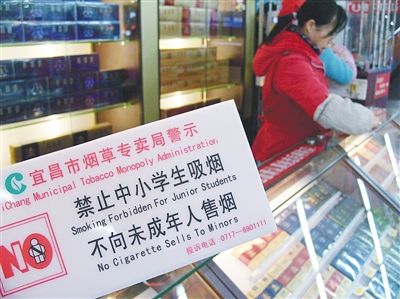
A notice placed in a tobacco specialty store prohibiting the sale of cigarettes to minors. But around Beijing Liwen Middle School, there are convenience stores selling tobacco 20 meters away from the school wall, 4 within 100 meters and 7 within 200 meters. Figure/Dongfang IC
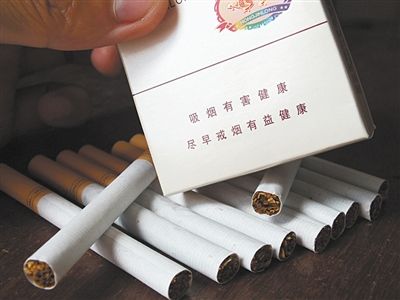
Written warnings are still used on tobacco packaging in my country. The health warnings on cigarette packs only account for 30% of the front and back of the cigarette packs. Only three written warning messages are used, and no information on specific diseases caused by smoking is provided. Figure/Dongfang IC
Today, the Third Session of the 12th National Committee of the Chinese People's Political Consultative Conference opened, and the 2015 National Two Sessions also officially kicked off. ldquo; Under the dome, how to control smog and ensure national health has become a topic of national concern at the two sessions. However, compared with visible haze days, less eye-catching haze can gather ultra-high concentrations of PM2.5 in a small area, directly endangering human health.
1.4 million people die every year from smoking-related diseases
The World Health Organization has long confirmed that smoking and second-hand smoke are the primary factors leading to lung cancer and are the main factors leading to many other tumors and diseases.
In the past 20 years, tobacco control has become a consensus among many countries in the world. In 2003, the China government signed the World Health Organization Framework Convention on Tobacco Control, the only international convention in the field of public health; with the approval of the Standing Committee of the National People's Congress, the Convention came into effect in China in 2006, and it has entered its tenth year.
But unfortunately, at present, China is still the world's largest tobacco producer and consumer, and tobacco production and sales have not declined but increased. Data released by the national health department show that the number of smokers in China exceeds 300 million, and about 740 million non-smokers suffer from second-hand smoke exposure. 1.4 million people die from smoking-related diseases every year, and 100,000 people die every year from second-hand smoke.
In recent years, the tobacco control proposals and motions of deputies to the National People's Congress and CPPCC members have become a growing consensus at the beginning and next sessions of the Two Sessions; 16 cities in my country have enacted laws (regulations) on smoking bans in public places, and the laws on smoking bans in public places at the national level have been included in the legislative agenda of the Legislative Affairs Office of the State Council; especially in December 2013, after the General Office of the CPC Central Committee and the General Office of the CPC Central Committee jointly issued the "Notice on Matters Related to Leading Cadres Taking the Lead in Smoking Ban in Public Places", no ashtrays were placed at the conference venues and stations, which has become a new trend across the country and in multiple local sessions.
However, every year during the two sessions, there are still representatives and committee members smoking in the corridors outside the venue. Scenes of smoking and discussing national affairs in the resident hotel appear from time to time, and even become a captured scene of the two sessions.
To control haze, we should also control smoke damage!
To this end, on the occasion of the opening of the National Two Sessions this year, the Beijing News, together with the World Health Organization Representative Office in China, China Tobacco Control Association, New Exploration Health Development Research Center, and Beijing Tobacco Control Association, jointly issued an initiative to more than 5000 representatives and members of the Two Sessions.——
1. During the 2015 National Two Sessions, do not smoke in all conference venues, workplaces and all other indoor places (including resident hotels and rooms).
2. Buy and deliver cigarettes without public funds: do not serve cigarettes, and actively persuade others to stop smoking in indoor public places; refuse to accept any form of tobacco gifts or sponsorship.
In November 2014, the Standing Committee of the Beijing City Municipal People's Congress passed the "Regulations on Smoking Control in Beijing City," which clarified that smoking is prohibited in indoor public places, workplaces, public transportation, densely populated outdoor public areas and main passages that pedestrians must pass through, marking that Beijing has entered the era of comprehensive smoking ban. On June 1 this year, the above-mentioned "Regulations" will officially come into effect.
We believe that if representatives and members of the National Two Sessions can start from me and take the lead in setting an example, they will undoubtedly promote the realization of smoke-free Beijing or even hazard-free Beijing, and promote the legislation and implementation of smoking bans in public places in the country and elsewhere. We hope that this year's National People's Congress and The National Committee of the Chinese People's Political Consultative Conference can become a 100% smoke-free Two Sessions, which will be of great benefit to the country and the people.
■ Focus on tobacco advertising
tobacco control experts
5.4 million point-of-sale ads will be a disaster
According to Article 4 of the National People's Congress Law Committee's report on the revision of the Advertising Law (Revised Draft), in accordance with the above amendments, in addition to publishing tobacco advertisements approved by the administrative department for industry and commerce of the State Council in the form of posting, display, etc. in the store rooms of tobacco product monopoly points, as well as tobacco product advertisements approved by the administrative department for industry and commerce of the State Council sent by tobacco product producers to sellers of tobacco products, any other form of tobacco advertising is prohibited. rdquo;#p#pagination title #e#
The Xintan Health Development Research Center pointed out that these tobacco monopoly points are sales terminals for the tobacco industry, including tobacco product specialty stores, image stores, demonstration stores, as well as tobacco product counters in supermarkets, shopping malls, grocery stores, and convenience stores. These places are public places that the general public can freely enter and exit.
Wu Yiqun, deputy director of the New Exploration Center, pointed out that although the second review draft of the Advertising Law (Revised Draft) has added restrictions on tobacco advertising, the attitude towards prohibiting tobacco advertising, promotion and sponsorship is still incomplete. Tobacco monopoly points can publish tobacco advertisements in stores, which leaves tobacco merchants with a lot of advertising and marketing space, and also indulges tobacco terminal sales advertisements. If advertisements and printed matter are allowed to be sent to 5.4 million tobacco monopoly points, then under the slogan of lighting up stores and displaying them beautifully, everything you see inside and outside the store will be tobacco advertisements. This will be a disaster, and the ones who will suffer the most will be teenagers.
According to data from the 2013 China Tobacco Yearbook, at the end of 2012, the number of licensed cigarette retailers nationwide reached 5.4238 million. This does not include the emergence of new retail outlets and unlicensed cigarette sellers in recent years.
A survey by Yunnan Chaoyi Health Consulting Center found that there are many types and large quantities of tobacco advertisements in cigarette shops. 77.6% of tobacco specialty stores posted tobacco promotion posters, 62% of tobacco specialty stores used cigarette brand names on doorlintels, and 30% of tobacco specialty stores used neon light boxes to advertise cigarette brands.
“If you want to sell bad things, you can sell them, why do you still need to market them? If this opening opens, it will be terrible. Allowing monopoly sites to advertise tobacco will be a disaster.& rdquo; Wu Yiqun pointed out that in recent years, tobacco companies have been clamoring for the decisive battle at the terminal, constantly training monopoly outlets on how to attract customers, and also holding tasting meetings in stores and trying various ways to promote sales.
The principal is worried
Tobacco advertisements lure teenagers to smoke
Ouyang Meng, principal of Beijing Liwen Middle School, is increasingly worried about the problem of student smoking. Schools strictly enforce smoking every year. A recent survey on student smoking rates showed that about 18% of students smoke, which is a decrease from the past, but the proportion of students who try smoking exceeds 20%.
Recently, the school conducted statistics on tobacco sales points in the surrounding area. There are convenience stores selling tobacco 20 meters away from the school wall, 4 stores within 100 meters, and 7 stores within 200 meters. They all place cigarettes in conspicuous positions. Buy them casually, and some stores can even break up cigarettes and sell them, obviously targeting the student group. Moreover, no store displayed signs banning the sale of cigarettes to minors.
“There is no way we can do it. Schools will punish students who catch smoking, but there is no way to control them after they leave school. rdquo; Ouyang Meng has many times encountered students holding cigarettes when they leave school. They have a rebellious mentality when they control too much. My parents don't care about me, but you care about me?" rdquo; He had heard this more than once.
Ouyang Meng's concerns are also the concerns of tobacco control practitioners.
According to the results of the 2014 Youth Tobacco Survey, 48.5% of junior high school students have seen at least one tobacco advertisement or promotion in the past 30 days, with the highest proportion of tobacco advertisements and promotions seen at tobacco retail outlets (41.3%). Tobacco shops have become the main place for young people to learn about tobacco. A survey conducted by the World Health Organization on six countries with the highest smoking rates, including China and Russia, shows that 86% of children in my country can recognize at least one tobacco brand, much higher than in other countries, and 22% of them said they will smoke in the future.
Shen Jinjin pointed out that tobacco products are highly addictive, and once smokers become addicted, it is difficult to quit. However, teenagers are in the physical and physiological growth stage, and they are very curious. They are particularly vulnerable to tobacco advertisements and lead to attempts. In order to protect the next generation from tobacco harm, all tobacco advertising, promotion and sponsorship must be completely banned as soon as possible.
NPC deputies
The Advertising Law says no to tobacco”
At the upcoming National People's Congress session, Shen Jinjin, a representative of the National People's Congress and director of the Jiangsu Yancheng City Center for Disease Control and Prevention, will submit a proposal on clearly and comprehensively prohibiting tobacco advertising, promotion and sponsorship in the Advertising Law, and recommends that the National People's Congress Law Committee and the Standing Committee of the National People's Congress, focusing on protecting people's health, starting from not allowing tobacco advertising, promotion and sponsorship to become a means to attract consumption and maintain sales, amend the Advertising Law in accordance with the requirements of the Convention, comprehensively ban all tobacco advertising, promotion and sponsorship.
Shen Jinjin pointed out that tobacco products are currently the only commodities known to have fatal damage to health but are still allowed to be sold legally. More than 1.4 million people die from smoking-related diseases every year. If this trend is not controlled, my country will have every year by 2050. There will be 3 million people dying from smoking-related diseases. Our country's Constitution stipulates that the state protects people's health. Therefore, the government has an obligation to control tobacco use and protect people's health. Specific to the revision of the advertising law, all tobacco advertising, promotion and sponsorship should be prohibited, which is the only effective measure to reduce smoking rates.# p#pagination title #e#
This is a critical period for the revision of the Advertising Law. Although the tobacco advertising related provisions in the second review draft of the Advertising Law (Revised Draft) are regarded as achieving the strictest tobacco control efforts in history, advertisements in tobacco monopoly sites are not prohibited. This has caused greater concern among tobacco control practitioners.
voice
“At present, there are at least 5.4 million tobacco retail outlets across the country, and they are almost densely located around schools. If tobacco retail outlets are not prohibited, then banning tobacco advertising and promotion will be empty talk. rdquo;
——Shen Jinjin, Director of the Center for Disease Control and Prevention of Jiangsu Yancheng City
“Only a comprehensive ban on tobacco advertising is a substantial improvement in tobacco control in China. rdquo;
——Wang Zhenyu, Director of Beijing City Yipai Law Firm
“One picture is worth a thousand words. As long as the government moves its mouth and tobacco companies go to print, the benefits will be the greatest. Why is it so difficult to push such a simple matter? rdquo;
——Wu Yiqun, a tobacco control expert and deputy director of the Xintan Health Development Research Center
■ Stone from other mountains
Australia: Graphic warnings covering 75% and 90% of the area on the front and back of cigarette packs are printed, and the use of tobacco company colors, logos and design elements on brands are prohibited on packaging.
Thailand: Warning graphics account for more than 85% of the cigarette box area.
Nepal: The graphic warning area to be implemented will exceed that of Thailand, accounting for 90% of the total area of cigarette packs.
Countries such as India, Vietnam, Indonesia, and Mongolia have also used graphical warnings.
Full warning packaging is becoming popular around the world, and South Africa, the United Kingdom, the European Union and New Zealand are implementing full warning packaging.
■ Focus on warning graphics on cigarette packs
CPPCC members warning pictures should be put on cigarette packs
Wu Ming, member of the National Committee of the Chinese People's Political Consultative Conference and professor of the School of Public Health of Peking University, will submit a proposal to the State Council, the National Health and Family Planning Commission, the Ministry of Industry and Information Technology, the State Administration of Quality Supervision, the State Administration for Industry and Commerce, and the State Tobacco Monopoly Administration to put warning graphics on cigarette packs. He suggested that the State Council instruct the Ministry of Industry and Information Technology, the State Administration of Quality Inspection, the State Administration for Industry and Commerce, and the State Tobacco Monopoly Administration will adopt full warning packaging on all cigarette packs starting in 2016, and at the same time amend the" Tobacco Monopoly Law" and relevant provisions of relevant laws, regulations and rules to maximize the protection of people's health.
Wu Ming pointed out that tobacco control legislation and promoting smoking bans in public places, etc., placing cigarette packs on warning patterns is the cheapest method and the best effect. The horrific pattern of diseases caused by smoking can effectively prevent the emergence of new smokers, especially for the young women, children and adolescents that we need to focus on protecting.
Warning graphics have obvious tobacco control effect
At present, 82 countries and regions around the world have mandatory implementation of the above-mentioned graphic warnings on tobacco packaging, of which 60 countries and regions require that their area must account for more than half of the front and back areas of cigarette packs. Practice has proven that the use of graphic warning packaging will weaken the tobacco industry's use of packaging as a marketing tool, improve the effectiveness of warnings on packaging, curb packaging fraud, and reduce tobacco use.
However, written warnings are still used on tobacco packaging in my country. The health warnings on cigarette packs only account for 30% of the front and back of the cigarette packs. Only three written warning messages are used, and no specific diseases caused by smoking are provided. Information is far from the requirements of the Convention.
Tobacco control system needs to change
Wu Yiqun, deputy director of the New Exploration Center, said that the World Health Organization is also urging China to adopt large and clear graphical warnings on the dangers of smoking. Its "Evaluation and Policy Recommendations on Health Warning Effectiveness of China Cigarette Cigarettes" released in 2014 pointed out that evidence from all over the world shows that Large graphical warnings have significantly improved the effectiveness of warning signs on cigarette packs. Currently, China's only text-only health warnings have almost no warning effect.
Why is it so difficult to print cigarette packs on warning graphics in the mainland of China? Wu Yiqun said that the State Tobacco Monopoly Administration had long resisted the printing of graphic warnings on cigarette packs on the grounds that graphic warnings would completely destroy the cultural and aesthetic content of the original packaging design with positive value. In addition, cigarettes exported to other countries have been printed with graphic warnings of smoking hazards such as lung cancer and rotten teeth in accordance with the Convention and the requirements of the governments of the countries where they are sold. ldquo; This kind of internal and external approach is extremely disrespectful of consumers 'right to know and a serious violation of their health rights and interests. rdquo;
Article 5.3 of the Convention stipulates that when formulating and implementing public health policies on tobacco control, each party shall take action in accordance with national laws to prevent these policies from being influenced by commercial and other vested interests of the tobacco industry. However, the author of my country's current "Regulations" on tobacco packaging is precisely the Tobacco Monopoly Administration (i.e., China Tobacco Corporation), which directly violates the principles of Article 5.3 of the Convention. To this end, Wu Ming suggested that the State Tobacco Monopoly Administration should not participate in the formulation of the "Regulations" on graphic warnings on tobacco packaging.# p#pagination title #e#
Lawyers 'advertising laws should not contradict themselves
Wang Zhenyu, director of Beijing City Yipai Law Firm, has participated in many public interest litigation for tobacco control. In his view, there are some contradictions in the second review draft of the Advertising Law (Revised Draft): on the one hand, advertising is prohibited in public places, but advertisements are allowed to be displayed inside specialty stores. Is the interior of stores no longer a public place? There are also many monopoly points in large supermarkets. Is this a public place?& rdquo;
He explained the shortcomings of the barrel theory. If there was no comprehensive ban on tobacco advertising, all water would still flow out of the shortest wooden board.
Written by the D04-D05 edition/Beijing News reporter Wang Kara


