Is Selling Vapes Profitable? Is Becoming a Vape Distributor Profitable?
Is selling vapes profitable? Is becoming a vape distributor profitable? As people pursue healthier lifestyles, consumer goods are being reshaped by new consumption trends and new purchasing models. As a healthier alternative to smoking, vaping is showing
Is selling vapes profitable? Is becoming a vape distributor profitable? As people increasingly pursue health, consumer products are being reshaped under new consumption trends and forms. E-cigarettes, as a healthier alternative to smoking, present unprecedented opportunities. Many industry leaders in China are entering the e-cigarette market, hoping to make a fortune in this industry!
In January 2019, Luo Yonghao introduced a new e-cigarette product called Flow, created by former Smartisan Technology executive Zhu Xiaomu, during the launch of the chat app. By the end of the month, Flow e-cigarettes began pre-sales on Taobao, priced at 299 RMB. The official introduction claimed that Flow e-cigarettes do not produce tar and are touted as a revolutionary product that reduces harm by 95% compared to traditional cigarettes.
In the same month, Cai Yuedong, the founder of the popular WeChat account "Tongdao Dashi," announced the launch of his e-cigarette brand "YOOZ" through a poster on social media. According to data provided by YOOZ, the first day of sales reached 5 million RMB through shares and promotions from social media influencers and KOLs.
Cai Yuedong stated: "Compared to traditional tobacco and IQOS, e-cigarettes eliminate the main harmful substances (tar, CO, and other reflective substances) in cigarettes, which helps with smoking cessation and reducing secondhand smoke. This is also the original intention behind our choice to start a business in the e-cigarette industry."
Additionally, five new media founders (chairmen) jointly launched their own e-cigarette brand "Lingxi LINX." Since the second half of 2018, there have been reports of over ten tech companies entering the e-cigarette field, such as iDuck from iVape, which sold over ten thousand units, along with other e-cigarette brands being established.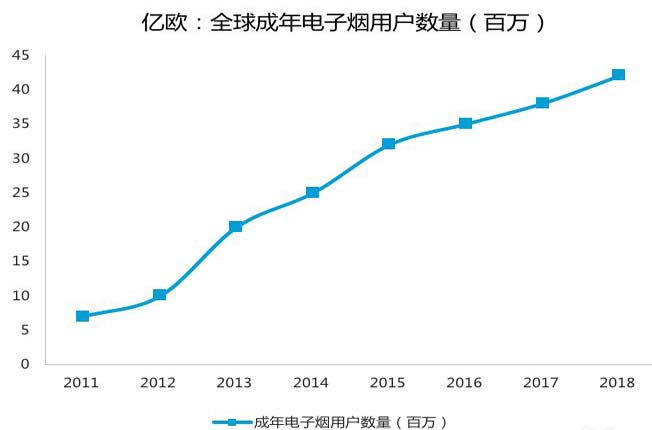 There are also reports that a Xiaomi ecological chain company will enter the e-cigarette market, but Xiaomi responded by stating: "Xiaomi will not produce e-cigarettes; this is purely a rumor."
These new e-cigarette brands are almost all promoting the "health" angle, either overtly or subtly. Traditional cigarettes are products burdened with "advertising shackles," so e-cigarettes have a significant marketing advantage. They can creatively utilize advertising, explore new media channels, and promote the "health" angle, which is highly competitive. They can help with smoking cessation and are less harmful than traditional cigarettes, all of which stimulate smokers' desires to smoke.
There are mixed opinions about the health effects of e-cigarettes. Manufacturers argue that e-cigarettes do not produce tar, carbon monoxide, or other combustion waste, making them healthier than traditional cigarettes. However, some researchers believe that e-cigarettes are not healthy, as the vapor they produce contains carcinogens, can harm the immune system, and lead to cardiovascular diseases, and many countries have explicitly banned the sale of e-cigarettes.
Even if everyone ignores the warning on cigarette packs that "smoking is harmful to health," the concept of "health" still holds significant appeal for smokers. It serves as an effective psychological comfort, and for e-cigarette businesses, it is a powerful marketing strategy. However, there are no relevant policies in place yet, and public opinion remains controversial, placing these marketing efforts in a gray area.
The sensory stimulation (throat hit) produced by e-cigarettes, the stunning visual effects (clouds of vapor), the absence of tobacco flavor, the variety of flavors available, and the underlying technological appeal all resonate with a segment of young consumers, gradually transitioning e-cigarettes into functional products that replace traditional cigarettes. Some subcultural consumers enjoy the identity of being an e-cigarette "player" and are fascinated by tricks like blowing smoke rings.
For profit, they are all in the "smoke" business.
The subcultural attributes of consumers are just one reason for the popularity of e-cigarettes; a larger driving force comes from capital, which seeks to quickly invest and capture the market. The influx of numerous manufacturers into the e-cigarette market is naturally driven by the lure of money, as e-cigarettes are a cash cow with terrifyingly high profits.
The Chinese tobacco market is worth trillions: in 2018, the tobacco industry achieved a total tax revenue of 11556.2 billion RMB, a year-on-year increase of 3.69%; the total amount paid to the national treasury was 10000.8 billion RMB, a year-on-year increase of 3.37%; and the industrial added value reached 7877 billion RMB, a year-on-year increase of 4.88%.
What does it mean to exceed a trillion? The tobacco industry accounts for about 1/16 of China's tax revenue, with its contributions to the national treasury consistently stable at 6% to 10% of total revenue. Moreover, the tax revenue from the tobacco industry has been growing annually; in 2009, tax revenue first exceeded 500 billion RMB, and in 2014, it successfully broke through the 1 trillion RMB mark.
Since 2016, although the annual growth rate of tobacco tax revenue has slowed, the 2018 tax revenue of 11556.2 billion RMB remains a historical high. This figure is roughly equivalent to the combined profits of "the two oil giants" + "the four major banks" + "BAT".
Additionally, China has the largest number of smokers in the world, approximately 350 million, making it the largest consumer and producer of tobacco globally, accounting for 44% of the world's cigarette consumption. However, the scale of domestic cigarette exports is relatively small. In 2017, Philip Morris International, British American Tobacco, Japan Tobacco, and Imperial Brands monopolized about 70% of the global cigarette market outside of China.
With such a large market, it is not hard to see why e-cigarettes are being targeted; a simple slice can yield hundreds of millions or even billions.
Goldman Sachs released a report in 2013 indicating that by 2020, e-cigarettes could account for 10% of the overall tobacco industry's sales and 15% of its profits. While this figure may seem high given the current domestic situation, it clearly indicates international institutions' positive outlook on the future of e-cigarettes.
Many listed companies have also ventured into the e-cigarette field, such as Shanghai Green New, Yiwei Lithium Energy, Dongfeng Co., and others. New Third Board listed companies like Shimeile, Wulun Electronics, and Aivipus are also involved. Among them, Shanghai Green New has specifically pointed out the substantial profit margins in e-cigarettes in its announcements.
The profit from e-cigarettes can reach ten times the cost, with a product priced over 300 RMB having a cost of around 30 RMB.
Mainstream e-commerce platforms in China generally sell e-cigarettes, and some brands can also be purchased through cross-border platforms. However, pods are often not sold on these platforms and need to be purchased separately through channels like WeChat merchants or agents. A person who purchases e-cigarettes from Japan revealed that as long as they dare to bring e-cigarettes into the country, they can make a profit on each one, with profits at least over 50%, and with larger quantities, conservatively estimating profits can reach 70% to 80%.
Other figures indicate that about 90% of vapor e-cigarette products and accessories are produced in China. Among the top five brands in the U.S. e-cigarette market, three are produced by Chinese e-cigarette companies, while all five of the top open-system e-cigarette brands are produced and exported by Chinese companies. According to data from the China Industry Research Institute, the number of smokers in China has exceeded that of the U.S. by two times, but the penetration rate of e-cigarettes is only 1%, while in the U.S. it is 13%.
Glass suppliers for mobile phones are also looking to get a piece of the action. Reports indicate that suppliers of 3D bent glass used in mobile phones are actively seeking partnerships with e-cigarette manufacturers to apply 3D glass to e-cigarettes, thus enhancing the product's "aesthetic appeal." The rising e-cigarette market will also bring considerable income to 3D glass suppliers. In December 2018, American tobacco giant Altria Group invested $12.8 billion to acquire a 35% stake in e-cigarette startup JUUL Labs, which has also seen its valuation soar to $38 billion. It is evident that traditional tobacco giants have sensed the "money scent" in this emerging field.
As giants charge ahead and entrepreneurs enter the fray, with capital heavily invested, is selling vapes profitable? Is becoming a vape distributor profitable? Will e-cigarettes truly become a trend? The current situation is that e-cigarettes still struggle to compete with traditional cigarettes, but their encroachment is accelerating. The e-cigarette industry is a sector with immense potential, and by the time you realize it, just like in real estate, it may already be too late to invest. If you're interested in making a mark in the e-cigarette industry, feel free to contact us via WeChat: yiuasuo or call our e-cigarette market manager at: 17682343645.
In January 2019, Luo Yonghao introduced a new e-cigarette product called Flow, created by former Smartisan Technology executive Zhu Xiaomu, during the launch of the chat app. By the end of the month, Flow e-cigarettes began pre-sales on Taobao, priced at 299 RMB. The official introduction claimed that Flow e-cigarettes do not produce tar and are touted as a revolutionary product that reduces harm by 95% compared to traditional cigarettes.
In the same month, Cai Yuedong, the founder of the popular WeChat account "Tongdao Dashi," announced the launch of his e-cigarette brand "YOOZ" through a poster on social media. According to data provided by YOOZ, the first day of sales reached 5 million RMB through shares and promotions from social media influencers and KOLs.
Cai Yuedong stated: "Compared to traditional tobacco and IQOS, e-cigarettes eliminate the main harmful substances (tar, CO, and other reflective substances) in cigarettes, which helps with smoking cessation and reducing secondhand smoke. This is also the original intention behind our choice to start a business in the e-cigarette industry."
Additionally, five new media founders (chairmen) jointly launched their own e-cigarette brand "Lingxi LINX." Since the second half of 2018, there have been reports of over ten tech companies entering the e-cigarette field, such as iDuck from iVape, which sold over ten thousand units, along with other e-cigarette brands being established.
There are also reports that a Xiaomi ecological chain company will enter the e-cigarette market, but Xiaomi responded by stating: "Xiaomi will not produce e-cigarettes; this is purely a rumor."These new e-cigarette brands are almost all promoting the "health" angle, either overtly or subtly. Traditional cigarettes are products burdened with "advertising shackles," so e-cigarettes have a significant marketing advantage. They can creatively utilize advertising, explore new media channels, and promote the "health" angle, which is highly competitive. They can help with smoking cessation and are less harmful than traditional cigarettes, all of which stimulate smokers' desires to smoke.
There are mixed opinions about the health effects of e-cigarettes. Manufacturers argue that e-cigarettes do not produce tar, carbon monoxide, or other combustion waste, making them healthier than traditional cigarettes. However, some researchers believe that e-cigarettes are not healthy, as the vapor they produce contains carcinogens, can harm the immune system, and lead to cardiovascular diseases, and many countries have explicitly banned the sale of e-cigarettes.
Even if everyone ignores the warning on cigarette packs that "smoking is harmful to health," the concept of "health" still holds significant appeal for smokers. It serves as an effective psychological comfort, and for e-cigarette businesses, it is a powerful marketing strategy. However, there are no relevant policies in place yet, and public opinion remains controversial, placing these marketing efforts in a gray area.
The sensory stimulation (throat hit) produced by e-cigarettes, the stunning visual effects (clouds of vapor), the absence of tobacco flavor, the variety of flavors available, and the underlying technological appeal all resonate with a segment of young consumers, gradually transitioning e-cigarettes into functional products that replace traditional cigarettes. Some subcultural consumers enjoy the identity of being an e-cigarette "player" and are fascinated by tricks like blowing smoke rings.
For profit, they are all in the "smoke" business.
The subcultural attributes of consumers are just one reason for the popularity of e-cigarettes; a larger driving force comes from capital, which seeks to quickly invest and capture the market. The influx of numerous manufacturers into the e-cigarette market is naturally driven by the lure of money, as e-cigarettes are a cash cow with terrifyingly high profits.
The Chinese tobacco market is worth trillions: in 2018, the tobacco industry achieved a total tax revenue of 11556.2 billion RMB, a year-on-year increase of 3.69%; the total amount paid to the national treasury was 10000.8 billion RMB, a year-on-year increase of 3.37%; and the industrial added value reached 7877 billion RMB, a year-on-year increase of 4.88%.
What does it mean to exceed a trillion? The tobacco industry accounts for about 1/16 of China's tax revenue, with its contributions to the national treasury consistently stable at 6% to 10% of total revenue. Moreover, the tax revenue from the tobacco industry has been growing annually; in 2009, tax revenue first exceeded 500 billion RMB, and in 2014, it successfully broke through the 1 trillion RMB mark.
Since 2016, although the annual growth rate of tobacco tax revenue has slowed, the 2018 tax revenue of 11556.2 billion RMB remains a historical high. This figure is roughly equivalent to the combined profits of "the two oil giants" + "the four major banks" + "BAT".
Additionally, China has the largest number of smokers in the world, approximately 350 million, making it the largest consumer and producer of tobacco globally, accounting for 44% of the world's cigarette consumption. However, the scale of domestic cigarette exports is relatively small. In 2017, Philip Morris International, British American Tobacco, Japan Tobacco, and Imperial Brands monopolized about 70% of the global cigarette market outside of China.
With such a large market, it is not hard to see why e-cigarettes are being targeted; a simple slice can yield hundreds of millions or even billions.
Goldman Sachs released a report in 2013 indicating that by 2020, e-cigarettes could account for 10% of the overall tobacco industry's sales and 15% of its profits. While this figure may seem high given the current domestic situation, it clearly indicates international institutions' positive outlook on the future of e-cigarettes.
Many listed companies have also ventured into the e-cigarette field, such as Shanghai Green New, Yiwei Lithium Energy, Dongfeng Co., and others. New Third Board listed companies like Shimeile, Wulun Electronics, and Aivipus are also involved. Among them, Shanghai Green New has specifically pointed out the substantial profit margins in e-cigarettes in its announcements.
The profit from e-cigarettes can reach ten times the cost, with a product priced over 300 RMB having a cost of around 30 RMB.
Mainstream e-commerce platforms in China generally sell e-cigarettes, and some brands can also be purchased through cross-border platforms. However, pods are often not sold on these platforms and need to be purchased separately through channels like WeChat merchants or agents. A person who purchases e-cigarettes from Japan revealed that as long as they dare to bring e-cigarettes into the country, they can make a profit on each one, with profits at least over 50%, and with larger quantities, conservatively estimating profits can reach 70% to 80%.
Other figures indicate that about 90% of vapor e-cigarette products and accessories are produced in China. Among the top five brands in the U.S. e-cigarette market, three are produced by Chinese e-cigarette companies, while all five of the top open-system e-cigarette brands are produced and exported by Chinese companies. According to data from the China Industry Research Institute, the number of smokers in China has exceeded that of the U.S. by two times, but the penetration rate of e-cigarettes is only 1%, while in the U.S. it is 13%.
Glass suppliers for mobile phones are also looking to get a piece of the action. Reports indicate that suppliers of 3D bent glass used in mobile phones are actively seeking partnerships with e-cigarette manufacturers to apply 3D glass to e-cigarettes, thus enhancing the product's "aesthetic appeal." The rising e-cigarette market will also bring considerable income to 3D glass suppliers.
In December 2018, American tobacco giant Altria Group invested $12.8 billion to acquire a 35% stake in e-cigarette startup JUUL Labs, which has also seen its valuation soar to $38 billion. It is evident that traditional tobacco giants have sensed the "money scent" in this emerging field.As giants charge ahead and entrepreneurs enter the fray, with capital heavily invested, is selling vapes profitable? Is becoming a vape distributor profitable? Will e-cigarettes truly become a trend? The current situation is that e-cigarettes still struggle to compete with traditional cigarettes, but their encroachment is accelerating. The e-cigarette industry is a sector with immense potential, and by the time you realize it, just like in real estate, it may already be too late to invest. If you're interested in making a mark in the e-cigarette industry, feel free to contact us via WeChat: yiuasuo or call our e-cigarette market manager at: 17682343645.