
WHO report clearly states that switching from cigarettes to vaping devices can reduce harm
Can e-cigarettes quit smoking? Can smokers switching to e-cigarettes reduce harm? It has always been the focus of attention and controversy over the e-cigarette industry from all walks of life.
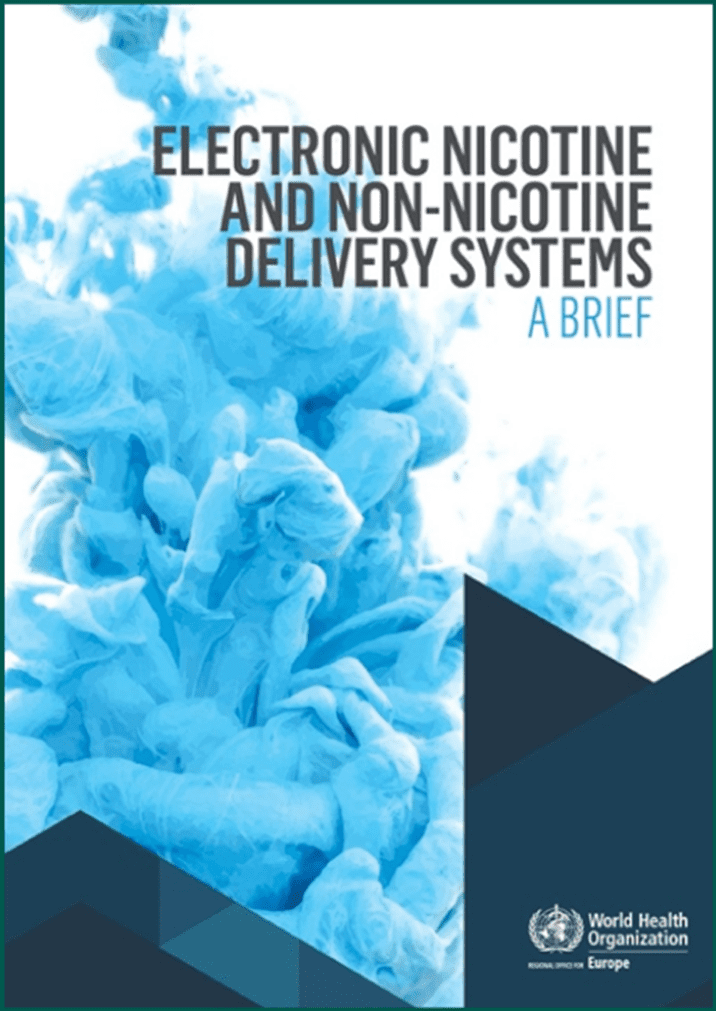
In fact, the World Health Organization (WHO) has long given an answer to these disputes in its e-cigarette thematic report released in 2020: there is conclusive evidence that the conversion of cigarettes to e-cigarettes can reduce harm.
conclusive evidence: e-cigarettes can quit smoking and reduce harm
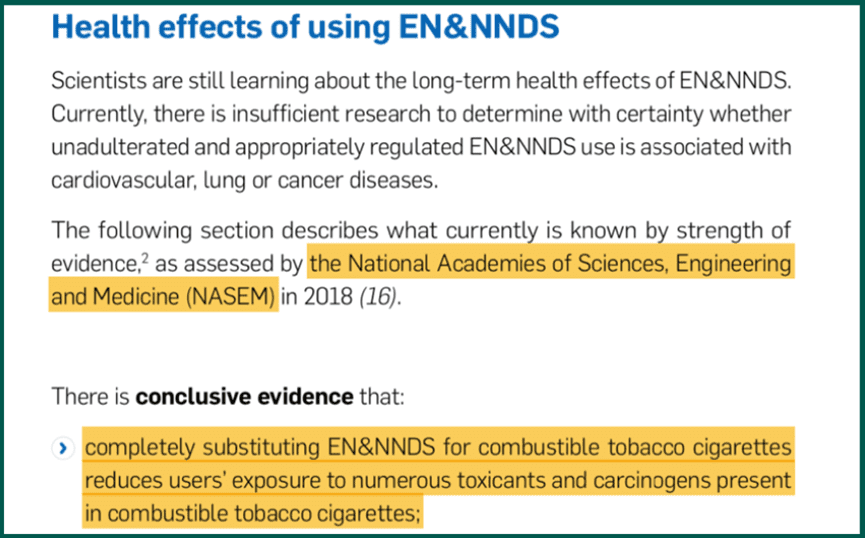
In the report, WHO cited the assessment of e-cigarettes by the National Academy of Sciences, Schools of Engineering and Medicine (hereinafter referred to as NASEM).
Among them, there is conclusive evidence: "The complete use of e-cigarettes instead of cigarettes can reduce the chances of users being exposed to various toxic and carcinogens produced by the burning of cigarettes."
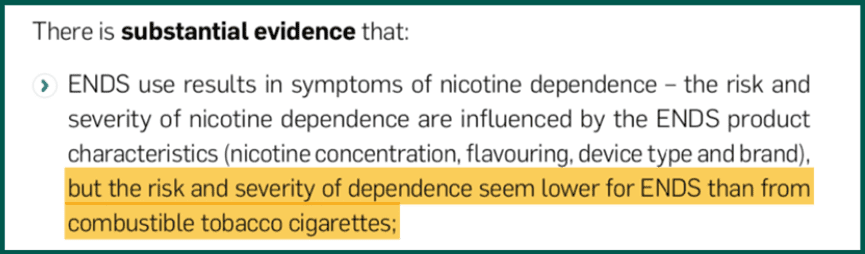
There is a large amount of evidence that: "The use of e-cigarettes can lead to nicotine dependence, but to a lower degree than cigarettes; e-cigarette smoke may increase the risk of some diseases in the long run, but the risk is lower than that of cigarettes; completely switching from cigarettes to e-cigarettes can improve the health of multiple organs in the body."# p#pagination title #e#

WHO specifically pointed out that recent research shows that the simultaneous use of cigarettes and e-cigarettes can lead to higher levels of oxidative stress and increase cardiovascular and lung health risks, so dual use is not recommended.
Under reasonable control, e-cigarettes will help long-term tobacco control
The report concluded that WHO, NASEM, and CDC (Centers for Disease Control and Prevention) have all realized the potential of e-cigarettes to improve the public health environment. At the same time, the WHO also made some recommendations in the report for countries planning to regulate e-cigarettes:
These include requiring e-cigarette companies to regulate sales channels (including online sales) and strictly enforce laws on the minimum purchase age; adopting standardized regulations to minimize the health risks of e-cigarette users; prohibiting the addition of carcinogens, mutagens and other harmful substances, etc.
Therefore, if the government reasonably controls e-cigarettes, it can minimize the negative effects of the tobacco epidemic and continue to have positive effects on public health.
In this regard, the UK has become a typical success story. The UK has been pursuing a smoke-free plan: phase out combustible cigarettes by 2030 and allow smokers to quit completely or switch to lower-risk nicotine delivery systems such as e-cigarettes.# p#pagination title #e#
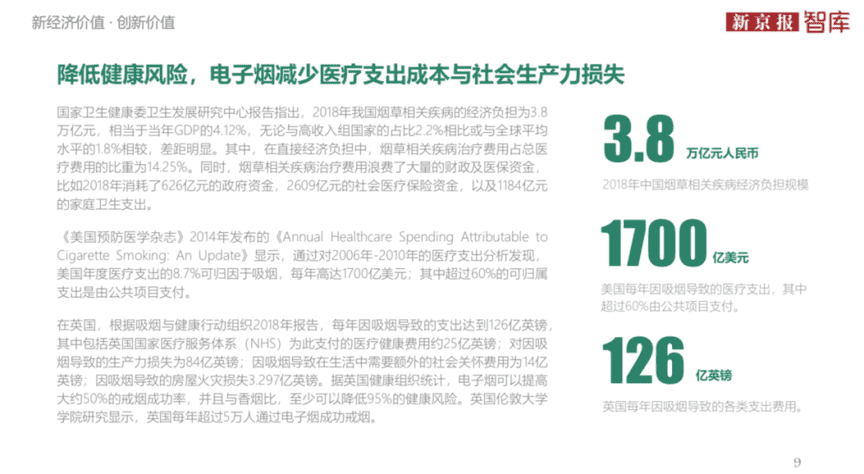
The premise for the UK to make this decision was based on long-term scientific research. As early as 2015, the UK Department of Public Health released a 113-page independent report. The report concluded: Although e-cigarettes are not auto safe, they are 95% less harmful than tobacco, and the content of harmful chemical substances is almost negligible. Policies should encourage smokers to use e-cigarettes as a key tobacco control strategy to reduce the harm caused by smoking.
In order to ensure that e-cigarettes maximize their positive social role, the UK has formulated comprehensive regulatory policies, including the control of e-cigarette advertisements, long-term tracking of social public health responses to observe the use of young people, etc.
At a time when tobacco control has become a major trend around the world, how to reduce the harm caused by cigarettes and thereby reduce the national medical expenditure caused by related diseases has become a thorny problem for all countries. Absolute harmlessness cannot be achieved in the short term, but can controlling the intake of harmful substances be regarded as a more realistic and more operational way?
Taking China as an example, although the smoking rate among people in China is currently showing a downward trend, it still remains at a high level, which is still far from the tobacco control goal proposed in the "Healthy China 2030" Plan Outline, that is, reducing the smoking rate among people over 15 years old to 20% in 2030.
Ma Liang, a researcher at the National Institute of Development and Strategy at Renmin University of China, once commented that the absolute harmlessness brought by smoke-free is certainly the best choice, but when harmlessness cannot be achieved in the short term, instead of advocating high-profile smoke-free ideals that are difficult to achieve in the short term, it is better to realistically start from reducing tobacco and harm and encourage smokers to reduce the health hazards caused by smoking and secondhand smoke exposure by replacing and reducing tobacco.# p#pagination title #e#
Related hot articles: Heavy! CCTV speaks for e-cigarettes: We should not rush to completely deny e-cigarettes!
In the article, Ma Liang believes that as to whether e-cigarettes have merits and demerits, it is necessary to compare the positive and negative evidence to provide both parties in the dispute with a fair opportunity to compete, rather than blindly accepting only the partial evidence that supports the harm of e-cigarettes. On the one hand, there is a large amount of evidence that the cigarette liquids, aerosols, additives, smoke, etc. of e-cigarettes can bring various health hazards and may induce young people to use cigarettes. On the other hand, there is also a large amount of evidence that e-cigarettes have merits in guiding smokers to quit smoking and reducing health hazards. Science means comprehensively evaluating all evidence, rather than establishing a certain opinion at the outset and accepting only evidence that is consistent with it.
In short, the regulation of e-cigarettes also needs to be made based on scientific evidence, overcome the fog of evidence, and promote smoke-free causes through evidence-based decision-making. E-cigarettes are indeed imperfect, but compared to cigarettes, e-cigarette products that have gone through multiple iterations can significantly reduce the health hazards to users and people exposed to second-hand smoke. In the future, it may have the opportunity to become a powerful tool for more countries to control tobacco and reduce harm.


