
Targeting the Smoking Alternative Market, Vaping Stores Continue to Grow
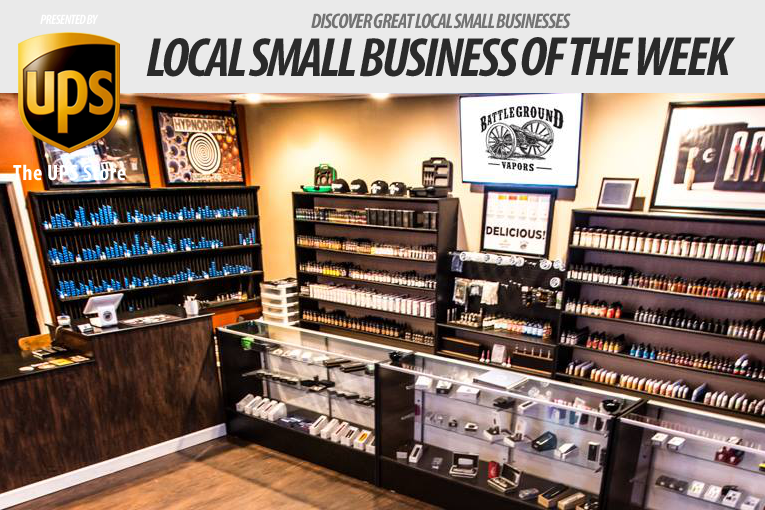
For a long time, vaping was a very niche market.
Used as an alternative to smoking, it has a flavor (tobacco) and a battery life shorter than devices used to heat "e-liquids" into vapor for inhalation by users.
With advancements in technology such as battery life, vaping has transformed from a multi-million dollar industry into a multi-billion dollar industry over the past decade.
There are over 3,500 vaping shops or cafes in the U.S., with the Battlefield Vapors located at 595 Hillsborough St., Suite 339, in the Independent Square Shopping Center being one of them.
Founded by Chris Green in 2014, the shop has steadily increased its sales as more smokers switch to vaping. The store serves as both a lounge and a marketplace for vaping, with four employees, including Chris's father, all full-time, ready to assist customers from 10 AM to 8 PM Monday through Saturday and from 1 PM to 5 PM on Sundays.
Smokers still far outnumber vapers—approximately 450,000 to 2.5 million in the U.S. as of 2015, according to the Centers for Disease Control. However, according to the Tobacco Vapor Electronic Cigarette Association, 29% of smokers who tried vaping or e-smoking no longer smoked after six months.
Vaping is surrounded by health concerns, as long-term studies on its effects are still incomplete, but the scientific consensus summarizes that vaping is significantly less unhealthy than smoking, certainly containing none of the carcinogens found in tobacco smoke.
Additionally, there are some legal issues surrounding it, as it has until recently been an unregulated industry. The FDA is beginning to attempt to regulate products and shops, which has been controversial. The vaping industry claims it is a threat to big tobacco companies, while others argue that, among other things, vaping is particularly appealing to youth. In 2013, three times as many teenagers tried cigarettes as tried vaping. By 2015, according to a scientific journal, those numbers flipped, with 16% of 2.39 million American teenagers having tried vaping compared to 1.37 million who tried cigarettes.
So, despite the uncertainty surrounding the industry's future, the Battlefield continues to thrive.
Most of their new business comes from smokers looking to switch, but repeat customers make up a significant portion of their business model.
Like many vape shops, Battlefield sells hardware and e-liquids or juices. Vaporizers come in many sizes, shapes, and power levels—the more power, the more vapor produced. They consist of two parts: a battery housing with a control panel and a tank that holds the juice. Sizes range from cigarette-sized vaporizers to some about the size and shape of a deodorant stick. Costs vary widely. Some setups can cost several hundred dollars, but most first-time buyers choose something in the $40 to $50 range.
Battlefield stocks several brands and styles, nurturing what sells best and focusing on that. The same strategy applies to the e-liquids they sell.
When they first opened, they—like many other shops—heavily promoted their "house" e-liquids. Over time, however, they have become a marketplace for the best of the best or the most popular juices nationwide. Certain companies focus solely on producing juices and selling to businesses, such as Charlie's Chalk Dust, Kosmic Khaos, and Cuttwood. These nationally recognized brands have become what Battlefield now sells.
This model serves to attract repeat customers and provides a full spectrum of products for those who vape.


