
How to Calculate Atomizer Coil Resistance for Vaping Devices
Single-battery devices are always the entry-level equipment for every vapor enthusiast, but some friends are never satisfied with the status quo and always want to lower the resistance for bigger clouds. However, pursuing low resistance and large clouds with single-battery devices is often not safe, which is where dual-battery devices come into play. Since there is an extra battery, the resistance of the heating wire also needs to be adjusted accordingly. Today, I will discuss how to choose the heating wire resistance for dual-battery devices.
There are two types of dual-battery devices:
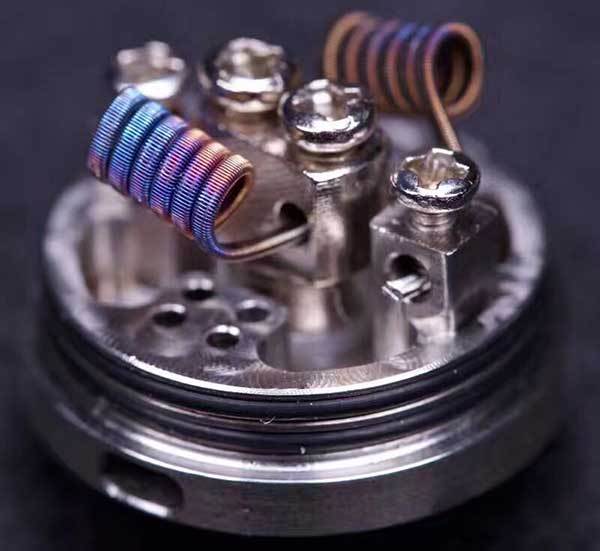
1. Series structure, where the current is equal. According to Ohm's law, I (current) = U (voltage) / R (resistance). With a fixed resistance, a higher voltage results in greater power and more vapor. This means that two 40A discharge-rated batteries double to 80A, which simply means increased power. When selecting the heating wire resistance, special attention is needed; if you still use a 0.1Ω resistance as in a single battery, it can cause the heating wire to heat up too quickly, and the cotton may ignite instantly, exceeding the battery's load, making it very unsafe. In long-term use, I personally recommend a resistance of 0.3Ω for series single wires. If using a fused wire, I recommend choosing no lower than 0.27Ω.
2. Parallel structure, where the voltage is equal. With a fixed voltage, a smaller resistance results in greater power and more vapor. Taking a single 18650 3700mAh battery as an example, when paralleled, it becomes 7400mAh. Therefore, when choosing the heating wire resistance, you can still maintain a resistance of 0.1Ω, but during use, due to the parallel structure, the same resistance will extend the usage time, reducing the frequency of battery changes.
In long-term use, I have also seen some friends trying to pursue larger vapor by attempting lower resistances. However, I do not recommend this, as too low resistance can still pose safety hazards. Everyone can leave comments in the comment section to discuss heating wire resistance values.


