The changing landscape of the e-cigarette industry: greed and helplessness in human nature?
May 31 every year is "World No Tobacco Day", and this year's theme is "Protect young people from traditional tobacco products and e-cigarettes."
Tobacco has a history of more than 100 years since it became popular in the 20th century and scientifically confirmed that it is harmful to health. Today, tobacco control has become a public health problem around the world, as well as infectious disease prevention and immunization planning.
Data shows that nearly 6 million people still lose their lives every year, including non-smokers who use tobacco directly and are exposed to second-hand smoke. Compared with other public health issues, tobacco control is unique in that it not only has to fight nicotine addiction, but also resists intangible thrust such as marketing methods from tobacco companies.
More than ten years after banning tobacco advertising, restricting sales to minors, and cigarette pack advertising were clarified by the World Health Organization in the Framework Convention on Tobacco Control ( FCTC ), many countries and regions around the world are controlling tobacco. Success has been achieved on the issue.
However, e-cigarettes, which have entered the public with a new attitude, are being noticed by more and more people, and the ensuing controversy is also full of contradictions: some countries include them as a smoking cessation product and include them in drug management, and others because of their popularity among young people. The epidemic pressure is heavy.
From the "online sales ban" issued by the two departments last year to the proposal of "gradually banning the production and sale of e-cigarettes" put forward by some representatives at this year's Two Sessions, the contradictions in public discourse not only involve the advantages and disadvantages of e-cigarettes, but also trigger discussions on e-cigarettes and traditional tobacco. Even many netizens suggested that the proposal to ban the sale of e-cigarettes should also be extended to traditional tobacco, with equal treatment.
In such disputes, how to treat and manage e-cigarettes has gradually become a hot topic in the topic of tobacco control.
From inventor country to imported product
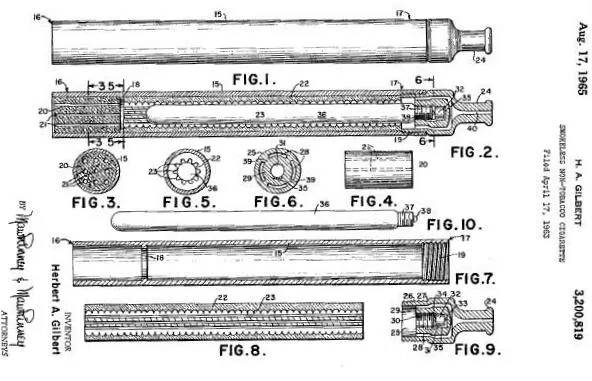
Han Li, the founder of Ruyan and a China, is widely known as the "father of e-cigarettes." The first generation of e-cigarettes he launched in 2005 was briefly popular.
Ruyan became popular in the name of "smoking cessation" and "health," but was later questioned by consumers that it deliberately concealed the content of nicotine and even fell into a lawsuit. The media's competition for reporting eventually led to Han Li and Ruyan traveling overseas, and were eventually acquired and refrigerated to this day.
Ruyan's defeat made for a long time, early e-cigarettes only had a niche player market, focusing on DIY, and did not have smoking cessation as the main purpose.
In the early years, many people's impression of e-cigarettes was that they were shrouded in smoke, which was the aerosol visual effect produced by cigarette oil under the action of an atomizer. However, since the nicotine content that the tobacco oil can carry at the beginning was not high, unless it was a very large amount, it would not bring the throat sensation of nicotine when smoking traditional tobacco. Therefore, the "cigarette replacement" effect was not good, and it was not popular among smokers.
Brother Xiaoma started running his own Taobao store during the smoky era. He claims to be good at operating communities, has high user stickiness, and has many repeat customers. Coupled with his hard work, he started operating the store well during his college years.
However, because the accessories required for DIY are expensive and the market is not large, large smoke e-cigarettes have been regarded as a hobby of burning money for a long time, and it is difficult to truly "get out of the circle."
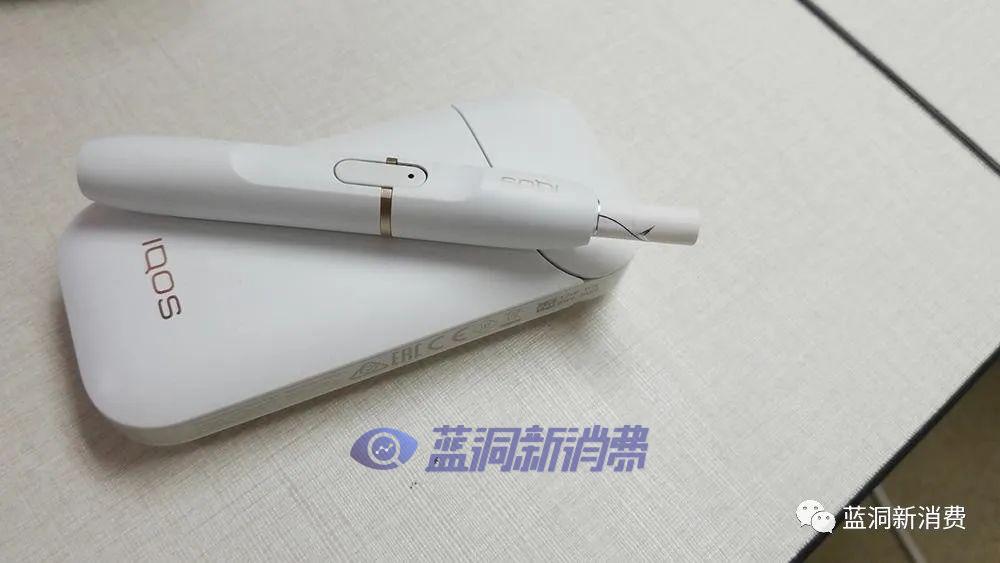
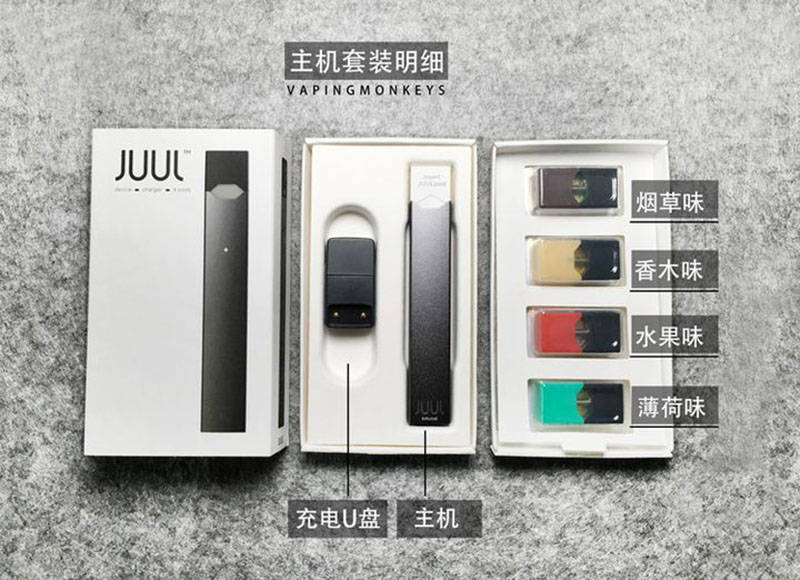
Xiao Ma recalled to "occasional cure" that the real change began in 2017."The birth of nicotine salt is the most important step." The popularity of JUUL, the American e-cigarette giant with a patent on nicotine salt, is the real rise of the third generation of e-cigarettes. sign.
JUUL's popularity in the United States is very fast, driving the popularity of e-cigarettes across the United States. By 2018, the penetration rate of the e-cigarette market in the United States was 13% , accounting for 43% of global e-cigarette sales. It is the world's largest e-cigarette market. JUUL accounts for more than 75% of the market share.
At the end of 2018, JUUL was known to people in China for the first time when it entered the hot search list on social platforms with a "year-end bonus of US$1.3 million per capita." Only then did people discover that the well-known e-cigarette foundries on the other side of the ocean are all in Shenzhen.
The e-cigarettes produced by JUUL have been called small cigarettes again. Due to the addition of nicotine salt, the nicotine transmission efficiency has been greatly improved compared with previous large cigarettes.
"The feeling of hitting the throat is strong. For the first time, I can truly achieve the effect of replacing cigarettes." Brother Xiaoma believes that the popularity of small cigarettes is revolutionary. It is not only because the design and appearance are more fashionable and close to young people, but also because its cigarette replacement effect really has a chance to penetrate the group of smokers.# p#pagination title #e#
JUUL's "exit from the circle" has allowed domestic capital to begin to deploy rapidly. According to technology media reports, as of November 2019, nearly 40 e-cigarette brands have completed first or more rounds of financing, and nearly 2 billion yuan has flowed into the e-cigarette market.
From 2018 to 2019, Brother Xiao Ma watched the establishment of many new brands and the influx of too many people. Some people describe that you can buy all the accessories and cigarette oil after walking around Shenzhen, register the trademark, and label it, and a brand new e-cigarette brand will be born.
Behind this are Shenzhen's advantages as a foreign e-cigarette OEM and multiple reasons why e-cigarettes themselves have low technical barriers. The barbaric growth of e-cigarette towns has allowed many early practitioners to make a lot of money, but at the same time its low threshold has also allowed a large number of low-end products to mix into the market.
In recent years, some people in the e-cigarette industry association have called for unified product standards. At the beginning of 2018, the "General Specifications for E-Cigarette Atomization Equipment Products" and "Specifications for E-Cigarette Atomization Liquid", which were drafted and formally confirmed by the Electronic Cigarette Industry Committee of China Electronics Chamber of Commerce, were released.
Although the introduction of this standard fills the gap in the field of e-cigarette group standards in China, its unofficial nature leads to little restraint.
Until May 2019, some media reported that the official website of the National Standardization Administration Commission showed that the mandatory national standard for "e-cigarettes" had been reviewed and was currently in a "approval" status. According to the project plan schedule, it may be released within the year.
But for profit-seeking capital, the urgency to seize the market is more intense than quality control.
Last year's "Double Eleven Shopping Festival" was an important stop for e-cigarettes to seize on major platforms. The e-cigarette brands that have received financing are all working hard in marketing. The entry of Luo Yonghao and others has also increased the popularity of e-cigarettes on domestic social platforms.
At an e-cigarette exhibition held in Shanghai at the end of October 2019,"Occasionally Healing" witnessed the grand event with its own eyes. Nearly a hundred e-cigarette brands gathered at the venue, and the atmosphere and popularity of the entire venue were no worse than comics exhibitions and e-sports exhibitions.
"Test smoking" is a key step for all booth guides, with brand representatives trying to hand disposable cigarette holders to everyone passing by the booth.
At a booth of a new e-cigarette brand claiming to be from Foshan, Guangdong, a girl who claimed to be a professional product coughed because she inhaled cigarette oil directly into her throat during a test smoking.
The exhibition staff skillfully handed over the tissue, and the girl who selected the product wiped the corners of her mouth without much surprise.
In this regard, practitioners told "occasionally cured" that the problem of oil spills is actually a common phenomenon in the industry, and even the best-selling leading brands will have similar problems.
It seems that these flaws do not affect brands 'ability to seize the consumer market like they are conquering the city.
The battle between advantages and disadvantages
More than a decade ago, Ruyan, who advertised "healthy", finally had to withdraw from the mainland market due to controversy over false publicity. But for e-cigarettes, it is undeniable that helping to quit smoking is one of their most important and just selling points.
In 2018, when heavy smoke players were still the main players, we visited several e-cigarette physical stores on a small scale. It was found that within a limited time, in addition to veteran DIY players, the main group of customers who intended to inquire were people who quit smoking.
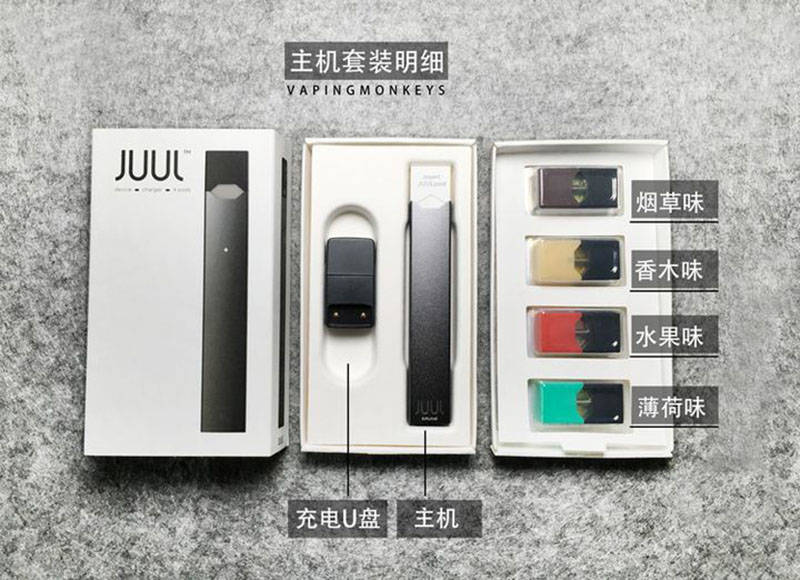
However, the main reason why JUUL e-cigarettes, which are imported, are popular is the same as traditional tobacco a century ago: advertisers use marketing methods to give e-cigarettes social attributes and target young people with strong hormones.
Hu Dayi, director and professor of the Institute of Cardiology at Peking University People's Hospital and president of the China Tobacco Control Association, once publicly stated that more than 3.6 million American middle school students smoked e-cigarettes in 2018, a surge of 1.5 million from 2017, and the growth rate is very fast. The U.S. health department exclaimed that it has never seen young people use a "drug" that endangers health so quickly in history, escalating the rapid growth of e-cigarette smoking among American teenagers into an "epidemic."
In fact, as early as 2016, the U.S. Food and Drug Administration (FDA) obtained the right to regulate e-cigarettes. However, before it had time to formulate formal rules and product standards for e-cigarettes, e-cigarettes such as JUUL have secretly become the "new favorite" of young people, and extreme death cases have attracted widespread attention and concern in society.
In July 2019, the U.S. Attorney General of North Carolina sued JUUL for providing e-cigarettes to young people. The reason is that the company conducts targeted marketing to young people while downplaying the potential harm its products may cause, making e-cigarettes an "epidemic" among minors.# p#pagination title #e#
On September 9, the U.S. FDA issued a warning letter to JUUL, alleging that the latter "markets unauthorized modified and risky tobacco products through participation in labeling, advertising and/or other activities aimed at consumers, including displaying them to young people in schools."
Since then, JUUL has had to take the initiative to stop selling e-cigarettes in other flavors except the original and mint flavors. JUUL, as a leading company, was subsequently downgraded in the capital market.
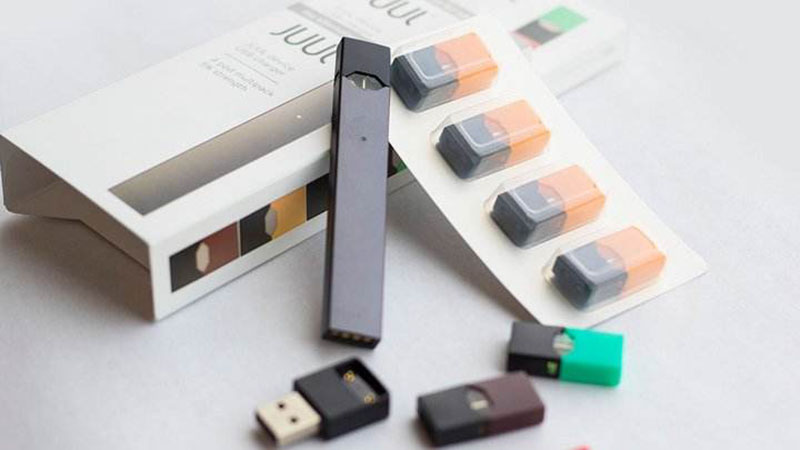
The United States has criticized the FDA's weak supervision, believing that the current FDA policies cannot solve the problem of addiction among young people. One reason is that the FDA and most health experts believe that e-cigarettes may be less harmful than traditional cigarettes because they do not produce carcinogenic by-products such as tar and carbon monoxide. However, there are few studies on the long-term health effects of e-cigarettes, especially on young people.
In early 2020, the U.S. Department of Health and Human Services stated in a document released on its website that it was taking comprehensive and economical measures to implement laws passed by the U.S. Congress. According to this law, there are currently no legally sold e-cigarettes on the market. Products that are widely used by young people have become a priority in this crackdown to ensure that young people are not provided with a gateway to nicotine addiction.
However, the current policy is still a compromise. Alex Azar, the U.S. Secretary of Health and Human Services, said the move would attempt to maintain e-cigarettes as a potential alternative to combustible tobacco use by adults while ensuring that young people are not addicted to nicotine, thereby achieving a balance in public health.
Achieving this balance actually requires strong regulatory capabilities. Compared with the liberal atmosphere in the United States, the United Kingdom has always adopted drug management for e-cigarettes because of its strong universal medical system.
Starting from May 20, 2017, the UK requires that the volume of a single tube of e-cigarettes should not exceed 2 milliliters; the maximum capacity of refilling the liquid should not exceed 10 milliliters; the nicotine concentration of the liquid should not exceed 20 mg per milliliter; Nicotine-containing products and their packaging must be able to prevent children from opening them and cannot be restored to their original state after opening them; it is prohibited to add certain ingredients, including pigments, caffeine, and taurine, to e-cigarette liquids; Add new labels and warnings to the packaging; whether e-cigarette tubes or tobacco liquids, all e-cigarette products must be notified to the FDA before being sold in the UK.
The British government and the medical community's support for e-cigarettes mainly stems from an independent review report in 2015 by the Public Health Agency of England (PHE), an executive arm of the British Department of Health. The review results believe that e-cigarettes are 95% safer than universal tobacco in terms of user health and have helped tens of thousands of smokers quit smoking.
Since then, the British government and the National Health Service (NHS) have begun to promote e-cigarettes to replace ordinary tobacco.
Another reason for the different attitudes between Britain and the United States is that the popularity of e-cigarettes has not soared among non-smokers in the UK. A survey of adult smokers in the UK also shows that the vast majority of people use e-cigarettes to quit traditional tobacco.
One point that is difficult to clarify is that success stories in the UK are now widely used as one of the selling points of many e-cigarette brands and merchants. However, these sales personnel will not tell the public that the UK uses prescription drugs to manage e-cigarettes.
As the International Union to Fight Tuberculosis and Lung Disease (UNION) wrote in an article published on the eve of this year's World No Tobacco Day, e-cigarettes and heated tobacco products are extremely profitable businesses, especially in low-and middle-income countries, and governments need to be vigilant about the commercial incentives for businesses to attract new users and expand the domestic nicotine market.
According to UNION, the reason why the UK can manage e-cigarettes as a harm-reduction and smoking cessation drug relies on its strong regulatory capabilities and the tobacco epidemic that has entered a later stage.
For most low-and middle-income countries, there is a lack of resources and enforcement mechanisms to ensure the implementation of comprehensive e-cigarette regulatory regulations.
Therefore, public health practitioners and policymakers must follow early warning principles and evidence-based methods in decision-making. These fundamental public health concepts require preventive measures when science is inconclusive.
At the same time, considering the potential harm of e-cigarettes and heated tobacco products, as well as the fact that their long-term health effects cannot be proven due to lack of time, the government must focus on preventing a possible e-cigarette epidemic.
The Federation believes that the introduction of new highly addictive nicotine and tobacco products to low-and middle-income countries is very bad: e-cigarettes and heated tobacco products are likely to overwhelm governments and exacerbate the tobacco epidemic.
And out of caution, low-and middle-income countries should ban the sale of these products; the manufacture, import or export of such products should be prohibited; and such products should comply with bans on tobacco advertising, promotion and sponsorship and smoke-free laws and regulations.# p#pagination title #e#
300 million smokers and tobacco control
Currently, most countries and regions around the world are implementing tobacco control policies based on the World Health Organization (WHO) Framework Convention on Tobacco Control to reduce tobacco demand. my country signed and joined the treaty in 2003, and has been implementing tobacco control in accordance with the Convention since 2006.
The formulation of the Convention is a response to the globalization of the tobacco epidemic. Under the Convention, parties are obligated to implement strong tobacco control policies: graphical health warnings, bans on tobacco advertising, promotions and sponsorships, increases in tobacco taxes and prices, smoke-free regulations, and provision of smoking cessation services, reducing illegal trade, preventing interference from the tobacco industry, etc.
However, in China, tobacco implements a monopoly system, and only China Tobacco Corporation and its affiliated companies monopolize tobacco sales.
The effect of this system on national tax revenue is obvious. Data released by the State Tobacco Monopoly Administration shows that in 2019, the tobacco industry achieved a total of 1.2056 billion yuan in industrial and commercial tax profits, a year-on-year increase of 4.3%, and the total fiscal revenue paid in was 1.177 billion yuan, a year-on-year increase of 17.7%, reaching a record high.
Some people jokingly joke that China Tobacco is the most low-key company. According to the above profit statistics, the net profit of China Tobacco is equivalent to 9.7 China Mobile, 15.4 Tencent, and 18.1 Alibaba, which is astonishing.
But at the same time, tobacco control practitioners have always criticized tobacco monopoly.
The International Tobacco Control Policy Assessment Project (ITC) is a multi-country, prospective study to assess the psychological and behavioral impact of key policies of the World Health Organization's Framework Convention on Tobacco Control.
Its report released in 2017 found that the main reason why smokers choose cigarette brands is that the price is affordable, but the price of cigarettes in China is not high enough to make smokers quit smoking, ranking fourth from the bottom among all 20 countries surveyed.
At the same time, smokers have a very high awareness rate that smoking causes lung cancer, but there is a large gap in understanding that smoking causes coronary heart disease, impotence and stroke.
Jiang Yuan, vice president of the China Tobacco Control Association, told "Occasionally cured" that although tobacco control has achieved certain results in recent years compared with other public health issues, for example, more and more cities are enacting smoke-free regulations in public places.
However, the situation is still severe. For example, only a few first-tier and second-tier cities have relatively good enforcement of smoking bans in public places, and half of the provinces and cities have not yet promulgated policies.
In addition, tobacco taxes have always been relatively low globally, and with the impact of inflation, tobacco prices have even become lower and lower.
Data shows that the average price of a pack of cigarettes in China is only 14 yuan, and even some regions still have low-priced cigarettes of 2 or 3 yuan. However, in Europe and the United States, due to the increase in tobacco taxes, the average price of a pack of cigarettes is about US$20, a significant gap.
Even in the design of cigarette pack packaging, China is significantly different from many developed countries. In order to be wary of the harmful effects of smoking on health, more than 100 countries, including Brazil, Russia, India, etc., have required that vigilant words and pictures be printed on cigarette packs.
However, in China, historical and cultural factors have always been used in ordinary or even exquisite packaging.
In this year's two sessions, Qu Jie, a member of the National Committee of the Chinese People's Political Consultative Conference, also put forward suggestions on this. One fact that many people don't know is that according to the provisions of the World Health Organization's Framework Convention on Tobacco Control, parties should take legal measures to ensure that warning pictures are used on cigarette packaging within three years after the convention enters into force, with an area of 50% or more, and should not be less than 30%. As of the end of 2018, 118 countries had implemented legal provisions on the use of warning pictures in cigarette packaging.

However, at present, warning pictures have been printed on cigarette packs for cigarettes exported by my country in accordance with the requirements of the Convention, but products sold in China have not yet implemented mandatory printing of warning pictures on cigarette packs.
However, the proposal to add warning pictures on cigarette packaging did not attract widespread attention. On the contrary, the discussion on another proposal "recommending a gradual ban on the production and sale of e-cigarettes" was once lively.
In this regard, Jiang Yuan pointed out that data shows that the usage rate of e-cigarettes is different between China and the United States.
In November 2019, two new studies published by the Journal of the American Medical Association ( JAMA ) undoubtedly showed that the popularity of e-cigarettes among teenagers in the United States is rising rapidly. Based on data from the 2019 National Youth Tobacco Survey, the study shows that 5.3 million middle school students used e-cigarettes in 2019, an increase from 3.6 million in 2018. From 2017 to 2019, the proportion of high school students using e-cigarettes more than doubled (from 11.7% to 27.5% ), and the proportion of middle school students using e-cigarettes more than tripled (from 3.3% to 10.5% ).# p#pagination title #e#
The more authoritative domestic data comes from the "China Adult Tobacco Survey Report" released by China Electronic Cigarette Commercial Electronic Cigarette Industry Committee and China Center for Disease Control and Prevention in 2018. It shows that from 2015 to 2018, the proportion of people aged 15 and above who are using e-cigarettes increased from 0.5% to 0.9%. Among them, the 15-to 24-year-old age group used the most, reaching 1.5%.
Why is it so much lower than the United States? Jiang Yuan believes that the main reason for the lack of popularity is that tobacco substitution is not high. Due to the low cost of obtaining cigarettes for smokers in China, the vast majority of smokers have no desire to seek alternatives.
The demand for replacing cigarettes in China as soon as possible is not strong, but the admission of capital still attracts the attention of many parties. Jiang Yuan believes that no matter how it is managed, clarifying the competent departments as soon as possible and increasing scientific research are the first key points.
On the eve of Double Eleven in 2019, the e-cigarette exhibition was held for three consecutive days. Accompanied by its popularity, many e-commerce platforms firmly believed that e-cigarette sales would create a new sales miracle at the shopping festival.
At the same time, there is a strange atmosphere in the industry. At that time, many industry insiders admitted to us that e-cigarettes are currently in an unsupervised vacuum, and product quality levels are uneven. It is expected that they will soon have authoritative industry standards.
However, instead of waiting for the "national standard", it was a notice called the "online sales ban."
On November 1, 2019, the official website of the State Administration for Market Regulation and the State Tobacco Monopoly Administration jointly issued the "Notice on Further Protecting Minors from E-Cigarettes", requiring e-commerce platforms to remove e-cigarette products from shelves in a timely manner.
In other words, because it was difficult for the Internet to verify the identity information of the buyer, the two departments finally proposed a ban on sales through the Internet.
Looking back on that paragraph, Brother Xiaoma still feels that the waves are strange. On the eve of Double Eleven, all major platforms and merchants conducted pre-sales, hoarding a large number of goods, and conducting pre-sales activities for a long period of time.
Everyone thinks that the real implementation of the policy will at least provide a buffer for businesses after Double Eleven. But just two days later, under media reports, the public's attention continued to decrease, and news began to spread that several e-commerce platform operators had been interviewed.
Around 0:00 on November 7, Brother Xiao Ma still remembers that everyone in his e-cigarette industry group was counting down together. He also witnessed the instant removal of his e-cigarette store, which had been in operation for 7 years and ranked among the top three on social platforms.
E-cigarettes "died" again?
The "sales ban" once again put Luo Yonghao on hot searches. Some people are distressed that his new business is in trouble again, and some people accuse him of being too high-profile for leading e-cigarettes into the abyss.
But when it comes to 2020, Luo has been on the hot search list for bringing goods through online live broadcasts. People are hotly discussing his incompetence in front of the camera, but this does not prevent him from harvesting wealth by bringing goods.
Public figures who once talked about "idealism" volunteered to join the whirlpool, but they probably rarely looked back and remembered that the trade-off between business and public health was far more worthwhile than traffic.
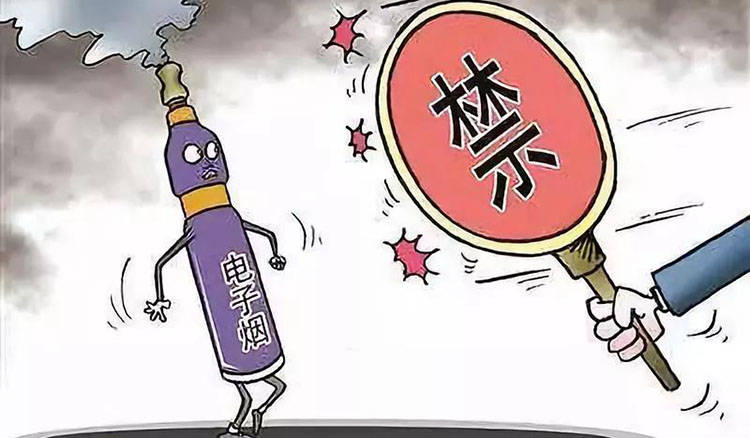
After the ban was issued, Da Pan, who was willing to chat with "Occasionally Healing", was very depressed. After graduating from high school, he came to Shenzhen to work and has been engaged in selling e-cigarettes and tobacco fluids for five years.
It was a good time to catch up with the first wave of e-cigarette foreign trade. I saved enough down payment and bought a house in the suburbs of Shenzhen. But now with strict control in the United States and the ban on domestic online sales, income has plummeted.
When talking about the impact of e-cigarettes on young people and related topics such as tobacco control, Da Pan cannot always express himself clearly. Like most front-line e-cigarette practitioners, he only regards it as a job to make a living.
In his circle of friends, links to articles reporting that e-cigarettes were stigmatized were forwarded. "I touched some people's cheese. Is there any need to say that?"
Under Da Pan's introduction,"Occasional Healing" came to Zhuoyue Building in Shatian District, Shenzhen on New Year's Day 2020.
This seemingly ordinary office building once gathered a large number of e-cigarette middlemen.
At that time, the online sales ban had been promulgated for two months, and Brother Xiaoma's Taobao store was removed from the shelves and entered a period of team rectification.
In the Zhuoyue Building, in some offices that were evacuated, traces of e-cigarette flavor descriptions such as "grape" and "ice cool" were still left on the walls. Even at the corner of the corridor, you can clearly smell a sweet smell of tobacco oil, which coincides with the smell of the e-cigarette exhibition.
Luo Yonghao's Weibo no longer publishes content about e-cigarettes. A large number of front-line workers in the factory settled their wages and went home early for the New Year. As for what to do next year, who knows?# p#pagination title #e#
After the Spring Festival, four months after the ban on online sales was released, Da Pan, who wanted to change his job, did not have many other options. Asked why he was still insisting, he asked,"In the current situation, can you tell me what I can do?"
The COVID-19 epidemic has also hit e-cigarette physical stores. Some brands have had to reduce the number of physical stores, and even reduced the price of cigarette rods originally priced at nearly 200 yuan to 9.9 yuan for promotion.
Many people predict that after Ruyan died once, more than a decade later, e-cigarettes will face the same policy and supervision problems and eventually enter a dead end.
At the same time, in the United States on the other side of the ocean, after JUUL was cracked down on, the government's problem of preventing the popularity of e-cigarettes among young people is facing new resistance.
JUUL stopped selling e-cigarette cartridges other than mint flavors last year. The U.S. government also explicitly banned the use of fruits and sweet cigarettes in replaceable e-cigarette cartridges, but did not include disposable cigarettes.
As a result, in just a few months, the new disposable e-cigarette brand Puff Bar became popular among young people, with products including more than 20 flavors. What's more, in order to avoid supervision, some e-cigarette brands have deliberately designed many product types that are conducive to hiding e-cigarettes.
In April 2020, the U.S. FDA issued a warning letter on this. The products involved include backpacks and sweatshirts with invisible pockets that can hide e-cigarette devices; ENDS (Electronic Nicotine Delivery System, or e-cigarettes) products similar to smart watches, or devices in the form of children's toys (portable video game systems (gamepads) or devices shaped like fingertip tops).
The FDA also issued warning letters to companies that sell e-liquids that mimic food packaging that attracts minors, such as candies or cartoon characters such as SpongeBob.
Like tobacco makers in the 20th century, American e-cigarette manufacturers are "wrestling" with regulators. Can China control e-cigarettes through a simple ban on online sales? Everything remains unknown.
What is certain at least is that China, which has 300 million smokers and tobacco monopolies, is still struggling on the road to tobacco control.
Written by: Liu Chu
References:
1. NHS UK: Using e-cigarettes to stop smoking.
2. UCL NEWS: E-cigarettes may help over 50,000 smokers to quit in England each year.
3. Tiger Sniff. com: Half a year after the "online ban", the e-cigarette industry almost lost its underpants.
4. Beijing News: Big data: More than 10 million e-cigarettes are used in China.
5. Health Times: Cigarette prices in China are too low. Raising tobacco taxes = saving lives.
6. NYTimes: Lawmakers Say Puff Bar Used Pandemic to Market to Teens.
7. CHINACDC: International Tobacco Control Policy Assessment Project (ITC Project) China Survey Report