
Will Offline E-Cigarette Stores Be Banned? Will E-Cigarettes Be Completely Prohibited?
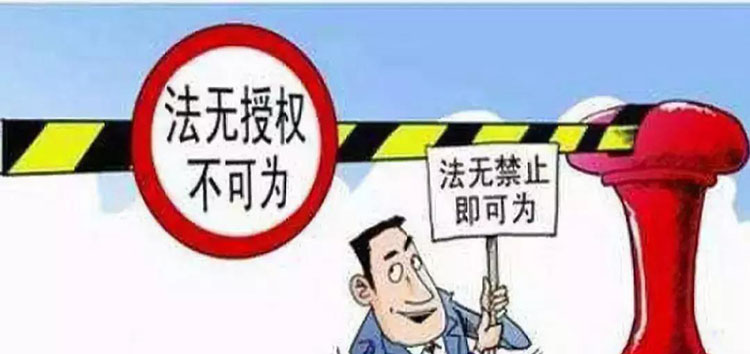
On November 1, 2019, China issued a ban on online sales of e-cigarettes. Around the world, this also triggered a wave of discussion about the harms of e-cigarettes and whether they should be banned. So the question is: it has been almost a year since last year’s e-cigarette ban, and offline store expansion has been astonishingly rapid. What exactly is the country’s policy toward e-cigarettes? So far, there is still no final conclusion, nor have any formal laws or regulations specifically targeting e-cigarettes been introduced. As for where the e-cigarette industry is headed, it remains largely unknown, and the industry and consumers alike are moving forward mostly on speculation.
In fact, many countries and regions around the world have already completely banned e-cigarettes, prohibiting their production and sale. Will China take the same approach and impose a total ban on e-cigarettes?
Here is the blogger’s personal view: from the broader environment, it is possible, but the likelihood may not be very high. The fact that the country has not introduced relevant laws and regulations for such a long time is definitely not due to low efficiency. Rather, it is because the authorities are weighing the pros and cons and cannot easily give a definitive conclusion in the short term. That is why related laws and regulations have been delayed again and again. However, it is only a matter of time before policies are introduced.
China is a major producer of e-cigarettes. More than 90% of the world’s e-cigarette products are manufactured in China, and the industry employs a very large workforce, conservatively estimated at no fewer than 200,000 people. It also makes a considerable contribution to public finances. If e-cigarette production were completely banned, those 200,000 people could face the risk of unemployment, and the e-cigarette supply chains of many countries around the world would be severely impacted. That is why China is extremely cautious about the e-cigarette industry.
Looking at e-cigarettes themselves, these products are by no means harmless. Traditional cigarettes have developed over thousands of years and their place is already firmly established. Although everyone knows they are harmful to human health, neither individual countries nor the world as a whole has been able to ban them, and the number of users remains enormous, with hundreds of millions of smokers worldwide. This also has its own historical inevitability. It is difficult to predict whether e-cigarettes will become another version of cigarettes. If e-cigarettes fail to replace cigarettes and instead become another product with a cigarette-like level of widespread use, that could be extremely dangerous for humanity.
In terms of harm, it is generally accepted that e-cigarettes are less harmful than cigarettes. So if e-cigarettes serve as a smoking alternative, could they be considered a benefit to humanity? In theory, yes. But in reality, there are many unpredictable risks. For example, could many non-smokers, or people who cannot tolerate cigarette smoke, end up becoming e-cigarette users? This includes many minors. For minors, they are taught from childhood that smoking is harmful to health, but they are not equally taught that e-cigarettes are also harmful. In addition, e-cigarette flavors are often more widely accepted by the public, making it possible that a new group of smokers could emerge. This is what makes the e-cigarette issue so complex.
No matter what, will e-cigarettes ultimately be completely banned? In the blogger’s personal opinion, the possibility is probably quite small, though it cannot be ruled out entirely. A more likely scenario is that the government will adopt a compromise approach by strengthening regulation of the e-cigarette industry, perhaps even more strictly than traditional cigarettes.
So for now, I ask everyone in the e-cigarette industry, as well as users, to patiently wait with me for the introduction of relevant e-cigarette laws and regulations.


