Why Does a Vaping Device Spit E-Liquid and How Should You Handle It?
As the number of vaping device users continues to grow, many issues that arise during use have also come to light. Most vaping problems are not caused by product quality itself, but by improper operation—one common example is e-liquid spitback. Many users report that after using a newly purchased vaping product for a period of time, they often hear popping sounds from the atomizer, and in serious cases may even inhale e-liquid into the mouth.
First, it helps to understand how spitback happens. About 93% of atomizers on the market use cotton as the e-liquid carrier. Vapor is produced when the e-liquid saturates the cotton wick and the heating coil heats the oil-soaked cotton to atomize the liquid. During this process, for various reasons, some e-liquid may fail to fully reach the atomization standard and is instead struck by the overheated coil in the form of droplets or particles. This is what causes e-liquid spitback.
This article summarizes three main causes of e-liquid spitback. As long as you avoid these three improper operations, the problem can usually be resolved with ease.
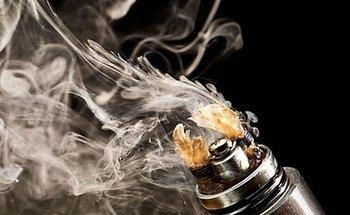
The first cause is that there is too little cotton inside the atomizer, so the juice ports are not fully blocked, allowing excess e-liquid to be drawn into the mouth before it is properly atomized. If you can clearly feel e-liquid droplets in your mouth, check whether the cotton wick is too small and add more as needed to solve the problem.
The second cause is also related to the cotton wick. At present, about 90% of the wick materials used in vaping devices are cotton, with the rest made from other absorbent materials. If the cotton density is too low, spitback can occur. When the wick is too loose, it becomes oversaturated, and excess e-liquid may be inhaled into the mouth before it has time to atomize. When buying an atomizer, check whether the wick material is up to standard to help prevent spitback.
Generally speaking, the following category can be grouped together: these issues mainly involve vaping DIY enthusiasts. Some experienced users like to chase big clouds and strong throat hit, so they modify their vaping devices. Heating coils are the first choice for DIY users. There are many types of coils on the market, and different coil materials determine different heating speeds. Many beginners who are new to cloud-chasing may wrap coils made from two or more materials without understanding their properties, causing the e-liquid to contact coils at different temperatures and leading to severe spitback. Building coils is a skill in itself; if the spacing between the coils is too wide, part of the e-liquid may fail to atomize and cause spitback.
The last situation is when the device settings do not match the power requirements of the heating coil. If the device power is too high, the coil heats up instantly and the e-liquid may not atomize properly; if the power is too low, the coil cannot reach the proper atomization standard. Both situations can lead to spitback.