
Explained: The Internal Structure of an E-Cigarette Atomizer
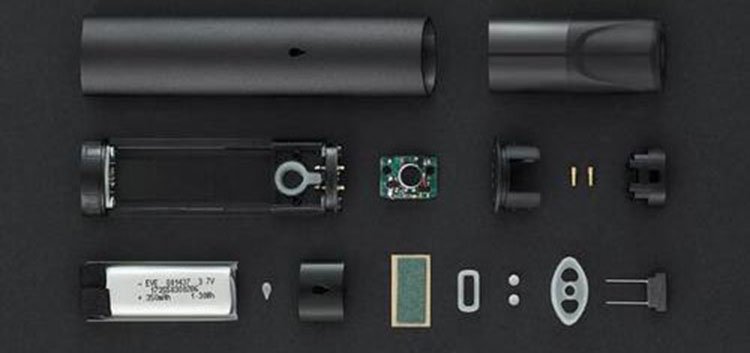
Many people are not very familiar with e-cigarettes and do not understand their working principles and internal structures. So today, let's take a closer look at the internal structure of an e-cigarette together:

The atomizer is a part of the e-cigarette, and this time we will detail the internal structure of the atomizer. We will explain it mainly through the mouthpiece, airway, atomization chamber, air inlet, heating wire, oil guide hole, and cotton.
1. Atomization Chamber
The vapor is produced by the steam generated from the atomization wire mixing with air. The space of the atomization chamber determines the amount of steam and air present. Under a certain data point, the steam atomized by the heating wire has a very small variable; this steam occupies part of the atomization chamber, while the remaining space is filled with air to mix with the steam. We can make an analogy: pouring 50ML of cola into a 100ML cup and a 200ML cup, the 50ML of cola occupies 50ML, leaving 50ML and 100ML to be filled with water. The more water added, the lighter the cola tastes. The same principle applies to the atomization chamber; the more air mixed with steam, the lighter the vapor flavor. A smaller atomization chamber allows for less air to be mixed, resulting in denser vapor.

2. Air Inlet
The air inlet is divided into an externally adjustable part and an internally non-adjustable part. The external adjustable part consists of the air holes and adjustment ring on the outside of the atomizer. The internal non-adjustable part is the path that air must pass through after going through the external adjustable part. The external adjustable part controls the amount of air entering within a certain time, while the internal non-adjustable part determines the flow of air entering from the outside. From this, we can understand that the more air enters the atomization chamber, the lower the density of the vapor, and the greater the amount of vapor produced. Therefore, the relationship between air volume and vapor formation is that the larger the air intake, the more air, and the larger the vapor volume, resulting in lighter mixed vapor. Conversely, a smaller air intake results in the opposite.
3. Heating Wire
We won't go into detail about the various aspects of the heating wire here, as many articles have already covered it. What we want to highlight is the size of the heating wire. We learned from the previous point that the space within the atomization chamber affects the vapor. The size of the heating wire determines the space that steam and air can occupy, which is why a larger atomization chamber requires a larger heating wire. Once the heating wire occupies a certain space, the remaining space is available for air. Thus, the size of the heating wire determines how much space air can occupy.
4. Oil Guide Hole and Cotton
The oil guide hole, as the name suggests, determines how much oil the cotton can absorb, affecting how quickly the cotton can be saturated with e-liquid. The degree to which the cotton is saturated with e-liquid determines whether the heating wire has enough liquid to vaporize. If the oil guide is fast, it ensures that the heating wire has sufficient e-liquid for each vaporization; if it is slow, there may not be enough e-liquid for the heating wire, leading to reduced steam volume or even burnt cotton. A decrease in steam volume can lead to an increase in air volume, making the vapor lighter.
Through this explanation of the internal structure of electronic vapor products, it can greatly assist friends who are not very familiar with e-cigarettes. From the points introduced above, it can be seen that the density of e-cigarette vapor is related to the size of the atomization chamber and air inlet, while a longer airway results in a finer and more layered vapor. Therefore, every e-cigarette structure has its significance and is not just randomly designed.


