
Why Does an E-cigarette Have Power but Not Produce Vapor?
Most people usually have the habit of smoking. Normally, smoking is primarily associated with men. In fact, many women now also enjoy smoking. Smoking has a significant impact on health, so it is best to avoid smoking cigarettes whenever possible. Some people find that when they smoke, no vapor is produced. In reality, there are many reasons for this situation, so why does an e-cigarette not produce vapor? Below, we specifically discuss why e-cigarettes may not produce vapor.
What happens when an e-cigarette has power but does not produce vapor?
This could be an operational issue. There are many factors that can affect the inability to produce vapor. After installing the atomizer, let it sit for 5 minutes before using it. If it still does not produce vapor, it indicates a problem with the atomizer coil. Replace the atomizer coil and try again as before. If it still does not work, there may be poor contact between the atomizer and the battery. After a long period of time, you can master these skills, and similar problems will not occur.
The reason could be that there is no e-liquid in the pod; add e-liquid or try another pod. 2. The battery is depleted; if the battery indicator is flashing or the light is off, it indicates that the battery is dead. Please charge it quickly. 3. If the battery is normal and there is e-liquid in the mouthpiece, it is recommended to replace the atomizer.
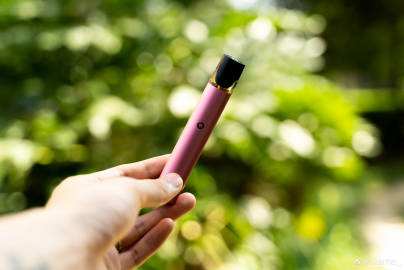
What is an e-cigarette?
An e-cigarette is an electronic product that mimics a cigarette and has the same appearance, vapor, taste, and feel as a cigarette. This product allows users to inhale nicotine and other substances that are vaporized through atomization and other means. Although e-cigarettes come in various styles or brands, they generally consist of a pipe containing a nicotine solution, an evaporation device, and a battery. The atomizer is powered by a battery stick, which converts the liquid nicotine in the pod into vapor, giving users the sensation of smoking and achieving the effect of "cloud chasing." It can even add various flavors, such as chocolate and mint, according to personal preferences.
Regulations on e-cigarettes
China is the inventor and main producer of e-cigarettes. Over 90% of the world's e-cigarettes come from Shenzhen and other places in China, but the supervision of them in our country is still lacking. In our country, e-cigarettes are neither drugs, health products, medical devices, nor tobacco. Therefore, most e-cigarettes are in a "three no" state, meaning there are no product standards, no quality supervision, and no safety assessments.
Harms of e-cigarettes
For a long time, merchants have been promoting e-cigarettes because they do not contain harmful components such as tar and suspended particles. They even use slogans like "Smoking Cessation Artifact" and "Lung Cleansing" in product introductions. In 2013, Dr. Elizabeth Porter, director of the Federal Center for Health Education in Germany, conducted research and analysis on e-cigarettes and found that they contain a large amount of propylene glycol, which can irritate the respiratory tract and cause some acute symptoms. Therefore, she believes that e-cigarettes are more harmful to human health than traditional cigarettes.
When people use e-cigarettes, they may inhale various undiscovered toxic compounds in addition to nicotine. At the same time, the secondhand vapor produced by e-cigarettes may also pose health risks. E-cigarettes can release fine particles and ultrafine particles, nicotine, and carcinogens into indoor air. Because e-cigarettes do not produce smoke, they can easily mislead consumers and create misunderstandings about safety and health.
Some e-cigarettes have extremely high nicotine content, which may pose greater risks than regular cigarettes. Although e-cigarettes do not contain tar, the nicotine they contain is not harmless. Just adding nicotine to the inhalation will also lead to health risks. Nicotine itself is not a carcinogen but can act as a "tumor promoter." Furthermore, there is sufficient evidence that exposure to nicotine during fetal and adolescent development can have long-term adverse effects on brain development.


