Behind RELX's US$3.8 billion revenue in three years: regulation, counterfeits, and quality concerns
Following the record-breaking 5 times increase in the stock price of Smol International after its listing in Hong Kong, the main company of the domestic brand RELX, Fogcore Technology, has also submitted a prospectus to enter the US stock market by the end of 2020.
Interestingly, on December 7, 2020, Fogcore Technology responded to rumors regarding its US listing, stating that "the rumors are untrue." According to the prospectus, Fogcore Technology was established less than three years ago, and its revenue has reached tens of billions, with a growth rate comparable to a rocket. In the first three quarters of 2020, the company's operating revenue was 2.2 billion yuan, a year-on-year increase of 93.28%, and a net profit of 190 million yuan, a year-on-year growth of 10.81%.
However, behind this rapid development, the path of Fogcore Technology is bound to face more regulatory restrictions. A ban issued at the end of 2019 has forced the e-cigarette industry to shift from online to offline sales. Whether the country will continue to restrict offline sales of e-cigarettes in the future remains unknown; additionally, the company's main sales method is a distribution model, but there are ongoing complaints about counterfeit products on the platform, and the company needs to continue to work on quality control.
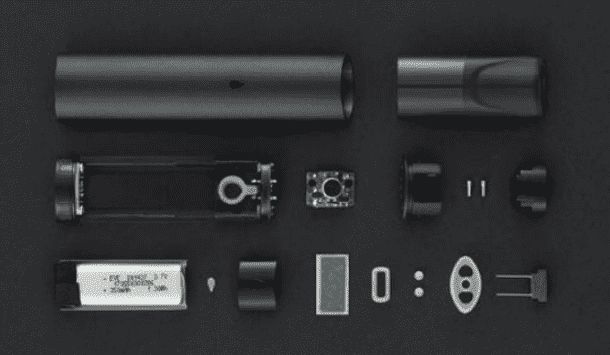
The e-cigarette industry has great development potential.
Revenue reaching tens of billions in less than three years.
Compared to overseas, China's e-cigarette industry is still in its infancy.
According to a CIC report, the penetration rates of e-cigarettes in the US, UK, and China (number of e-cigarette users / number of smokers) were 21.2%, 34.4%, and 0.4% in 2016, increasing to 32.4%, 50.4%, and 1.2% respectively.
Although the penetration rate of e-cigarettes in China has increased, there is still a significant gap compared to the UK and the US, which also means that there is great potential for future development in the e-cigarette industry.
Fogcore Technology was established in January 2018.
According to the prospectus data, the company's operating revenue for 2018, 2019, and the first three quarters of 2020 was 132 million yuan, 1.549 billion yuan, and 2.21 billion yuan, with profits of -287,000 yuan, 47.75 million yuan, and 190 million yuan respectively. In less than three years, Fogcore Technology has generated 3.882 billion yuan in revenue and 157 million yuan in net profit. In terms of market share, Fogcore Technology ranks first, with market shares of 48% and 62.6% in the first three quarters of 2019 and 2020 respectively. In 2020, it will further solidify its position as an industry leader.
From these data alone, Fogcore Technology's development seems smooth, with steady growth in revenue and net profit. The company lost 287,000 yuan in its first year as it began to develop. On the path of rapid growth, net profit has increased from tens of millions to hundreds of millions. However, if we look back at a quarter's financial data, it is not difficult to find that the company's rapid development pace was forced to interrupt in the fourth quarter of 2019.
If it weren't for a loss of 50.3 million yuan in the fourth quarter of 2019, Fogcore Technology might have delivered a more impressive report card that year.
Encountering regulatory "iron fist" and shifting from online to offline.
The future policy risks remain unknown.
On October 30, 2019, the National Tobacco Administration and the National Health Commission jointly issued a notice on further protecting minors from harm. This notice stated that from the date of publication, in order to further strengthen the protection of minors' physical and mental health and prevent minors from purchasing and using e-cigarettes through the internet, e-cigarette production and sales companies or individuals are urged to promptly shut down e-cigarette internet sales websites or customers, and e-commerce platforms are urged to promptly close e-cigarette stores and delete e-cigarette products, and e-cigarette production and sales companies or individuals are urged to withdraw e-cigarette advertisements published on the internet.
Once the "announcement" was released, the online sales channels for e-cigarettes were completely shut down, forcing companies like Fogcore Technology to shift from partial online sales to all offline sales.
Data shows that in 2018, Fogcore Technology's revenue from direct sales to consumers through e-commerce platforms and sales to third-party e-commerce distributors accounted for 33.5% and 6.3% respectively, amounting to 44.41 million yuan and 8.35 million yuan. In 2019, this proportion dropped to 18.1% and 8%. By the third quarter of 2020, the company basically had only offline distributors as its single sales channel.
This policy directly led to a change in the company's revenue growth trend in the fourth quarter of 2019, resulting in a quarter-on-quarter decline. The revenues for the third and fourth quarters of 2019 were 556 million yuan and 410 million yuan respectively. Due to costs and expenses remaining at a high level, Fogcore Technology incurred a loss of 50.3 million yuan in the fourth quarter of 2019, halting its previous rapid growth momentum.
However, I must say that the company responded quickly. Fogcore Technology immediately adjusted its sales channels. Even under the impact of the pandemic at the beginning of 2020, it still achieved profits in each quarter of 2020. It can be said to be a relatively successful case of policy response.
For Fogcore Technology, policy regulation is like the sword of Damocles hanging over the tobacco industry. I do not know when it will fall again. This time, online sales were tightened to prevent minors from purchasing and using e-cigarettes. However, according to some media field visits, the offline control of sales to minors is not strict, and many minors can still easily purchase e-cigarette products. In this case, the original intention of monitoring and protecting minors has clearly not been fully realized, and whether e-cigarette sales will be further tightened remains unknown.
Declining gross margin.
Repeated complaints about product quality due to lax channel control.
Although the company has steadily conducted offline sales, this result has still raised some issues.
The prospectus shows that Fogcore Technology's gross margin decreased from 44.7% in 2018 to 37.5% in 2019, and remained relatively stable at 37.9% in the first three quarters of 2020.
Compared to 2018, the gross margin has dropped by more than 7 percentage points. The company explained that this is mainly due to the significant increase in the proportion of offline distributors. When the company sells through this channel, prices become more flexible to ensure the interests of distributors and retailers, allowing them to obtain sufficient profits.
Additionally, as online sales have recently lost their main sales channel, RELX's offline distributors have rapidly developed. The prospectus shows that the number of authorized distributors has increased from 41 in the first three quarters of 2019 to 110 in the first three quarters of 2020. Although this has led to a significant increase in e-cigarette shipments and brought in a lot of revenue, the relaxation of channels has also led to some management deficiencies for the company.
In addition to the rampant counterfeit products due to poor control, the company's product quality has also faced repeated criticism from consumers, with some reporting after-sales issues.
Searching for RELX on "Black Cat Complaints," the company's satisfaction rating is only 3 stars, with 80 complaints, focusing on issues such as oil leakage in cartridges and strange tastes in certain flavors. Consumer complaints include strange sounds from the orange soda flavor leaking oil and strange smells from the watermelon flavor cartridges.
If the spread of counterfeits is restricted, the quality issues will be entirely the responsibility of the merchants. Aside from the rapid expansion of Fogcore Technology, how to improve product quality and ensure quality control is a question worth pondering.