Wotofo Serpent RTA Vape Tank Atomizer
Time flies, and it's already July; half of 2017 has passed. It seems there is an exhibition in Shanghai today, and I wonder if the main character will appear at the exhibition. Today, we are discussing the Wotofo Serpent RTA, which has a name that resonates with me as a long-time Razer keyboard and mouse fan. I wonder if the person who named the Serpent RTA is also a Razer fan. For convenience, let's refer to it as the Serpent.
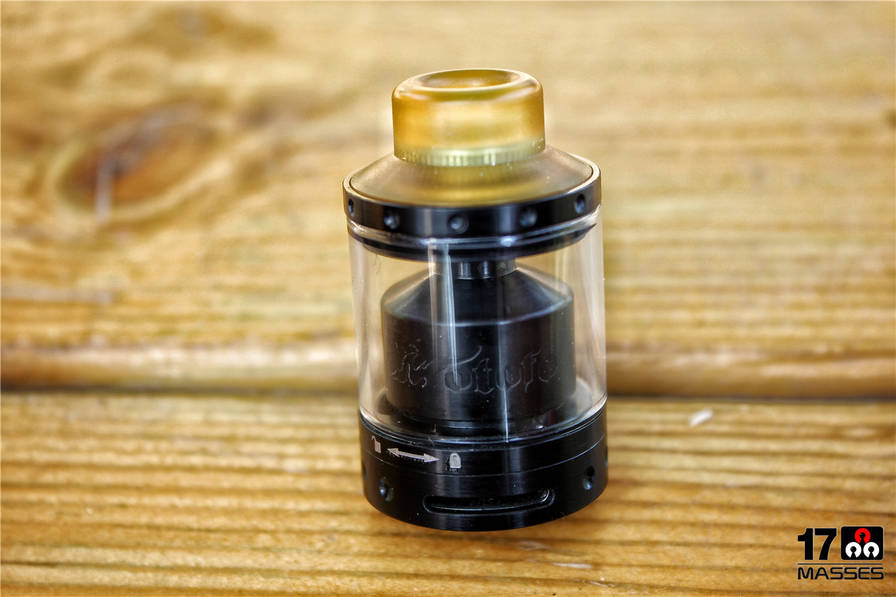
Since this is an engineering version, there is no packaging, so I don't know what will be included in the official version. However, I guess the accessory pack might include some cotton and wire, as everyone likes to provide these for new players who don't have all the equipment yet.
The Serpent I received is in black, while a friend received the stainless steel version. The drip tip and top cap of the Serpent are a non-separable integrated design. The overall height is 40mm, and the diameter is 24mm, which is just right for a 24mm atomizer. The drip tip and top cap are connected as one piece, and can be normally disassembled into about four parts. The recent adjustable ring can also be disassembled for easy daily cleaning and maintenance. The visible striped airflow and all the obvious markings, along with the anti-slip recesses at the top and bottom, are both practical and aesthetically pleasing.
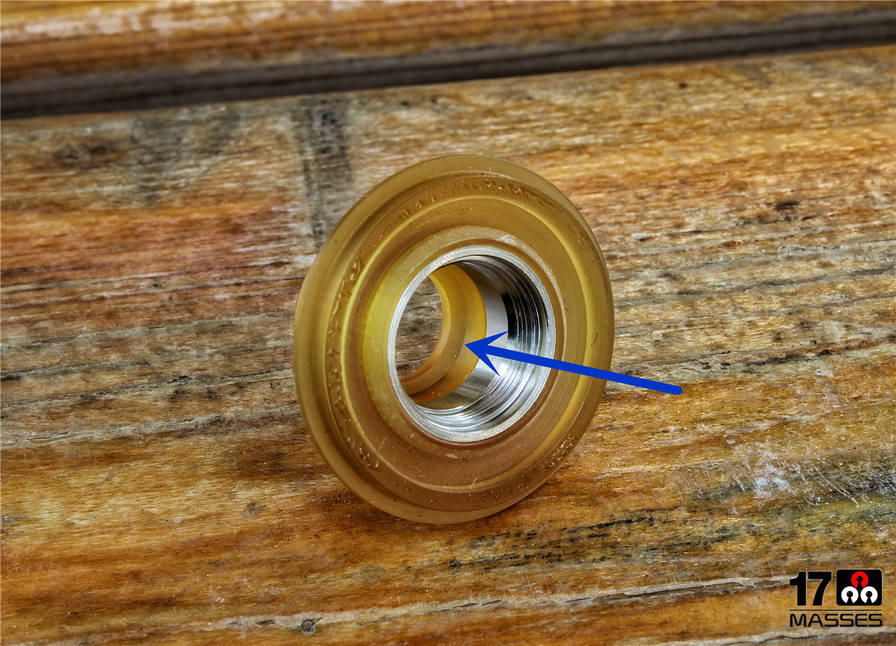
The drip tip part, as shown in the picture, is made of PEI material, which is widely used in electronic cigarettes due to its stability under high temperatures. The top end of the drip tip has a design similar to an outer edge, which significantly aids in condensation management. Personally, I feel this design is superior to funnel-shaped drip tips. On oil-dripping atomizers, this design makes it difficult for e-liquid and condensation to enter, especially since the Serpent is an oil storage type. The embedded metal threads inside are more durable for long-term use, as the top cap needs to be unscrewed every time you refill.
A pair of large kidney-shaped oil filling holes. Layered rubber rings ensure sealing. Previously, I mentioned the oil lock function, so there's no need to worry too much about e-liquid being squeezed out and leaking. The Serpent has a capacity of about 3ML, which, while not as large as some 5ML storage options, is still sufficient. Currently, the squat and fat design is mainstream; if you don't increase the height of the atomizer, you can only compress the atomization chamber or dig around to increase capacity. The size of the oil storage atomizer and the atomization chamber not only determines the storage capacity but also directly affects the flavor and heat dissipation. It must support single coil wires while ensuring a certain oil storage capacity. If the capacity is too small, the wire will run out of oil after just a few puffs, which defeats the purpose of oil storage. Conversely, if the atomization chamber is too small, while the oil storage capacity increases, heat dissipation decreases, which will also affect flavor. This balance can only be found through continuous practice and testing by the designer.
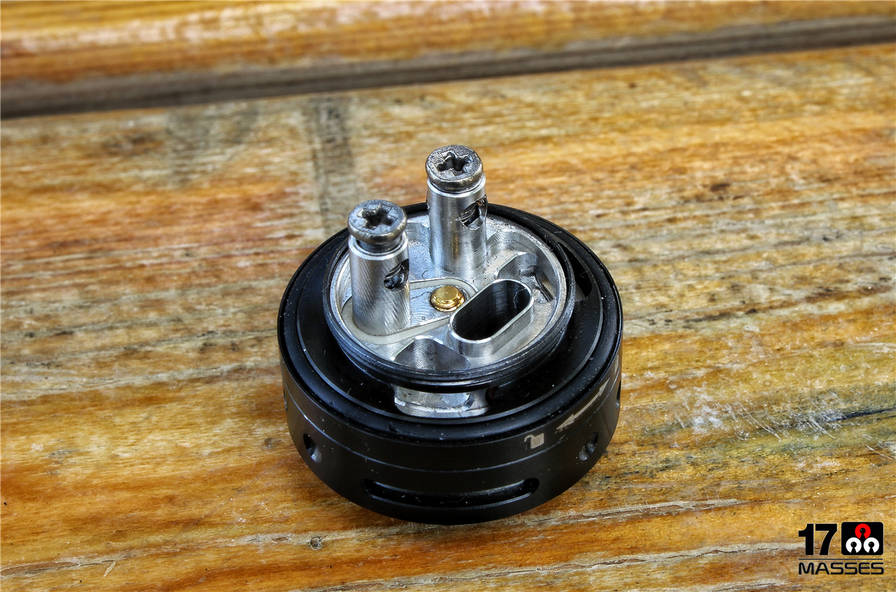
The base is quite traditional, with a dual-post single coil design, and two cross screws correspond to larger wire holes, leaving enough space. Otherwise, it would be extremely awkward if the wire couldn't fit into the large space.
The airflow holes are higher than the bottom, effectively preventing e-liquid condensation from flowing into the airflow holes. The oil guide holes are deep and large, as they need to support the wire, and the size of the oil guide holes directly affects the user experience.
The airflow ring is detachable, which is obviously convenient for cleaning and maintenance. You can find replacement rubber rings to adjust the tightness of the airflow. Compared to non-detachable types, the advantages are quite clear.
At the bottom, there are regular product name markings, and the single electrode screw is prominent, suitable for use with mechanical mods.
Regarding the oil lock, the obvious benefit is leak prevention. Recently, there is another exhibition in Shanghai, and bringing devices to exhibitions can be awkward if they leak oil.
Leaks can occur during filling due to pressure changes or when carried in a bag. Oil storage atomizers seem to always have an annoying connection with leaking oil.
The Serpent uses silicone oil locks, with clear markings above the atomizer's airflow holes. When not in use, you can seal the oil holes at any time. The silicone's adherence is quite high, remaining stable under non-obvious external forces. The only pressure inside the atomizer can be considered an external force.
Some have tested it on airplanes without issues; I hope to test it while climbing the Himalayas.
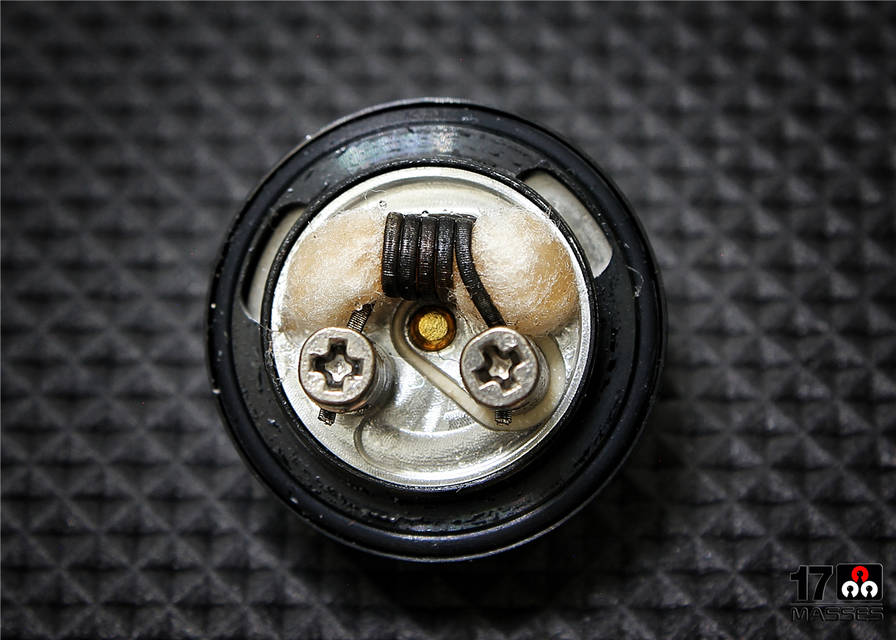
The sudden change in tone is because the wire photo was taken ten days ago. Making coils on a dual post is very simple, and I didn't document much at that time.
As seen in the picture, the Serpent has the ability to handle wire. As for cotton placement and adjustment, it mainly depends on personal habits. #p#分页标题#e#
Having detailed the various parts of the Serpent, I will summarize my experience using it over a period.
First, let's talk about the advantages.
In terms of airflow, the bottom direct blow provides a satisfying flavor experience when using wire. The airflow adjustment offers different experiences based on size, which cannot be detailed as everyone has different preferences; you can only experience it yourself.
Although it is a single coil, it does not show a significant weakness in vapor production, but there is still a gap compared to mainstream dual-coil high vapor storage devices.
The oil lock feature is particularly beneficial. During use, especially when not in use for a long time, when carrying it out or while sleeping, I always choose to activate the oil lock. In the days I've used it, there have been no unexpected leaking incidents, even during long periods of inactivity.
The oil storage capacity is above average, as wire consumption is higher than single coils. A 3ML capacity does not require frequent refills, which is sufficient for daily use. Personally, I would rather refill once or twice more than use a bulky atomizer.
There is no such thing as perfection in this world; there are minor issues that need improvement during use. For example, the oil lock can be quite tight when first received, and the electrode post is slightly tilted. These issues should be improved in the official version and should not occur.
Let me share a small tip from my experience.
Wire can sometimes cause minor oil explosions. In rare cases, e-liquid and condensation may enter the airflow holes. After a few days of use, it's best to clean it as much as possible, as the adjustable ring can be easily disassembled for cleaning with a small tissue.
When installing the glass chamber, most people will press the glass chamber against the base while screwing the atomizer. The Serpent, on the other hand, is easier to install by first attaching the glass chamber to the atomizer and then easily securing it to the base.
The oil lock may be a bit tight when first used, so there's no need to rush. After heating the wire, the silicone may become easier to operate.
Additionally, when using for the first time, it is recommended to adjust the oil lock after heating the wire, closing it before inserting the cotton. This ensures that the cotton amount won't be too much, preventing the oil lock from being unable to open.
The airflow adjustment ring features a dual rubber ring design. If you're not satisfied with the tightness, you can adjust it by replacing one of the rings. I replaced one to make it easier.
For friends who enjoy oil storage and are accustomed to using fancy heating wires, the Serpent is a great choice.
The oil lock function effectively solves the annoying leaking issue. If you're interested in the Serpent, you can keep an eye on it. The official version has not yet launched, but it should be available soon.
This concludes my usage sharing; let's meet again next time.
END