The Offline Vape Battle: Huge Profits or Heavy-Handed Competition
Capital has pushed e-cigarettes offline, ripening this ambiguous new market; policy uncertainty means that capital may abandon them at any time
Half a month ago, Chen Chen, an agent who had newly joined the e-cigarette brand Yueshi, flew from Jiangsu to Northeast China to meet with Wang Aimin, a provincial agent of Yueshi, and inspected several local e-cigarette stores.
Sitting in a barbecue restaurant late at night in Northeast China, Wang Aimin told Chen Chen that he had opened more than 40 stores, the best performing store, with monthly sales reaching 200,000 yuan and net profit exceeding 100,000 yuan.
Stories of huge profits in e-cigarette stores have already spread. In recent months, e-cigarette brands have begun to make every effort to enter offline stores. Yueshi has launched an offline strategy of "hundreds of people, thousands of stores". Another e-cigarette startup, Yooz Electronic Cigarette, founder Cai Yuedong's circle of friends is full of promotional content from various offline agents.
This is a peculiar phenomenon. Few emerging categories will open offline brand stores on a large scale in a short period of time. If e-cigarettes are positioned as consumer electronics products, except for the top few smartphone manufacturers, most of other electronic products choose existing channels, such as home appliance stores, or electronic product collection stores such as Shundian.
But everyone who joins the game has a clear reason. They believe that the cost of online traffic is getting higher and higher. If you want to start it quickly, you must further open up the market, and offline can provide unique values including experience, after-sales, brand promotion, etc. Agents 'ideas are simpler and more direct and can make money.
The e-cigarette industry began to take shape at the end of 2017 and quickly became a small outlet. Business card data shows that throughout 2017, the domestic e-cigarette industry completed a total of 6 financings. In 2018, this number rose to 9. As of 2019, 37 financings have been completed. Emerging e-cigarette brands are emerging one after another. There are more than 1000 e-cigarette processing plants in Shenzhen.
The chain of the e-cigarette industry is not as simple as production, shipping, and sales. Now that the tentacles of e-cigarettes have extended to offline, the model will instantly increase, and this game of wind is becoming more and more complex.
Wang Aimin only joined the bureau last year, but it was already the year of the e-cigarette industry. At a financing dinner, he met the relevant person in charge of Yueshi. At that time, he was still a self-media person. He reached a cooperation with Yueshi to help Yueshi carry out "Double Eleven" marketing promotion before.
In addition to cooperation, Yueshi gave him several boxes of e-cigarettes, which he distributed to relatives and friends around him. The feedback was good, so he took over Yueshi's agency.
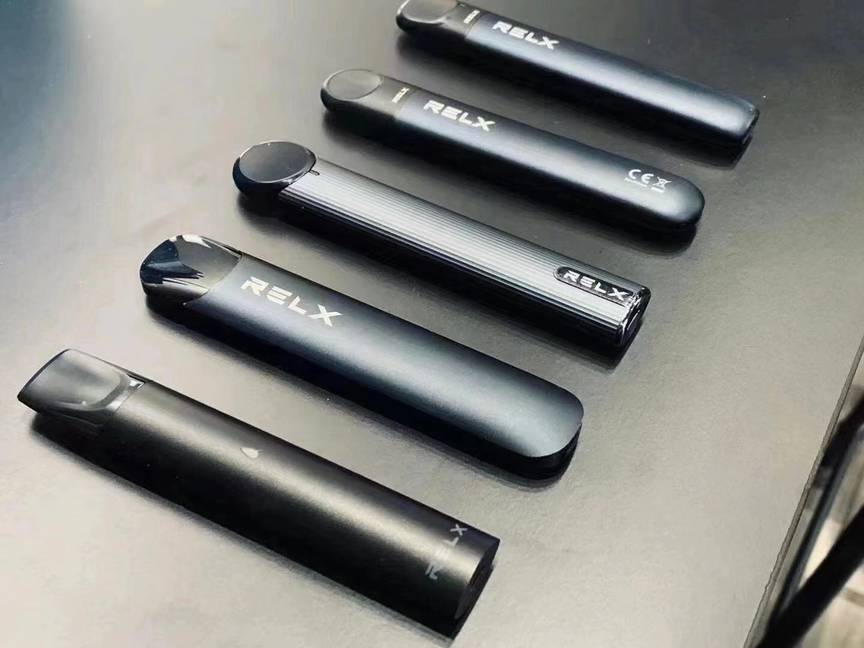
In January 2019, the first offline store in Northeast China opened. Half a year later, there were more than 40 stores in Northeast China. E-cigarette stores are currently mainly opened in shopping malls. Only first-tier and second-tier cities are rich in shopping mall resources. For example, more than half of the Yuexie stores in Liaoning Province are concentrated in Shenyang, the provincial capital.
When Wang Aimin had 30 stores in his hands, the number of Yuexie stores across the country was about 50 - 60. When he opened 40 stores, Yuexie opened 100 stores across the country. At present, his store opening speed has slowed down, but Yueshi is still running fast. So far, Yueshi has opened more than 400 offline stores.
Saying goodbye to Wang Aimin, Chen Chen did not return directly to Jiangsu. He first went to Beijing and met with Leng Fei, the founder of Orange Factory.
Orange Factory is a flash Internet service platform that cooperates with multiple e-cigarette brands to help e-cigarette brands find offline venues. Chen Chen received Yuexie's agency rights through Orange Factory.
At present, the founding teams of most e-cigarette brands are mainly people in the Internet industry. They have insufficient experience in offline store opening and store management and need to be promoted through partners.
In a teahouse in Beijing, Leng Fei told Chen Chen bluntly,"You must move quickly. Don't care whether it's weekdays or weekends. Hurry up and talk about the venue. If you don't grab it, someone else will."
Nowadays, many people learn about e-cigarette brands through online channels. Major brands have opened brand stores on mainstream e-commerce platforms, including Jingdong, Tmall, Youzan, etc. However, the reality is that e-cigarettes are mainly sold. Sales come from offline.
Qiu Yiwu, founder of e-cigarette startup Whale Light Cigarette, told Caijing that their current sales are about %, and all other sales come from offline. Caijing reporter learned from multiple sources that sales of major e-cigarette brands and online flagship stores account for almost 15%-20%.
Qiu Yiwu mentioned that at present, the cost of obtaining customers for an e-cigarette user on Jingdong and Tmall reaches nearly 50 yuan,"while the offline cost of obtaining customers is only a dozen yuan per person."
An e-commerce industry official revealed that in the past, the price of buying a keyword click on Jingdong was about 3 yuan, and 5 yuan was already a very high price, but now "e-cigarette brands need at least 20 yuan to buy a click, because All e-cigarette brands are rushing for this resource."# p#pagination title #e#
Previously, due to the special products, a large number of e-cigarette agents sold goods through WeChat, QQ or second-hand trading platform idle fish and other channels. These were private transactions and were difficult for brands to control, resulting in a large number of fakes and random pricing.
Moreover, e-cigarettes are a very special category. E-cigarettes contain tobacco oil, which is harmful to the human body and can cause addiction. Therefore, they cannot be promoted on some public advertising platforms. Offline stores are a good brand promotion channel.
In addition, smokers are very sensitive to taste. Many smokers have tobacco brands and categories that they are accustomed to buying, but it is difficult to describe in detail the specific taste differences. With the breakthrough of nicotine salt technology, the threshold for e-cigarette production is already very low, and various brands are trying to differentiate in taste.
Differences in taste require the cooperation of offline stores, and consumers can experience it on site. Chen Chen learned that a customer originally wanted to buy Yueshi's e-cigarettes, but after experiencing the Red Bull flavor launched by Ono e-cigarettes in the store, choose to buy Ono. Ono was founded in March this year by Peng Jianzhou, former president of Hammer Technology. The actual main planner behind the scenes is Luo Yonghao, former founder of Hammer Technology.
E-cigarettes are also consumer electronic products and are frequently used. After purchasing, users will continue to purchase cigarettes to replenish them. Offline stores are convenient for purchase and can ensure after-sales channels.
More and more people like Chen Chen and Wang Aimin are joining the army of e-cigarette agents. Offline is a complex market. Being able to afford store rents is only the first step. It also requires connections, operational capabilities and management skills, as well as some "unspeakable" means.
Leng Fei is familiar with the offline market. The core is that he can find traffic. Each city has a limited traffic center. There may be only three shopping malls in a second-tier city that can attract enough young people.
He told Chen Chen that the situation in the Beijing market was already very tense. Due to the competition for too many e-cigarette brands, a store in Xidan directly auctioned off, and the highest bidder won, and the rent finally tripled. "We need to find a way to reduce the rent, but if it is a prime location, we can pay a high price to occupy it."
Founded in 2018, Yueshi is currently the leading brand in China's e-cigarette industry. In just one year, its valuation has reached US$2.4 billion.
The e-cigarette industry is an emerging industry and is still in chaos. No one can accurately explain how big the current market space is, but all industry insiders interviewed by Caijing reporters agree that Yueshi currently ranks first in market share.
Compared with online, the offline market is very diverse. In addition to the shopping malls and brand stores that Yuexie focuses on, e-cigarette companies have their own unique skills, including settling in convenience stores and commissaries; entering trendy goods collection stores; and even selling them directly on unmanned shelves., almost ubiquitous, it seems that there are opportunities everywhere.
Whales 'main offline channels are commissaries and convenience stores. This company was only established in January this year. It also wholly acquired Hangzhou Qingyan Technology. Qingyan Technology has previously accumulated many offline channel resources such as convenience stores, Internet cafes, and restaurants. Founder Qiu Yiwu chose to directly lay convenience store containers on a large scale.
To be more pervasive, the density of convenience stores and commissaries is far from enough. Many e-cigarette brands have begun to install vending machines, similar to rental machines that share charging treasure, where customers purchase them by scanning codes.
The whale and Yuki are already moving. A major hidden danger of vending machines is how to prevent minors from buying them. Yueyake has installed the "Face Recognition" function on the machine. In cooperation with Alipay, whales are also studying adding the Face Recognition function by Face Recognition the customer's age.
Perhaps the model is similar, there are shared charging treasure companies that have joined the fray. Xiaodian Technology, which is valued at US$300 million, is one of them. It has already begun to launch a small scale machine called "iCool Xiaoshuang". Cigarette vending machine equipment.
No matter how you look at it, this is a market that is being ripened. When an emerging industry starts, it will develop slowly first. As more and more people see the opportunity, a large number of competitors will pour in, and the cost of competition will rise sharply. Some teams that have not developed well will close down or retreat. In a small territory, the head effect began to become prominent, and then the industry formed a stable pattern. In different industries, this process can take years or decades. However, due to the support of capital, e-cigarettes directly evolved into the "Thousand Cigarettes War" situation in less than a year.
Yang Ge, founding partner of Xinghan Capital, commented that the capital market has been looking for "outlets" in the past two years. When e-cigarettes come, everyone wants to quickly boost the detonation.
Early the day after meeting Leng Fei, Chen Chen immediately left for Jiangsu to study the matter of opening a store. He used to be an agent for a women's clothing brand and had experience in opening stores in shopping malls. He selected several shopping malls in advance and began to observe the flow of people.# p#pagination title #e#
Opening a store offline is completely different from the way it plays in the Internet industry. Everything must be done in person. At 2 p.m., in a Wanda Plaza in Jiangsu, Chen Chen stood next to the elevator of the mall for three hours. There was enough traffic, and he was relieved.
After finding the investment promotion staff in the mall, he proposed to open a Yueke e-cigarette store. The store was a 10-square-meter store. The other party offered a monthly rent of 20,000 yuan. Chen Chen thought it was a bit expensive. He had previously observed an e-cigarette store in another shopping mall in Taizhou, Jiangsu Province. It was 5 square meters, with a monthly rent of 5000 yuan, and a monthly sales of about 78,000 yuan. After deducting the cost of goods and labor costs of 20,000 yuan, he could make a net profit of about 30,000 yuan.
In the end, he lowered the rental price to 15,000 yuan. Offline stores are a society of acquaintances. With connections, everything is possible. Chen Chen said, no,"you may not even be able to touch the door of the mall."
But after meeting the person in charge of investment promotion in the mall, he began to be a little nervous. Many agents of other brands had already contacted the mall before him.
In a shopping mall in Wuxi, Chen Chen had signed a letter of intent. Two days later, the other party told him that two more e-cigarettes had come to discuss cooperation. The buyers competed, and the sellers immediately raised their attitude. The investment promotion staff told him that the mall planned to open up a trendy street and put all three e-cigarette stores together.
In order to build a relationship, Chen Chen gave the other party a box of e-cigarettes and invited the other party to a cup of coffee. In the other party's view, this was already a very sincere move. Another agent was only willing to take out a silicone nipple and let him smoke for free.
Chen Chen got his wish and received the exclusive qualification. However, the original store on the first floor was relocated to the second floor of the shopping mall. The traffic on the second floor of the shopping mall was usually only half of that on the first floor. However, the other party gave him some hope, saying that a bar street would open next to the shopping mall soon, and he planned to ride a donkey and find a horse.
At this time, Wang Aimin from Northeast China was already a celebrity in the e-cigarette industry. Every day, he would receive calls from many other brands, asking if he would like to change brands or represent other brands at the same time, but he refused all of them.
"Only by being a head brand is valuable," Wang Aimin said."Being an agent for multiple brands at the same time usually makes no money."
If a positive breakthrough fails, some people will choose to attack from behind. Wang Aimin said that the store in his hands will often receive various complaints from unknown sources. Today, they will complain to the Industry and Commerce Bureau, tomorrow they will complain about tax issues, and the day after tomorrow they will complain about tobacco. "They just want to squeeze my store out so they can have room to come in."
The war continued to the raw material market. Qiu Yiwu said the price of nicotine salt has doubled this year. As the upstream price rises, the price of goods taken by downstream agents will rise accordingly. Some agents revealed that the unit price of goods taken has increased by about 30 yuan on average recently.
This situation has caused some people to begin to weigh whether they should continue to attack the offline market. Currently, whales have not entered the offline market in Beijing, and the "cost is particularly high." Qiu Yiwu said that his plan is to wait until a batch of brands die in the Beijing market before entering.
Moreover, his traditional convenience store has also begun to be threatened. Convenience stores cannot accept exclusivity agreements."Convenience stores must sell both Coca-Cola and Pepsi."
A reporter from Caijing randomly visited a canteen in the Shuangjing area of Beijing. Four different types of e-cigarettes were placed at the checkout counter, similar to chewing gum shelves. A reporter from Caijing observed that the canteen has a large flow of people and many customers come to buy cigarettes, but almost no one is interested in these four boxes of e-cigarettes.
An industry insider told Caijing that the efficiency of selling e-cigarettes in the canteen is very low. The owner of the canteen has no brand loyalty and can pay an entrance fee. There will be no product introduction or experience link."It may not sell 10 cigarettes in a day."
In Qiu Yiwu's view, it is not without value to shop in a convenience store."The key is that you shop large enough." He believes that if 500 convenience stores in a prefecture-level city display the same brand of e-cigarettes, there will be a qualitative breakthrough in sales. "Just like the logic of shared bicycles, there is only a scale effect when you can see it anywhere."
Strictly speaking, e-cigarettes belong to the tobacco industry, an industry that is strongly regulated and policies determine its destiny at any time.
The biggest risk lies in uncertain policy factors. In June this year, the official website of the National Standardization Administration Commission showed that the "Compulsory National Standards for Electronic Cigarettes" had been reviewed and was currently in the "approval" status. According to the project plan schedule, it would be released as soon as this year.
Once this policy is released, it means that the production and circulation environment of e-cigarettes in China will have standards to follow, and it also means that it will be difficult to "grow savagely."
On July 22, Mao Qun 'an, director of the Planning Department of the National Health Commission, said at a press conference that the supervision of e-cigarettes must be strictly strengthened. He emphasized the health hazards of e-cigarettes and said that the Health Commission is working with relevant departments to conduct research on the supervision of the e-cigarette industry.# p#pagination title #e#
A reporter from Caijing called the State Tobacco Monopoly Administration to inquire about the latest progress of the e-cigarette policy. The other party said that the focus of ongoing supervision is to ban the sale of e-cigarettes to minors, and did not disclose the direction of future supervision.
All industry insiders are paying close attention to the new progress of the policy. Many industry insiders told Caijing reporters that around October this year, a regulatory policy for e-cigarette ingredients will be introduced, which will limit the content of nicotine."It is very likely that the nicotine will not exceed 2%."
Nowadays, mainstream e-cigarette products have a nicotine content of 3%-5%. Once restricted, these brands need to re-launch new products that meet regulations. The main revenue growth of e-cigarettes comes from users repurchasing cigarettes. After the new regulations are introduced, they need to buy new tobacco rods again, which will cause increased marketing costs and even loss of users.
If the new regulations are enacted, clearing up the inventory of products that do not meet market regulations will also be a problem. Wang Aimin predicts that in order to remove inventory as soon as possible, agents may reduce prices and sell."At that time, there will be a situation in the market where old products will be sold for 199 yuan and new products will be sold for 299 yuan, which will cause chaos in the price system."
Of course, this may be a short-term problem. For them, the most terrifying thing is that due to policy uncertainty, many investors have taken a wait-and-see attitude towards this new trend, and some e-cigarette companies have begun to face financial pressure. This is originally a market where capital ripens, and capital can also easily destroy this giant baby.
An industry insider told Caijing that in order to ship goods as soon as possible, e-cigarette companies and foundries settled cash. If there is inventory that cannot be sold, financial pressure is likely to cause a group of companies to be eliminated early.
There is also a potentially fatal hidden danger in the e-cigarette industry that is being ripened: oil leaks from cigarette bombs.
The current product defects can be seen from the after-sales ratio. Many industry insiders revealed that the after-sales rate of several well-known brands has reached 30%, and "even some brands have after-sales as high as 90%." Chen Chen mentioned that the current after-sales service of e-cigarette brands is "simple and crude", and if problems such as oil leaks occur, all products will be replaced directly.
The core reason for the serious oil spill is that the pace of competition in the industry has accelerated, and many e-cigarette brands have started shipping goods only two months after their establishment. Although the threshold for e-cigarettes is not high, it takes time to polish it if you want to make a qualified product.
In order to launch an e-cigarette with a good enough experience, Firearms Electronic Fireworks has been working on product development for a year. Firearms Chairman Fan Jingyu told Caijing reporter that to develop an e-cigarette, it takes a month to open the mold. Next, it requires multiple debugging, reopening, and re-debugging. After the mold is completed, it also needs to design the appearance, develop the taste, and then go to mass production."Practice step by step, groping is more important than investment."
Firearms were established in 2016, earlier than many brands that are now relatively more well-known. Not only that, the shareholder of Firearms is Bolton Fragrance Group, which provides some raw materials for almost all e-cigarette brands.
But in order to ensure product quality, they missed out on the first-mover advantage."Yueshi sells better than us mainly because they distribute the goods earlier."
Yue Ke also mentioned in a written reply to the Caijing reporter that e-cigarettes are not an industry that can grow by burning money."It requires 3-5 years of long-term planning, including research and development, talents, brand value, etc., all require long-term continuous investment."
Almost all e-cigarette brands claim to be working hard to solve product quality issues, but this takes time. The team's energy is limited, and it is difficult for startups to support too many people. Instead of concentrating on research and development, more people choose to quickly build stores and sell goods.
According to the plan, Chen Chen will open two new stores in Jiangsu by the end of August. He is a little nervous and "always feels that there will be a small problem somewhere."
Everyone does not shy away from potential internal and external risks. Everyone is aware of policy risks, product problems, and intensified competition.
But like Chen Chen, most people are willing to take risks and enter, and the profits are really considerable. Fan Jingyu mentioned that the monthly turnover of their stores in Hong Kong can reach 500,000 Hong Kong dollars and can recover the cost in the second month.
Yooz founder Cai Yuedong posted a screenshot of the chat history in his circle of friends. The screenshot showed that a store they opened in Yixing had a daily turnover of 4000 yuan and a monthly rent of 5000 yuan, with half a month's return.
However, Fan Jingyu also mentioned that the high profits of offline stores are only a publicity strategy, and most stores have a return period of 3 to 5 months. Wang Aimin also said that he also has stores that make almost no money."It is normal for a single store to not make money. The key is to form a network effect. When there are enough stores, sales will gradually average."
They have a consensus that "huge profits" do not actually exist. "If you want to make huge profits, it's better to sell lipstick," Qiu Yiwu said."The terminal price of lipstick is 10 times the production cost, and the e-cigarette is only 4 times at most."# p#pagination title #e#
The ones who can make money are provincial agents, who are responsible for shipments across the province. "Provincial representatives make money lying down," Chen Chen said."They don't need to go to offline stores every day. If we want to open a store, we have to get goods from provincial representatives."
However, as sales increased, the brand side also began to gradually segment its agents. Wang Aimin said that his provincial representative qualifications will be cut in half immediately.
A person who plans to represent e-cigarettes told Caijing that he just wants to make a quick buck."Now the e-cigarette industry has just emerged. The penetration rate of e-cigarettes in China is less than 1%, and the penetration rate in the United States has exceeded 10%. At least in the next year or two, many people will be interested in e-cigarettes and will buy them and try them."
The tobacco industry is a huge market. Data from the State Tobacco Monopoly Administration shows that in 2018, the total industrial and commercial tax profits of China's tobacco industry reached 1.1556 billion yuan. There are more than 300 million smokers in China. People who have a positive attitude towards e-cigarettes believe that these may be potential users of e-cigarettes.
Some people also have reservations. In Yang Ge's view, the market space for e-cigarettes is not large. E-cigarettes are the intersection of FMCG and hardware. It is a very vertical segment of the industry. The leading company can achieve a maximum of 10 billion yuan. If it can break through overseas markets, it will be possible to go further.
"The duration of a tuyere depends on how big the market space it carries. The Internet industry can be a tuyere for 20 years, but the peak life of some associated niche hotspots in the capital market is only one to two years, and e-cigarettes are similar."