
Can you build a brand with 5 million? Where is the entry barrier for the vaping industry?
E-cigarettes are increasingly attracting the attention of capital. With top-tier capital like Source Code and IDG entering the market, the e-cigarette industry has seen a surge in financing this year. Anyone with a bit of knowledge about e-cigarettes has probably heard of domestic brands like RELX, Gippro, IJOY, and Laan.<\/p>
Recently, Yiou has heard that many investment institutions focusing on consumer sectors are flocking to look at e-cigarettes. There are even rumors that projects that have already secured financing are being advised by investors to pivot towards the e-cigarette track. Behind the capital's interest is the favorable development prospects of the e-cigarette industry. On one hand, e-cigarettes are becoming a substitute for traditional cigarettes, closely resembling them in taste and use, while significantly reducing harmful substances like tar, carbon monoxide, and nitrous oxide; on the other hand, global cigarette production is continuously declining, and niche markets like e-cigarettes are experiencing high growth.<\/p>
New things often have fragility. Looking back at the history of e-cigarettes, they were invented by Chinese physician Han Li in 2004, who patented the invention and founded the brand "Ruyan" in the same year, achieving sales of 21 billion yuan by 2008. Subsequently, CCTV's "News 30 Minutes" raised doubts, and the tobacco bureau demanded regulation. The inherent problem was the exaggerated promotional claims, claiming to help consumers quit smoking. In 2013, founder Han Li sold the patent to British American Tobacco for $75 million.<\/p>
Currently, new types of e-cigarettes on the market are generally divided into three categories: heated non-combustion e-cigarettes, e-liquid e-cigarettes, and inhalable energy sticks. The third category does not strictly belong to addictive nicotine products. For example, there are sleep sticks with added melatonin, energy sticks with taurine and caffeine for fatigue relief, and beauty sticks with added vitamins… These products do not have obvious tobacco attributes but have great development potential, resembling consumable foods, and have gradually matured in developed countries like Japan, where the acceptance is strong.<\/p>
The second type, heated non-combustion e-cigarettes, is represented by IQOS (I Quit Original Smoking), produced by Philip Morris International, the world's largest tobacco company, which is committed to developing harm-reduction new tobacco products. These heated non-combustion cartridges contain traditional cigarette materials, closely resembling the real taste of traditional cigarettes, making them more acceptable to smokers. However, these materials are classified as tobacco products, subject to national regulation, allowed for export but not for domestic sale.<\/p>
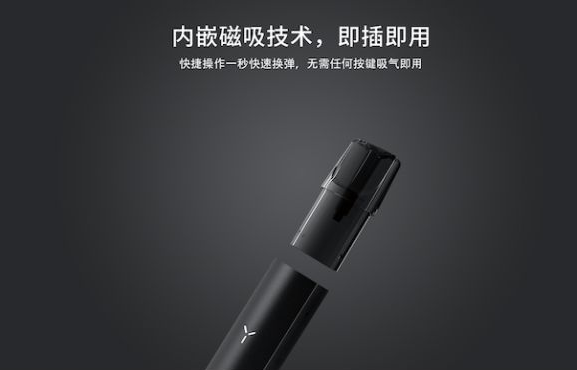
The third type, e-liquid e-cigarettes, is an important direction for domestic entrepreneurship. Its basic structure includes a battery component, atomizer, and cartridge. The e-liquid in the cartridge is generally a mixture of nicotine, propylene glycol, glycerin, and flavoring. Unlike traditional cigarettes, it does not contain tar. The atomizer is powered by the battery, which can convert the liquid nicotine in the cartridge into vapor, giving users a smoking-like experience.<\/p>
 <\/p>
<\/p>
From a health perspective: The main harmful substances from traditional cigarettes come from the combustion process. The burning temperature of cigarettes is generally around 800°C, and incomplete combustion produces tar that affects lung health, while carbon monoxide affects heart health, along with over 40 chemical carcinogens. Additionally, cigarettes are a major source of indoor PM2.5 and contribute to secondhand smoke. Beijing once issued the strictest smoking ban in history, while e-cigarettes are not included in the smoking ban. The burning temperature of e-cigarettes is around 200°C, and the combustion method is to heat the liquid through the atomizer into vapor, which does not produce tar or carbon monoxide, posing relatively less harm and does not generate secondhand smoke.<\/p>
However, this does not mean that e-cigarettes are completely harmless. The U.S. Food and Drug Administration (FDA) has detected trace carcinogens such as nitrosamines and other potentially harmful substances in e-cigarettes. Internationally, the materials used in e-liquid e-cigarette atomizers (ceramics/glass fiber) have raised health concerns.<\/p>
In terms of price, the average selling price of e-cigarettes is higher than that of traditional cigarettes. In addition to needing to purchase devices, consumables also need to be bought. Most retail store device prices range from 100 to 10,000 yuan, while e-liquids vary in price from 80 to 200 yuan depending on the milliliters and brand. The median price of a pack of cigarettes in Beijing is about 12 yuan, in Chengdu about 20 yuan, and in Shanghai about 14 yuan.<\/p>
In China, there are over 600 e-cigarette manufacturers, with representative companies listed on the New Third Board including AIVIP, MCV, Wulun Electronics, Sigrey, and YQ Technology. Additionally, the scale is generally small, with 95% of products mainly exported, and the domestic market share is low. Below is a summary of e-cigarette brands that have announced financing news in the past three years, showing that 2018 was a concentrated financing year for the e-cigarette industry.<\/p>
In July of this year, the U.S. startup e-cigarette brand Juul was valued at $15 billion. It holds 68% of the U.S. e-cigarette market share, which has reached half the valuation of a century-old tobacco company like British American Tobacco, making Juul the sixth highest-valued startup in the U.S. Similarly, Philip Morris International announced this year that the company's future vision is "smokeless," with the product iQOS responding to this trend. Currently, the domestic e-cigarette industry is fragmented, and no leading brand has formed.<\/p>
E-cigarettes, as a fashionable product, are designed beautifully and are gradually forming a trend culture. The flavor profiles are richer, healthier compared to traditional cigarettes, and endorsements and participation from celebrities make e-cigarettes more easily accepted by young people. Among advanced users, trends like device burning, DIY e-liquid, and fancy smoke rings are on the rise.<\/p>
In e-cigarette products, the nicotine, taurine, or caffeine contained can easily lead to addiction, and the profit margins of e-cigarettes are generally higher than those of cigarettes, making it a good business opportunity.<\/p>
In addition to investment institutions taking action, the China Tobacco Group is also gearing up. Nearly ten local tobacco factories under the China Tobacco Group are continuously developing e-cigarettes. However, they are mainly in the trial stage, only exporting to South Korea and Japan on a small scale. Since the traditional cigarette market continues to be profitable, the e-cigarette products of China Tobacco are still considered a defensive layout.<\/p>
With the development of the industry, e-cigarettes are no longer positioned as "smoking cessation" products. Internationally, brands are increasingly characterized by differentiation and trendiness. This can be seen from the VaporFi brand operated by the well-known U.S. e-cigarette group International Vapor Group, Inc. This brand is positioned as a trendy e-cigarette, emphasizing coolness, fun, socializing, sensuality, and desire, targeting the 18-45 age group, with many fashion icons and celebrities being loyal fans.<\/p>
For example, the following domestic brands that have secured financing in the past three years have also attracted consumers through research and innovation and brand differentiation:<\/p>
RELX: Offers convenient 0-cleaning maintenance and large-capacity cartridges (one RELX cartridge is equivalent to 60 IQOS cartridges);<\/p>
Gippro: Provides a more segmented product range (including heated non-combustion, e-liquid e-cigarettes, and inhalable energy sticks) as well as nicotine-free e-liquid products;<\/p>
However, more Chinese e-cigarette brands are manufacturing enterprises with weak research and brand capabilities, which will pose challenges for many small and medium-sized brands.<\/p>
The operating channels for new tobacco do not rely heavily on traditional channels, but rather spread through social and word-of-mouth recommendations. Among the six e-cigarette consumers I interacted with, four tried it because of a friend's recommendation. Currently, e-cigarette brands that have secured financing are also developing diverse channels: WeChat Moments, forums, micro-businesses, short videos, and mini-programs to develop users. A friend who has been in the e-cigarette industry for three years and has experience in e-cigarette ODM/OEM said that channels are crucial for e-cigarettes, and as the industry becomes more specialized, there may even be professional distributors supplying convenience stores, KTVs, restaurants, and bars in the future.<\/p>
In China, cigarettes have long been a symbol of social status, with different brands representing different consumption abilities. Additionally, cigarettes have strong social attributes. Besides personal use, they are widely used in the gift market and for maintaining daily relationships. We often see the gift economy of "giving cigarettes and alcohol" and hear phrases like "XX leader, let's go smoke together" to build rapport. However, e-cigarettes cannot be shared; each person has their own device, making it a personalized experience.<\/p>
Secondly, in the absence of e-cigarettes becoming mainstream consumer products, consumers are unfamiliar with the brands, leading to high market education costs.<\/p>
90% of e-cigarette production in China is concentrated in Shenzhen. While it seems that the industry concentration is high, no brand has formed strong control over the entire industry chain. Industry insiders reveal that an investment of around 5 million yuan can establish a brand, targeting the gift market or direct sales channels, achieving annual sales of 10,000 to 20,000 units, which can yield around 2 million yuan in profit, with profit margins reaching 60%.<\/p>
From the upstream perspective, the production difficulty of batteries and atomizers is relatively low, with the key being the factories producing "cartridges." In Shenzhen, only 3-5 companies have the capability to artificially synthesize "nicotine salts," so the pricing power of cartridges lies with the factories, not the companies.<\/p>
From the midstream perspective, the production of devices and assembly generally adopts OEM and ODM models, with low technical content. The cheapest outsourcing can produce a set of devices for around 30 yuan.<\/p>
From the downstream perspective, the e-cigarette market is just starting, with product distribution channels being self-built e-commerce online; offline channels include traditional tobacco shops, electronic product stores, and e-cigarette specialty stores. Companies do not have strong control over channels, and product sales will be limited.<\/p>
In addition to having sufficient startup capital, the entry barrier for the e-cigarette industry is relatively low. Industry insiders reveal that the current e-cigarette market is similar to the counterfeit mobile phone market in China ten years ago. Some brands that do not sell well this year can simply change their name and sell under a different brand tomorrow. In the future, only companies that have control over the entire industry chain will be competitive.<\/p>
The tobacco industry plays an important role in driving the economy and is a highly regulated industry by the state, so the development of e-cigarettes is also easily influenced and restricted by policies. According to data released annually by the National Tobacco Administration, tobacco tax revenue was 1,051.76 billion yuan in 2014; 1,143.6 billion yuan in 2015; 1,079.5 billion yuan in 2016 (showing a decline of 5.6% in both sales and tax revenue compared to 2015); 1,114.51 billion yuan in 2017, showing a slow overall growth trend. According to "Fortune China," the annual profit of the tobacco total company exceeds one trillion yuan, directly challenging the profits of the four major banks and Sinopec and PetroChina.<\/p>
China's tobacco tax has long maintained a tax rate of 40%. Taking the market price of 65 yuan for a pack of soft Zhonghua cigarettes as an example, it is estimated that the cost of a pack of Zhonghua cigarettes does not exceed 3 yuan, while the comprehensive tax burden (including tobacco tax, value-added tax, etc.) for this pack of Zhonghua cigarettes is about 59.5%, meaning about 39 yuan in taxes, leaving over 20 yuan for circulation costs, production profits, and sales profits. Therefore, the tobacco industry is also an industry with profits exceeding one trillion yuan and tax revenues exceeding one trillion yuan. However, the tax rate for tobacco in China is not high compared to countries like Israel, the UK, Greece, and Turkey, where tax rates exceed 80%, making cigarette prices relatively cheap.<\/p>
On the other hand, due to health awareness and demographic changes, the percentage of smokers globally has declined in recent years. According to a research paper published in April 2017 in the British Medical Journal The Lancet, the daily smoking rate among men dropped from 35% in 1990 to 25% in 2015, while for women, it dropped from 8% to 5%. In 1990, one in three men smoked, and one in twelve women smoked, while by 2015, it had dropped to one in four men and one in twenty women.<\/p>
Correspondingly, the global population using e-cigarettes has seen explosive growth. Research reports indicate that the global e-cigarette market size was around 60-70 billion yuan in 2016, with a compound growth rate of 41%. China's market only accounts for about 5%, with a market size of 3 billion yuan, but it is growing very rapidly, with a growth rate of 316% in 2016. According to the BBC's estimates, there were about 7 million e-cigarette users globally in 2011, and about 35 million in 2016. According to Euromonitor International's estimates, by 2021, the adult e-cigarette user population will increase to 55 million.<\/p>
Data shows that by the end of 2016, 68 countries had established regulations regarding e-cigarettes. In China, the e-cigarette industry is still in a mixed and rapidly developing stage, with almost no regulation, as it is neither classified as a drug or medical device nor formally categorized as tobacco. As tobacco tax revenue growth slows and the number of smokers continues to decline, the significant increase in e-cigarette users is evident. Industry veterans believe that if e-cigarettes form a larger industrial scale, it will directly impact cigarette sales, and national regulations on e-cigarettes are inevitable; it is just a matter of time.<\/p>
However, some practitioners have expressed opposing views, stating that products with strong research capabilities, channel capabilities, and brand capabilities will prevail, and the development of e-cigarettes is an unstoppable global trend. With top-tier capital entering the market, it is sending positive signals to the industry. If domestic regulations are implemented, the development of e-cigarettes can also pivot towards non-nicotine, inhalable energy sticks.


