
A Detailed Look at Boulder’s E-liquid Line — Fisher Oil
Speaking of Boulder’s Fisher Oil, we must mention the PMTA. Boulder has been preparing to submit PMTA applications, especially for e-liquids, for over five years, spending more than 100 million yuan, conducting countless experiments, and preparing hundreds of thousands of pages of application materials. Last year, they officially submitted PMTA applications for six e-liquids and three hardware devices. <\/p>
As of now, Boulder is still the only Chinese e-cigarette company to submit PMTA for e-liquids. In terms of progress, like JUUL, Philip Morris, and Reynolds, all SKUs submitted by Boulder have entered the substantive scientific review stage. <\/p>
Boulder’s Fisher Oil is just one of the by-products of Boulder’s years of “technical persistence” and PMTA preparation. It’s just one of many by-products. <\/p>
 <\/p>
<\/p>
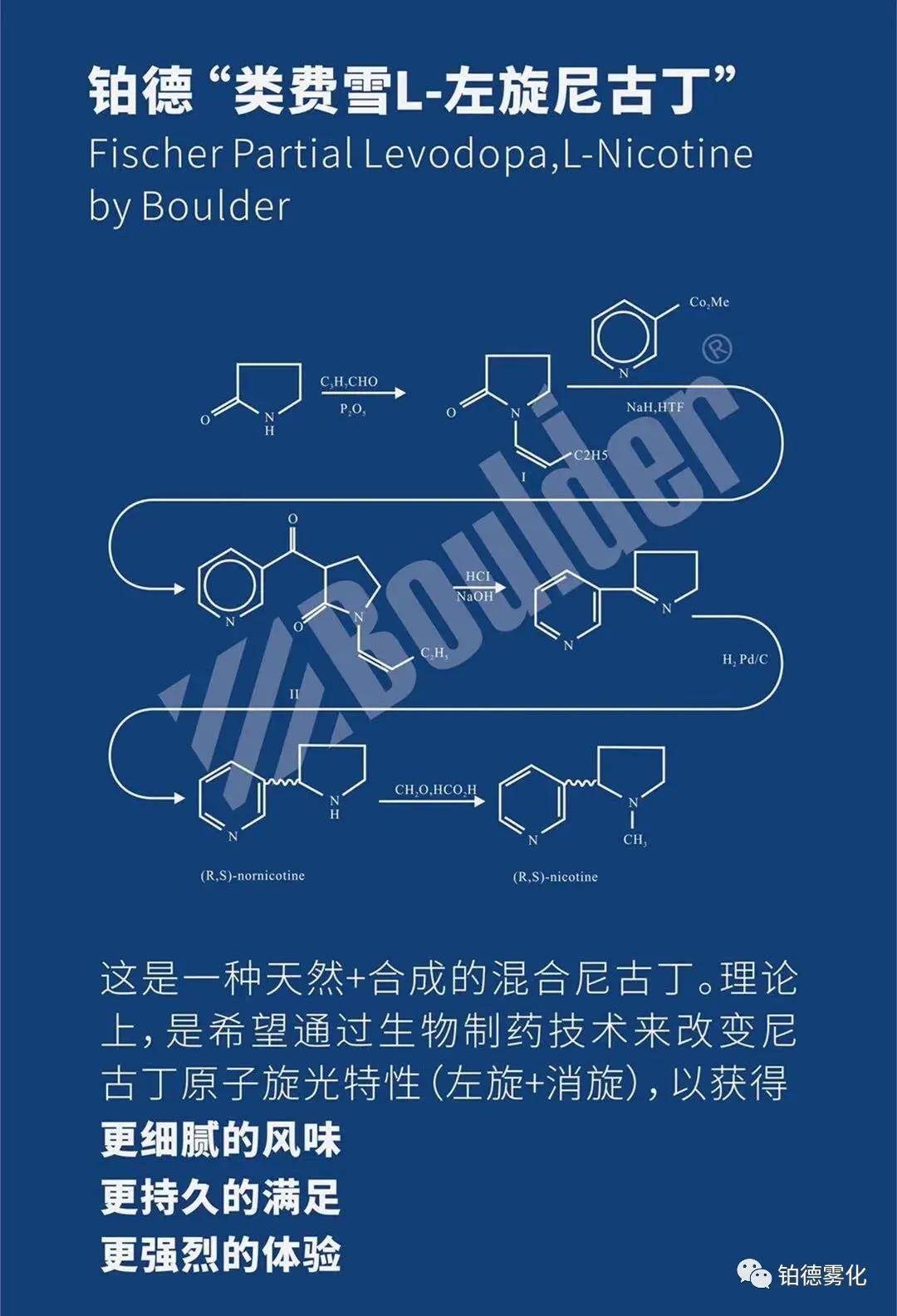
“Less is more” has always been Boulder’s goal, and how to deliver a smoother, longer-lasting, and more satisfying experience with lower nicotine content is also Boulder’s pursuit. During the PMTA application preparation process, Boulder’s “tech-savvy” approach started from the most basic technological updates. It’s worth noting that nicotine technology is more advanced than nicotine salt technology, which is more fundamental; if it’s more basic than nicotine salt, it’s called “pyridine,” which is actually more challenging. I won’t delve into pyridine, but I know a little about nicotine and nicotine salts. <\/p>
During the preparation of a large amount of PMTA application materials and experiments, Boulder discovered that by utilizing atomic polarization characteristics to change atomic arrangements, they could stimulate more dopamine with lower doses of nicotine, significantly improving flavor experience and dopamine sustainability. <\/p>
Thus, the initially internally coded oil known as K was created, which is what we refer to as Fisher Oil, containing left-handed nicotine. <\/p>
Boulder’s Fisher Oil has higher transmission efficiency, lower intake, greater satisfaction, and a smoother flavor experience. <\/p>
Boulder’s Fisher Oil significantly enhances flavor and complexity. As users continue to use the product, the fatigue of taste buds becomes a norm, and issues like “emptiness,” “dispersal,” and “rapid weakening of flavor” cannot maintain the experience's “persistence.” Boulder’s Fisher Oil effectively and significantly improves this, maintaining the vapor flavor's persistence and consistent tonal quality, greatly enhancing the constant effect. <\/p>
Boulder’s Fisher Oil achieves greater satisfaction with fewer puffs compared to traditional nicotine. In practical use, the duration of satisfaction has also correspondingly increased. This means that the same milligram amount of nicotine can now be achieved with just three puffs, compared to five puffs previously, while the nicotine intake in the same time frame is also reduced. For long-term users, this can easily achieve a more efficient effect, making it more cost-effective than traditional nicotine e-liquids from a purchasing perspective. <\/p>
The satisfaction from Fisher Oil is particularly noticeable compared to regular nicotine; about 1-3 minutes after use, the sustained feeling of satisfaction gradually diminishes. After repeated use of 4-5 times, the satisfaction and duration remain stable, which is a significant improvement compared to the 5-6 puffs needed for satisfaction and duration with traditional nicotine. <\/p>
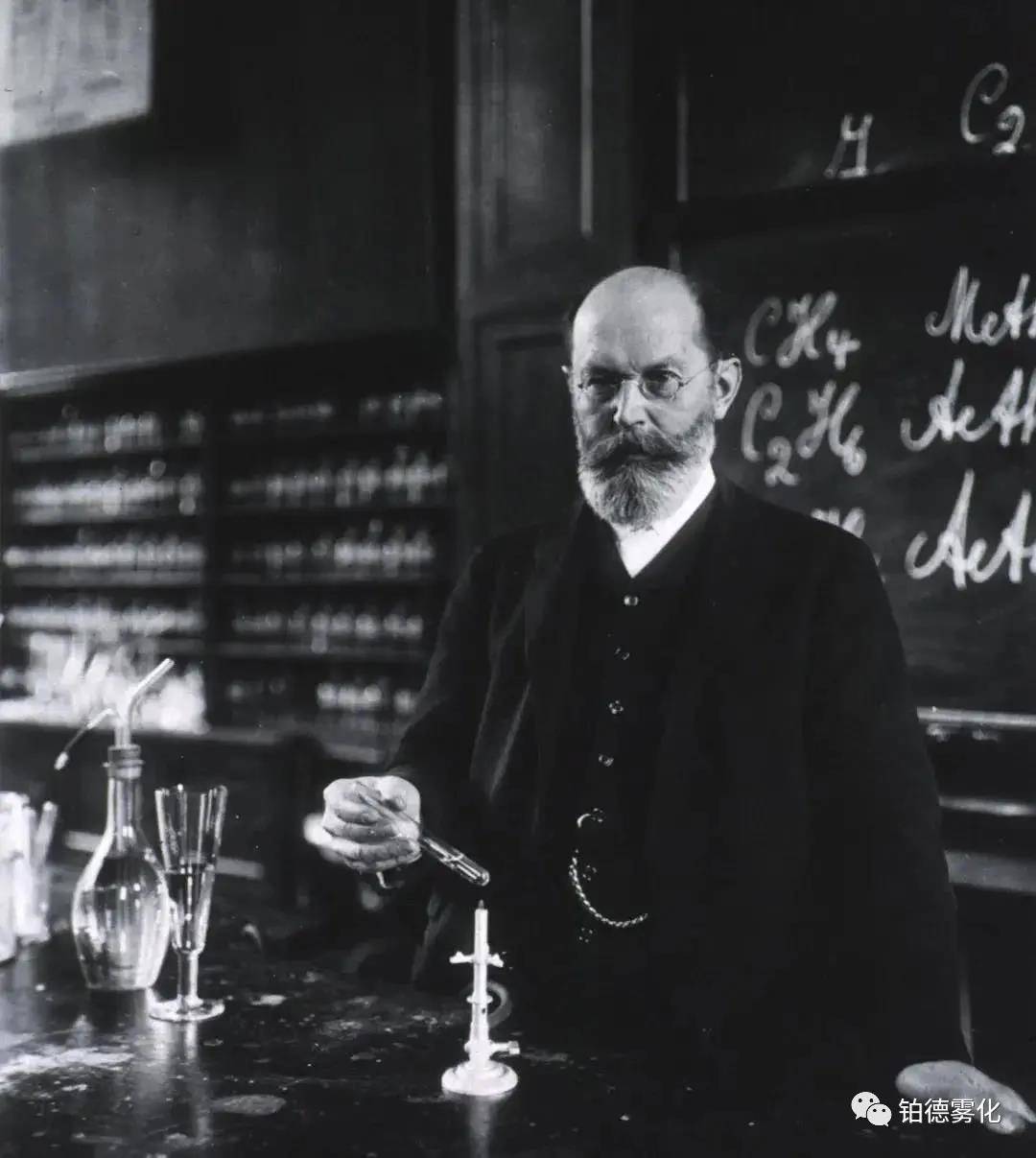
The reason why the nicotine technology developed last year using atomic polarization characteristics has such a long name, called Fisher Oil, is actually to pay tribute! <\/p>
 <\/p>
<\/p>
“Atomic polarization technology” refers to the “left-handed” and “right-handed” arrangements of atoms. The great chemist Hermann Fischer named it the “Fischer projection.” Fischer projection is used to depict and study chiral isomers, commonly seen in drugs like levofloxacin. <\/p>
“Fischer,” or “费歇尔,” is a German chemist who invented the projection of chiral isomers and won the Nobel Prize in Chemistry in 1902. Boulder named the related invention Fisher Oil to pay homage to Professor Fischer. <\/p>


