
Why Has Hong Kong Banned E-Cigarettes? Over 70% of Hong Kong Youth Encounter E-Cigarette Promotion O
The Kowloon Charity Foundation (referred to as "Kowloon Charity") has noticed the increasing popularity of e-cigarettes in recent years. Many studies have found that e-cigarettes contain toxic substances, yet most e-cigarette packaging does not list detailed ingredients, instead promoting various flavors and misleading terms such as "non-addictive" and "helps quit smoking," which attract young people. However, the government has only proposed "regulation" without actively considering a complete ban on e-cigarettes. Why has Hong Kong banned e-cigarettes? Mr. Li Shengpo, chairman of Kowloon Charity, stated that as an educational organization and a charity nurturing children and youth, they are particularly concerned about the impact of e-cigarettes on young people and the general public. Between June and July, they conducted a survey among students aged 9 to 22, as well as a group of educators, social workers, and parents, to understand their views on a complete ban on e-cigarettes from multiple perspectives.
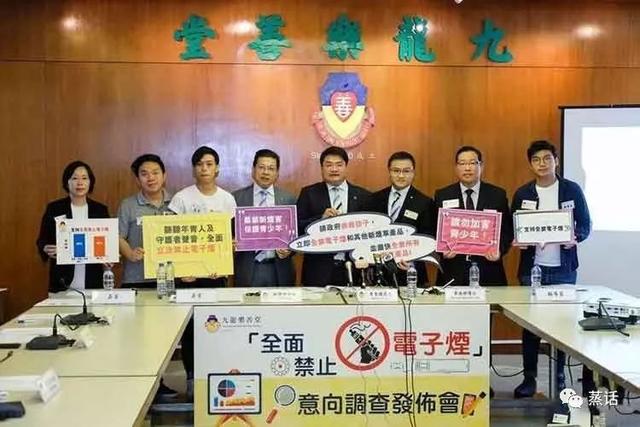
The survey received 4,265 valid responses, of which 1,131 were from young people. E-cigarette promotions are not only found in physical stores like stationery shops but also extensively advertised through young people's social media platforms such as Instagram, Facebook, WeChat, YouTube, and online. Among the respondents, 77% of young people indicated that they encountered e-cigarette promotions through these online channels, and nearly 30% expressed curiosity or a desire to learn more about the products when exposed to e-cigarette or related product promotions. 12% of young people reported having tried e-cigarettes. When asked whether they believe e-cigarettes can harm health, 93% of young respondents agreed that e-cigarettes are harmful, and 80% believed the government should legislate to completely ban e-cigarettes and their emerging products. In recent years, the government has actively listened to the voices of the younger generation. Through this survey, Kowloon Charity strongly urges the government to accept the opinions of young people, "Do not harm the youth" by allowing them access to any form of tobacco products, and to legislate as soon as possible to completely ban e-cigarettes and their emerging products, "Strictly prohibit new tobacco harms, protect the youth!" The survey also included responses from a group of guardians, including parents, social workers, and educators, receiving 3,134 valid responses. 98% of the guardians believed that e-cigarettes could harm health, 93% were concerned that the emergence of new e-cigarette products would attract young people to try smoking, and 86% believed that a complete ban on the sale of e-cigarettes is an effective method to prevent youth smoking. Over 90% of parents, educators, and social workers supported the government legislating to completely ban the sale of e-cigarettes and emerging products. Over 90% of parents, educators, and social workers support a complete ban on e-cigarettes. Kowloon Charity, as a partner of parents, teachers, and social workers, strongly urges the government to listen to the opinions of these young guardians, "Together, let’s protect and save the children, immediately ban e-cigarettes and other new tobacco products, and quickly ban all tobacco products to prevent harming the next generation."

At a press conference, a 27-year-old young man named Tom, who had previously used e-cigarettes, shared that he had tried e-cigarettes a few years ago under peer influence but did not continue because he believed the ingredients of e-cigarettes were unclear and there were safety issues such as explosions. He also observed that friends who used both traditional cigarettes and e-cigarettes did not reduce their smoking but instead ended up using nicotine in a dual manner.
Although he initially tried e-cigarettes out of curiosity, he believes that using e-cigarettes as a smoking cessation tool is ineffective. He thinks that if the government only regulates, it essentially legalizes e-cigarettes, which will only lead to more e-cigarette products flooding the market, resulting in more young people smoking. Therefore, he supports a complete ban on e-cigarettes and related emerging products as a young person.
Counselor Wen Weixuan from the University of Hong Kong's youth smoking cessation hotline program stated that in recent years, more and more young people have switched from traditional cigarettes to e-cigarettes. Many mistakenly believe that e-cigarettes are an alternative method for quitting or reducing smoking. However, due to the difficulty in quantifying the amount consumed, it becomes unrestrained, exacerbating nicotine addiction. He pointed out that since e-cigarettes are marketed with terms like "smokeless" and "low nicotine," young people are easily attracted to try the products. He is concerned that e-cigarettes may become a starting point for youth smoking and urges the Hong Kong government to ban their sale completely.
Dr. Li Haoxiang, an associate professor at the University of Hong Kong's School of Nursing, stated at the press conference that e-cigarettes can easily become a gateway for youth smoking and increase their dependence on nicotine, making them susceptible to addiction. E-cigarettes generally lack ingredient labels, and the chemical substances they contain and produce when heated are also unclear, posing risks to youth health. Dr. Li also pointed out that there is currently no detailed scientific research proving that e-cigarettes effectively help with smoking cessation. The World Health Organization has also stated that e-cigarettes are not recognized as a smoking cessation method. Research abroad has indicated that smokers using e-cigarettes to quit smoking are more likely to end up with dual nicotine use. Dr. Li believes that e-cigarettes and heated non-combustible tobacco products should be banned in Hong Kong as soon as possible before they become widespread, prioritizing public health.


