
Understand the History of E-Cigarette Development in 3 Minutes—Save It for Later!
The world of e-cigarettes is a Jianghu. When the martial arts community was founded, there were a large number of people who quit smoking and had an excellent mass foundation. It is not an exaggeration to say that they were a famous school in the martial arts community; as time went by, rising stars emerged in the martial arts community, and a group of players emerged. In addition to replacing cigarettes, they also played new tricks on e-cigarettes. A hundred flowers bloom and a hundred schools of thought contend. In just a few years, the number of believers has reached millions.
Where there are people, there are Jianghu, and where there are Jianghu, there is history.
Speaking of the history of e-cigarettes, it seems that every Vapor can talk a few words, but if you ask more comprehensively and in detail, few people will understand it. Faced with the ignorant eyes of the newcomers, are you still secretly reading the encyclopedia?
Today, the Joker will come to talk to you about the development history of e-cigarettes. I will contract the next blow!
The birth of any industry will go through such a process: the germination period-the chaos period-the development period-the explosion period-the recession period, that is, it rises amid opposition, erupts amid discussion, and ends amid cheers. The same is true for the e-cigarette industry.
Early development of e-cigarettes
The earliest e-cigarettes can be traced back to 1963, when Herbert A. Gilbert developed a smokeless, non-cigarette device, a device that generates vapor gas by heating a nicotine solution.
In 1965, his research and development patent was officially approved, and in the same year Gilbert's smoke-free, non-cigarette invention concept was first mentioned in the most popular mechanics journals.
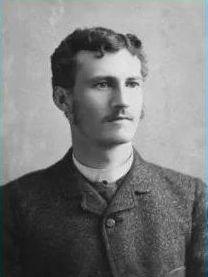
Unfortunately, when Gilbert looked for a company to mass-produce e-cigarettes in 1967, he did not receive support. Since then, Gilbert's smoke-free, non-cigarette equipment began to fade away until it disappeared.
In 2001, Steven Vlacho designed the world's first functional sample of an e-cigarette prototype, which uses electronic thermal resistance to heat a biological mixture containing nicotine to produce vapor.
In 2002, this first edition of e-cigarette was officially unveiled to the public at the Geneva International Invention Exhibition, arousing strong interest among smokers. Despite this, Vlach did not apply for a patent for the product invention.
It was not until 2004, when his e-cigarette products appeared in China, that completely changed his mind. He began producing the first batch of e-cigarettes and claimed that his patents had been stolen. Although there is no way to verify whether this is the case.

In 2003, Han Li invented the first nicotine-based e-cigarette product and was once widely regarded as the inventor and creator of the first generation of e-cigarettes.
In 2004, Han Li quantified the production and sales of this equipment for the first time in the world, and renamed Jinlong Holding Company to Ruyan Technology.
In 2005, Ruyan Technology's e-cigarette products began to be exported overseas, and in 2007, it obtained its first international patent.
After the invention of e-cigarettes, e-cigarettes did not attract attention in China at first, but were used for export. This is because there are many laws and regulations abroad that prohibit smoking in public places and impose strict requirements on quality of life.
At that time, there were also some e-cigarette brands in China, but the prices were very expensive. E-cigarettes are hardly sold domestically, but are all exported, so many Chinese people don't know about it.

However, with the outbreak of the financial crisis after 2008, many export products were blocked from being exported abroad and began to be sold domestically. Therefore, the price of e-cigarettes gradually dropped.
Then, the e-cigarette market came into being. At this time, the main venue for e-cigarettes was in Shenzhen. In the following years, the e-cigarette industry began to enter the fast lane of historical development. Second and third-generation e-cigarette products were introduced one after another, leading the trend of the international e-cigarette market.# p#pagination title #e#

The development and evolution of e-cigarettes
the first generation of electronic cigarettes
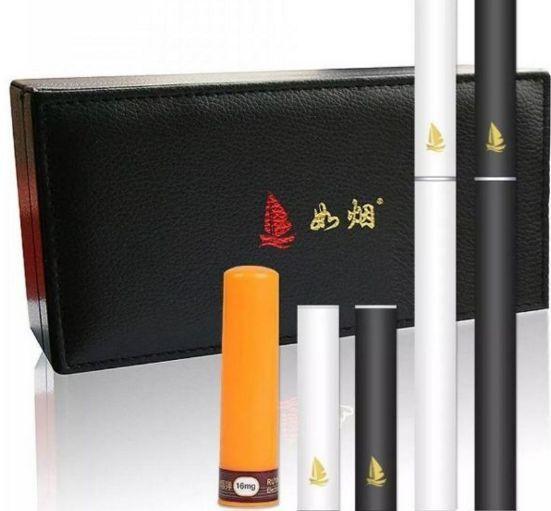
The first generation of e-cigarettes, or the first e-cigarette product, was invented by Han Li of China around 2000. The first generation of e-cigarettes as a small and convenient cigarette substitute prototype was unique at that time, and later manufacturers also basically used this product as a prototype.
The first generation of e-cigarettes has an electronic controller that is separate from the battery to control the 3.7v rechargeable lithium battery to discharge current. It adopts a three-stage structure of battery, atomizer, and cigarette bomb. The battery controller limits the voltage to 4.2V through a micro circuit board and outputs a voltage of 3.3V.
Second generation e-cigarettes
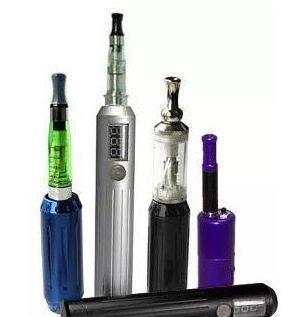
Early models of second-generation e-cigarettes included a 14500 lithium battery box (for example: the Nicostick, an early e-cigarette prototype product, which was first discussed at a foreign e-cigarette forum in 2009 to install a battery box on e-cigarettes), a copper cigarette tube connected to batteries at both ends (an early prototype product includes the Copper).
The first second-generation e-cigarette prototype to achieve commercial success was the Screwdriver made by Trog in the United Kingdom. The most typical feature of this prototype is that it has a larger RC123a lithium battery, which is more stable and lasts longer after each charge. nTrog used a resistor sheet to reduce the battery voltage to 5V, a prototype that was considered a template for most other products at the time. Limited by consumer awareness, business achievements are limited.
The third generation of electronic cigarettes
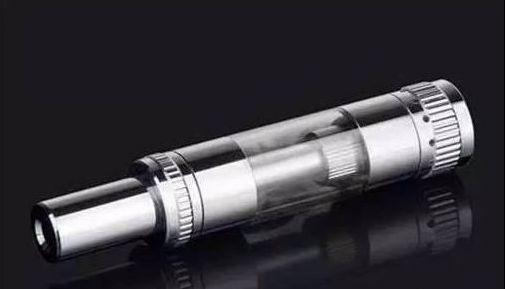
The third-generation e-cigarettes are truly electronically regulated equipment and have made great progress. The e-cigarette started with two lithium batteries in a plastic box after another, and gradually changed into a box style. In the third-generation e-cigarette battery box, there are still two lithium batteries. Under normal circumstances, it can reach a maximum of 7.4v, but an electronic voltage regulator controller is installed to stabilize the battery output voltage at 5v.
The third-generation e-cigarettes also have three advantages: 5v output voltage, use lithium batteries, and be rechargeable, achieving the ultimate goal of battery discussions on the Internet.
The fourth generation of electronic cigarettes
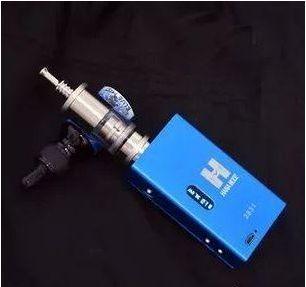
Electronic regulator boxes have led the trend of the fourth-generation e-cigarettes. The fourth-generation e-cigarettes initially allowed users to adjust the voltage from 3.3v to 6v, but they still use rough potentiometer buttons to provide external voltage control like the second-generation products., or use a screwdriver to adjust the voltage.
At first, the fourth generation of e-cigarettes did not have a display screen. Everyone had to guess how much voltage was adjusted. Later, a display like a very primitive electronic watch was added. Although it was very rough at first, the flexibility of the fourth-generation products at that time still surprised everyone.
The fifth generation of e-cigarettes

The fifth-generation e-cigarette is a voltage-regulating box-type device. The voltage regulator can generate the voltage used by any atomizer, and is not limited by the battery voltage. It can even use a lithium battery to adjust any required voltage. If the required voltage is less than the battery voltage, the regulator box suppresses the voltage, and if the required voltage is higher than the battery voltage, the regulator box can also increase the voltage.# p#pagination title #e#
The sixth generation of electronic cigarettes
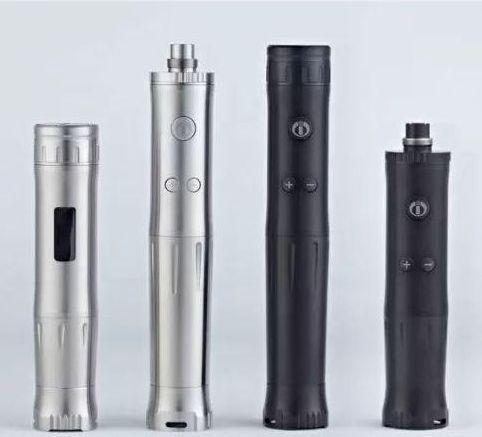
The sixth-generation e-cigarettes have adjustable output power box equipment, and the playability of the same type of atomizer and tobacco oil has become stronger (there have been more changes in the amount and concentration of smoke produced).
The symbol of the sixth-generation e-cigarette is adjustable output power, which means that the wattage output by the atomizer can be adjusted. Under the same output power, no matter what kind of atomizer is used, the amount of smoke generated will be basically no difference.
The seventh generation of e-cigarettes
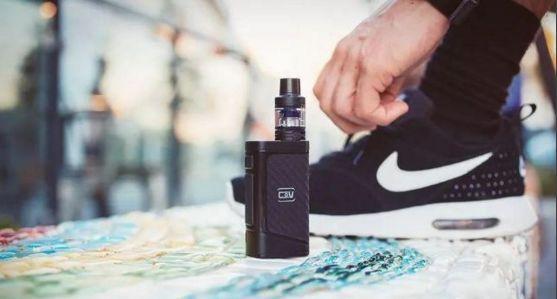
In the first quarter of 2015, the seventh generation of temperature-controlled e-cigarettes entered everyone's attention. The seventh generation of e-cigarettes is also what we call temperature-controlled e-cigarettes. Security is enhanced while increasing playability.
The chip in the e-cigarette can control the e-cigarette equipment to produce smoke at a certain temperature. This has many advantages, such as avoiding drying the cotton core and setting a maximum temperature limit. Prevent excessive temperature from causing thermal degradation of tobacco oil.
E-cigarette products are the most innovative technological products in the 21st century. They introduce environmental protection and health concepts and break through the monopoly position of traditional cigarettes. They have epoch-making historical significance. The times are always developing, and we believe that there are infinite possibilities for the future of e-cigarettes!
E-cigarettes have developed from a product to an industry, and then into a VAPE culture. During this period, many obstacles and problems have been encountered, but new things will surely replace old things. The development future of e-cigarettes is bumpy but bright.
As an e-cigarette enthusiast, he has always been committed to working with people of the same era in the industry and looking forward to better e-cigarette development and market popularization in the future.
Everything we do today will become history tomorrow and become a part of the history of e-cigarette development.


