
Can the XiaoYe V2 pod work with YOOZ? Does the definition of compatibility need to be changed?
Many people have probably seen a video going around in the past few days: a XiaoYe V2 pod slides smoothly into a YOOZ device, and then the white breathing light on the YOOZ three-pronged star logo flashes, indicating that the pod has been successfully recognized:
So what does this video mean? If we jump to the simplest and bluntest conclusion, it would be: XiaoYe has made pods compatible with YOOZ!
But wait—if I’m not mistaken, wasn’t your first reaction that something about that conclusion feels off? You’d probably think: how could XiaoYe be making YOOZ-compatible pods? Even if its market share and shipment volume are below YOOZ, it is still a legitimate, established brand. Why would it do something as sneaky as making generic-compatible products?
And that is exactly what makes this interesting.
The logic most of us use to judge compatibility is this: if Brand A’s pod can be inserted into and used with Brand B’s device, then Brand A is making a compatible product for Brand B—right? That is almost certainly how most people think.
But why does that logic suddenly feel unconvincing when it comes to XiaoYe?
Because “compatibility” has been equated with something underhanded and stigmatized. Once that happens, many people naturally assume that “piggybacking” on another brand and using lower prices to siphon off its customers must be something only small brands would do. People tend to believe that brands that care about their reputation would never want to do that.
But in reality, this is not the first time pods from legitimate brands have been directly cross-compatible. As far as we know, ZOVOO pods can be used in RELX 4th/5th generation devices, and RELX 4th/5th generation pods can also be used in INS Air devices.
So here’s the question: why do some people think ZOVOO is making compatible products, while XiaoYe is not? Isn’t that a pure double standard? A textbook double standard, in fact. If we’re talking about brand influence, market share, and profitability, JWEI Technology, the company behind ZOVOO,
is far ahead of XiaoYe overseas, and has already won a whole stack of awards in international markets.
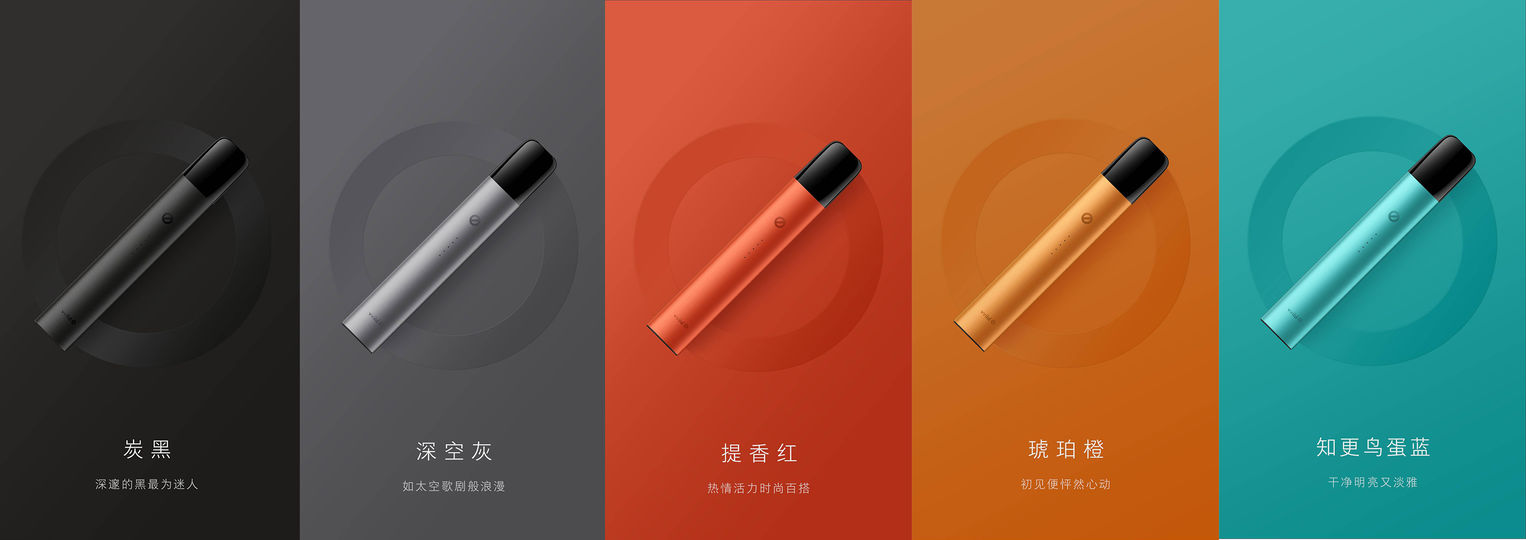
So where exactly is the issue? We believe the definition of compatibility needs to be revised. With that in mind, we would like to propose two criteria for determining whether something counts as compatibility, and we also welcome everyone to add to or challenge them in the comments:
First: brand history and product portfolio.
Put simply, has the brand previously sold mature vaping products in the market and achieved a certain level of brand recognition? Has it previously launched products with independent interfaces and achieved a certain level of market recognition?
Using this standard, it becomes easy to conclude that neither ZOVOO nor XiaoYe is really making compatibility products in the usual sense. So if a brand that meets these two criteria does want to enter the compatibility segment, how would it do it? Very simply: through a sub-brand. For example, FLOW entered the compatibility segment through brands such as Xinliu and Nado; and not long ago, we learned that KMOSE, which was preparing to enter the compatibility segment, was also planning to do so through a sub-brand under mose.
In simple terms, the key is to see whether the brand grew by relying on compatible products, or whether it became successful first and only then moved into the compatibility segment.
Second: two-way compatibility and design intent.
What do we mean by “two-way compatibility”? Simply put, if Brand A and Brand B can mix and match both pods and devices freely and without issue, then they are two-way compatible. This suggests that the molds for both sides’ pods and devices are highly similar.
Why emphasize this point? In fact, if you think about it, pod shape is constrained by many factors: the shape of the heating element, e-liquid capacity, airflow channel design, the dual-contact power structure, ergonomic considerations, and so on. These are all small adjustments made within a fairly fixed overall framework. You have never seen a brand make a triangular or five-pointed-star pod, have you?
And when you factor in tolerances, manufacturing precision, and similar issues, the fit between a pod and a device is not truly perfectly seamless in the strict sense. Leaving a little play is actually very common in any industry that is not ultra-high-precision.
What does that lead to? A typical situation is that Brand A’s pod may just barely fit into Brand B’s device, and the contacts may connect well enough to power it and produce vapor. But because the airflow structure is not properly matched, the draw resistance and intake volume may differ from the design standard. At best, the flavor may seem odd; at worst, it could reduce pod lifespan or even cause burnt coils and other problems.
In other words, two brands with merely similar shapes may accidentally discover that their devices and pods can be used interchangeably to some extent—even if insertion is not smooth, performance is unstable, and the device flashes a red light from time to time.
So if people judge something to be “compatible” simply because it can be inserted and can produce vapor, that is clearly an irresponsible conclusion made without sufficient understanding of the operating principle and structure. Unless, of course, they are fully prepared for after-sales problems to explode. #p#Page Title#e#
To reiterate, the standards above are only intended to start the discussion. The market changes rapidly, and the compatibility segment is constantly creating new approaches. If you feel these standards differ from your own, that’s simple—go with your own judgment.
That said, we still want to restate our earlier view:
“Compatibility is not the same as counterfeit or knockoff products. It arises from real market demand, is an important part of the market, and in the long run may even play an important role in helping this emerging market mature.”
In fact, in my view, getting overly hung up on whether compatibility is right or wrong is rather unnecessary to begin with.
How should right and wrong be judged? Don’t just argue online—leave it to the relevant authorities, professional testing institutions, and users. If a product is both safe and reliable and does not infringe on intellectual property rights, why shouldn’t it be allowed to compete fairly in the market?
And as for the major brands that invested hundreds of millions of real money in building and educating the market in the early stages, they don’t deserve to be met only with sarcasm either. The real enemy for everyone should be the opportunists who pass off inferior products as good ones, sell counterfeit and substandard goods, and show no regard for user health.
Perhaps many years from now, when we look back at today’s arguments, those of us who witnessed them will find the whole thing quite interesting.


