
Which Is More Harmful: E-cigarettes or Cigarettes? Caution Against One-Size-Fits-All Regulation of E
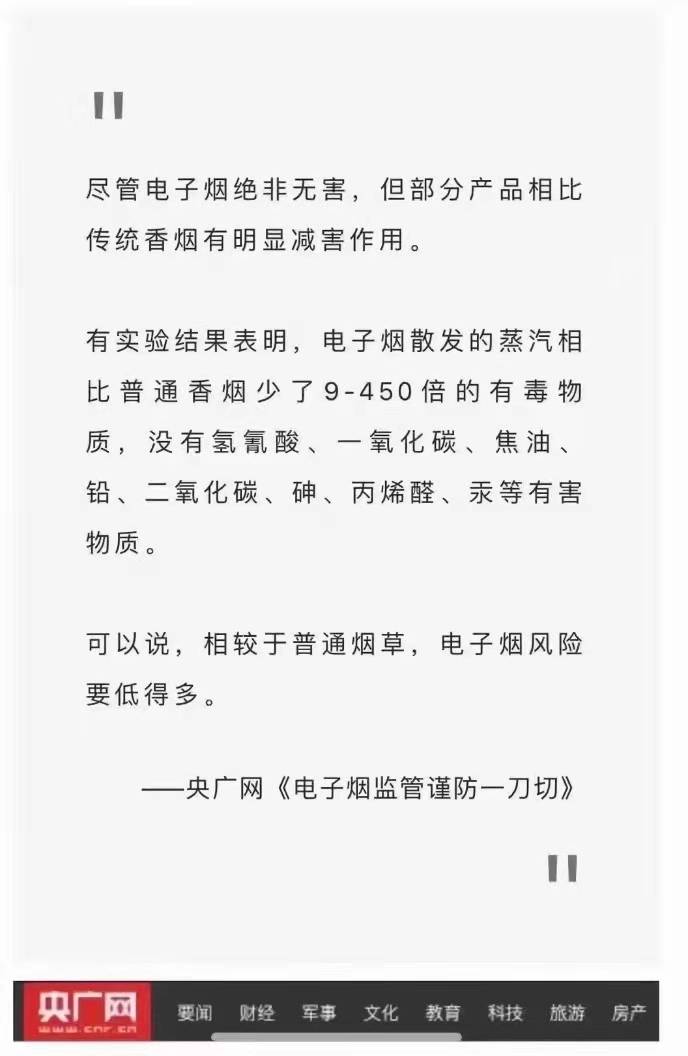
Although e-cigarettes are by no means harmless, some products offer clear harm-reduction benefits compared with traditional cigarettes.
Experimental results have shown that the vapor released by e-cigarettes contains 9 to 450 times fewer toxic substances than ordinary cigarettes, and does not contain harmful substances such as hydrogen cyanide, carbon monoxide, tar, lead, carbon dioxide, arsenic, acrolein, or mercury.
It can be said that, compared with conventional tobacco, e-cigarettes carry much lower risk.
— CNR, “Beware of One-Size-Fits-All Regulation on E-cigarettes”
On March 22, in order to strengthen supervision over e-cigarettes and other new tobacco products, the Ministry of Industry and Information Technology and the State Tobacco Monopoly Administration drafted the “Decision on Revising the Implementation Regulations of the Tobacco Monopoly Law of the People’s Republic of China (Draft for Public Comment),” stating that “e-cigarettes and other new tobacco products shall be implemented with reference to the relevant provisions on cigarettes in these regulations.”
As soon as the news was released, the topic “e-cigarettes to be regulated with reference to cigarettes” surged onto Sina Weibo’s trending list. Many industry insiders believe that being brought under the tobacco monopoly system would reshape multiple links in the e-cigarette industry chain, and whether e-cigarettes and other new tobacco products should in fact be regulated under cigarette-related provisions has become a major point of public discussion.
The Beijing Tobacco Control Association said that stronger regulation is needed to address the disorder in the e-cigarette market, but suggested that e-cigarettes should not be placed under tobacco monopoly regulation. Instead, they should be supervised by health authorities, food and drug regulators, or market supervision authorities. Zhang Jianshu, president of the Beijing Tobacco Control Association, believes that only heated tobacco products belong to tobacco products, while other major categories do not. If all e-cigarettes are brought under the tobacco monopoly system, it would give the tobacco industry—already seriously harmful to public health—an opportunity for further expansion.
In fact, from the perspective of industry development, the rise of e-cigarettes originated from tobacco companies’ ongoing efforts to reduce the harm of tobacco. Major tobacco companies have continually tried to reduce tobacco-related harm, and as the potential for further development in reduced-tar products declined, e-cigarettes became a new direction for advancing harm reduction in the industry. It is precisely because of this advantage that e-cigarettes have attracted enthusiasm and favor from smokers around the world.
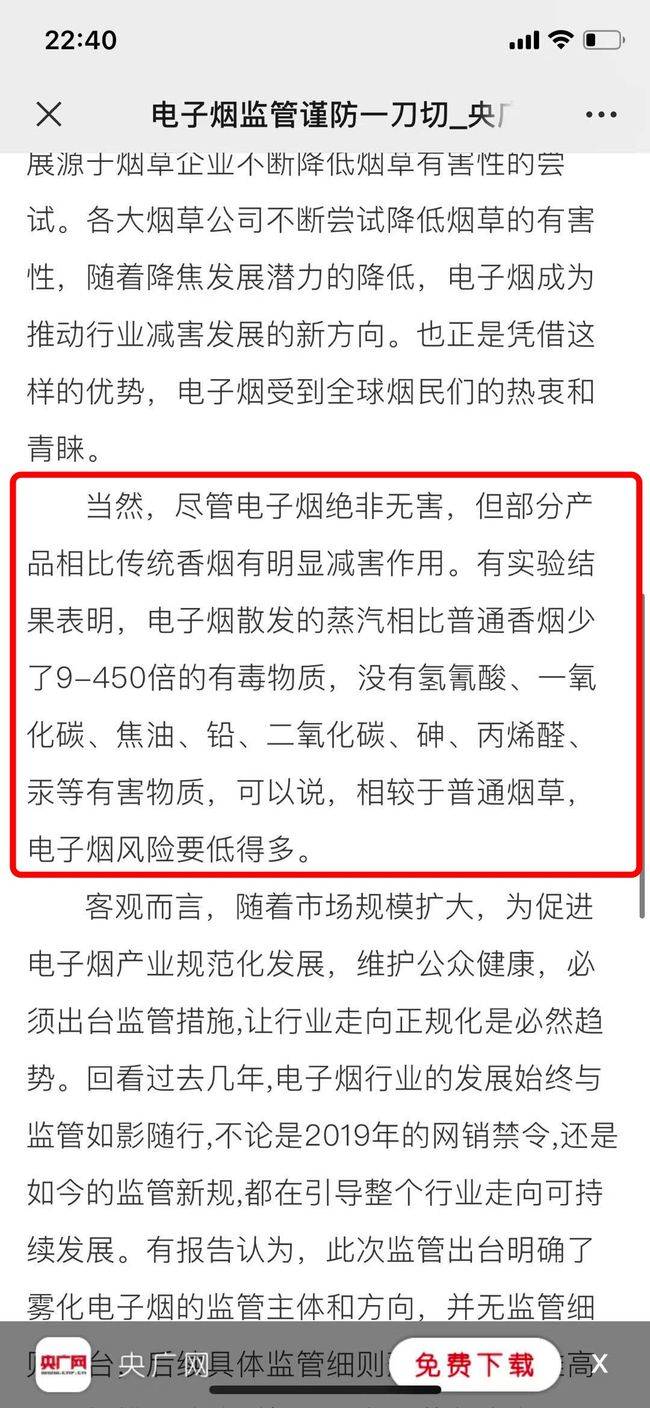
Of course, although e-cigarettes are by no means harmless, some products do offer clear harm-reduction benefits compared with traditional cigarettes. Experimental results have shown that the vapor emitted by e-cigarettes contains 9 to 450 times fewer toxic substances than ordinary cigarettes, and does not contain harmful substances such as hydrogen cyanide, carbon monoxide, tar, lead, carbon dioxide, arsenic, acrolein, or mercury. In other words, compared with conventional tobacco, e-cigarettes carry much lower risk.
Objectively speaking, as the market expands, regulatory measures must be introduced to promote standardized development of the e-cigarette industry and protect public health. Guiding the industry toward formalization is an inevitable trend. Looking back over the past few years, the development of the e-cigarette industry has always gone hand in hand with regulation. Whether it was the 2019 online sales ban or today’s new regulatory policies, both have pushed the industry toward sustainable development. Some reports believe that this round of regulation has clarified the regulatory authority and direction for vaping products, though detailed rules have not yet been issued. Only when specific implementing rules are introduced and industry entry barriers are effectively raised will this truly benefit leading companies across the supply chain.
Ultimately, when it comes to the e-cigarette industry, while implementing reasonable regulation, it is also necessary to clearly understand the laws governing the industry’s development. The characteristics of different products should be taken into account, and both the risks and benefits of e-cigarettes should be evaluated objectively. Only by adopting refined regulatory rules, finding a balance between industry development and supervision, and guarding against a one-size-fits-all approach can the e-cigarette industry achieve steady and long-term growth.


