To reassure you, China Tobacco let mice use e-cigarettes for three months
"No significant toxic effects on rats"!
As a new thing, the most painful thing about e-cigarettes for practitioners is that the product is too new to conduct a lot of empirical research. This resulted in all kinds of false information flying all over the place. What "e-cigarettes are more harmful than cigarettes" and "smoking one e-cigarette is equivalent to smoking ten cigarettes" is simply alarmist.
Humanity is always afraid of the unknown. For example, aliens, for example, various supernatural phenomena. However, we always express reassurance about known things, even if they are first-class carcinogens, such as betel nuts, cigarettes, alcohol, and salted fish, and confidently believe that they can control their intake.
Although in theory, e-cigarettes are definitely less harmful than cigarettes. However, cigarettes have existed for hundreds of years, and it has long been studied how many harmful substances there are and how harmful they will be to the human body.
Fortunately, with the popularization of the concept of "harm reduction", research on e-cigarettes has gradually increased. It is said that there is a fundamental market conflict between e-cigarettes and traditional cigarettes, but everyone knows that China Tobacco System has been silently studying e-cigarettes for many years.
Recently, CECRA discovered two e-cigarette papers on China Tobacco, which specifically studied the toxicity of e-cigarette oil.
At first glance, this content makes people shudder, but the conclusion tells the truth: "No significant toxic effects on rats #p#pagination title #e#”。
These two papers were published in 2019 and 2020 respectively, and were both published in the Journal of Tobacco of China. They are co-authors. The units are Shanghai New Tobacco Products Research Institute, Shanghai City Food and Drug Inspection Institute, and Shanghai Tobacco Group Co., Ltd.
This lineup is not weak. This topic is not serious. This conclusion can be said to be beyond doubt. Everyone knows that the biggest obstacle to the popularization of e-cigarettes is traditional tobacco. They have been studied by traditional tobacco and concluded that "there is no significant toxic effect on rats." Do you think e-cigarettes can be smoked?
1. Study overview: Rats were given PG and VG for three months
The experimental methods in both papers are very similar. Both rats are allowed to inhale e-cigarette aerosols for 90 consecutive days. The only difference is that one paper studied mice pumping propylene glycol for 90 consecutive days, and the other studied mice pumping glycerol for 90 consecutive days.
So what are propylene glycol and glycerol? Why do you do these two experiments separately?
In fact, the reason is very simple. When we smoke e-cigarettes, we mainly use cigarette oil to atomize a specific solution into vapor through vaping equipment. To speak human words, smoke liquid is atomized and inhaled into the lungs through a tobacco rod. So, when we talk about the harmfulness of e-cigarettes, we actually talk more about the toxicity and safety of cigarette liquids.# p#pagination title #e#
Tobacco liquid is mainly composed of four components, namely propylene glycol (PG), glycerol (also known as glycerol, VG), essence and nicotine. Other ingredients such as alcohol, food coloring, and palm oil (sometimes used instead of glycerin) may also be present in certain cigarette liquids. But as the industry develops, the use of these ingredients will become less and less. The final ingredients may be nothing more than PG, VG, essence, and nicotine.
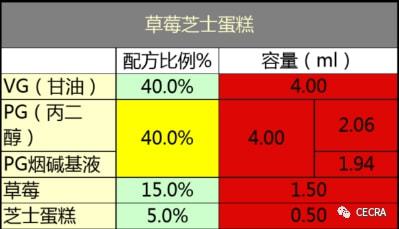
Why did the two papers only experiment with PG and VG, but not essence and nicotine? We can take a look at the following two pictures:
In this e-cigarette liquid composition table, PG and VG account for 80% of the total cigarette liquid.
In fact, with the development of the industry, more cigarette liquid component ratios may be as follows:
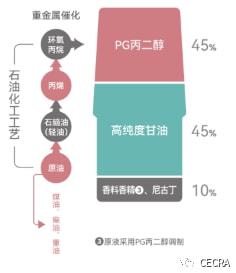
In other words:PG and VG together usually account for more than 80% of e-cigarette liquid, and some can reach 90%. The remaining 10% to 20% can be distributed to other ingredients such as essence, nicotine, and alcohol. Naturally, PG and VG should be listed as key research objects.If we talk about toxicity aside from the dose, it would be blatant hooliganism.
#p#Pagination Title #e#A little clever here,As we know it, its main ingredient is glycerol.In other words, if you don't dislike Kaisai dew and don't care about the taste, you can also try it on an e-cigarette stick.
Propylene glycol (PG) is a by-product of petroleum that is colorless, odorless, sparse, and slightly viscous. PG is a good flavor carrier and can absorb more flavors in solution. It is also called a "fragrance carrier" by many people in the industry. This is also the reason why some high-PG cigarette liquids have stronger flavors and stronger aromas. The PG ratio can also affect the feeling of throat strike.
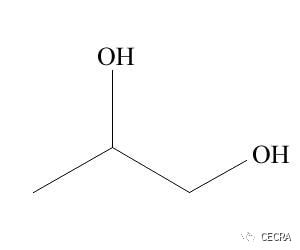
propylene glycol
In fact, PG is very common in life. "GB 2760-2014 National Food Safety Standards for the Use of Food Additives" stipulates that propylene glycol is used in raw and wet flour products.(such as noodles, dumpling skins, wonton skins, and steamed wheat skins) The maximum usage requirement is 1.5 g/kg, and the maximum usage requirement in pastry production is 3.0 g/kg; in terms of oral drugs, the threshold dose for daily PG intake by adults can be as high as 25 mg/kg/day; in terms of daily cosmetics, according to the 1993 American Cosmetic Ingredient Review (CIR) report, it was concluded that PG concentrations up to 50% can be safely used in cosmetic products.
However, oral intake of excessive doses of PG may also cause cardiovascular and renal failure, central nervous system abnormalities, acid-base abnormalities and hyperosmolar symptoms. Transdermal exposure to excessive PG may also cause skin allergies. Exposure to other special routes such as intravenous injection of PG may also cause adverse reactions.
Glycerine (also known as glycerin, or VG for short), which is commonly called "Vegetable Glycerin" in Chinese, is a natural chemical extracted from vegetable oil. Vegetarians can also safely use the ratio of VG means high viscosity. Using a high VG liquid means you will consume more tobacco oil when you smoke steam cigarettes. Therefore, VG is also called the "fog maker". The ratio of VG also affects the smoothness of the smoke inlet.# p#pagination title #e#
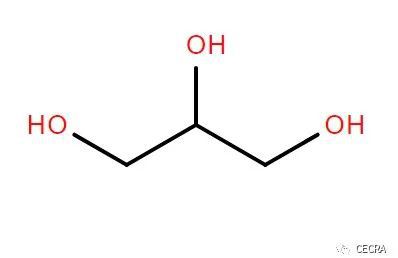
glycerol
Glycerol is a colorless, transparent, odorless, and sweet viscous liquid. Due to its moisturizing, plasticizing, seasoning, thickening, and anti-corrosion effects, it is widely used in tobacco, cosmetics, coatings, textiles, food and medicine. In traditional cigarette products, 1% to 5% glycerol is usually used as a moisturizer and a surfactant for tobacco flavors and fragrances.
2. Introduction to experimental content
Propylene glycol group:
Adult Wistar rats were randomly divided into negative control group and low, medium and high dose groups exposed to PG (doses of 100 mg/kg, 500 mg/kg and 1500 mg/kg respectively) based on their body weight. There were 16 rats in each group, half male and half female, and a total of 64 rats. The trial was divided into a 90-day exposure period and a 1-month recovery period after the exposure was stopped.
Changes in animal weight and food consumption were observed during the test; after the exposure period and recovery period respectively, half of the animals in each group were taken for blood biochemistry, hematology, urine and other indicators, and the animal organs were subjected to histopathological examination.
[Results] Compared with the negative control group #p#pagination title #e#
①The body weight of female rats only decreased significantly in the low dose group at week 8,There were no significant differences during the test in other groups; there were no significant differences in the body weights of the low and medium dose groups of male rats during the test, butBody weights in high-dose male rats decreased significantly after 4 weeks after exposure until the end of the recovery period
②During the 4-week recovery period, the animals in the low and high dose groups decreased significantly,The decreases ranged from 12.7% to 40.8% and 13.9% to 35.9% respectively in female and male animals, with less fluctuations in food consumption in other groups and during the test period
③ The levels of some biochemical indicators such as sodium ion, chloride ion and potassium ion in the low, medium and high dose groups changed, and returned to normal levels after the recovery period ended.
④ The number of red blood cells in male rats in the middle and high-dose groups decreased significantly, and there was a dose-response relationship in the low, middle and high-dose groups. After the recovery period, this indicator returned to normal, and no significant abnormalities were observed in other hematological indicators.
④ There were no significant abnormalities in urine indicators in each dose group during the exposure period and recovery period
④ There were no significant differences in organ weights and organ coefficients among each dose group.Only after the recovery period, the thymus weight of female rats in the mid-dose group increased, and the visceral brain ratio coefficient of the thymus increased significantly
In mouse's words: #p#pagination title #e#
1. The female mouse that smoked less PG lost weight after about 60 days of pumping! Male mice that smoked a lot of PG began to lose weight after about 30 days of smoking!
2. If the mice that smoked less PG and the mice that smoked more PG, whether male or female, quit PG after 3 months, they began to stop drinking and eat less!
3. Female mice that smoke little or little PG will have bigger breasts if they quit PG after 3 months!
Glycerol group:
120 Wistar rats were selected for a 90-day inhalation toxicity test (recovery period of 28 days). Rats were randomly divided into negative control group, low-dose group (10 mg/kg), medium-dose group (100 mg/kg) and high-dose group (750 mg/kg) according to their body weight. There were 30 animals in each group, half male and half female. Changes in body weight and food consumption of the rats were measured during the test; after the exposure period and recovery period, the rats were dissected for hematology, blood biochemistry, urine and other indicators and lung bronchial lavage fluid analysis, and the organs of the rats were examined histopathologically.
[Results] Compared with the negative control group:
① Weight and food consumption: #p#paginated title #e#Food consumption in male rats in the middle dose group decreased in week 3, and in female rats in the high dose group decreased in weeks 6 and 11.
② Hematology:In male rats in the mid-dose group during the recovery period, the MCH (mean corpuscular hemoglobin) level increased; the PLT (platelet count) level decreased
③ Blood biochemistry: There were no significant differences in all indicators in the treatment groups
④ Urine:Increased urine specific gravity in low-dose male rats during the recovery period
③ Organ weight and coefficient:During the exposure period, the liver weight and kidney weight of female rats in the high dose group were lower than those in the negative control group,Lung weights of male rats in the mid-dose group during the recovery period were lower than those in the negative control group
④ Analysis of pulmonary bronchial lavage fluid: There were no significant differences in all indicators in the treatment group
③ Histopathological examination: There were no obvious lesions in the organs and tissues of the rats in the negative control group and the high-dose group. After analysis, the changes in the above indicators did not show a dose-effect relationship
Again, in the words of the mouse:
#p#Pagination Title #e#1. VG smoked a lot of male mice, but their appetite decreased after about 20 days! The female mice that smoked a lot of VG smoked a lot, and their appetite decreased after pumping for 40 days and about 80 days!
2. Male mice that smoke less PG will start to urinate frequently if they quit VG after 3 months!
3. If male mice that have not pumped much PG, if they quit PG after 3 months, the oxygen content in their blood will decrease and they will become prone to bleeding!
4. Female mice with too much PG may have kidney atrophy.
3. Experimental conclusion: No significant toxic effects
The experimental conclusion of propylene glycol is that the NOEL value of PG inhaled in rats for 90 days is 100 mg/kg, and long-term inhalation of lower doses of PG has no significant toxic effect.
The first glycerol experimental conclusion was that rats inhaled glycerol through the nose for 90 days had no significant toxic effects on rats at an exposure dose of 750 mg/kg.
The common e-cigarette bombs on the market are generally 2ml/capsule.# p#pagination title #e#
In the propylene glycol experiment, the low-dose group was equivalent to letting mice smoke 50 cigarette bombs for 90 days. One cigarette bomb for two days. The mid-dose group actually smoked 250 cigarettes, and the high-dose group smoked 750 cigarettes.
This is simply pumping the little mouse to death! The weight difference between humans and mice is not considered at all!
(Mouse OS: Cruel humans!)
Let's take a look at the glycerol test. The doses in the high, medium and low dose groups were 750 mg/kg, 100 mg/kg, and 10 mg/kg, respectively.
In other words, 120 mice smoked 375 cigarettes, 50 cigarettes, and 5 cigarettes respectively over 90 days. Then we used the highest dose of data to tell us that high doses of inhaled glycerol had no significant toxic effects on rats!
For the sake of human health, the little mouse crazily tried to smoke e-cigarettes brought us this set of data. Please remember:
The main components of e-cigarette liquid, propylene glycol and glycerol, will not have toxic effects on the human body after long-term use at higher doses!# p#pagination title #e#
Finally, let us thank the little mouse and the rigour of China tobaccotryTest!
References:
1. Gao Yihan, Yan Dawei, Zheng Saijing, et al. 90-day inhalation toxicity study of propylene glycol, an e-cigarette aerosol agent in rats [J]. Journal of Tobacco of China, 2019, 25
2. Yan Dawei, Gao Yihan, Sheng Yunhua, et al. 90-day inhalation toxicity study on glycerol, an e-cigarette aerosol agent in rats [J]. Journal of Tobacco of China, 2020, 26