New YOOZ 2nd Gen Higanbana Debuts in Striking Style – The Story Behind the ‘Higanbana’
According to legend, there were once two people named Bi and An, who were destined never to meet. They cherished each other and admired one another, and one day, they secretly met despite the heavenly decree. As fate would have it, upon meeting, Bi discovered that An was a beautiful woman, and An found Bi to be a handsome young man. They fell in love at first sight and decided to be together forever.
However, their fate was sealed, as their relationship was ruthlessly crushed for violating the heavenly rules. The heavens imposed a cruel curse on them, turning them into a flower and a leaf of a plant, but this flower was peculiar, with flowers not seen with leaves and leaves not seen with flowers, destined to be apart for eternity.
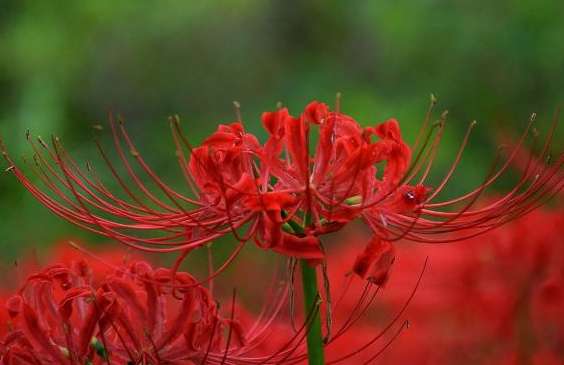
After countless reincarnations, one day, the Buddha came to this place and saw a flower on the ground, strikingly beautiful and fiery red. The Buddha approached to observe it closely and immediately understood its secret. He felt neither sadness nor anger; instead, he suddenly laughed three times and pulled the flower from the ground. Holding the flower, the Buddha sighed, saying, "In your past life, you could not meet; after countless reincarnations, you could not be together. The so-called separations and reunions are merely the birth and death of fate. You carry the curse of the heavens, which makes your fate end yet not disperse, extinguished yet not separated. I cannot help you break this cruel curse, but I will take you to the other shore, where you can bloom in abundance."
On the way to the other shore, the Buddha passed by the River of Forgetfulness in the underworld and accidentally got his clothes wet. The flower he carried was affected, and when the Buddha reached the other shore and unwrapped the flower, he found that the fiery red flower had turned pure white. The Buddha pondered for a moment and laughed, saying: "Great joy is not as good as great sorrow; remembering is not as good as forgetting. How can one distinguish right from wrong? What a beautiful flower! What a beautiful flower!" The Buddha planted this flower on the other shore, naming it Manjusha, and because it was on the other shore, it was also called the Higanbana.
However, the Buddha did not know that the flower, having lost its red color in the River of Forgetfulness, had dripped all its red into the river, causing endless mourning, which was sorrowful to hear. The Ksitigarbha Bodhisattva, knowing that the Manjusha had been born, came to the riverbank and threw a seed into the river. Soon, a red flower even more beautiful than before grew from the water. Ksitigarbha took it in his hands and sighed: "You have escaped and gained great freedom; why leave this boundless hatred in the already suffering hell? I will make you a guide, leading them towards reincarnation, and remember this one color; the other shore already has Manjusha, so I will call you Higanbana."
From then on, there were two completely different Higanbana flowers in the world, one growing on the other shore and the other by the River of Forgetfulness.

Heartfelt red, city-beautifying beauty