
OEM manufacturing, brand rise: how much further does vaping have to go?
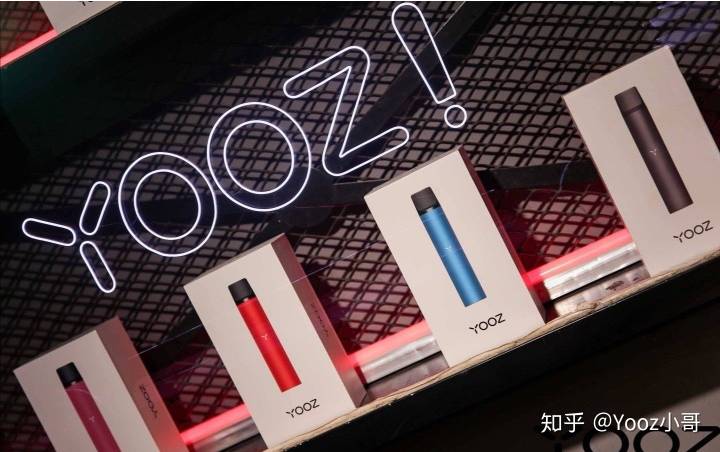
Hello everyone, I am a long-time investor in electronic cigarette stocks who has been trapped. When it comes to electronic cigarettes, everyone should be familiar with them. Almost everyone has one or two friends around them who are vaping. The market penetration is quite impressive. The huge market and profit potential of electronic cigarettes have naturally attracted many entrepreneurs and investors, leading to a fierce capital market in recent years.
During the hottest period, numerous electronic cigarette brands rushed to launch their products. Notable figures like Zhu Xiaomu from Smartisan Technology and Cai Yuedong, the founder of “Tongdao Dashi,” all introduced their own electronic cigarette brands. Data shows that in the first three months of 2019, 248 new electronic cigarette companies were established. Even the famous Luo Yonghao jumped on the bandwagon, collaborating with Edison Chen to launch an electronic cigarette brand called “Xiao Ye.”
Unfortunately, Luo Yonghao, known as the “industry’s dark lamp,” announced the launch of a new product on Weibo, only to face an online sales ban for electronic cigarettes just 20 minutes later. Truly, every industry faces its own challenges. By April of this year, news of electronic cigarettes being regulated like traditional cigarettes directly crushed the stock prices of several electronic cigarette concept stocks, which have yet to recover.
With entrepreneurs coming and going, who is actually taking a slice of the electronic cigarette pie? Let me break it down for you.
Shenzhen’s Fog Valley Story
Keywords like McWell and RLX Technology might give the impression that electronic cigarettes are foreign imports. However, electronic cigarettes are genuinely a Chinese invention and manufacture.
In 2003, Chinese pharmacist Han Li designed the first electronic cigarette to help people quit smoking, naming it “Ru Yan.” During that era, television advertisements featured various miraculous inventions like Beibeijia and Brain Platinum, and Ru Yan also entered the market through TV ads. Older friends might still remember the catchy ads for Ru Yan. The advertising campaign targeted successful individuals, promoting concepts of “health” and “quitting smoking,” giving nicotine-addicted men a reason to persuade their wives, thus willingly spending money. In its launch year, Ru Yan achieved sales of 200 million yuan, and by 2005, it had expanded to overseas markets, reaching sales of 1 billion yuan. By 2008, Ru Yan had sold over 300,000 electronic cigarettes and was listed on the Hong Kong Stock Exchange under the name Sanlong International.
After enjoying the initial years of profit, counterfeit versions of Ru Yan flooded the market, creating a harsh competitive environment. In 2006, CCTV suddenly exposed that Ru Yan's claims of helping people quit smoking were false, stating that Ru Yan did not possess any quitting function. In reality, Ru Yan merely allowed smokers to inhale nicotine without absorbing the harmful substances produced by burning tobacco. The State Tobacco Monopoly Administration deemed Ru Yan's advertising misleading and demanded regulation.
Under multiple pressures, Ru Yan faced continuous losses and ultimately had to sell itself to Imperial Brands, the fourth-largest tobacco company in the world, for 75 million USD, with Han Li transitioning from founder to consultant. Ru Yan was sold in 2013, and had it endured just one more year, it would have witnessed the explosive growth of the electronic cigarette industry in 2014. Unfortunately, after acquiring Ru Yan, Imperial Brands buried it, subsequently launching only its own brands of electronic cigarettes, causing Ru Yan to fade into obscurity.
With Ru Yan's downfall, a massive market opportunity fell into Shenzhen's lap. As mentioned earlier, when Ru Yan was thriving, a wave of counterfeit versions emerged, primarily from Sha Jing in Shenzhen. With Ru Yan's collapse, the vast market share went unclaimed, leading domestic and international orders to flood into small factories in Sha Jing, quickly forming a complete electronic cigarette industry chain, earning Shenzhen the title of “World Fog Valley.” Back then in Shenzhen, one could easily buy components in Huaqiangbei, hire a few workers to assemble them, and make money effortlessly.
Amidst the chaotic industry landscape, a future electronic cigarette giant began to emerge.
In 2009, Chen Zhiping from Hunan settled in Shenzhen and founded an electronic cigarette OEM factory—McWell. To grow stronger, Chen Zhiping moved out of the small factory and brought in the already listed industry giant EVE Energy as a shareholder. EVE Energy is also part of the electronic cigarette supply chain, primarily producing electronic cigarette batteries, and clearly saw the potential in the electronic cigarette industry. EVE Energy ultimately spent 439 million yuan to acquire 50.1% of McWell. Although backed by a strong partner, McWell initially struggled to meet its performance targets and nearly got sold off by EVE Energy. Eventually, McWell's newly developed products began to penetrate the market, claiming an 18.9% share of the global market at its peak, and quickly went public on the Hong Kong Stock Exchange under the name Smoore International (06969HK).
Smoore International's business model primarily focuses on B2B, essentially acting as an OEM for major electronic cigarette brands. As the world's largest electronic cigarette OEM, we can roughly see the list of global electronic cigarette giants from Smoore International's client roster. According to its prospectus, Smoore's main clients include British American Tobacco, Japan Tobacco, and RELX.
RELX, in particular, has also been thriving in the domestic market, having gone public in the US stock market within just three years, trading under the ticker RLX. Founded in Shenzhen in 2018, RELX operates the RELX brand of electronic cigarettes and has grown amidst the chaotic industry landscape.
As mentioned at the beginning, on October 30, 2019, the announcement on “Further Protecting Minors from the Harm of Electronic Cigarettes” was officially released, implementing the online sales ban for electronic cigarettes, leading many brands reliant on online channels to collapse. However, RELX had already secured 38 million yuan in angel round financing in 2018 and completed a 30 million USD Series A financing in 2019. With ample funds, RELX expanded its offline channels through store openings and acquisitions, carving out a path during the industry's darkest hours. After the online sales ban, the suppressed market demand shifted to offline, and RELX was perfectly positioned to capture this wave of benefits.
According to a CIC report, as of September 30, 2020, RELX had captured 62.6% of the domestic closed electronic cigarette market. RELX's sales network covers over 250 cities nationwide, with more than 110 authorized distributors and over 5,000 brand specialty stores.
Where is regulation headed?
Looking back at the global history of electronic cigarettes, the most significant influencing factor is policy, which is an inherent topic for electronic cigarettes. Tobacco, as a tool for taxation and addiction, is regulated in many countries. The emergence of electronic cigarettes has posed challenges for governments and tobacco companies worldwide.
The first issue with electronic cigarettes is the youth demographic. Currently, various flavored pods are available on the market, with very mild tobacco flavors, making them quite deceptive and discreet. Coupled with the trendy designs of electronic cigarettes and the herd mentality of young people, many minors are tempted to “join the club.” However, smokers still inhale nicotine through electronic cigarettes, which is addictive and harmful to health.
Preventing electronic cigarettes from reaching minors is a crucial regulatory issue. As mentioned earlier, the country banned online sales of electronic cigarettes at the end of 2019. However, media reports indicate that many physical stores near schools still sell electronic cigarettes to minors, and channels like WeChat commerce are pervasive.
The second issue is the taxation of electronic cigarettes.
During the wild growth phase of electronic cigarettes, entrepreneurs exploited regulatory loopholes by registering as technology companies, only needing to pay a 13% value-added tax. If taxed as tobacco, for instance in China, the tax rate for Class A cigarettes is 56%, and for Class B, it is 36%, with an additional per-stick tax of 0.005 yuan. Furthermore, an additional ad valorem tax is imposed at the wholesale level, with both Class A and B cigarettes subject to an 11% tax rate, plus a per-stick tax of 0.005 yuan. Assuming the production cost of an electronic cigarette is 50 yuan and the selling price is 100 yuan, at least 39 yuan in taxes would need to be paid, which is quite painful for current electronic cigarette companies.
This regulation is seen as a sign of high taxation for electronic cigarettes, directly causing the stock prices of several electronic cigarette giants to plummet. Smoore International's stock price soared to 90 HKD at the beginning of the year but has now dropped to around 35 HKD. RELX Technology has also fallen from 38 USD at the beginning of the year to less than 5 USD now.
Some believe that since traditional tobacco can be profitable, electronic cigarettes will still be a lucrative business even if taxed like cigarettes. Currently, although many small and medium-sized enterprises are exiting under the tightening policies, global tobacco companies are still increasing their investments in electronic cigarettes, clearly not wanting to miss out on this lucrative market.
The demand for electronic cigarettes in China has always existed and is on the rise. According to iiMedia, the market size of electronic cigarettes in China reached 550 million yuan in 2013 and grew to 8.33 billion yuan by 2020, with a compound annual growth rate of 72.5% over eight years. Additionally, in the UK and the US, the penetration rates of electronic cigarettes are 32.4% and 50.4%, respectively, while China's is only 1.2%, indicating a vast market potential.
The tides of history also show that in the electronic cigarette industry, when one giant falls, new companies will rise to take its place. Who knows what the future landscape of electronic cigarettes will look like?


